Castle of Legnano: A Medieval Fortress and Residence in Italy



Visitor Information
Google Rating: 4.2
Popularity: Medium
Google Maps: View on Google Maps
Official Website: www.lombardiabeniculturali.it
Country: Italy
Civilization: Unclassified
Remains: Military

History
The Castle of Legnano stands on a natural island formed by the Olona River, south of the municipality of Legnano in Italy. Its origins date back to medieval times when it began as an Augustinian convent dedicated to Saint George, a religious establishment documented from the early 13th century and linked to an earlier foundation known from 789. This initial phase centered on the convent’s spiritual role and its broad agricultural estates in the surrounding area.
Legnano’s location was strategically important in the Middle Ages, positioned along a crucial communication route between Milan and Lake Maggiore via the ancient Via Severiana Augusta. Control over this area meant securing Milan’s northwest countryside and safeguarding access through the Olona Valley. In 1261, following the political turmoil after the Battle of Legnano in 1176 and pressures from local noble families, the Augustinian monks transferred the convent and its lands to the Della Torre family, a powerful Milanese dynasty.
Between 1261 and 1273, the Della Torre family converted the convent into a fortified castle. They expanded the original watchtower and built two large wings, likely incorporating parts of the convent’s church and buildings. The castle’s prestige was marked by a visit in 1273 from English royalty, Edward I and Eleanor of Castile. However, after the Della Torre family’s defeat at the 1277 Battle of Desio, control of the castle shifted to the Visconti family. Ottone Visconti favored the castle for its defensive advantages and used it both as a military stronghold and residence. The castle featured in regional conflicts such as the 1339 Battle of Parabiago involving Lodrisio Visconti.
In the 15th century, the castle passed to the Lampugnani family, with Oldrado II Lampugnani notably enhancing its fortifications and using it as a summer home while maintaining its military purpose. During the 15th and 16th centuries, the castle was caught up in the political and military struggles that marked the transition from Sforza to Habsburg dominance in Milan. By 1798, ownership transferred to the Cornaggia family, prominent cotton merchants who adapted the castle as a noble summer residence until the late 1800s. Subsequently, the estate was converted for agricultural functions, with barns and stables added and much of the castle’s original decorative and artistic elements removed.
The castle fell into gradual neglect through its agricultural phase until the municipality of Legnano purchased it in 1973. Restoration work, completed in 2005, repurposed the castle for cultural events and community activities, preserving its historical legacy within the town.
Remains
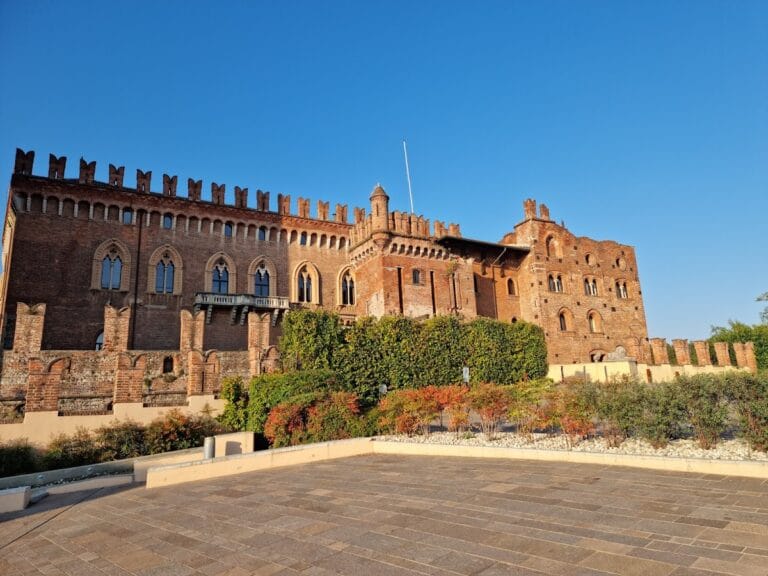
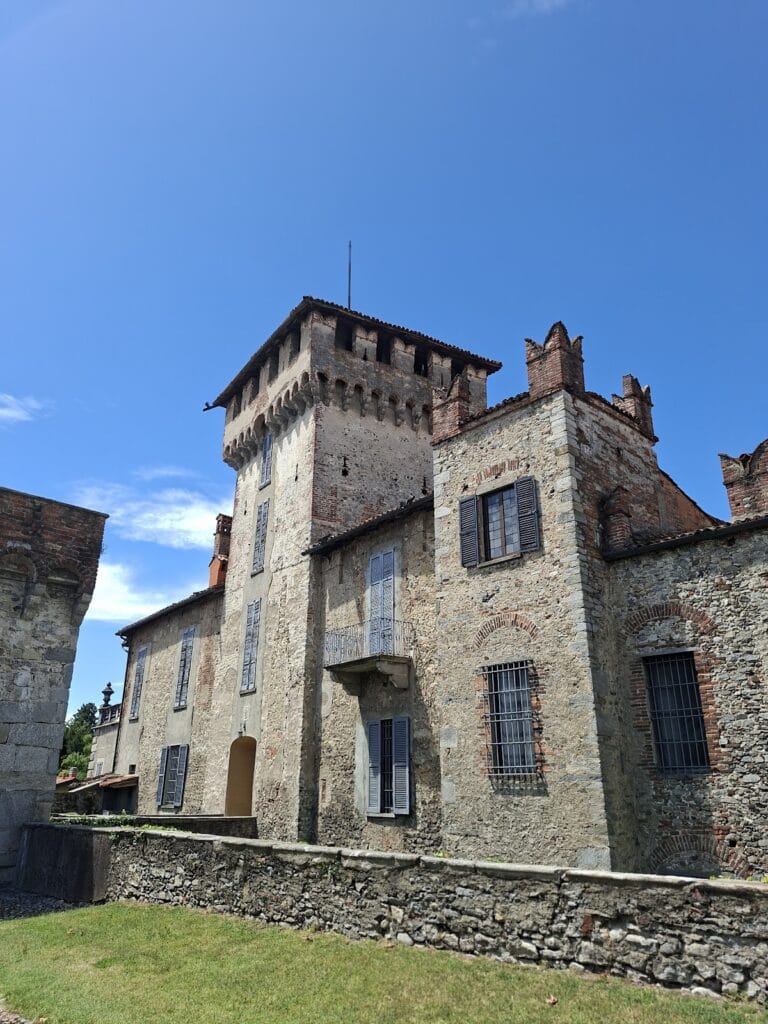
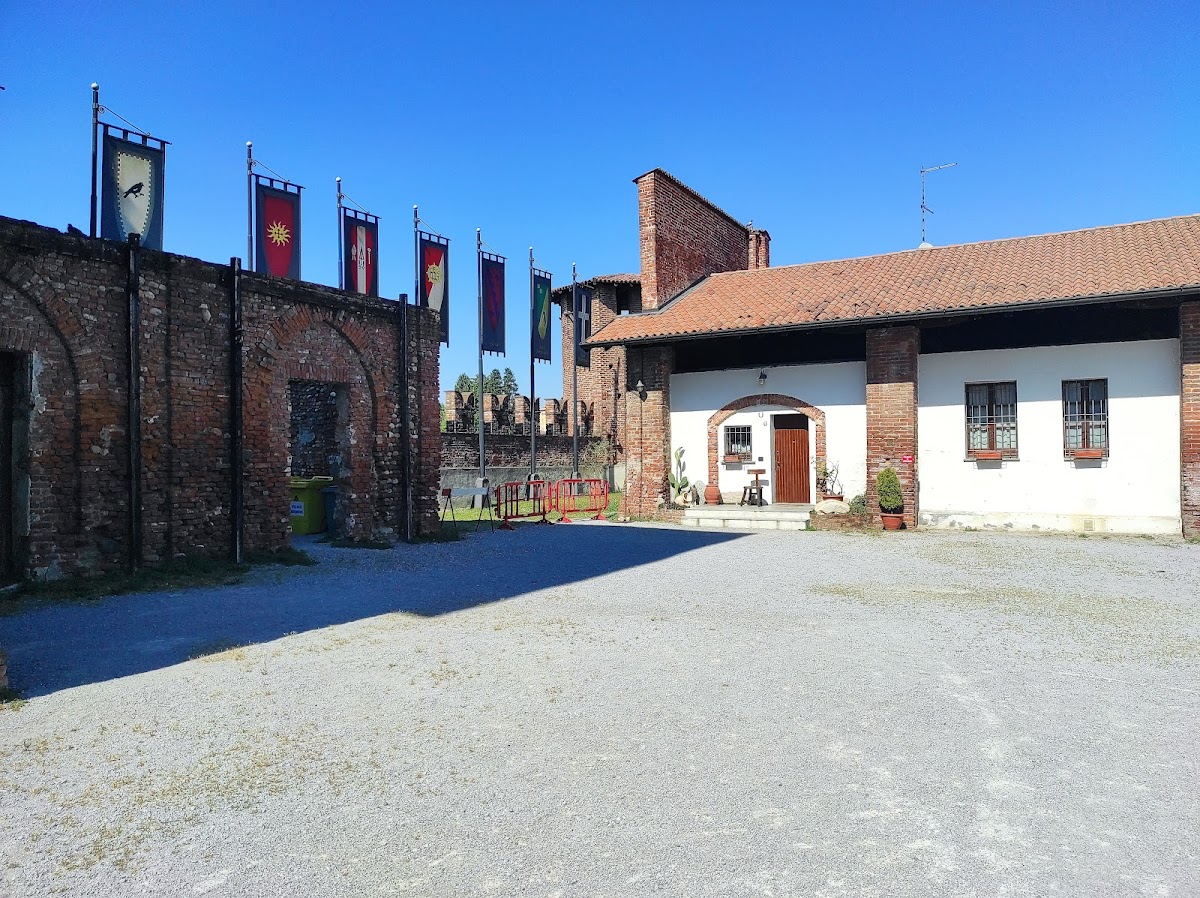
The Castle of Legnano is characterized by brick construction and a layout originally enclosing an area approximately 80 by 120 meters, later reduced. At its core is a medieval watchtower, the oldest visible part, dating from around 1231. This tower has a square footprint of 7.5 meters per side. Noteworthy features include bricked-up arched windows and entrances with distinctive brick and white marble arches. The original entrance faced west, marked by a broad brick arch with marble detailing. The tower once rose higher and included battlements; however, renovations in the 15th century lowered the floors. Renaissance frescoes remain preserved on its upper floor. During the castle’s agricultural use, the tower accommodated wine presses, evidenced by stone channels for grape must drainage and visible holes used for scaffolding.
Two wings constructed by the Della Torre family between 1261 and 1273 extend from the tower. The northern wing, running parallel to the river, measures 20 by 7.5 meters, while the southern wing is 7.5 by 30 meters. Over time, the wings underwent changes, including the bricking up of their original arched windows and conversion of the northern wing into multiple floors for storage when the castle became an agricultural estate.
Significant modifications came in the early 16th century when Oldrado III Lampugnani rebuilt and enlarged the southern wing. He added Baroque-style white plaster and adorned two upper-floor bedrooms with frescoes featuring marble inlay designs, painted by Gian Giacomo Lampugnani. This area also includes coffered ceilings, rustic fireplaces, and an early heating system that circulated warm air through terracotta pipes and grills.
Within the castle grounds, a small church dedicated to Saint George dates back to 1440 and likely occupies the site of the convent’s original chapel. Used as a private oratory and family burial place, it underwent renovation in the 19th century under the Cornaggia family. The church’s interior is modest, with tomb inscriptions and an early 19th-century painting of Saint George.
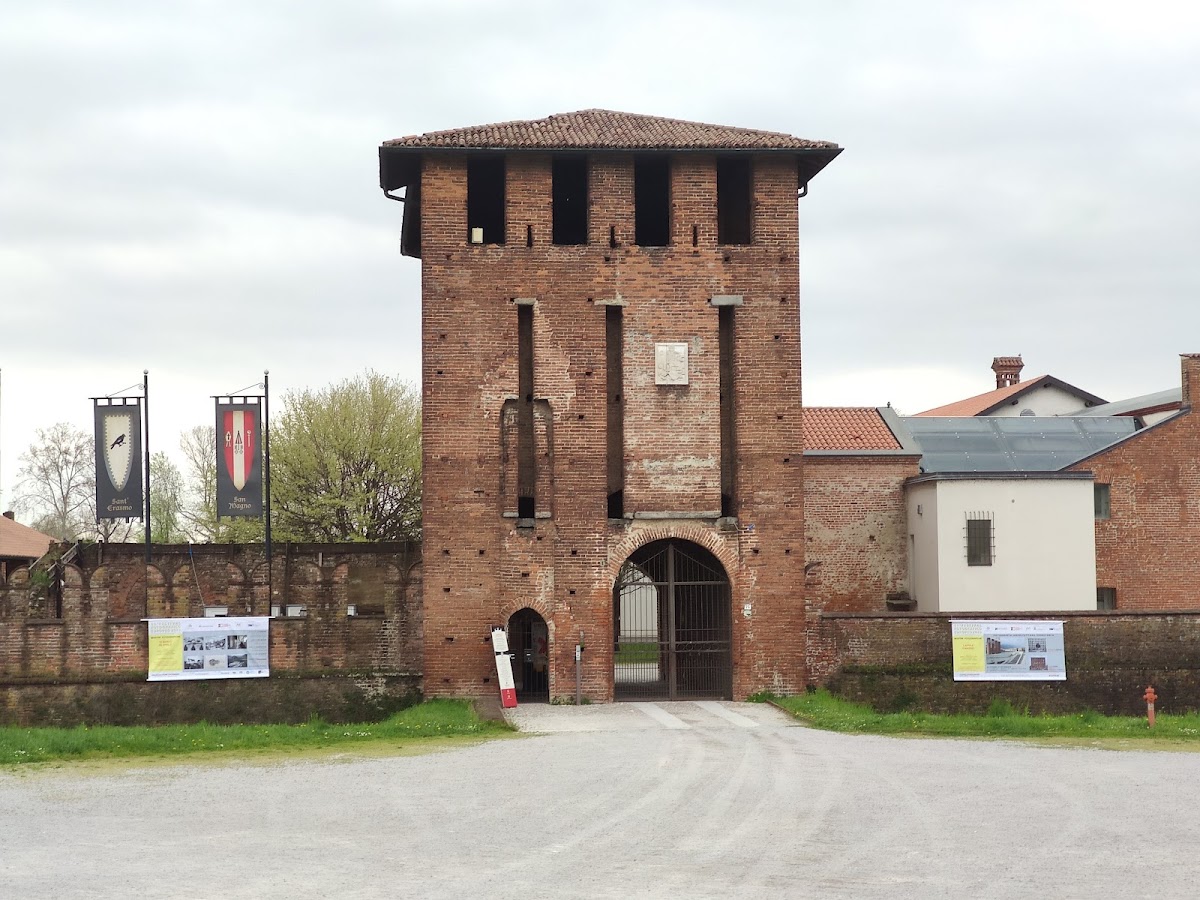
A prominent feature dating to the 15th century is the main keep, constructed by Oldrado II Lampugnani. This rectangular tower stands 16.5 meters tall and measures 9.2 by 14 meters at its base on the north side of the castle. It contains the castle’s current main entrance, which shifted from the earlier western orientation. Access to the guard rooms within originally relied on an external wooden staircase later replaced by an internal masonry stair. Above the entrance is a notable Candoglia marble coat of arms bearing the Lampugnani family symbols, including military helmets, a lamb with a bridle, and a Maltese cross framed by pine cones and branches.
Defensive enhancements from this period include a floodable moat connected via locks to the Olona River, a drawbridge, and a portcullis (now removed). This moat functioned year-round, even during winter when ice formed. The brick perimeter walls surrounding the castle are substantial, 1 to 2 meters thick and standing 5.2 meters high from the bottom of the moat. Originally enclosing a larger area, the walls now encompass about 80 by 70 meters.
Along the walls, six cylindrical towers stand approximately 12.5 meters tall with flared bases. Four occupy the corners and two are positioned midway along the longer sides. These towers featured defensive openings called embrasures and battlements for protection. Two southern towers were demolished, likely during the 17th century by the Cornaggia family. The towers on the right side were decorated in an Empire style with floral frescoes, probably painted by Carlo Cornaggia around the late 18th or early 19th century.
The Cornaggia family also constructed 20th-century agricultural buildings such as barns and stables attached to the Lampugnani structure. These additions led to the removal of most battlements and the demolition of the southern towers. Beneath these structures lies an underground icehouse, known as a “caneva,” situated about eight meters below the walls and accessible through a grille-covered doorway.
A noteworthy feature of the castle’s defensive network is the system of underground tunnels connecting the stronghold to nearby properties, including the towns of San Vittore Olona and others in the vicinity. These passages, mainly used during the 14th and 15th centuries, served as concealed escape routes or hidden access during conflicts. Multiple entrances and sections have been identified, such as one located inside the icehouse.
The interior courtyard was transformed in the 16th century by Oldrado III Lampugnani, who added decorative panels illustrating weapons and rural motifs (now mostly lost), as well as architectural details like cornices, chimney pots, and balcony railings characteristic of the 17th century. Inside, the castle includes a spacious reception hall measuring 15 by 8 meters with a vaulted ceiling supported by ribs and pendentives, a fireplace, and adjacent to it a small study that housed the heating system’s apparatus. The upper floor features three oak-paneled rooms with floral decoration on the ceiling coffers.
During the castle’s later agricultural phase, many original furnishings, artworks, and decorative elements were removed or relocated, including historic furniture such as a 16th-century Baroque wooden bed transferred to another noble residence. Despite these losses, the castle retains substantial architectural and artistic evidence of its varied history from convent to fortress, noble residence, and agricultural estate.
Nearby sites