Castello di Carimate: A Fourteenth-Century Castle in Italy
Site at a Glance
- Rating
- 4.2
- Popularity
- Low
- Country
- Italy
- Primary era
- Medieval
- External website
- Open
- Eras represented
- Medieval, Modern
- Civilizations
- Duchy of Milan, Holy Roman Empire, Italian
- Site type
- Military
- Remains
- Castle
On this page10 sections
History
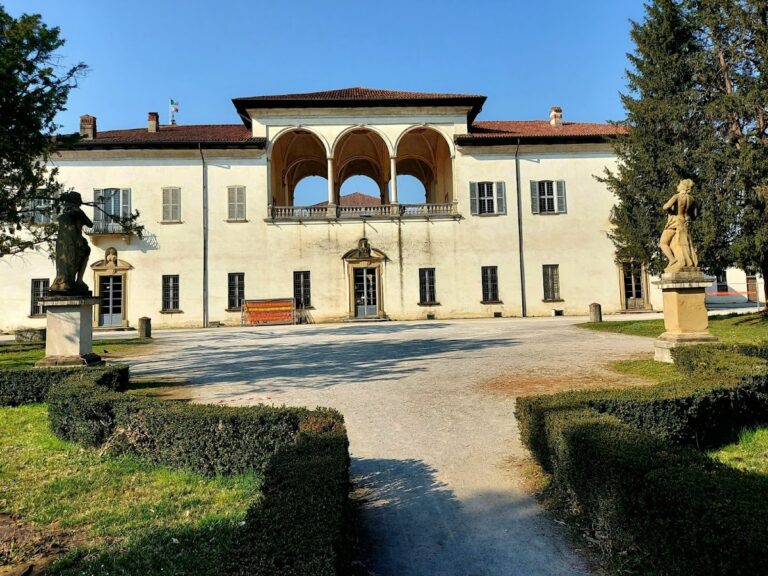
Castello di Carimate is a fourteenth-century Gothic castle in Carimate, Italy. Its position near the Via Regina, the historic route from Milan to Como and onward toward Switzerland, gave it a place in the defensive network north of Milan. The castle also served as a country residence and hunting site.
Medieval fortification and Visconti rule
A fortification occupied the site by at least 1149. It was destroyed during the thirteenth-century conflicts between Como and Milan, before Luchino I Visconti reconstructed the citadel in 1345. The Visconti were the ruling dynasty of Milan during this period and later administered Carimate through feudal arrangements.
The castle temporarily passed to the Malabarba family before returning to the Visconti. Bernabò Visconti strengthened the property and transferred it to his wife, Beatrice Regina della Scala, in 1380. A moat and drawbridge were added during the subsequent period of Visconti ownership.
Feudal transfer and Sforza confirmation
After further changes involving the Malabarba and Della Mirandola families, Filippo Maria Visconti granted the castle and the rest of Carimate as a fief to Giorgio Aicardi, known as Scaramuzza, in 1434. A fief was land granted by a ruler in return for service. The grant rewarded Aicardi for uncovering a conspiracy against the duke involving the Milanese Malatesta, Arcelli, and Beccaria families. He was also allowed to add Visconti to his surname.
The Sforza succeeded the Visconti as Milan’s ruling dynasty in the late fifteenth century. In 1477, Galeazzo Maria Sforza confirmed the castle as the property of the heirs of Giorgio Scaramuzza Visconti Aicardi. Giorgio’s son, Lancelotto Visconti, carried out another restructuring in 1481, followed by further interventions in 1493.
Ducal visits and the late medieval transition
On 3 December 1493, the wedding procession of Bianca Maria Sforza stayed at Carimate while accompanying her to Germany for her marriage to Maximilian I of Habsburg. The party included Bianca Maria Sforza, Duke Gian Galeazzo Maria Sforza, Ludovico il Moro, Beatrice d’Este, and other members of the ducal family.
Maximilian I stayed at Carimate for seven days in 1496 and hunted deer in the surrounding woods. Ludovico il Moro later used the castle as his last refuge before fleeing to Germany in 1499. These visits placed Carimate within the movements and political crises of the Milanese ruling families at the end of the fifteenth century.
Later ownership and the Risorgimento
After Annibale Visconti died in 1626, the castle passed to Ottavio Visconti. That branch of the family ended with the death of Lodovico Visconti in 1795. The castle and its attached village then reverted partly to the Milanese Curia through the reversion of feudal grants. In 1800, Cristoforo and Carlo Arnaboldi of Como purchased the properties.
During the Risorgimento, the nineteenth-century movement that led to the political unification of Italy, Vittorio Emanuele II of Savoy and Giuseppe Garibaldi watched troop movements connected with the Third Italian War of Independence from the castle tower in 1866. A commemorative plaque on the north side of the tower records the event.
Arnaboldi restoration and modern uses
In 1874, Bernardo Arnaboldi Gazzaniga, Count of Pirocco, commissioned a radical restoration by the architect Ercole Balossi Merlo. The work aimed to recreate the castle’s presumed medieval appearance through archaeological, historical, and philological reconstruction, while also introducing Romantic elements. Arnaboldi Gazzaniga subsequently moved an extensive collection of paintings, tapestries, and other artworks into the castle.
In 1910, the castle became a film set for the short film Gioacchino Murat dalla locanda al trono. The production used 400 extras and the stable for the horses appearing in the scenes. Arnaboldi and other members of the Lombard aristocracy also took part as actors.
The Arnaboldi family retained ownership until 1957, when the property was sold to Società Generale Immobiliare. The company developed the surrounding area as a residential center for permanent or seasonal homes serving people from nearby Milan and created the adjacent golf course. This was the first example in Italy of this type of residential development, following a pattern already widely used in the United States.
After the development was completed, Società Generale Immobiliare sold the golf course, castle, and former stables known as Il Torchio. The sports facilities passed to another managing body, while the castle was sold in 1976 to the recording company Stone Castle Studios. Some rooms were adapted for technical recording functions, and the studios were used between 1977 and 1987 by Pino Daniele, Fabrizio De André, Mia Martini, Pooh, Lucio Dalla, Antonello Venditti, Riccardo Cocciante, Nena, Paul Young, Roberto Vecchioni, and Yes.
In 1986, the castle changed ownership again and was adapted as a restaurant and hotel. Historic rooms were equipped for meetings and banquets, and the changes required substantial interventions to the building’s structure and decorative elements. From the 1990s, a citizens’ cooperative converted the former stables into a civic and cultural venue. The castle is currently used as a hotel.
Remains
Castle block
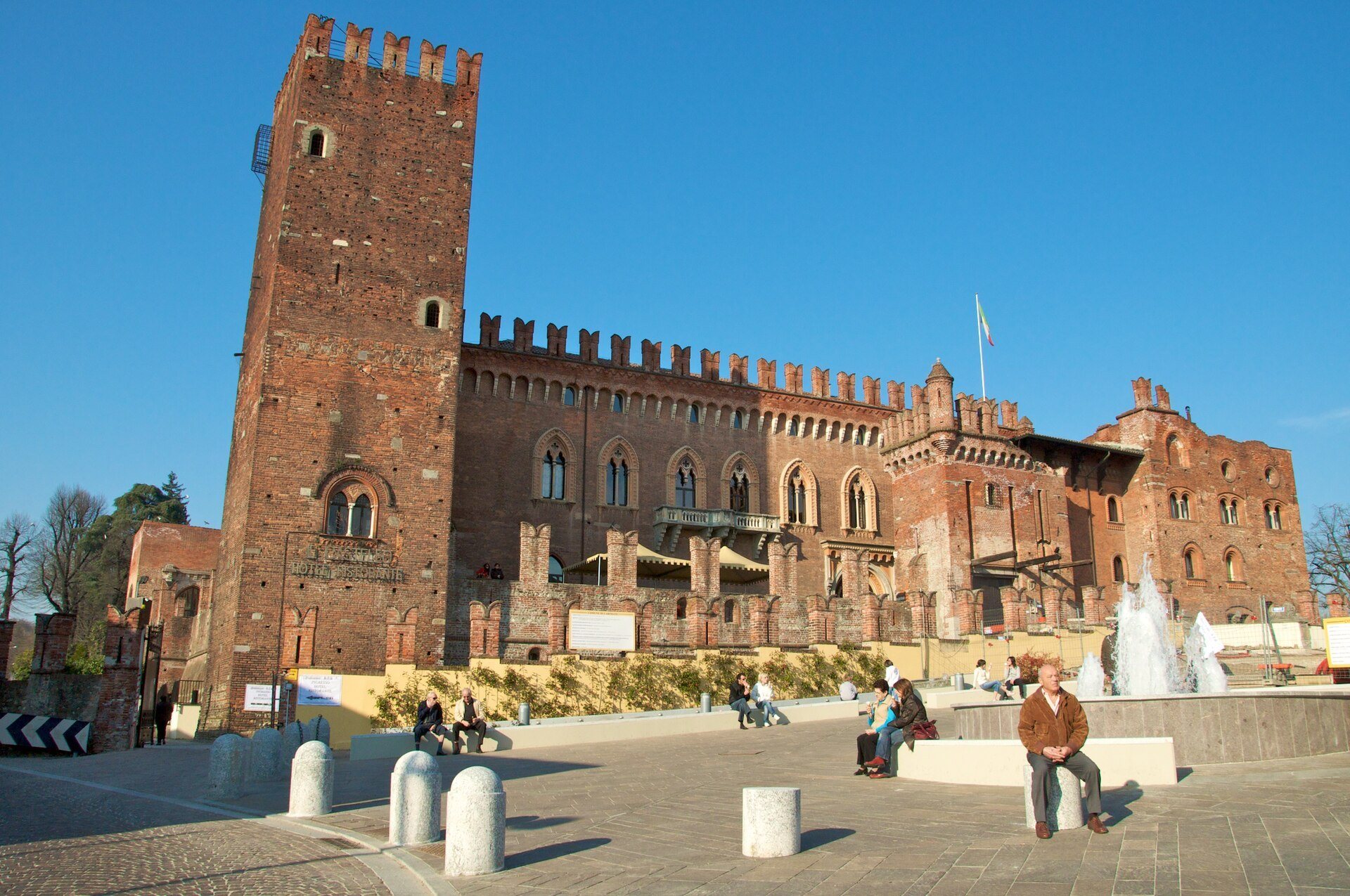
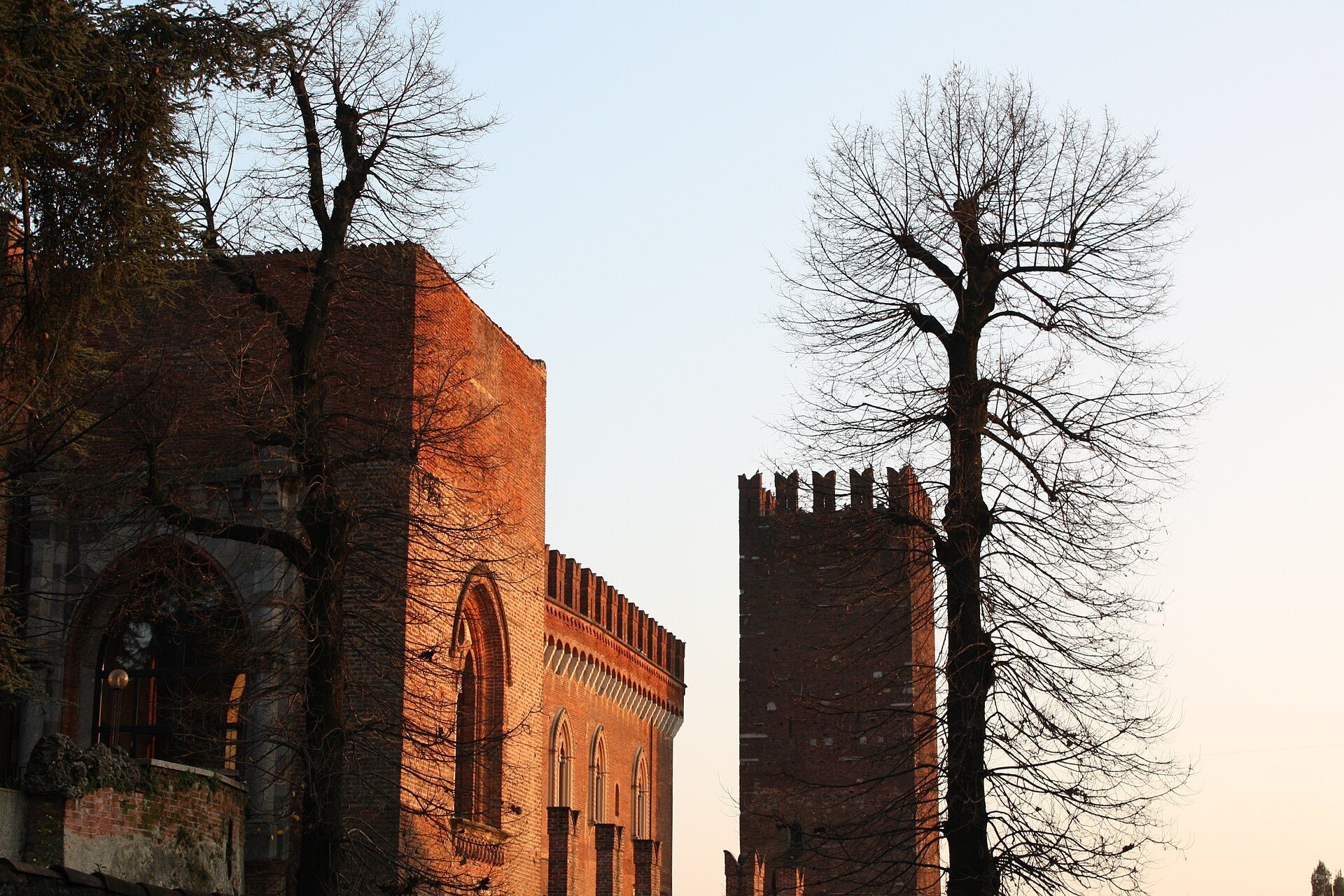
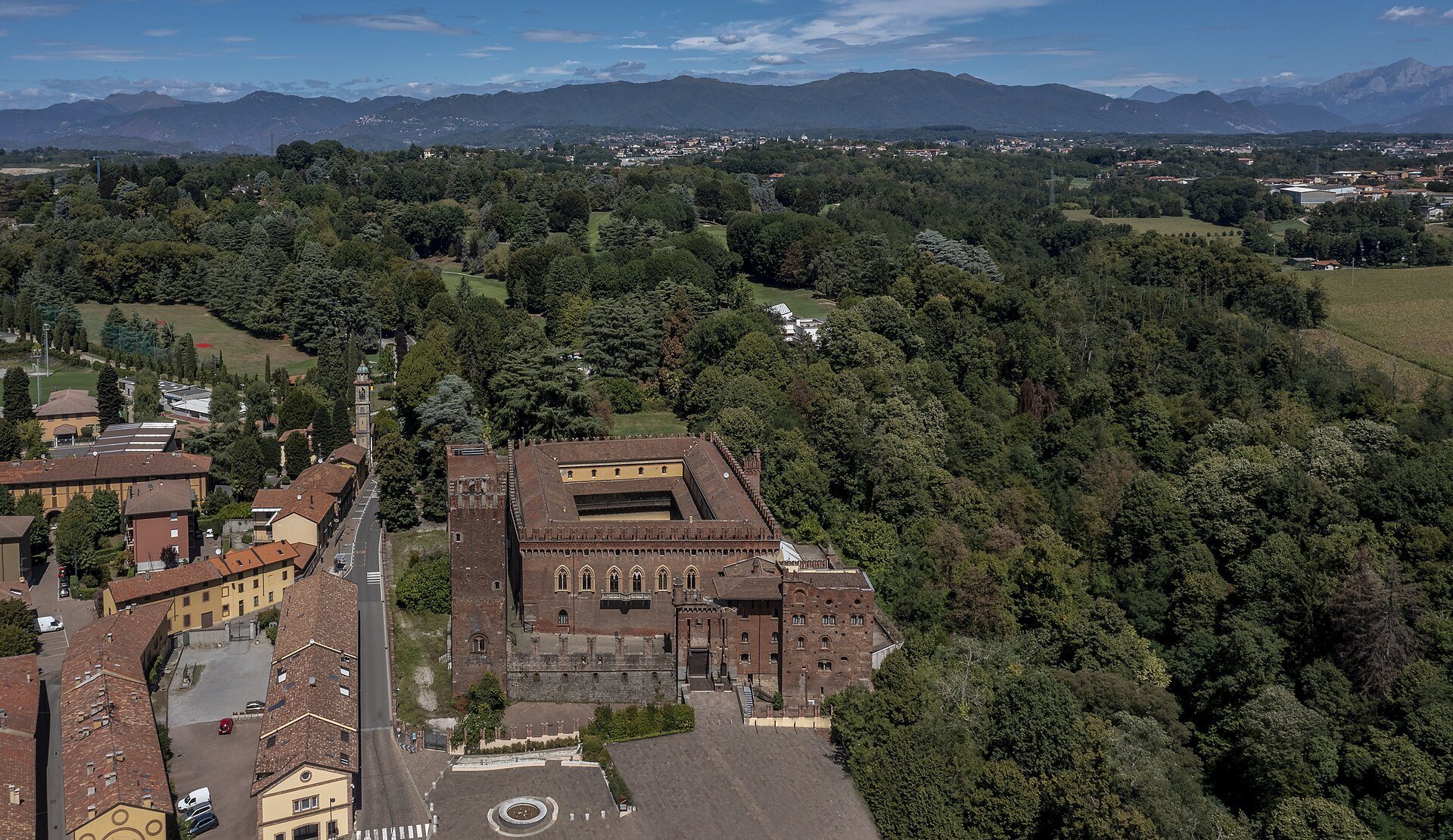
The main building is a large square or quadrilateral Gothic block arranged around a central courtyard. Its entrance retains structural asymmetries and traces of an ancient portcullis, a vertically sliding defensive gate, together with evidence of the drawbridge that once restricted access across the moat. On the second floor, a series of pointed, mullioned windows forms one of the building’s principal Gothic features.
The roofline and parts of the boundary walls on the town side carry swallowtail, or Ghibelline, crenellations. These battlement merlons have forked, V-shaped tops traditionally associated with the imperial political faction in medieval Italy. On the north side, an elevated terrace extends above the grounds.
Corner tower and interiors
A tall brick tower stands at the southwest corner and is largely separate from the main block. Its north side carries the plaque commemorating the 1866 observation of troop movements by Vittorio Emanuele II and Giuseppe Garibaldi.
The interiors contain neo-Gothic ribbing and ceiling decoration from the nineteenth-century restoration. Neo-Gothic was a revival of medieval Gothic forms, while ribbing consists of projecting bands used on ceilings for structural or decorative effect. Later adaptations altered both the structure and decorative elements as the castle became a restaurant and hotel.
Former stables and present complex
The former stables, known as Il Torchio, were converted into a civic and cultural venue from the 1990s. The present hotel complex includes 50 rooms and a spa, as well as an on-site restaurant and access to the adjacent golf course.