Castle of Geraki: A Historic Fortress in Sparta, Greece


Visitor Information
Google Rating: 4.6
Popularity: Low
Google Maps: View on Google Maps
Official Website: odysseus.culture.gr
Country: Greece
Civilization: Byzantine, Crusader, Ottoman
Remains: Military

History
The Castle of Geraki is located near the village of Geronthri in the municipality of Sparta, Greece. This fortress was established during the period of Frankish rule in the Peloponnese, constructed between 1209 and 1250. It was likely built by Guy de Nivelet or his son Jean de Nivelet, members of the Frankish nobility who controlled the area following the Fourth Crusade. The castle served as the administrative center of the Barony of Geraki, a territory within the Principality of Achaea, a feudal state established by the Franks in the Peloponnese.
In 1262, the Frankish rulers surrendered the castle to the Byzantine Empire, marking a significant shift in regional control. Under Byzantine rule, the fortress became part of the Despotate of the Morea, a semi-autonomous province in the late Byzantine period. This transition reflects the gradual reclamation of territories in the Peloponnese by Byzantine forces after years of Frankish occupation.
The Ottomans expanded into the region in the mid-15th century, capturing the Castle of Geraki in 1460 as part of their conquest of Laconia. For a brief period between 1463 and 1468, Venetian forces controlled the fortress, but it was soon retaken by the Ottomans. There is some uncertainty about the castle’s continued use following this period. Some sources indicate it was abandoned by the 15th or 16th century, while others suggest it remained in use until the late 18th century. During the late 17th century until 1715, the Venetians held the castle again before the Ottoman Empire reclaimed it.
Eventually, after its abandonment as a fortified site, the local settlement shifted back to the ancient acropolis of Geronthrai, the original historic location of the area. This move led to the foundation of the modern village of Geraki near the foot of the ancient hill. The ruins of the castle and its related structures, including numerous churches, have been the subject of restoration efforts, preserving traces of its layered historical past.
Remains
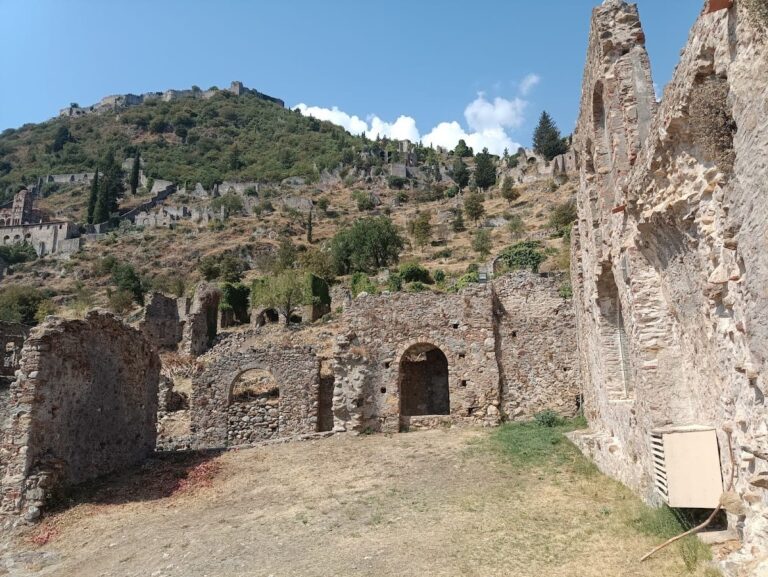
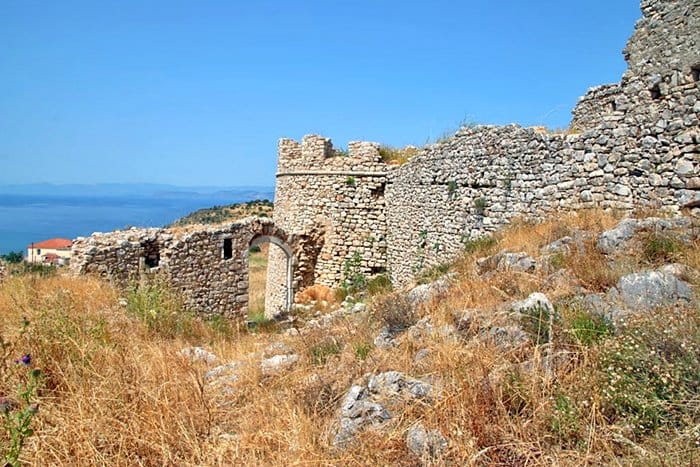
The Castle of Geraki sits atop the Palaiókastro hill, part of the Parnonas mountain range, standing at approximately 400 meters altitude and rising about 100 meters above the surrounding land. The fortress occupies the northern summit of this hill, with a fortified lower town extending down the slopes beneath it. The southern summit also contains settlement remains, connected to the northern peak by a narrow ridge, forming a compact fortified complex that once dominated the landscape.
The remains of the castle include portions of the defensive walls and towers constructed during the Frankish period. These structures were likely built using local stone, arranged to maximize defense on the hill’s natural elevations. Within the fortified area, there are ruins of several other buildings, though their exact functions remain partly unclear due to the fragmentary nature of the remains. The overall layout suggests a well-planned military and administrative center.
Particularly striking at Geraki are the ruins of about thirty churches scattered across the hill, both inside the castle complex and on its slopes. Some of these places of worship are dedicated to well-known saints and Christian figures, highlighting the religious life associated with the fortress and the surrounding settlement over several centuries. Churches named for Saint Athanasius, Saint George, and Saint John Chrysostom stand among them, illustrating a range of Christian devotional traditions.
Other notable ecclesiastical ruins include those honoring Saint Nicholas, Saint Paraskevi, Saint Sozon, and the Holy Theodores, attesting to the varied Christian community that once thrived here. The Annunciation of the Virgin Mary church, known as Evangelístria, and churches dedicated to the Virgin Mary under titles such as Panagía i Eleoúsa or Zoodóchos Pigí also remain in partial ruin, providing insight into Marian devotion in the region.
Beyond these, a group of churches known collectively as the “outer churches” (Péra Ekklisíes) is located outside the main castle enclosure. This group includes the churches of the Archangels (Taxiárches), the Baptism of Christ (Theofánia), and Prophet Elias (Profítis Ilías). These religious sites, varying in size and state of preservation, contribute significantly to the historical fabric of the site and highlight its extended use beyond purely military purposes.
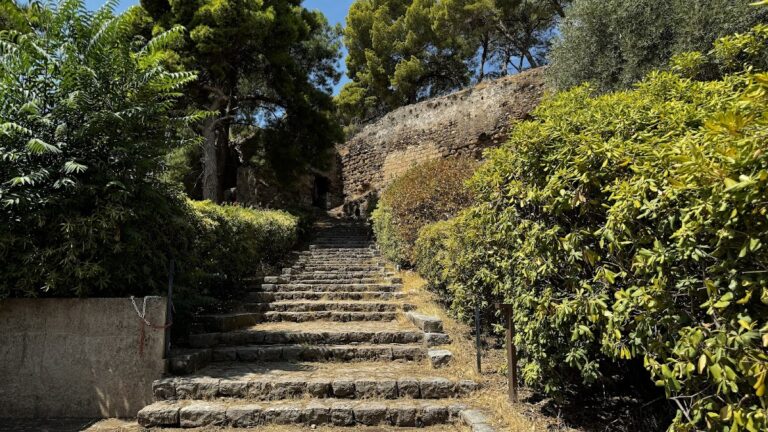
Though much of the castle and its associated buildings now lie in ruin, restoration work has helped stabilize and, in some cases, partially rebuild key structures. These efforts aim to preserve the visible history of the site’s Frankish origins, Byzantine transitions, and later Venetian and Ottoman phases, offering a tangible connection to the complex historical narrative embedded in the landscape of Geraki.