Castle of Farners: A Romanesque Fortress in Santa Coloma de Farners, Spain


Visitor Information
Google Rating: 4.6
Popularity: Medium
Google Maps: View on Google Maps
Official Website: www.scf.cat
Country: Spain
Civilization: Unclassified
Remains: Military

History
The Castle of Farners is situated in the municipality of Santa Coloma de Farners, Spain. This Romanesque fortress was constructed in the 11th century during the medieval period and first appears in historical records in 1046. At that time, Viscount Ramón Folc I of Cardona swore an oath of loyalty to Count Ramón Berenguer I, affirming the castle’s early importance within the regional feudal system.
Initially, the castle formed part of the Viscountcy of Cardona’s holdings, with its direct management entrusted to the Farners family until the 13th century. Subsequently, control passed to the Vilademany family. Notably, in 1240, Pedro Ramón de Vilademany granted the castle’s lordship to his son Arnau, linking the estate again to Viscount Ramón Folc IV of Cardona through familial ties.
Toward the close of the 13th century, a prolonged dispute emerged between King Peter III of Aragon and Viscount Ramón Folc VI of Cardona over the castle’s jurisdiction. The king sought to assert his royal authority over the fortress, while the viscount maintained control. This jurisdictional conflict extended into the 14th century, illustrating the castle’s strategic and political significance.
During the late 15th century, the castle played an active role in the Catalan civil unrest against King John II. In 1485, it was occupied by remensa peasants—serfs known for their demands for freedom—who took advantage of the castle’s fortified position. Even after the Sentencia Arbitral de Guadalupe, a royal decree granting peasants certain freedoms, the castle saw renewed occupation by peasants excluded from these new rights, highlighting ongoing tensions in Catalonia’s rural society.
Ownership of the castle eventually transferred from Joan Pere de Vilademany to Carles de Vilademany and de Cruïlles. Later lords included the Counts of Aranda, followed by the Duke of Híjar. The castle’s final recorded military use came in the 18th century when it hosted a Bourbon regiment during the War of Spanish Succession, marking the end of its active role in warfare.
Remains
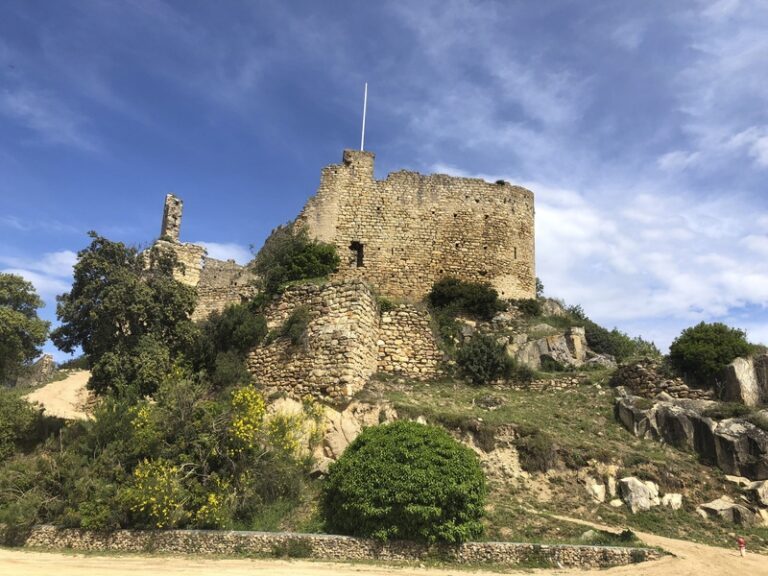
The Castle of Farners occupies an irregular trapezoidal area covering about 200 square meters and exemplifies Romanesque military architecture. The surviving structure includes broad, low stone walls rising roughly four meters high from the original 11th-century construction phase. Around the 14th or 15th century, these walls were extended by an additional two meters, reflecting adaptations to evolving defensive needs.
A central feature is the keep, or tower of homage, which has a circular base measuring 8.40 meters in diameter and reaches 12 meters in height. Its entrance is positioned unusually high, about seven meters above ground level, likely intended to enhance its defensibility by limiting direct access. This tower remains largely intact, standing as the most prominent part of the fortress.
The main gateway to the castle lies on the west side and is distinguished by a lowered semicircular arch. This entrance is further protected by a small fortified outwork measuring 2.75 by 1.75 meters. This outwork includes three narrow openings known as arrow slits, designed for archers to defend the entrance without exposing themselves.
On the northern side, a modest door connects the castle to the nearby Turó del Vent, or Hill of the Wind, indicating a strategic linkage between the two sites. All the surrounding walls are topped with battlements referred to as merlons—upright sections of stonework providing cover for defenders. These battlements contribute to the castle’s defensive architecture as understood today.
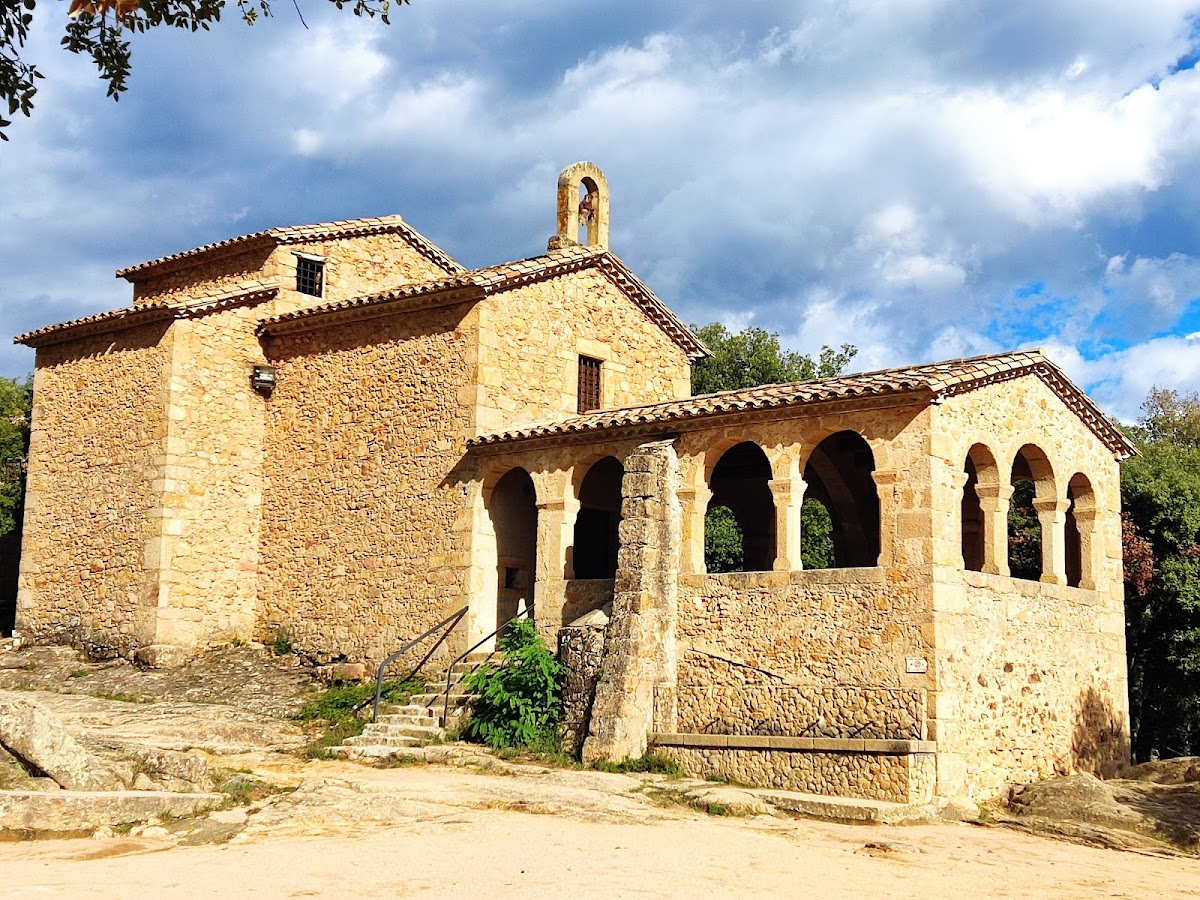
At the foot of the hill on which the castle stands lies a small plain that houses the Sanctuary of the Virgin of Farners. Originally constructed during the 13th century, this religious building was completely rebuilt in either the 17th or 18th century. The sanctuary’s presence reflects the longstanding spiritual significance of the area adjacent to the fortress.
Nearby sites