Castle of Faing: A Historic Site in Chiny, Belgium



Visitor Information
Google Rating: 4.5
Popularity: Low
Google Maps: View on Google Maps
Official Website: www.chiny.be
Country: Belgium
Civilization: Unclassified
Remains: Military

History
The castle of Faing is situated in the municipality of Chiny, Belgium. Its origins trace back to the medieval period when a fortress was established in the 14th century by Gilles du Faing, a noble figure whose family name the castle still bears. This original stronghold stood as a defensive construction typical of the Middle Ages, reflecting the feudal society of that era.
In the 19th century, around 1880, the present château was erected directly on the site of the medieval ruins. The builders followed the layout of the original fortress, integrating parts of the older structure into the new construction. This renewal marked a transition from the military function of the medieval castle to a more residential and administrative use, corresponding with changes in social and political circumstances over the centuries.
During the tumultuous years of World War II, the château experienced a significant change in use. It became known as “home reine Elisabeth,” initially serving as a residence before being converted into a boys’ school in 1942. Notably, the school’s director, Marie Taquet, and her husband, Émile Taquet, courageously sheltered 87 Jewish children within its walls, offering them protection during the Holocaust. This humanitarian role is an important chapter in the castle’s 20th-century history.
Since 2012, the building has functioned as the municipal offices for the City of Chiny, following partial restoration work. It remains a relevant location for local governance. Further efforts to modernize the château include a project approved in 2025, aimed at energy efficiency improvements such as better insulation and updated heating and lighting systems, supported by European subsidies.
Remains
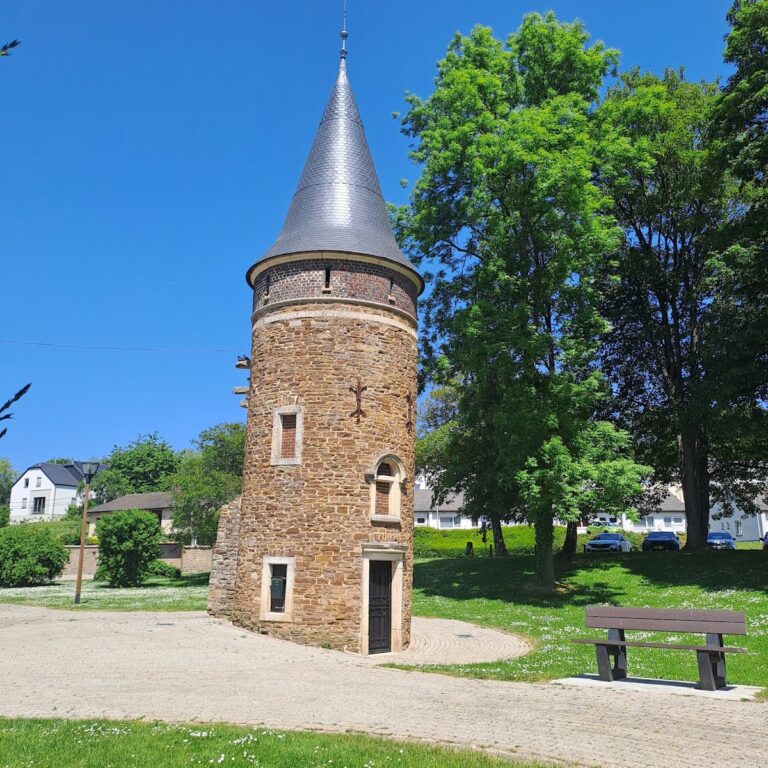
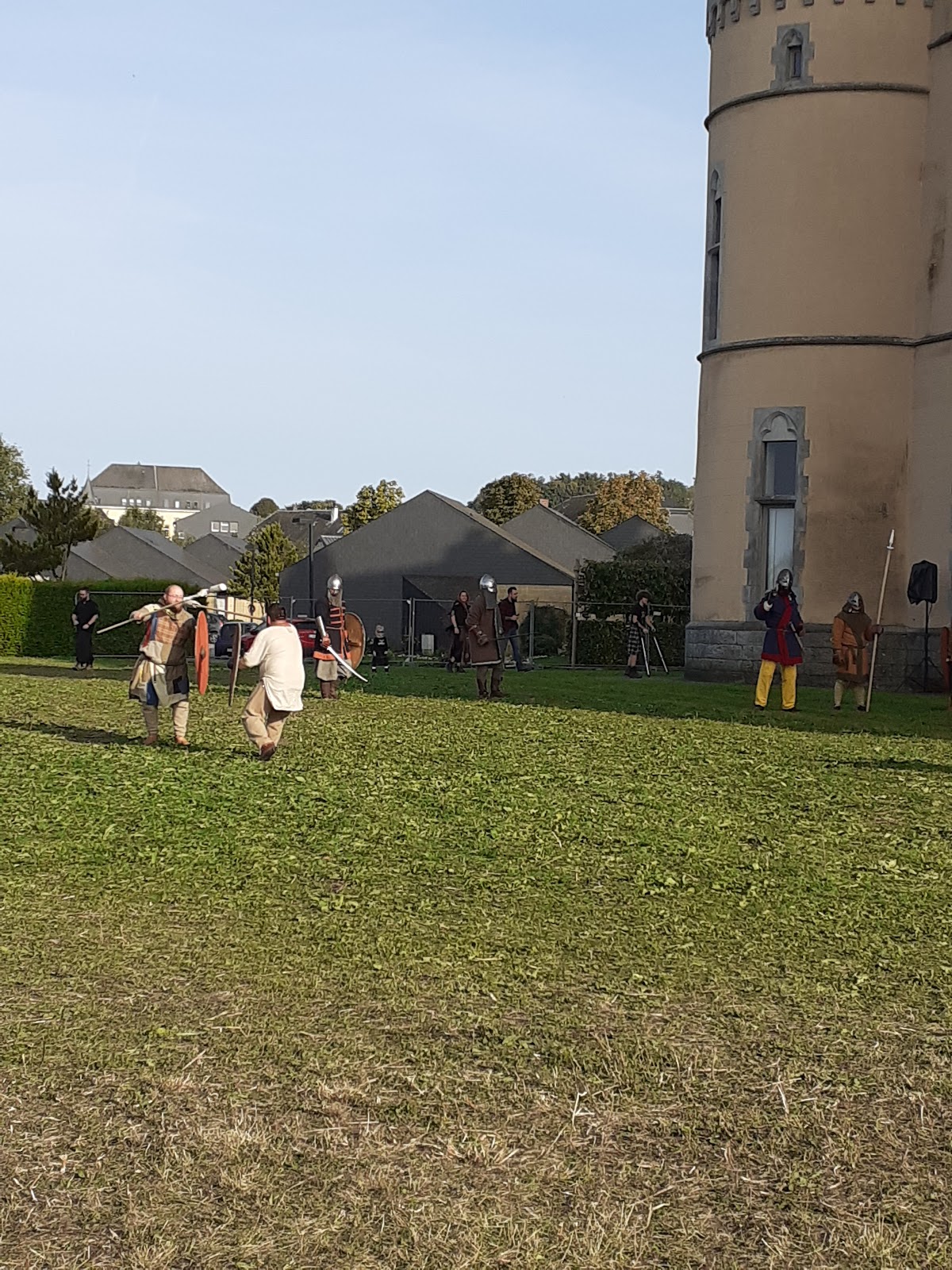
The castle of Faing blends architectural elements from its medieval origins with its 19th-century reconstruction. The layout reflects the original plans of the fortress, with the new château incorporating surviving fragments of the earlier medieval structure. Among these remains are sections of the enclosing wall and the jambs—vertical supports—of former gates, which have been integrated into the courtyard’s boundary wall.
Key protected features include the château’s facades and roofs, which maintain historical character through preservation efforts. Inside, four ground-floor rooms hold particular significance: the hall, an office, a television lounge, and a living room. These rooms retain elements worthy of heritage protection, reflecting both their historical and architectural interest.
The courtyard itself contains a gate dated to 1760, predating the current château but standing as a testament to the site’s evolving use. Attached to the courtyard wall is an annexed barn featuring a timber frame, which has also been preserved as part of the overall heritage.
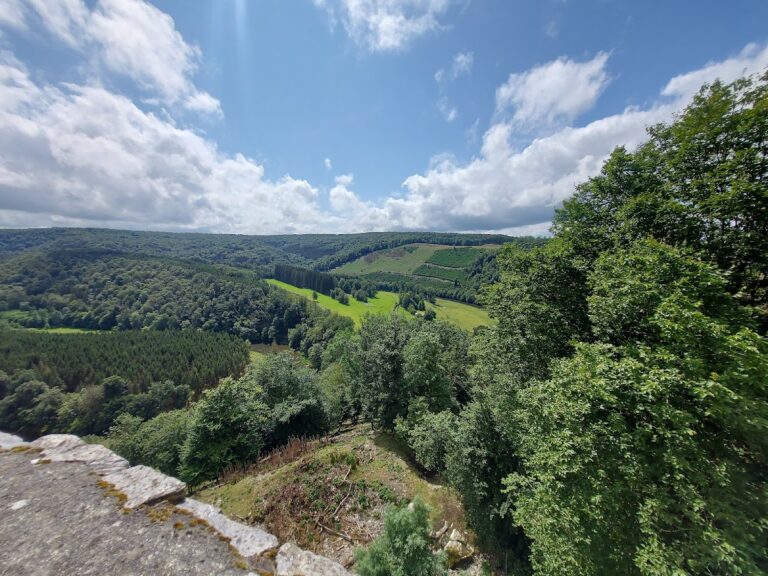
The castle’s surroundings contribute to its character, featuring two alleys lined with chestnut trees that lead to the main building. Nearby meadows stretch toward the Semois river, forming a natural setting linked to the estate’s historical landscape. These natural elements are recognized along with the architectural features, highlighting the combined cultural and environmental value of the site.
Together, these preserved components tell the story of the castle’s continuous adaptation and care through centuries, linking medieval fortifications to modern use while safeguarding elements from different historical periods.
Nearby sites