Castle Hauenstein: A Romanesque High-Altitude Fortress in South Tyrol


Site at a Glance
- Rating
- 4.5
- Popularity
- Low
- Country
- Italy
- Primary era
- Medieval
- External website
- Open
- Eras represented
- Medieval, Early Modern
- Civilizations
- Habsburg, Holy Roman Empire
- Site type
- Military
- Remains
- Castle
On this page7 sections
History
Foundation and the Lords of Hauenstein
Castle Hauenstein is a high-altitude castle ruin above Seis am Schlern in Italy, erected by the Lords of Hauenstein during the twelfth century in the Romanesque tradition. This architectural tradition preceded the Gothic style and favored massive masonry and strongly defensive forms. The castle was first documented in 1186.
The Hauenstein family later experienced financial difficulties. In 1367, it sold a one-third share of the castle and its associated properties to Ekhard von Villanders. Ekhard’s son-in-law, Friedrich von Wolkenstein, inherited that share and unlawfully collected revenues from farms liable to pay dues. Some of these revenues belonged to his co-owner Anna von Hauenstein, who was married to the knight Martin Jäger and probably lived at Fahlburg.
Oswald von Wolkenstein at Hauenstein
Oswald von Wolkenstein, Friedrich’s younger son, inherited the Wolkenstein share, occupied Hauenstein, and continued to collect dues belonging to the Jäger family. Probably in autumn 1421, he was abducted to Fahlburg and tortured. He was then taken to Vorst Castle, where Martin Jäger served as castellan, an official responsible for administering and defending a castle for its lord. Oswald was released only after a substantial guarantee was provided to Friedrich IV, the Habsburg duke of Austria and territorial ruler.
After prolonged legal disputes, Oswald reached a settlement in 1427. He acquired the Jägers’ two-thirds share and compensated them for the revenues that had been withheld. Although his official duties took him on frequent journeys, he spent extended periods at Hauenstein with his wife, Margareta von Schwangau, and their children. Oswald, a late-medieval Tyrolean poet, composer, diplomat, and military figure, composed songs at the castle, including the Hauenstein song. Its association with him has made Hauenstein a residence connected with this medieval poet-composer.
Expansion and Ruin
The castle was enlarged during the fifteenth and sixteenth centuries. Christoph, Baron von Wolkenstein, acquired it on 1 January 1551. His heirs later lost interest in the property, and it fell into ruin from the seventeenth century onward.
The surviving remains were restored during the 1970s, particularly between 1976 and 1978, when chapel frescoes were exposed. Castle Hauenstein is now owned by the Roman Catholic Diocese of Bolzano-Brixen, the territorial jurisdiction of a bishop, and is recognized as a cultural heritage monument in South Tyrol.
Remains
Fortress Setting and Walls
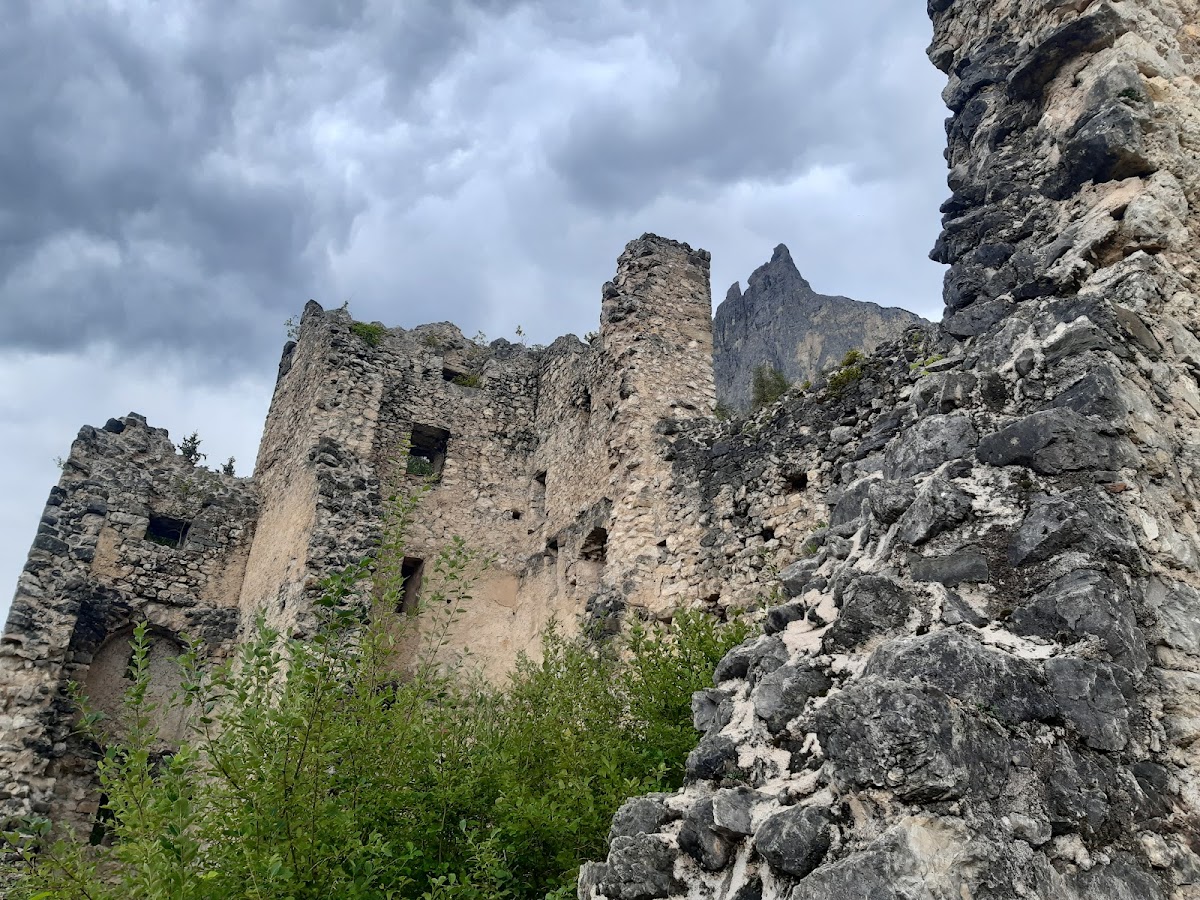
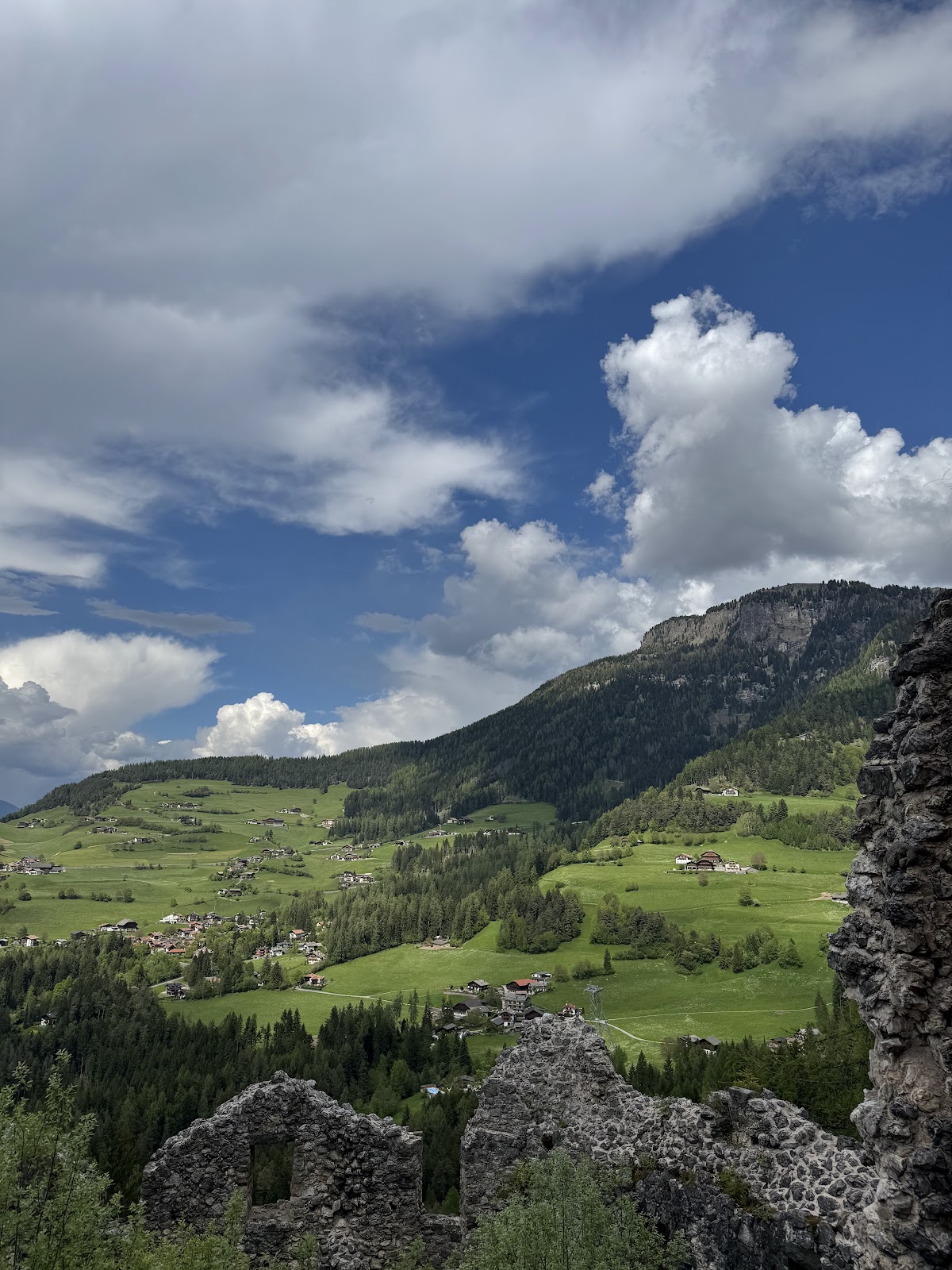
Castle Hauenstein stands at 1,273 metres above sea level in dense woodland at the foot of the Schlern, above a large Dolomite rock and below the Santner peak. Salegg Castle lies approximately one kilometre to the west at about the same elevation. The Romanesque fortress was later enlarged in the fifteenth and sixteenth centuries, but only wall remains of the former complex survive. These remains are ruinous in condition and were restored during the 1970s.
Chapel and Excavated Objects
The interior of the castle chapel retains exposed remnants of frescoes, revealed during the restoration work. Excavations at the ruins also produced a bronze sword and other objects.