Castle of Cornago: A Medieval Fortress in Spain


Visitor Information
Google Rating: 4.3
Popularity: Low
Google Maps: View on Google Maps
Official Website: www.castillodecornago.es
Country: Spain
Civilization: Unclassified
Remains: Military

History
The Castle of Cornago is located in the municipality of Cornago, Spain, and was constructed by medieval Christian inhabitants during the late 13th century. It occupies a site that had previously hosted a fortification dating back to the 9th century, serving as a stronghold during the early Christian efforts of the Reconquista, when Christian kingdoms sought to reclaim territories in the Iberian Peninsula.
In the late Middle Ages, the castle held a crucial position near the borders shared by the kingdoms of Navarre, Castile, and Aragon. This strategic location meant the fortress played a significant role in regional conflicts, including struggles between these Christian realms. Notably, it was involved in the civil war between King Pedro the Cruel of Castile and his half-brother Enrique. After Enrique secured the throne, the castle was granted to the noble Luna family, a key alliance in consolidating royal power.
From the 14th century through to the 17th century, the Luna family maintained ownership of the fortress. Among its notable lords was Álvaro de Luna, who held the title of Constable of Castile and received Cornago as part of his marriage arrangements granted by King John II. However, over time, the family’s fortunes declined. Financial difficulties led them to pledge some of their estates to creditors, but the castle itself remained under their control until it was eventually abandoned in the 1600s.
In the 19th and 20th centuries, specifically from 1813 to 1971, the castle’s grounds found a new use as a cemetery, which altered its condition and purpose significantly. Starting in the 1980s, efforts began to restore and clear the fortress, aiming to preserve its historical remains for future generations.
Remains
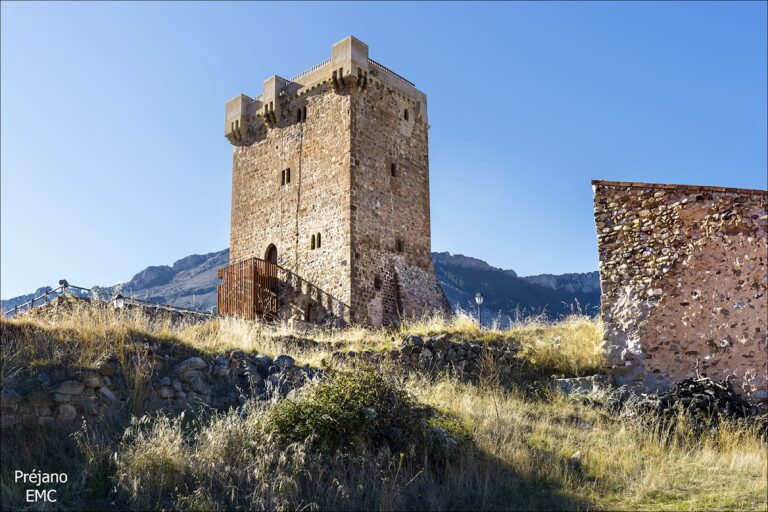
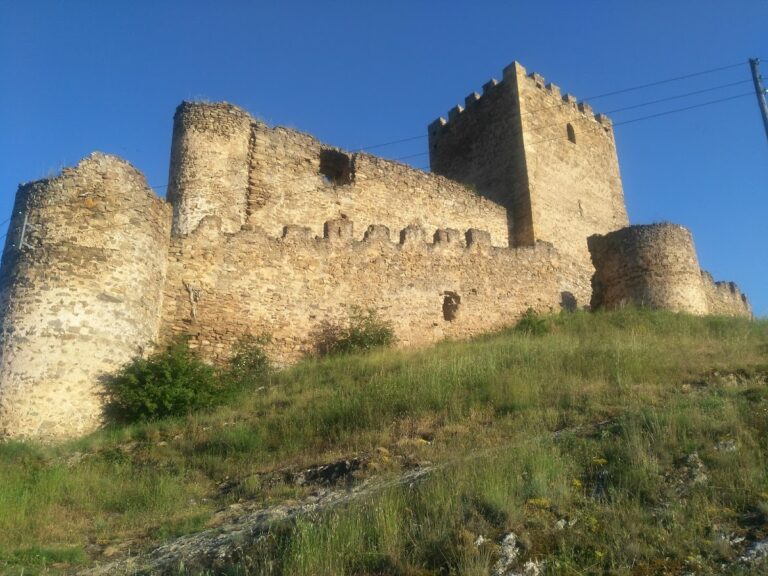
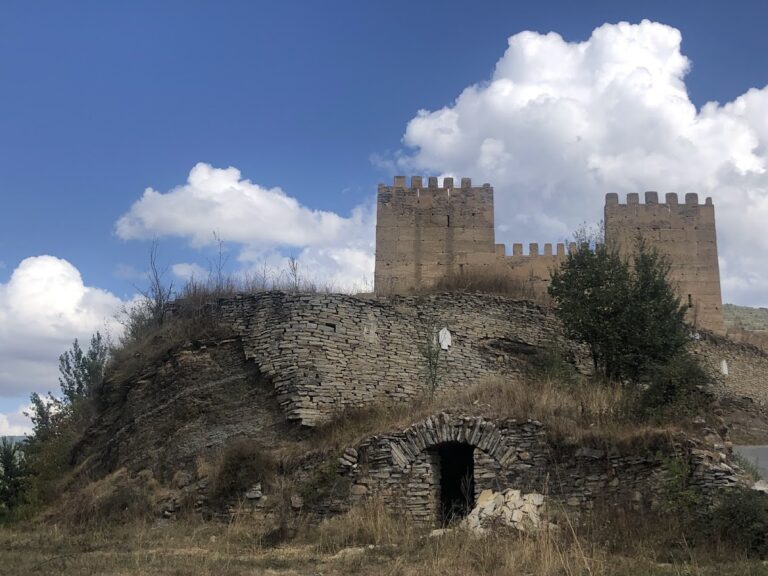
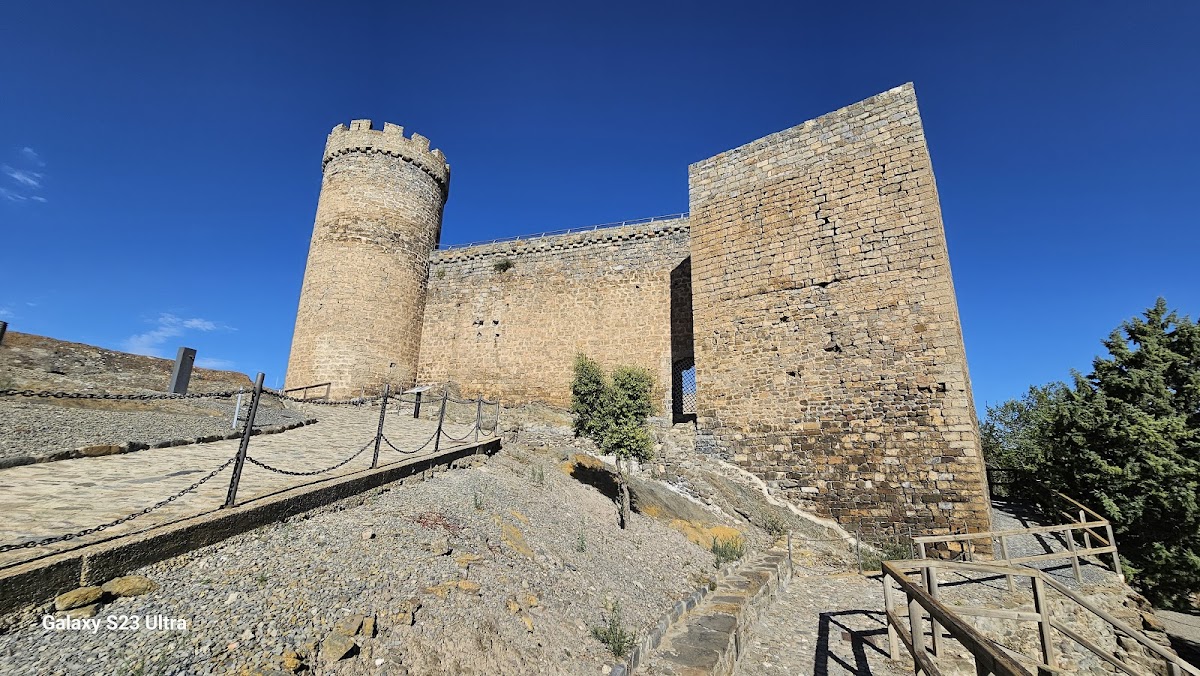
The Castle of Cornago stands prominently on the highest hill above the village, featuring a large rectangular or nearly square layout. Its walls are constructed from a combination of finely cut stone, known as ashlar, and brick, creating a robust defensive structure befitting its medieval military function. The fortress is defined by four corner towers, three of which are round but differ in size, while the tower at the northeast corner is square. This square tower includes a distinctive rectangular opening near the top section of its wall.
Among the towers, only the southern one retains its original battlements, characterized by crenellations—the alternating high and low sections on top of a defensive wall that allowed defenders to shield themselves while observing or attacking. Surrounding the main fortress is an outer wall, which encloses a courtyard containing a church. This enclosed area is thought to have served as an albacar, a fortified refuge where local villagers could find shelter and protection during times of warfare. Access to this inner space was controlled through a gate known as the Arco de la Campanilla.
The castle’s main entrance is fortified; it is flanked on both sides by towers and safeguarded by a machicolation gallery. A machicolation is an overhanging structure with openings in its floor through which defenders could drop stones or boiling substances onto attackers below. Inside the stronghold, evidence remains of holes in the walls that once supported wooden beams, indicating the presence of upper floors within the towers or walls that likely served residential or storage purposes.
Among the identifiable interior spaces are a kitchen, several bedrooms, a well for water supply, and a large grain storage silo called a fogón or silo. This silo is housed within a semicircular chamber and reaches a depth of approximately seven meters, reflecting the castle’s role in supporting a self-sufficient community during sieges or prolonged conflicts. Additionally, the complex includes a cellar or cistern, used for storing provisions or collecting rainwater.
Overall, the castle’s walls are notably thick and solid, designed to endure the rigors of medieval combat. The courtyard inside is spacious, allowing for movement and sheltering those who sought refuge within the fortress during turbulent periods. Restoration efforts have focused on preserving these structural features and uncovering the castle’s layered history embedded in its stones.