Castle of San Terenzo: A Coastal Fortification in Italy


Site at a Glance
- Rating
- 4.4
- Popularity
- Low
- Country
- Italy
- Primary era
- Medieval
- External website
- Open
- Eras represented
- Medieval
- Civilizations
- Genoese
- Site type
- Military
- Remains
- Castle
On this page7 sections
History
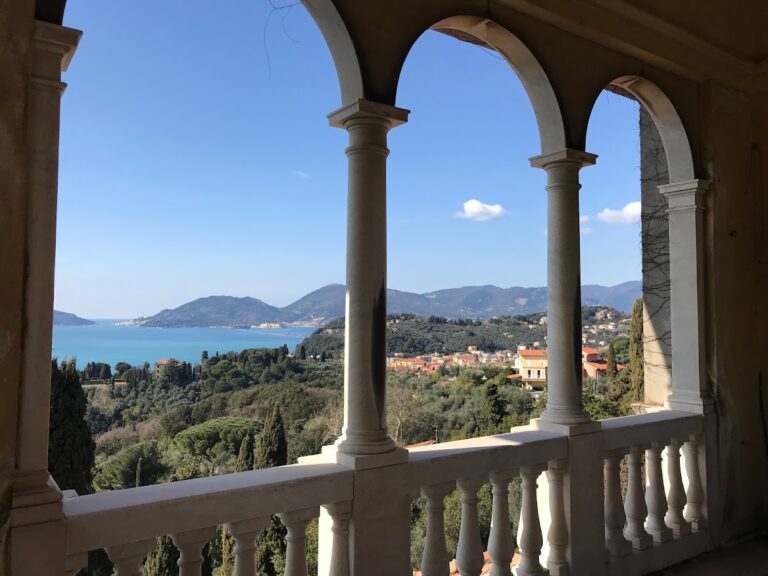
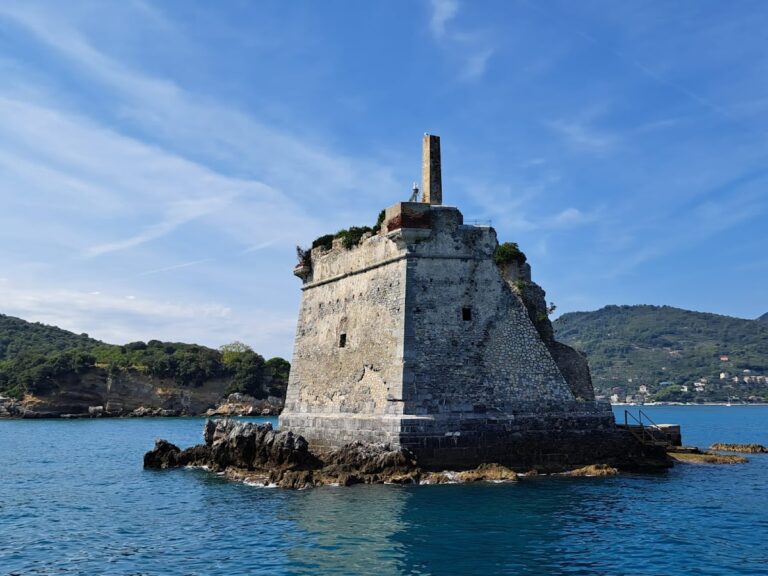
The Castle of San Terenzo is a coastal fortification in Italy, built in 1360 by the inhabitants of the village of San Terenzo, now part of the municipality of Lerici. Its position protected the maritime settlement and helped control the Gulf of the Poets.
Origins and Early Commanders
The castle began as a watchtower and was established on the villagers’ own initiative. A document dated 29 July 1588 confirms this origin, describing it as a small castle built by the people of the village. Among its earliest castellans, officers responsible for commanding and administering a castle, was Giovanni da Mongiardino. He had also held the post at Lerici in 1401 and commanded eight crossbowmen at San Terenzo.
Giovanni da Mongiardino was later replaced by Giacomo Rossi, a resident of San Terenzo. Rossi fought against the Pisans and received praise from Simone Boccanegra, a doge, or elected head of state, of Genoa.
Genoese Defensive System
The watchtower was later developed into a bastion to defend the village from frequent raids by Ottoman pirates. It became a secondary defensive position of the larger Fortress of Lerici, while controlling a substantial part of the bay. The castle formed part of the defensive network organized by the Republic of Genoa in the Gulf of La Spezia.
Its recorded controlling authorities included the Republic of Pisa, the Republic of Genoa, the Ligurian Republic, the Kingdom of Sardinia, the Kingdom of Italy, and the Municipality of Lerici. During a late-sixteenth-century inspection of the Gulf of La Spezia’s fortifications, the podestà Gregorio Cadamartori, a senior civic official, reported on the castle to the Genoese doge Davide Vaccari.
Later Management and Heritage Status
The complex underwent interventions in different periods without disrupting its overall harmony, according to its historical description. Since December 2014, it has been managed by Italy’s Ministry of Culture through the Ligurian Museum Complex, which became the Regional Museums Directorate in December 2019. The castle has been recognized as Italian national heritage since 1936 and is identified as a military museum building, an Italian national museum, and a historical park museum.
Remains
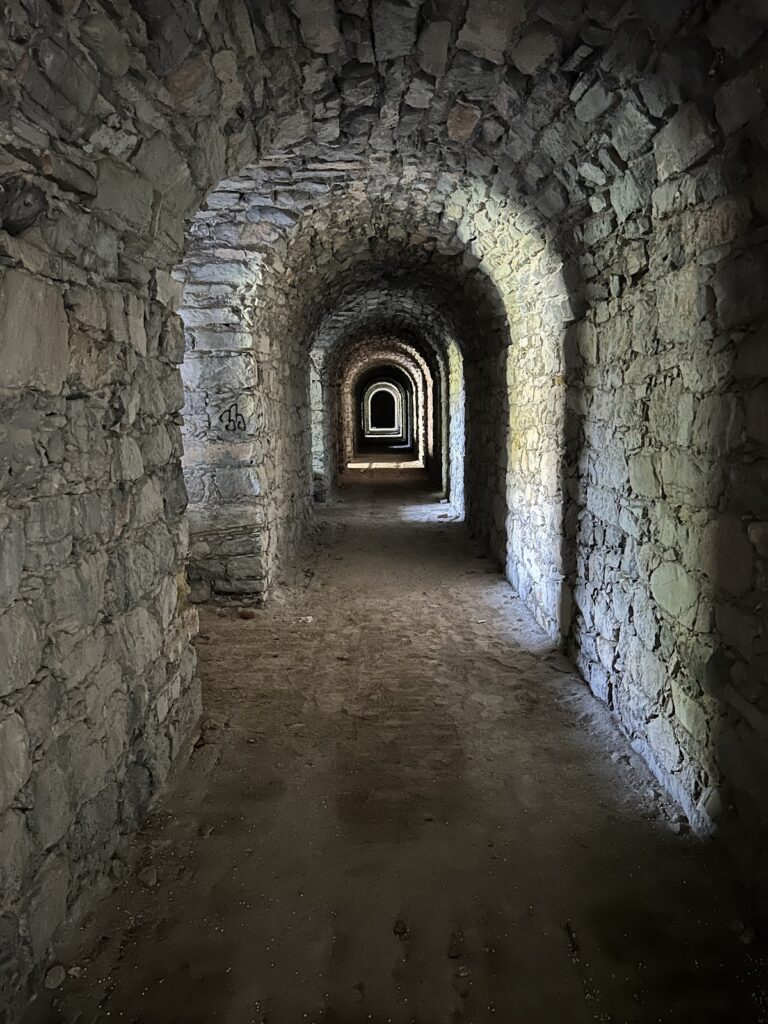
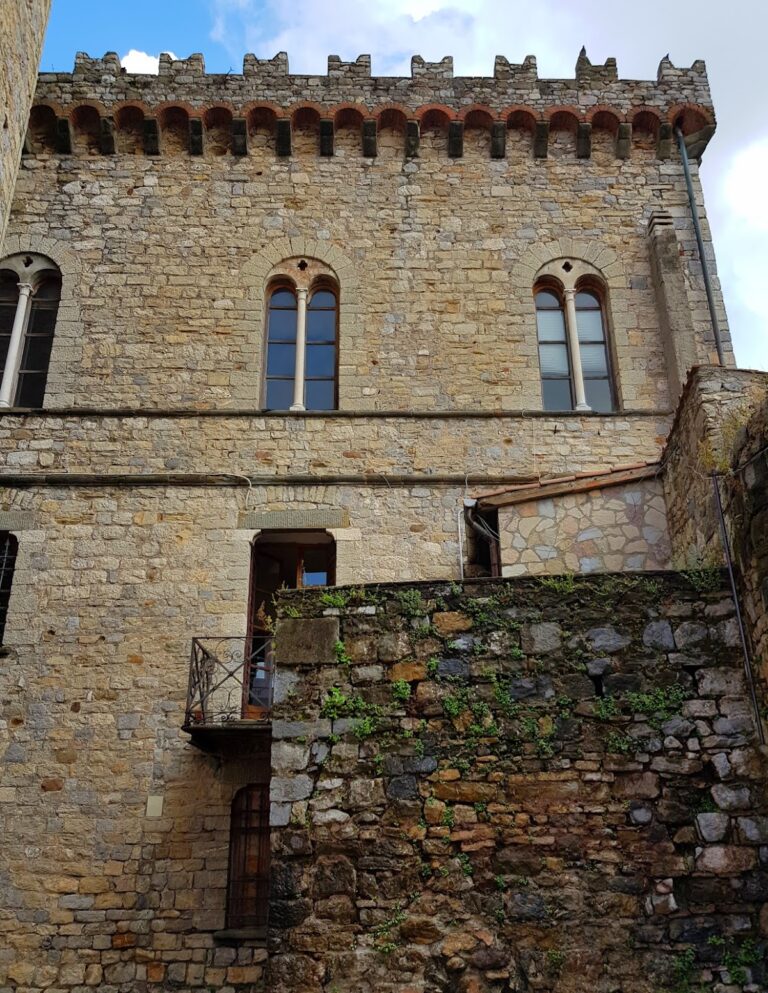
The castle occupies a rocky spur at the western end of the bay, facing San Terenzo. Its pentagonal fortification includes three circular turrets on the corners toward the village, while strong curtain walls enclose a second inner circuit. A cave opening in the same promontory is known as the Tana dei Turchi. The castle is currently in good condition.
Walls, Turrets, and Moat
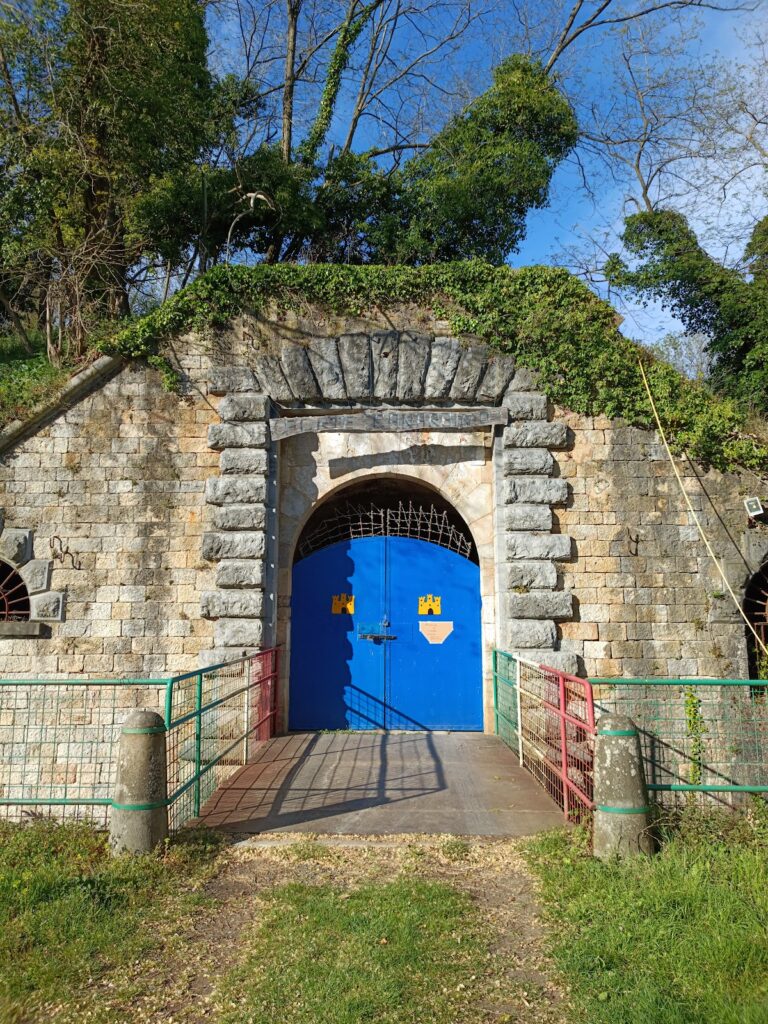
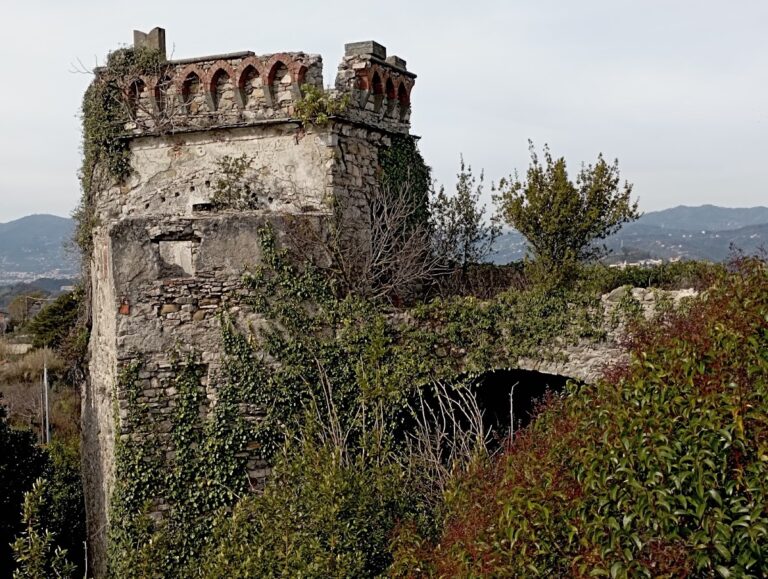
The earliest structure was a single square tower about 10 metres high, equipped with battlements. A first wall circuit was later added in an irregular pentagonal form, with three circular watchtowers at its corners. On the landward side, a large barbican, an advanced defensive work protecting an entrance or wall, strengthened the section facing the moat. The moat has since been filled, but an arrow slit in the northern bastion indicates where it once ran.
Entrance Tower
The entrance is accompanied by a square-based tower. Its Guelph merlons are rectangular battlements associated with the Guelph tradition in medieval Italian fortification, while square-section machicolations project through the structure. These openings allowed defenders to drop or discharge materials onto attackers below.