Loch Doon Castle: A Medieval Island Fortress in Scotland


Site at a Glance
- Rating
- 4.5
- Popularity
- Low
- Country
- United Kingdom
- Primary era
- Medieval
- External website
- Open
- Eras represented
- Medieval, Early Modern
- Civilizations
- Kingdom of Scotland
- Site type
- Military
- Remains
- Castle
On this page9 sections
History
Origins and early custodianship
Loch Doon Castle is a medieval Scottish fortress in the United Kingdom, built in the late thirteenth century on an island in Loch Doon. Also known as Balliol Castle, it was associated with the Earls of Carrick, and the Bruce family is identified with its construction. A record from 1206 names the Corrie family as hereditary keepers of Castle Loch Doon. In 1263, Sir Robert Corrie’s marriage to Lady Susanna Carlisle greatly expanded the family’s possessions in Dumfriesshire.
The Wars of Independence
Loch Doon Castle became involved in the Scottish Wars of Independence, the conflict through which Scotland resisted English rule. Sir Gilbert de Carrick, also known as Gille Brighde, held the castle before surrendering it to the English. Scottish forces led by Robert I, commonly known as Robert the Bruce, soon recovered it. English forces captured the fortress again in 1306, but the Scots retook it in 1314.
In 1333, the castle was among five fortresses held by supporters of David II, the Scottish king and son of Robert the Bruce, against Edward Balliol, a claimant to the Scottish throne who had English support. Loch Doon Castle was besieged again in 1335, confirming its continuing role in the struggle for control of Scotland.
Kennedy control and later destruction
During the fourteenth century, the castle was held by the Kennedy family. William Douglas, 8th Earl of Douglas, captured it after a siege in 1446, but it was later returned to the Kennedys. In 1511, William Crawford of Lefnoris seized the castle from them and burned it. The fortress was subsequently restored and occupied again.
During the reign of James V, whose rule lasted from 1513 to 1542, the castle was destroyed as part of a wider policy intended to reduce the power of the barons of Galloway. It was rebuilt in a less elaborate form, with a later keep added within the enclosure. The castle was abandoned in the seventeenth century and then fell into increasing decay.
Nineteenth-century condition and relocation
In the nineteenth century, the fortress was still described as partly intact. Its owner demolished a 70-step stairway leading to the island and reused the stone to construct a hunting lodge. The lodge was little used because it was too cold for permanent occupation.
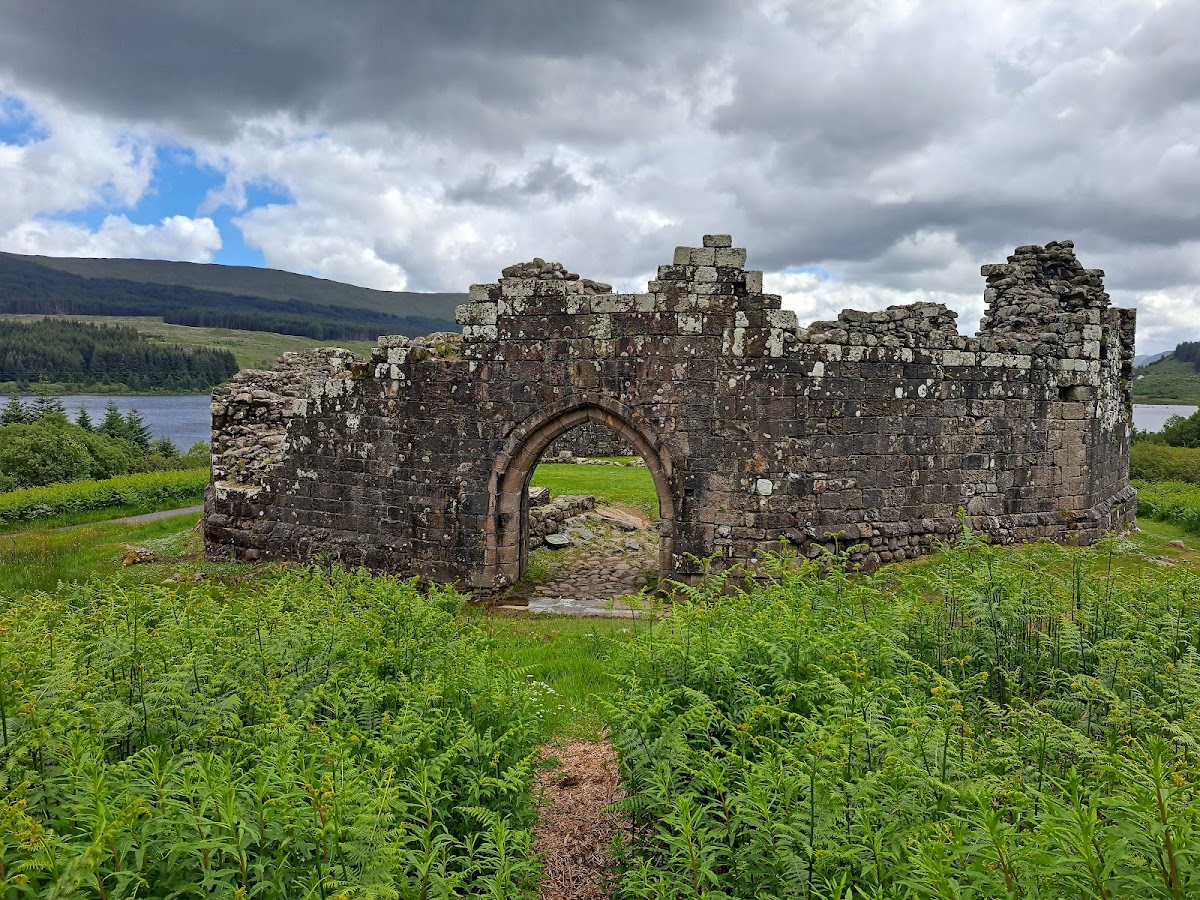
Around 1935, the water level of Loch Doon was raised for a hydro-electric scheme. To prevent the island castle from being partly destroyed, the ruins were dismantled and reconstructed on the loch’s western shore, approximately 400 metres from their original position. The newer keep was not rebuilt. The original island site and the relocated remains are both protected as scheduled monuments, a legal category for nationally important archaeological or historic sites. The castle was designated in 1921, while the original site and the relocated remains received separate designations in 1999. Historic Environment Scotland manages the castle.
Remains
Island plan and enclosing walls
The original castle stood on Castle Island, a small island in Loch Doon. Its unusual plan forms an irregular eleven-sided polygon. The principal surviving feature is a polygonal curtain wall, meaning a fortified enclosing wall that linked the entrances and other defensive elements. It was exceptionally substantial and elaborately built for its period. The main gateway is on the north side, while a smaller gateway occupies the east side.
Keep and changing construction
A keep, a fortified tower or central strong building, stood on the western side inside the ring wall. It belonged to the later rebuilding and is described as a sixteenth-century structure. Unlike the enclosing walls, this newer keep was not reconstructed when the castle was moved. The earlier masonry used finely dressed ashlar, while the later rebuilding employed rubble stone, giving the reconstructed fabric evidence of the castle’s changing phases.
Relocated ruins and original foundations
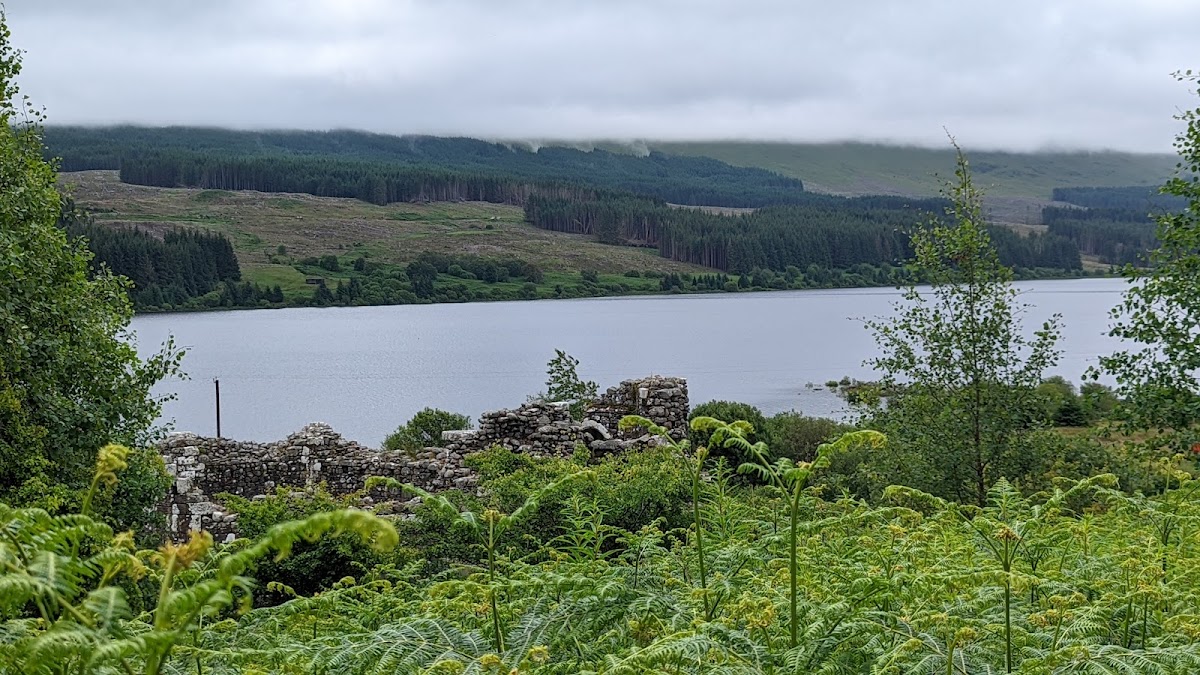
The ruin now occupies an isolated position on the western shore of Loch Doon. The foundations remained on the original island when the visible ruins were relocated. When the loch level is low, these foundations are partly exposed above the water, preserving the physical connection between the present reconstruction and the castle’s original setting.