Castle of Burgos: A Historic Fortress in Spain



Visitor Information
Google Rating: 4.2
Popularity: Medium
Google Maps: View on Google Maps
Official Website: www.aytoburgos.es
Country: Spain
Civilization: Medieval European
Remains: Military

History
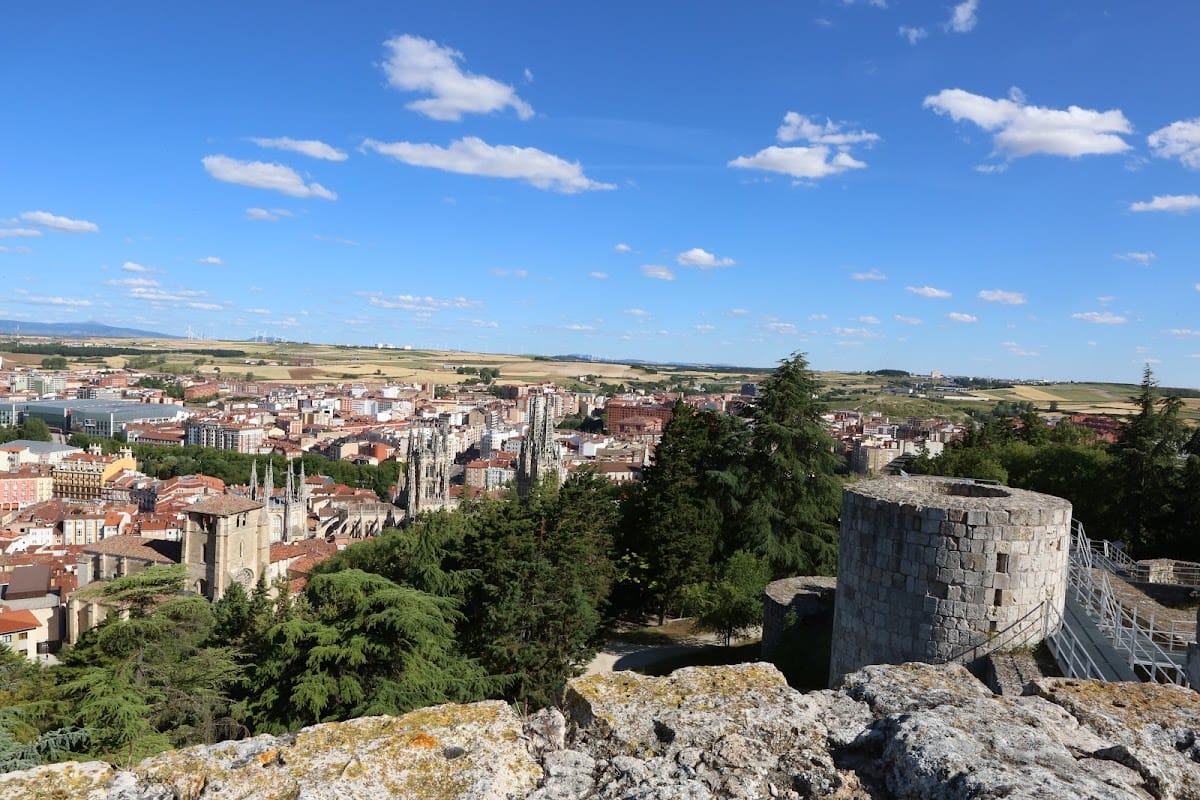
The Castle of Burgos stands on the hill of San Miguel in the city of Burgos, Spain, built originally by the Visigoths and later developed through Roman occupation. Archaeological studies conducted during the 1920s revealed its ancient origins, confirming its strategic importance since early times.
The first significant construction at the site was a tower erected in 884 by Count Diego Rodríguez Porcelos amid the Christian Reconquista, coinciding with Burgos’s foundation and its repopulation efforts. This initial structure served defensive and administrative purposes, marking the beginning of the castle’s evolution. Over the following centuries, the castle expanded from a lone tower to a fortified complex and royal residence.
During the reign of Alfonso VIII, the castle underwent notable architectural modifications adopting the Mudéjar style, a fusion of Christian and Islamic artistic influences. Later, in the 15th century under King Henry IV of Castile, the fortress was transformed into a more palace-like structure, including the addition of ceremonial halls, private chambers, and a chapel. Throughout this period, it also served as a state prison that housed prominent captives such as García II of Galicia, Alfonso VI of León, and Tomás de Gournay. In a grim event in 1277, Infante Frederick of Castile was executed within the castle by order of Alfonso X.
The Castle of Burgos faced several military sieges throughout its history. During the War of the Castilian Succession (1474–1476), forces loyal to Ferdinand the Catholic besieged the fortress, aiming to cut off its water supply and weaken its defenses. Centuries later, in 1812, Anglo-Portuguese troops commanded by the Duke of Wellington undertook another siege during the Peninsular War.
The 16th century introduced a new role for the castle as Spain’s first artillery training school was established there. It also became a center for gunpowder production, achieving a daily output of about 20 quintals by 1542, reflecting its continuing military significance.
A disastrous fire in the 1730s severely damaged the castle’s interior, destroying wooden elements and coffered ceilings. During the Napoleonic Wars, French forces occupied the site, strengthening its defenses. In June 1813, as the French retreated, they detonated explosives that demolished much of the fortress, killing over 200 soldiers and inflicting widespread damage on nearby religious buildings, including the city’s cathedral.
Despite its ruinous state, the castle saw intermittent use in the 19th century during the Carlist Wars and reemerged in the 20th century as a site for anti-aircraft defense amid the Spanish Civil War. Additionally, the castle played a part in the 19th century’s optical telegraph system known as the Line of Castile, serving as position 27 on the communication route between Madrid and Irún.
Starting in 1985, archaeological excavations uncovered significant underground features of the castle, including its well and tunnel networks. From 1996 to 2003, an archaeological museum was established on the castle grounds, preserving and interpreting the site’s rich historical layers.
Remains
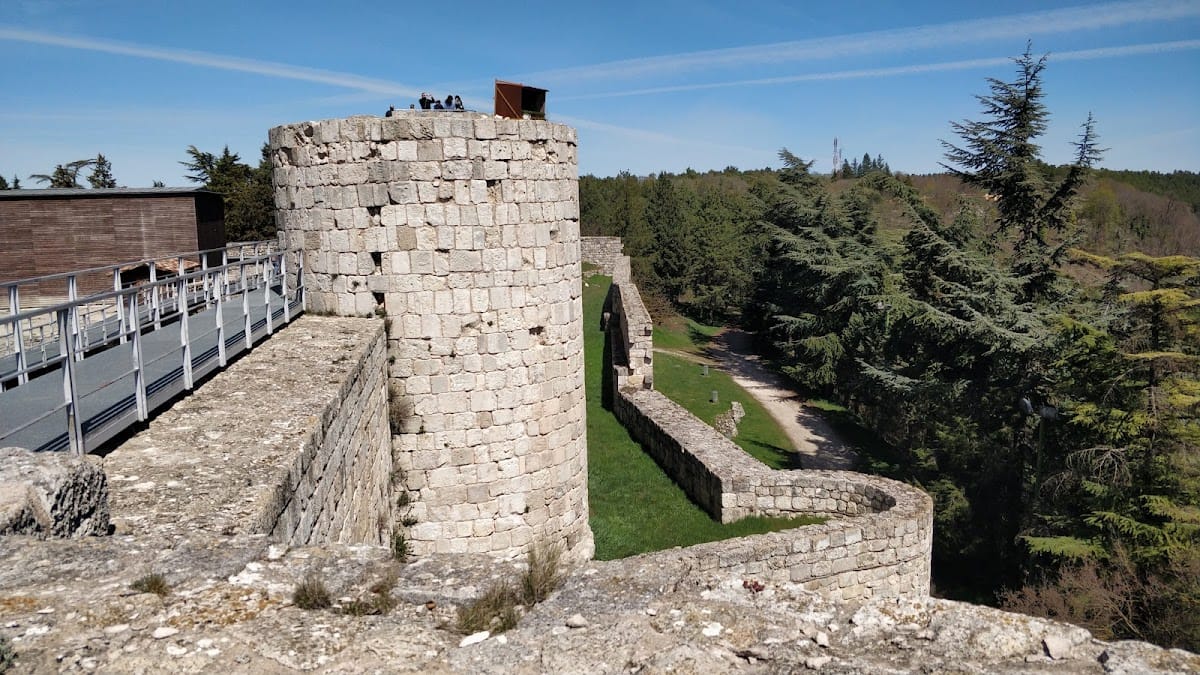
Perched 75 meters above the city, the Castle of Burgos occupies a well-defined perimeter featuring remnants of its defensive walls and key structural elements. Excavations have exposed parts of the South Gate, identified by a broken wall with an entrance flanked by two semicircular towers. The main gate, located on the northwestern side, includes a vaulted passageway designed for defense and control of access.
One of the castle’s most remarkable discoveries lies underground: a well-known water source called the “Cueva del Moro,” dating to the 12th and 13th centuries. The well consists of a deep vertical shaft measured between 61.5 and 62.5 meters, built from carefully cut limestone blocks, or ashlar masonry. This shaft is hollow and cylindrical, allowing water access through six narrow vertical openings called spindles, each about 1.4 meters wide. Visitors can descend via a spiral stone staircase that contains 335 steps and incorporates intermittent skylights to illuminate the interior space.
Additional surviving features include the castle’s bailey or courtyard area, fragments of the Tower of Homage—a primary defensive and residential tower—anthropomorphic tombs, various rooms intended for administrative and living purposes, and original stone pavement sections. These elements bear witness to the castle’s multifaceted uses over centuries.
Though fire and explosions during the 18th and early 19th centuries left much of the structure in ruins, efforts have allowed partial reconstruction and preservation. Between 1996 and 2003, an archaeological museum was created within the castle grounds, designed by Marian Álvarez-Buylla and Joaquín Ibáñez Montoya. The museum features a protective, removable pavilion that enables exhibition of finds and archaeological features without interfering with the remains.
Today, the castle grounds function as a green space incorporating streets named after poets, while guided tours offer access to the impressive underground galleries that form part of the original fortress’s water system and defense infrastructure.
Nearby sites