Castle of Monasterio de Rodilla: A Frontier Fortress in Burgos, Spain


Site at a Glance
- Rating
- 4
- Popularity
- Very Low
- Country
- Spain
- Primary era
- Medieval
- External website
- Open
- Eras represented
- Medieval, Modern
- Civilizations
- Kingdom of Asturias
- Site type
- Military
- Remains
- Castle
On this page7 sections
History
Castle of Monasterio de Rodilla is a frontier fortress in Spain, built during the period of early Castilian expansion around Burgos and probably associated with the ninth century. Its first documented mention dates to 1011. The castle occupied a defensive position above Monasterio de Rodilla and formed part of the line protecting newly colonized territories around Burgos.
The Burgos frontier and Navarrese rule
Count Diego Porcelos, a figure associated with the early expansion and organization of Castile around Burgos, settled in the city in 884. The castle was built during this period to protect the surrounding territories. Along with the fortresses of Urbel and Pancorbo, it belonged to a defensive system linked to Burgos.
After the assassination of García Sánchez of Castile in 1028, the castle and its possessions passed to Sancho III of Navarre, known as Sancho the Great, through his marriage to García Sánchez’s sister, Mayor of Castile. When Sancho died in 1035, La Bureba became part of Navarre. In 1048, Lope Fortunionis held the castle for García III, Sancho’s successor as king of Pamplona.
The political situation changed after the Battle of Atapuerca in 1054, a conflict that reshaped control of territory between Navarre and Castile. The Navarrese abandoned the fortress, and La Bureba returned to Castile.
Royal grants and noble ownership
In 1170, Alfonso VIII granted the castle to Leonor Plantagenet as part of her dower, the property assigned to a royal bride. In 1188, it was included in the dowry of Berenguela. During the fourteenth century, the castle passed successively among different owners.
Juan Fernández de Velasco acquired it in 1398, after which the fortress became part of the extensive properties of the Velasco family, a powerful Castilian noble house. Its declining strategic importance probably contributed to the continued changes of ownership from that century onward.
Protection as historic heritage
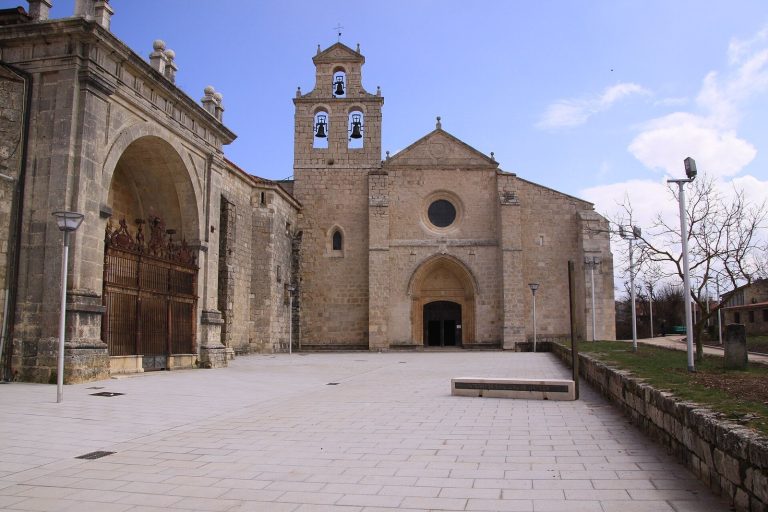
The castle and the monastic complex of Monasterio de Rodilla received protected-monument status by decree on 22 April 1949. The castle is designated a site of cultural interest and forms part of Spain’s historical heritage.
Remains
Fortified ridge and enclosure
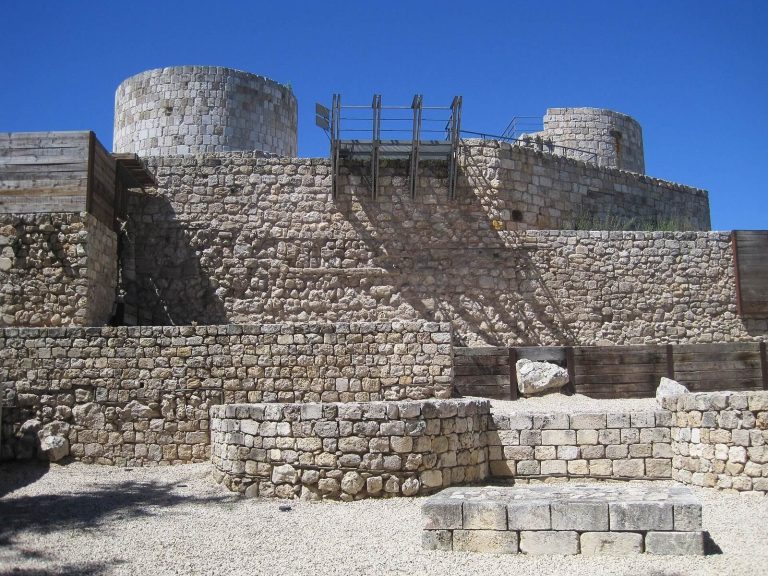
The fortress stood on a rocky ridge above Monasterio de Rodilla, with its walls adapted to the shape of the outcrop. Its elevated position gave it a view across the surrounding plain and the La Bureba region. The enclosure followed a pentagonal plan around the perimeter of the rock, while a walled terrace occupied the southern side.
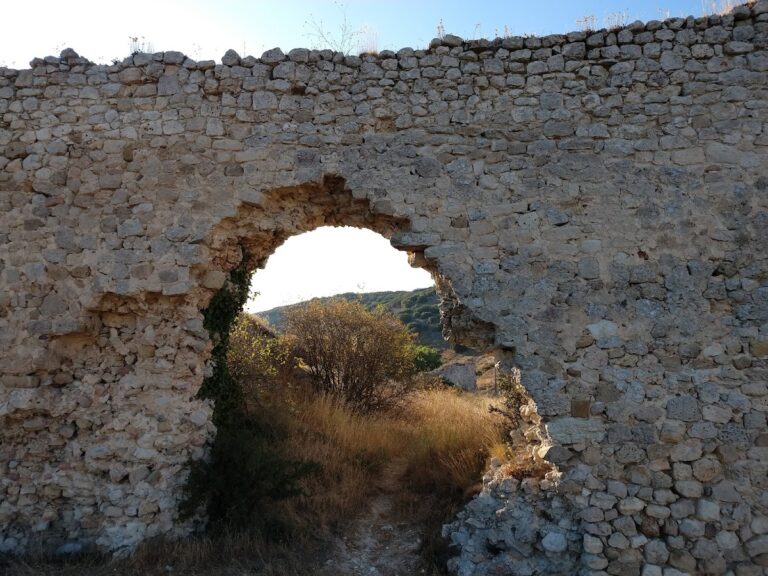
The main gate and the keep, the castle’s principal fortified tower, were on the northern side. Another description identifies three square towers and a cliff protecting the fourth side. Small portions of a tower, the foundations of the perimeter, and limited sections of wall survive. A wall painting from the twentieth century is also preserved.
Reused Roman stone
Building material for the castle was taken from the ruins of Tritium Autrigonum, an ancient Roman settlement. Among the reused materials was a stone bearing a Latin inscription, which had been set into one of the surviving curtain walls, a connecting defensive wall.
The inscribed stone probably originated in a Roman funerary monument. Treasure hunters removed it by the beginning of the twentieth century, while photographic records preserve traces of its appearance. Its reuse links the later fortress to the earlier Roman settlement whose ruins supplied part of its building material.