Castle of Brissac: A Historic French Castle in Maine-et-Loire


Visitor Information
Google Rating: 4.6
Popularity: Medium
Google Maps: View on Google Maps
Official Website: www.chateau-brissac.fr
Country: France
Civilization: Medieval European
Remains: Military

History
The Castle of Brissac is located in Brissac Loire Aubance, within the Maine-et-Loire department of western France. It was originally built in the 11th century by Foulques Nerra, Count of Anjou, a prominent medieval ruler. After King Philip Augustus defeated the English, he granted the castle to his seneschal Guillaume des Roches, establishing its early importance in regional governance.
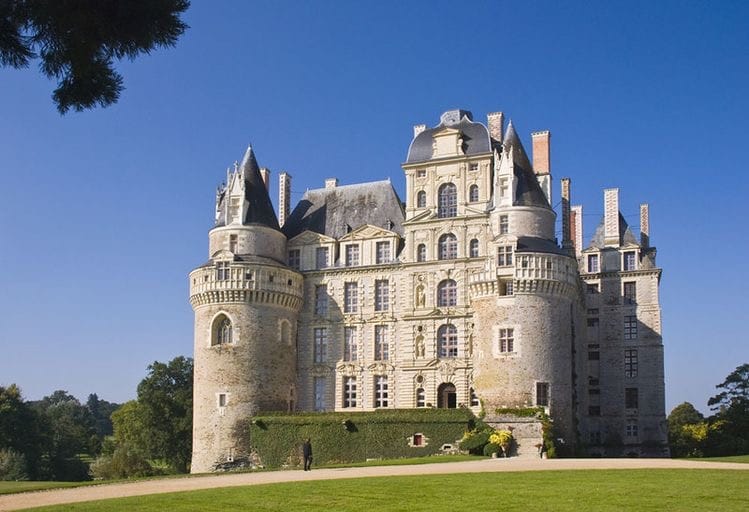
In the 15th century, Pierre de Brézé, a minister to Charles VII and Louis XI, acquired the castle in 1435 and undertook significant restoration by 1455. He added large Gothic towers that remain part of the eastern façade. After Pierre’s death at the Battle of Montlhéry, his son Jacques inherited the property. In a dramatic episode around 1462 or 1477, Jacques killed his wife Charlotte de Valois and her lover Pierre de Lavergne upon discovering their affair. This event gave rise to a local legend that Charlotte’s ghost haunts the castle.
The castle entered the possession of the Cossé family in 1502 when René de Cossé, appointed governor of Maine and Anjou, purchased it. This began the long-standing ownership by the Cossé-Brissac family, which continues today. During the French Wars of Religion, Charles II de Cossé supported the Catholic League. The castle was besieged by King Henry IV, but after Charles reconciled with the king in 1594, he found the castle heavily damaged. Charles was later granted the title Duke of Brissac in 1611.
Reconstruction efforts started under architects Jacques Corbineau and Jacques d’Angluze, aiming to create a modern, tall structure of seven to eight stories. However, work stopped after the duke’s death in 1621, leaving a blend of old and new architectural elements. In 1620, the castle hosted a significant reconciliation meeting between Louis XIII and his mother Marie de’ Medici, held on neutral ground. The event included three days of celebrations organized by the Duke of Cossé.
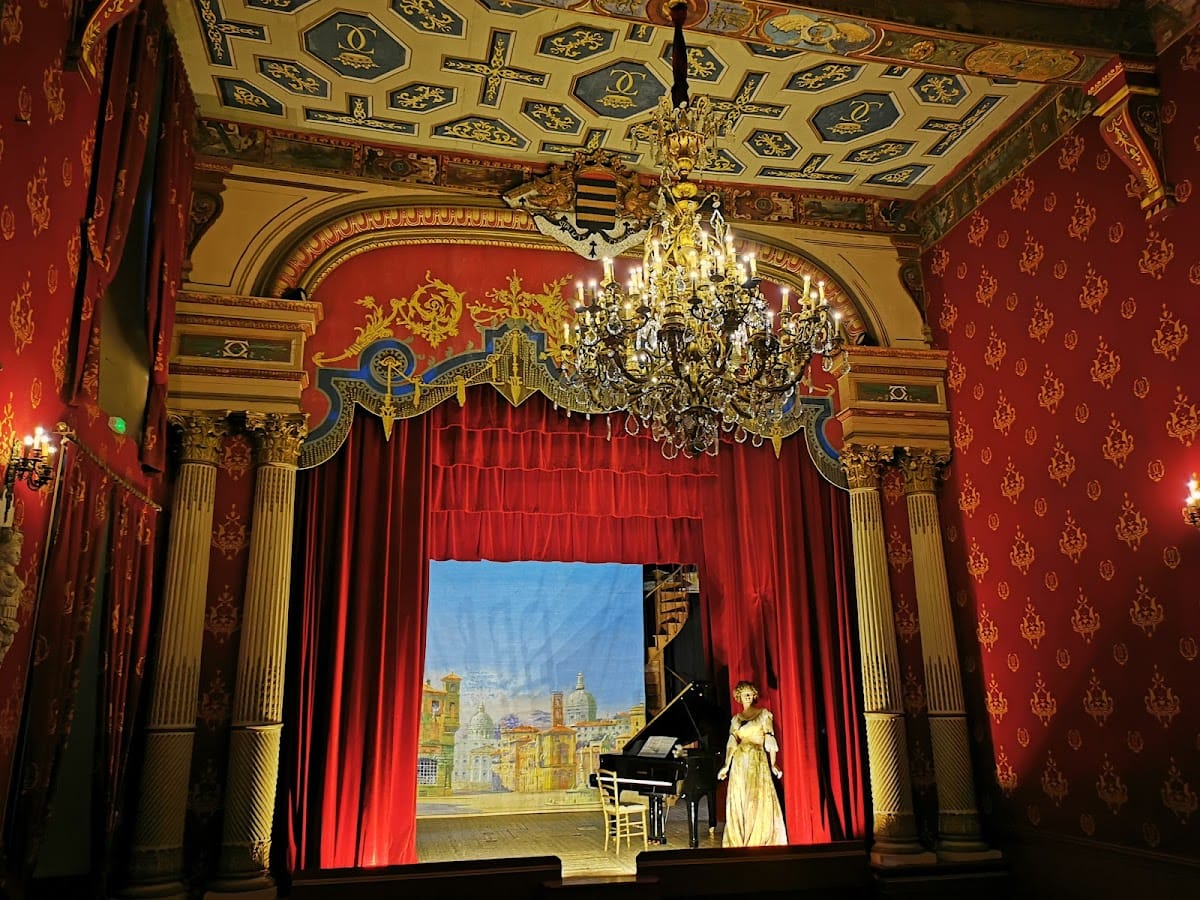
The Cossé-Brissac family maintained ownership until the French Revolution in 1792. During the revolution, the castle was seized, looted, and used as a warehouse by the Vendéens, leading to its decline. Restoration began in 1844 to repair the damage. In 1890, Jeanne-Marie Say, widow of Roland de Cossé, added a two-story theater within the castle, reflecting 17th-century style. This theater was closed for decades but restored and reopened in 1983.
During World War II, from 1939 to 1946, the castle served as a safe storage site for valuable artworks and furniture from Versailles and other French museums. In August 1944, the castle was attacked by five German soldiers, resulting in the death of the guard Jean-Baptiste Faucher. Today, the castle remains a private residence of the Dukes of Brissac and continues to host cultural events.
Remains
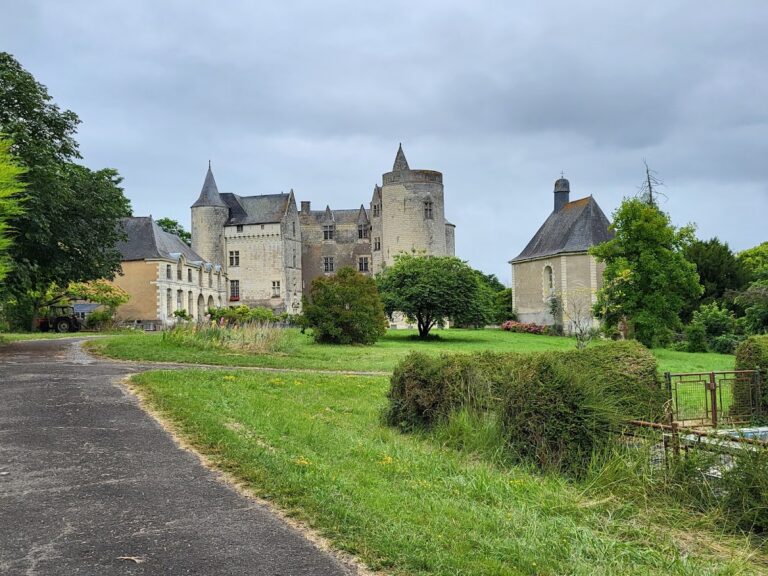
The Castle of Brissac is the tallest castle in France, rising to seven floors and containing over 200 rooms. Its layout combines medieval Gothic elements with Renaissance and Baroque influences. The eastern façade, dating from the 15th century, features two massive Gothic towers with defensive openings called machicolations. One tower houses a private chapel containing a marble bas-relief by sculptor David d’Angers.
The castle’s architecture reflects Italian Renaissance and 17th-century Baroque styles, visible in richly decorated facades and asymmetrical window pediments. The central pavilion reaches 37 meters in height and once had a lantern topped by a bronze statue of Mercury until its removal in 1793. Inside, the “Salon Doré” stands out with a gilded coffered ceiling from the 17th century, four Murano crystal chandeliers, and a large Louis XIII style fireplace adorned with floral and fruit garlands.
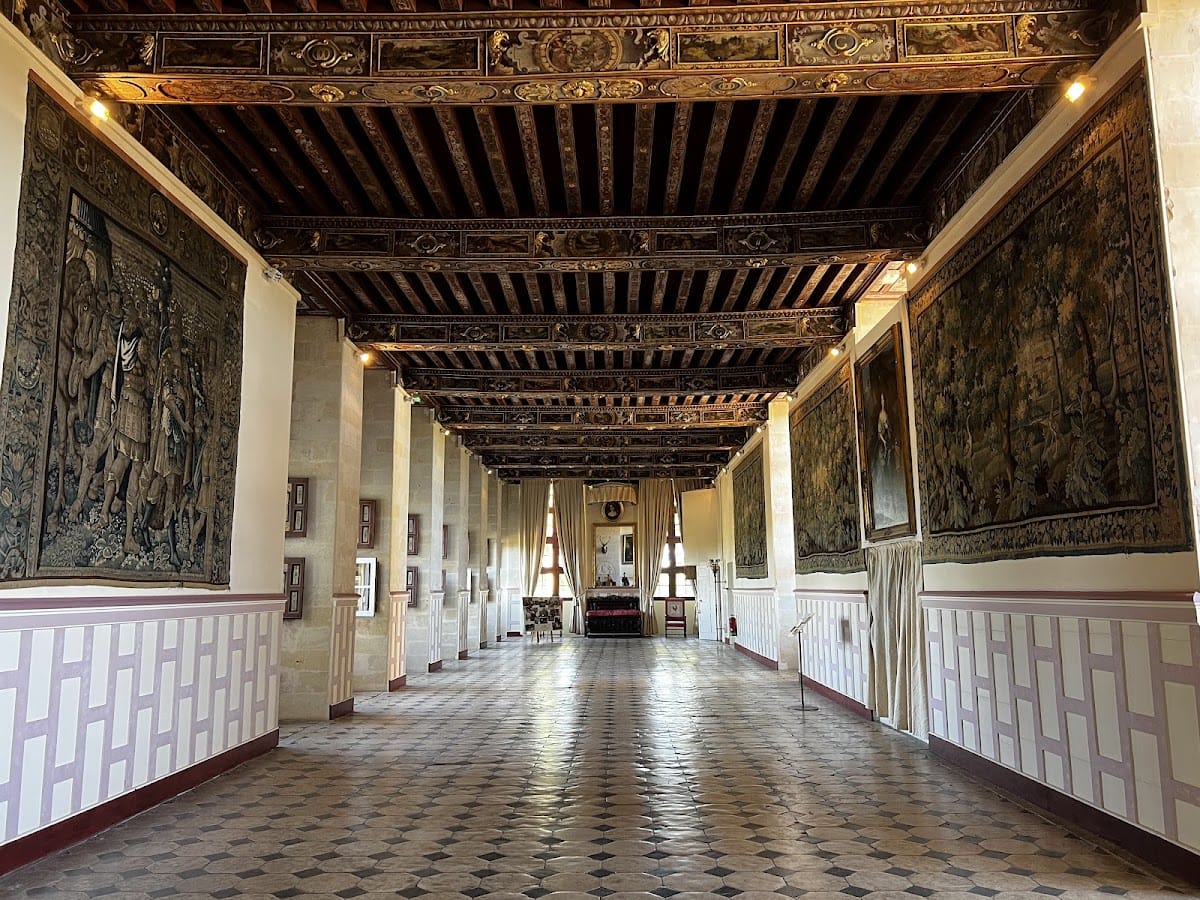
Portraits of the Brissac family by artists such as Bernard Boutet de Monvel and Mignard decorate the interiors. The castle also contains Gobelin tapestries from 1782 illustrating scenes from Don Quixote. A 32-meter gallery displays Flemish 16th-century tapestries depicting Alexander the Great’s life alongside pastoral scenes from Louis XIV’s era. The ceiling beams, painted in 1625, feature about one hundred small images of pastoral, biblical, and mythological subjects.
A Louis XIII style staircase made of tuffeau stone includes a ceiling decorated with the intertwined monogram of Charles de Cossé. The southern Gothic tower contains the family chapel. Furnishings include exquisite pieces by André Charles Boulle, such as a cabinet with copper and tortoiseshell inlays and a wall clock, as well as 18th-century Meissen and Sèvres porcelain bearing the Brissac coat of arms.
The castle’s interior also features richly carved Italian Renaissance wardrobes with secret compartments and a painted ceiling in the French style decorated with floral motifs. A large mural measuring six by 3.5 meters depicts the Bercy estate near Paris. The 19th-century theater, built by Jeanne Say in the style of 17th-century theaters, has two floors and seats 170 people. It was restored in 1983 and is used for cultural and musical events.
The grounds include an English-style park created by Jeanne Say, who also had the castle’s moat filled in. Since 1958, the castle has been partially protected as a historic monument, preserving its status as a significant cultural and historical landmark in the Loire Valley.
Nearby sites