Castle of Bruniquel: A Medieval Fortified Complex in France

Site at a Glance
- Rating
- 4.5
- Popularity
- Medium
- Country
- France
- Primary era
- Medieval
- External website
- Open
- Eras represented
- Medieval, Early Modern
- Civilizations
- County of Toulouse, French
- Site type
- Military
- Remains
- Castle
On this page13 sections
History
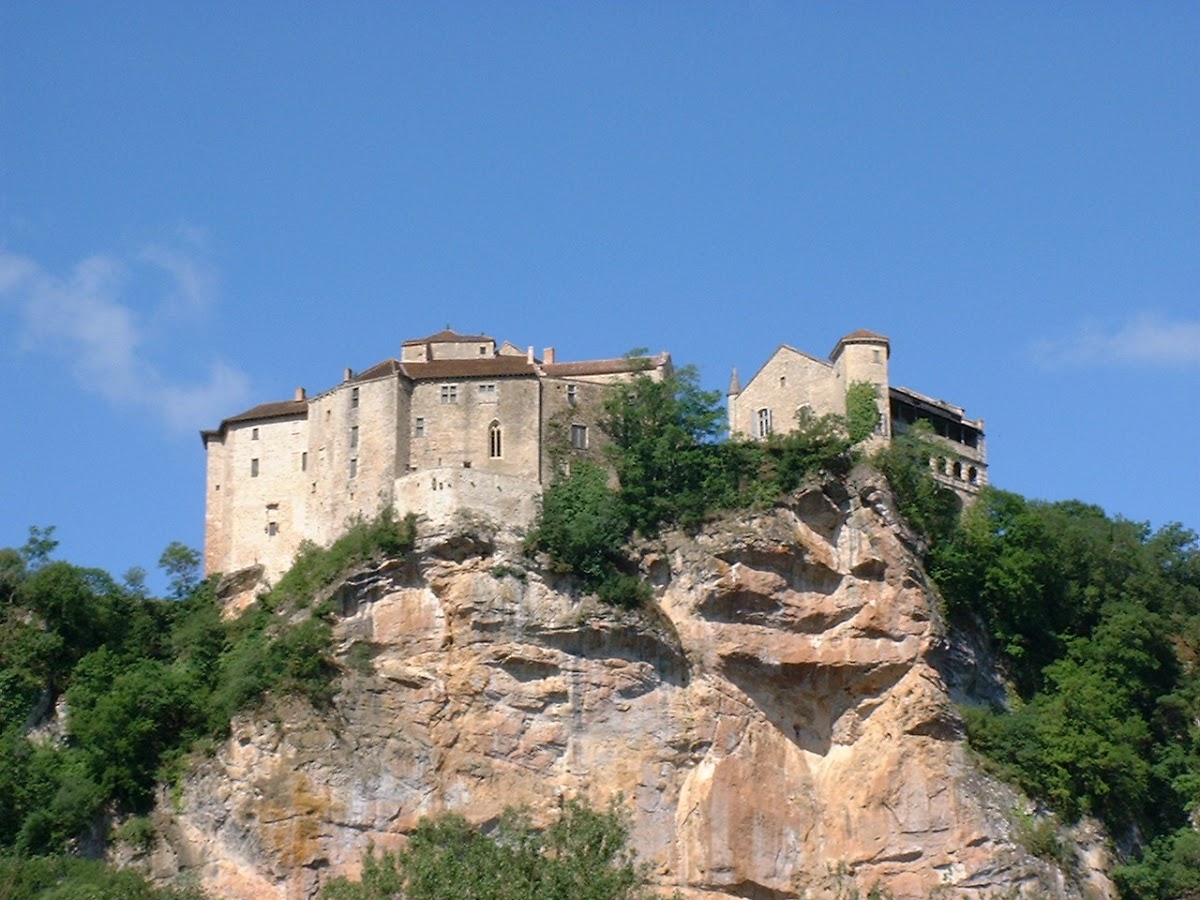
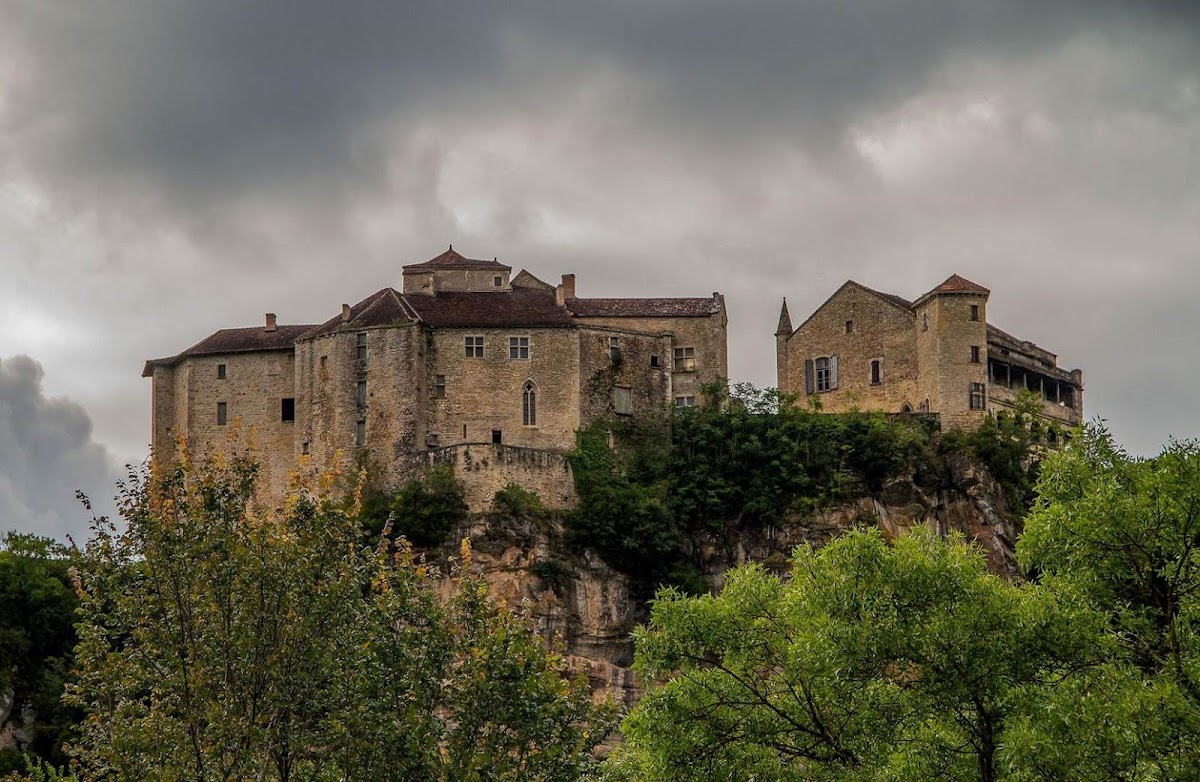
The Castle of Bruniquel is a medieval fortified complex in France, in the town of Bruniquel, built and developed by successive noble lords from the twelfth century onward. It consists of the old castle and the young castle, positioned above the confluence of the Aveyron and Vère. The complex guarded the valley route between Quercy and Albigeois and occupied a strategic position above the river gorges and valley.
Early foundations and the counts of Toulouse
Tradition attributes the first castle to Brunehaut, also known in English as Brunhilda, a Merovingian queen of the sixth and early seventh centuries. The Merovingians ruled the Frankish kingdoms during this period. The tradition places the castle on the site of a Roman castrum, a fortified settlement or military stronghold. It may be connected with the place-name Brunichildum, which appears in the 1083 foundation charter of Saint-Maffre Priory, a dependency of Moissac Abbey.
Bruniquel belonged to the domains of Saint-Géraud d’Aurillac Abbey in the tenth century. The settlement became a viscounty around 1050, meaning a territory governed by a viscount, a rank below that of a count. Its lords descended from the viscounts of Toulouse, but this line ended after the death of the last viscount around 1175.
The castrum was conquered by the counts of Toulouse from the Trencavel family in 1176. The Trencavels were a powerful noble dynasty that controlled territories in southern France, including areas affected by the Albigensian Crusade. In December 1224, Raymond VII, count of Toulouse, granted Bruniquel, Montclar, and Salvagnac to his brother Bertrand, probably his father’s illegitimate son.
The present old castle rose on the ruins of the earlier stronghold during the thirteenth century and belonged to the counts of Toulouse. The viscounts of Bruniquel lived there, while the settlement around it developed into a prosperous town with notable residences.
The division into two castles
The distinctive two-castle arrangement emerged from a fifteenth-century division of the estate and its enclosure between rival branches of the Comminges-Couserans family. Antoine-Roger de Comminges, a partial viscount of Bruniquel, disputed the inheritance with his son Léonard-Roger. In 1471, Antoine-Roger transferred his share to his cousin Maffre-Roger de Comminges.
Léonard-Roger retained the lower castle, the old castle, and a judgment of the Parliament of Toulouse confirmed his rights on 30 September 1486. The Parliament of Toulouse was the high regional court that exercised sovereign judicial authority in the area under the French monarchy. Maffre-Roger established the upper, or young, castle between 1485 and 1510, creating the arrangement that still defines the complex.
For about three centuries, the two branches remained in conflict. The owners of the old castle were Catholic, while those of the young castle were Protestant. The Wars of Religion, the sixteenth-century conflicts between Catholics and Protestants in France, brought attacks and damage to the old castle. Traces of these assaults remain in the medieval residence known as the Knights’ Hall.
Reunification and later history
The two lines of ownership continued into the eighteenth century. Hector d’Ouvrier, a councillor of the Parliament of Toulouse, became viscount of the old castle through his marriage in 1689 to Louise-Galiote du Lion de Gasques. Their son, Guillaume-Marie d’Ouvrier de Villegly, later inherited the old castle, but died without issue in April 1754. The property then passed to his young cousin Joseph-Accurse-Louis-Rigal d’Ouvrier.
On 27 October 1780, Emery-Louis-Roger de Rochechouart-Faudoas, viscount of the young castle, sold his share to Joseph-Accurse-Louis-Rigal d’Ouvrier de Villegly. Bruniquel was thereby reunited under one owner, although Joseph-Accurse-Louis-Rigal belonged to neither the Comminges-Couserans nor the Toulouse-Bruniquel viscountial lines. He and his wife, Marie-Charlotte de Brunet de Villeneuve, were threatened during the French Revolution but survived. He died at Villegly on 28 October 1818.
The former owners’ family helped secure the castles’ classification as historic monuments in 1840. The complex remained privately owned until the death of the viscountess of Bruniquel, Madame de Bellefon, in 1980. The municipality acquired the castles in 1987. Restoration then concentrated mainly on the young castle, while the old castle received comparatively little restoration.
Guillaume de Tudèle, a medieval cleric and chronicler associated with the narrative of the Albigensian Crusade, lived in the old castle and wrote the Song of the Albigensian Crusade, an account of the Cathar wars. The Cathars were members of a Christian dissident movement influential in parts of southern France during the Middle Ages.
The complex was also used as a filming location for Robert Enrico’s 1975 film The Old Gun. A well placed at the center of the complex for the film is artificial rather than an original castle feature, and photographs connected with the filming are displayed in the old castle. The four-rock-shelter archaeological area associated with Bruniquel, comprising Montastruc, Gandil, Lafaye, and Plantade, was listed in 1996. The advanced fortifications were listed in 2025.
Remains
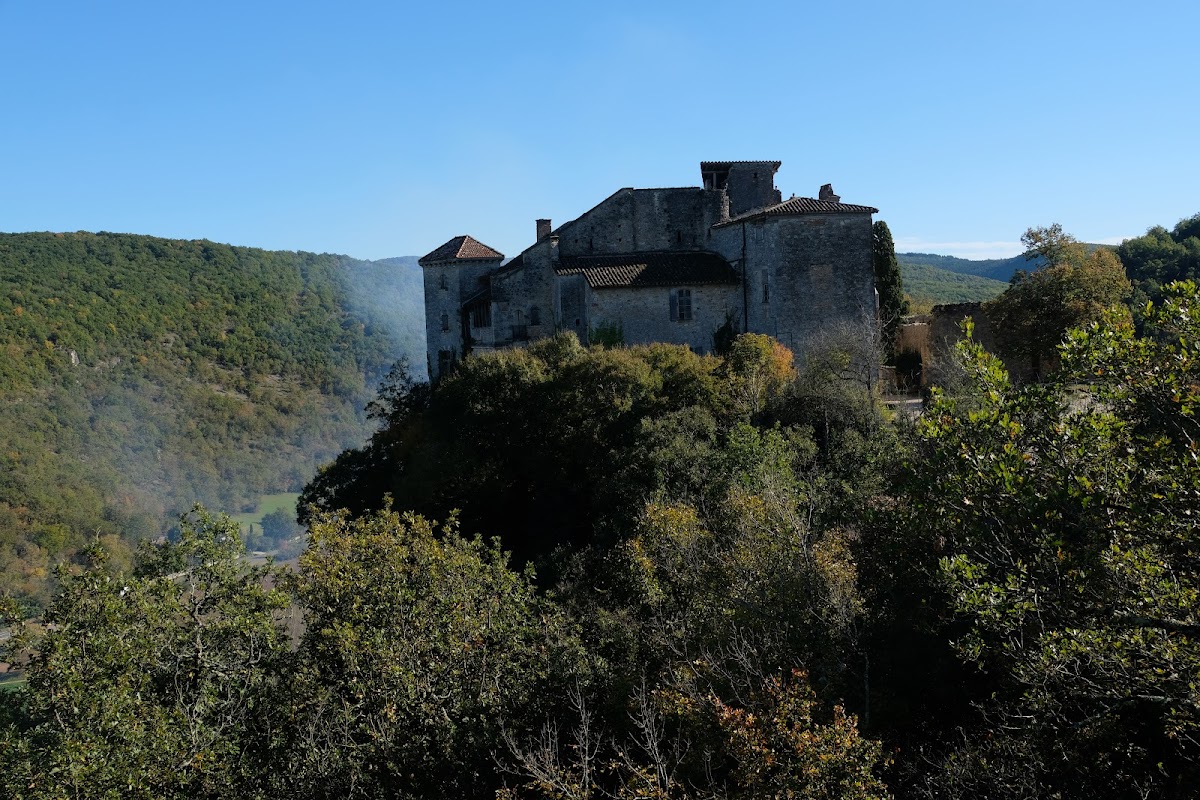
The castles occupy a rocky promontory on a cliff approximately 90 metres above the Aveyron, where the river emerges from its gorges and meets the Vère valley. The complex combines the lower old castle with the upper young castle and preserves construction from the early twelfth century through the Baroque period, as well as later alterations caused by fires, conflict, and changing domestic use.
Old Castle
Keep and medieval buildings
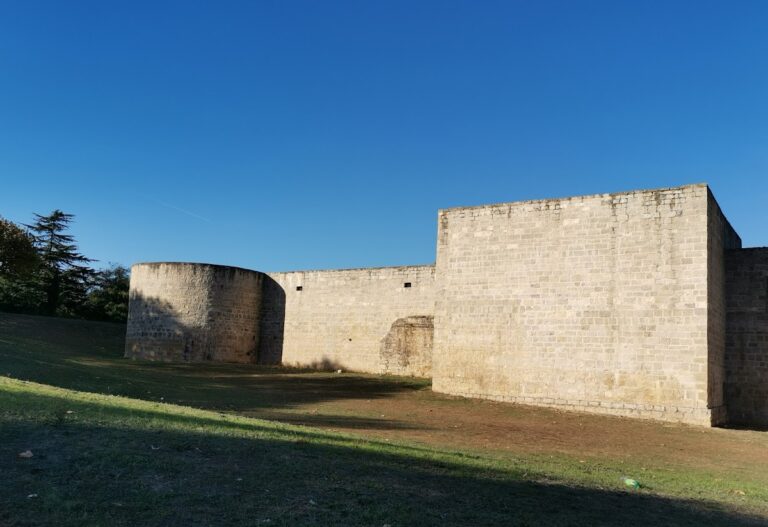
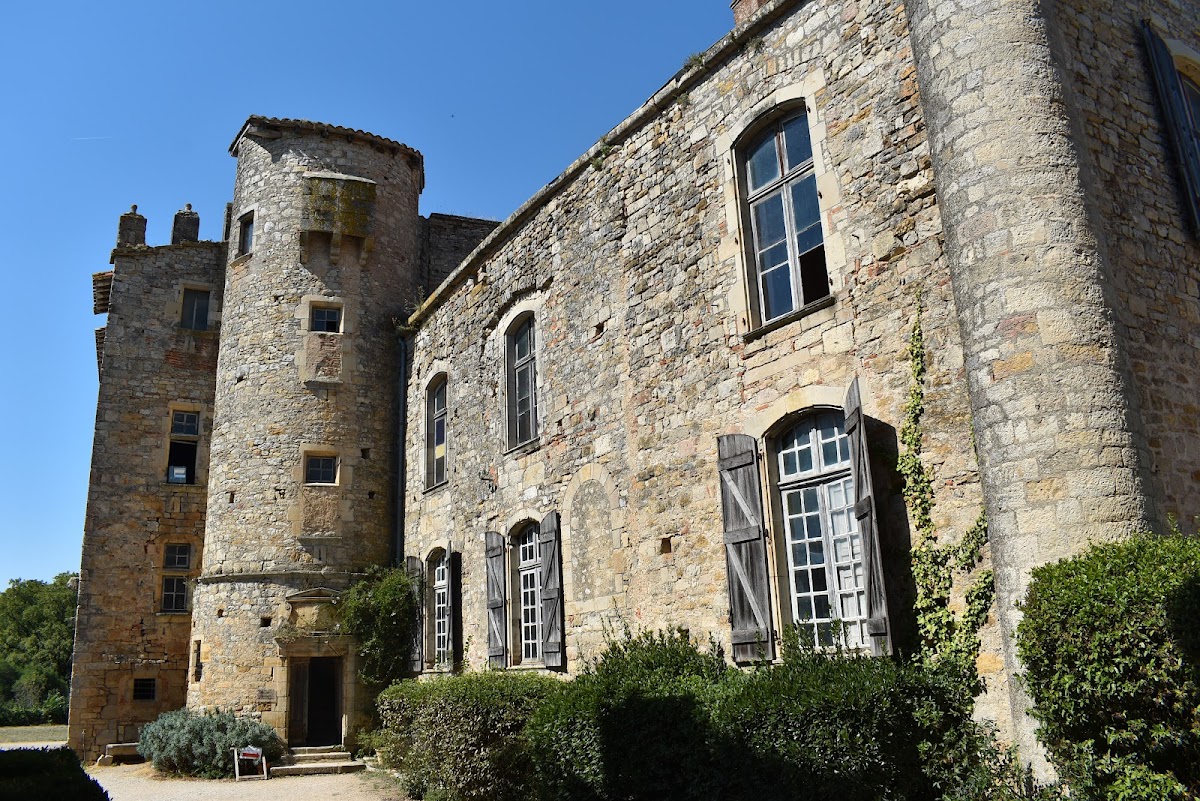
Remains of the early twelfth-century construction include partial foundations, wall sections, and the keep known as the Tour de Bruno, also associated with the name Tour Brunehaut. The old castle retains a square twelfth-century keep. Its enclosure contains thirteenth-century ramparts and residential buildings, including a vaulted level from the twelfth century and a principal residential block dating from the period of the counts of Toulouse.
Two buildings occupy the enclosure following its division between the rival cousins in the fifteenth century. Several areas were substantially altered after fires during the Wars of Religion and again during the eighteenth and nineteenth centuries. The former medieval residence called the Knights’ Hall still contains traces of the attacks that affected the old castle.
Gallery and defensive features
A Renaissance gallery with six arcades projects above the Aveyron at a height of approximately 90 metres. The old castle also includes a tower topped by a machicolation, a projecting defensive opening through which objects could be dropped onto attackers. Together with the keep, ramparts, and surviving wall sections, these elements express the castle’s development from a medieval stronghold into a residence with later architectural additions.
Young Castle
Renaissance and Baroque alterations
The young castle was built on the upper part of the cliff between 1485 and 1510. It was remodelled during the Baroque period, with internal changes and new window openings made during the seventeenth and eighteenth centuries. A sculpted doorway was added at the entrance to its staircase in 1683.
Its ceremonial hall was remodelled in the seventeenth century and contains a carved wooden fireplace. The castle also preserves a seventeenth-century kitchen with a rare nine-hole potager, a masonry cooking installation with openings for heating pots that preceded the modern stove. A former chapel was converted into this kitchen. A fireplace from Bruniquel was transferred in the nineteenth century to the dining room of Lastour Castle at Réalville.
Archaeological surroundings and later additions
Rock shelters and recovered finds
The associated archaeological area includes four rock shelters near the castle: Montastruc, Gandil, Lafaye, and Plantade. A room in the young castle presents the “Treasures of Bruniquel,” finds recovered from several nearby caves. These archaeological features and objects broaden the physical setting of the two castles beyond their walls and connect the complex with the surrounding caves.
Central well
The well now visible at the center of the complex was constructed as a film prop for The Old Gun. It belongs to the twentieth-century filming history of Bruniquel rather than to the original medieval or early modern fabric of the castles.