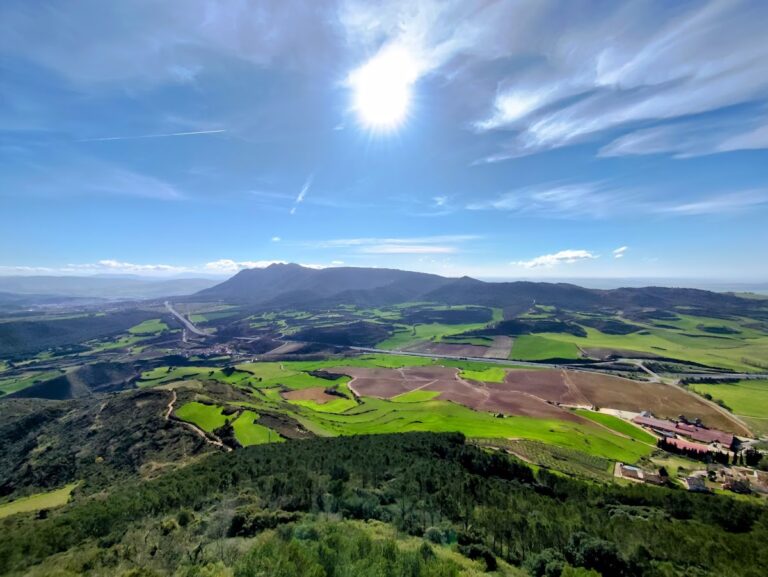
Castle of Aguas Mansas: A Medieval Fortress in Agoncillo, Spain



Visitor Information
Google Rating: 4.4
Popularity: Low
Google Maps: View on Google Maps
Official Website: agoncillo.org
Country: Spain
Civilization: Unclassified
Remains: Military

History
The Castle of Aguas Mansas stands in the municipality of Agoncillo, Spain, and was constructed during the medieval period by Christian forces. Its origins trace back to a strategic fortress in a region contested between Muslim and Christian rulers.
Records indicate that in the 10th century, Sancho Garcés, king of Pamplona, conquered a Muslim-held castle in this area, marking an early phase in the site’s history. Over the following centuries, documents from the 11th and 12th centuries refer to a defensive stronghold known as either Aguas Mansas or Aguas Muertas, underscoring its continued military importance. In 1191, Alfonso VIII, king of Castile, formalized control over the castle and surrounding lands through an agreement with local nobles Pedro and Gómez García.
The Medrano family emerged as prominent proprietors in the early 13th century. Their influence was strengthened by a notable event around 1211, when Saint Francis of Assisi is said to have healed the son of a Medrano lord, a story that enhanced the family’s standing. The Medrano coat of arms, featuring a cross with fleur-de-lis ends known as a cross flory, appeared above the castle’s eastern entrance, symbolizing their long-term ownership. This emblem also commemorates their ancestors’ participation in the pivotal Battle of Las Navas de Tolosa in 1212, a turning point in the Christian Reconquista.
In 1337, Rodrigo Alfonso de Medrano, serving as a crossbowman to Alfonso XI, acquired both the castle and the adjacent village. He invested significantly in reconstruction efforts, as documented in his 1345 will, which lists considerable expenditure on enhancing the fortress and settlement. During the mid-14th century civil strife between Peter the Cruel and Henry of Trastámara, the castle briefly became the possession of Charles II of Navarre. It was restored to the Medrano family in 1392 after Rodrigo Alfonso de Medrano bequeathed it to his nephew Diego López de Medrano and his descendants, who later held the titles of Counts of Siruela. This lineage maintained residence in the castle up to the 19th century.
Recognizing its cultural value, the castle was declared a National Historic Artistic Monument in 1983. A comprehensive restoration project commenced in 1989, led by local authorities, aimed at halting its deterioration. This work removed later additions from the 18th and 19th centuries, returning the castle to a form closer to its original medieval state. In the 1990s, restoration efforts culminated in the preservation of key architectural and historical elements.
Today, the castle serves civic functions, housing municipal offices such as the town hall and library. In 2024, as part of a cultural initiative linked to local medieval-themed festivities, a mural featuring a 16th-century armored knight was painted on a wall facing the castle, reaffirming its continued role in the community’s heritage.
Remains
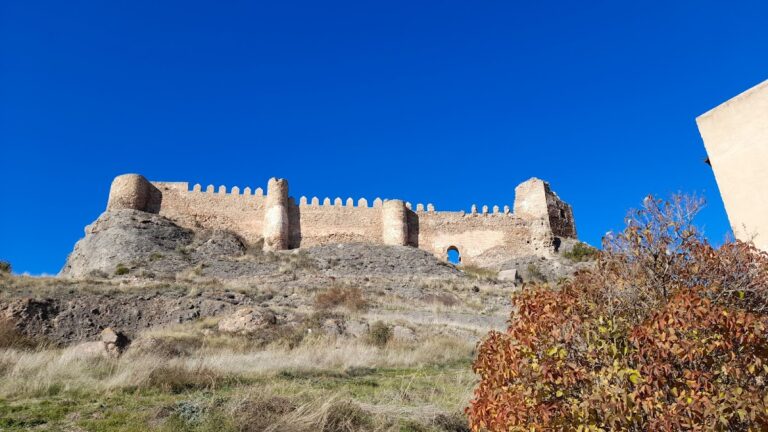
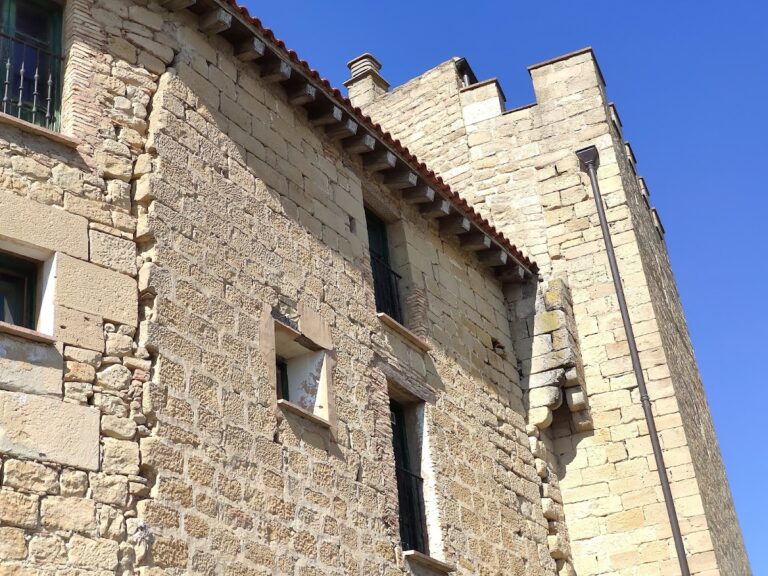
The Castle of Aguas Mansas features a nearly rectangular layout anchored by four corner towers that rise as prism-shaped sentinels, each retaining its original machicolations—openings between the corbels of battlements used to drop objects on attackers below. Constructed primarily from carefully cut dimension stones known as ashlar, the fortress reflects two significant periods of building activity: the mid-14th century, which saw the foundation laid atop earlier structures, and later modifications in the late 15th century that expanded or enhanced the complex.
The eastern façade acts as the primary entrance and is marked by the Medrano family coat of arms displaying the cross flory, a design linking the castle’s identity to its medieval lords. The most imposing tower, often called the keep or tower of homage, rises four stories high featuring pointed barrel vaults—a type of curved ceiling shaped like a half-cylinder common in Gothic design—and is accessed via a pointed arch doorway, emphasizing its defensive and symbolic prominence within the castle.
One of the smaller towers is nicknamed “de las palomas,” meaning “of the doves,” a name possibly inspired by its design or use. This tower preserves a series of well-maintained modillions, which are small corbels supporting the machicolation above. Its interior includes wooden floors laid on regularly spaced beams resting on stone corbels embedded in the walls. The entire fortress is circled by an impressive moat, enhancing its defensive capacity by creating a barrier against invaders.
Within the walls lies the parade ground, or patio de armas, which underwent restoration in the 16th century, acquiring a cloister-like shape with two levels. The main gallery on the ground floor is upheld by semicircular arches, lending an elegant rhythm to the courtyard space while serving practical functions during military and administrative activities.
The 1990 restoration removed numerous 18th- and 19th-century utilitarian structures that had been appended over the centuries. This intervention reinstated much of the castle’s medieval character, allowing it to retain a remarkable state of conservation. The adaptation of the castle for municipal use balances respect for its historical fabric with contemporary needs, ensuring that the site remains a living part of Agoncillo’s identity.
Nearby sites