Baena Castle: A Hispano-Muslim Fortress in Spain


Site at a Glance
- Rating
- 3.8
- Popularity
- Low
- Country
- Spain
- Primary era
- Medieval
- External website
- Open
- Eras represented
- Medieval, Early Modern
- Civilizations
- Spanish, Umayyad
- Site type
- Military
- Remains
- Castle
On this page7 sections
History
Baena Castle is a Hispano-Muslim fortress in Baena, Spain, whose construction dates to the ninth century. It stood within the Muslim-ruled territory of Al-Andalus and was first mentioned by Muslim historians in the late ninth century, during the revolts of Omar ibn Hafsun against the Emirate of Córdoba, the independent Muslim state centred on Córdoba from 756 to 929.
Castilian conquest and frontier role
Castilian forces led by Ferdinand III took possession of Baena in 1241. Ferdinand III, king of Castile and León, was advancing Christian rule into Muslim-held Iberia. After the conquest, the fortress became one of the most prominent strongholds in the southern part of the Kingdom of Córdoba, facing the Nasrid Kingdom of Granada, the last Muslim kingdom in Iberia. An Islamic mosque on the site was replaced by a chapel dedicated to Saint Bartholomew.
Lordship of the House of Córdoba
The Castilian Crown retained the fortress until 1386, when King John I of Castile granted Baena to the nobleman Diego Fernández de Córdoba. The castle then came under the jurisdiction of the House of Córdoba and later its Cabra branch, aristocratic lineages that held lordship over the town.
Following the end of the Granada War, which concluded with the conquest of the Nasrid kingdom by the Crown of Castile in 1492, the castle lost its strategic frontier function. It became one of the principal residences of the counts. In 1566, Philip II granted Gonzalo Fernández de Córdoba, the fifth Count of Cabra, the title of Duke of Baena.
Decline, damage, and reconstruction
The fortress remained almost intact until 1879, when the noble family sold it. The site was then used as a quarry, and several buildings were erected inside the enclosure. A horseshoe arch, whose inward-curving shape extends beyond a semicircle, was demolished in the mid-twentieth century.
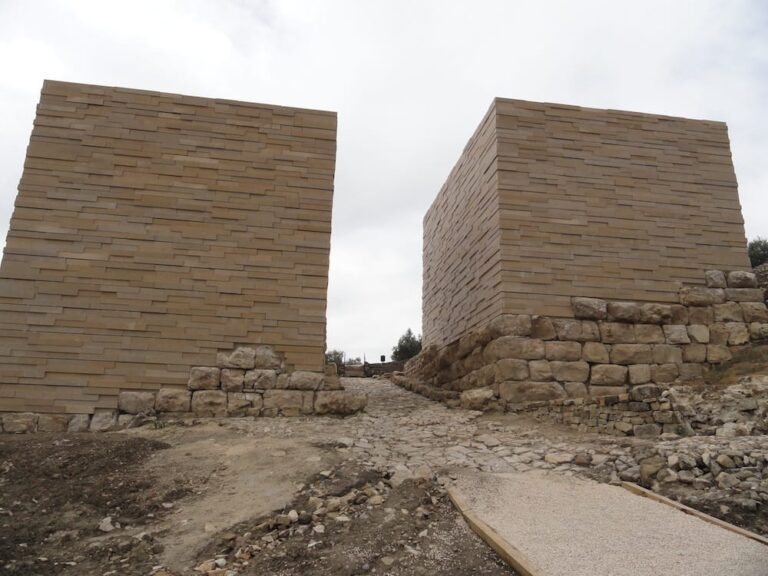
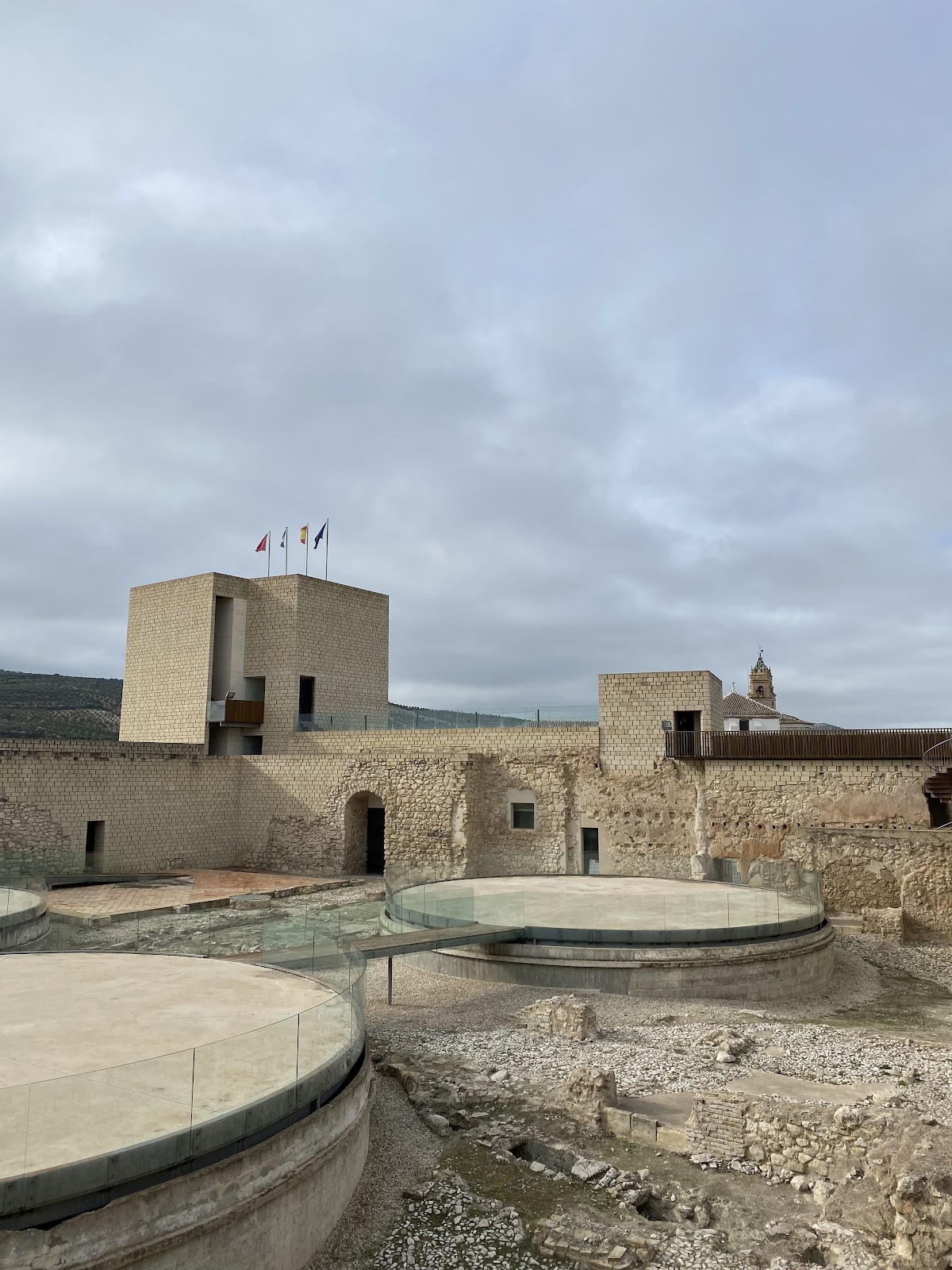
From 1927 to 1959, the castle’s parade ground served as a water reservoir, causing serious damage to the historic complex. The site subsequently remained in ruins. Restoration and reconstruction of the fortified enclosure began in 2005 after archaeological testing and research. Reconstruction took place in 2011 and was completed in August 2016. Baena Castle has been protected as a Spanish Asset of Cultural Interest in the category of Monument since 1985.
Remains
Layout and surviving walls
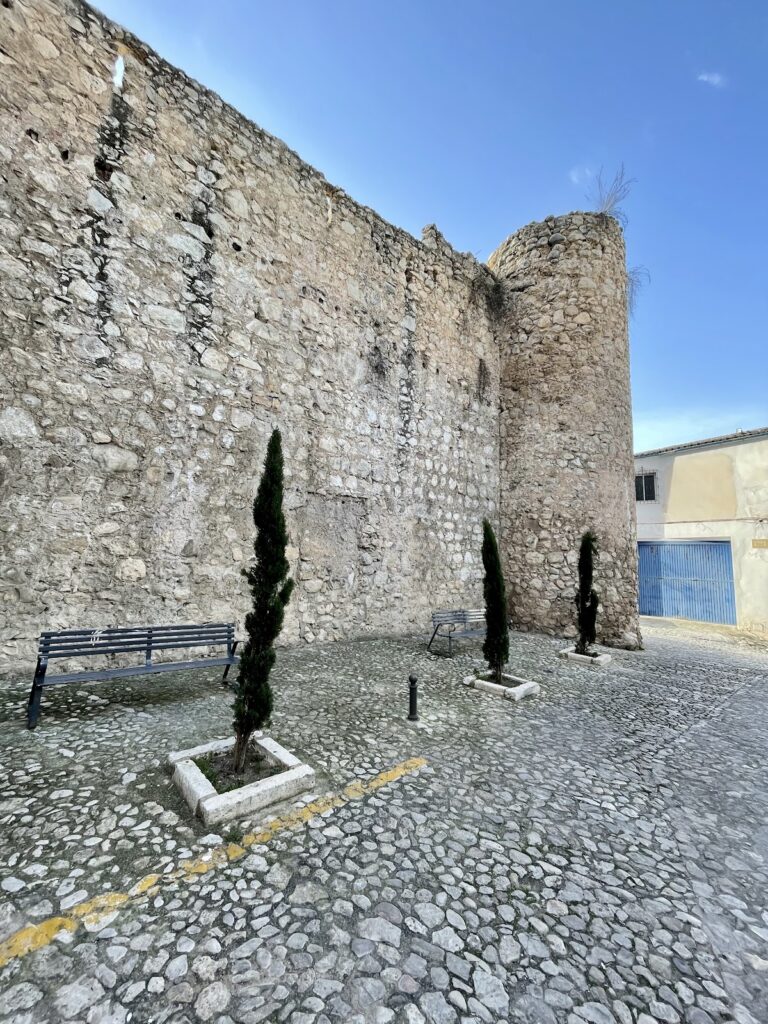
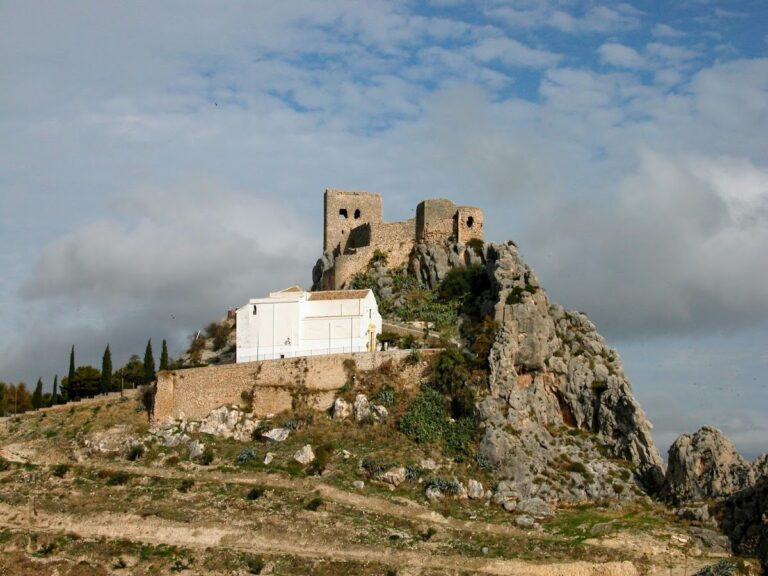
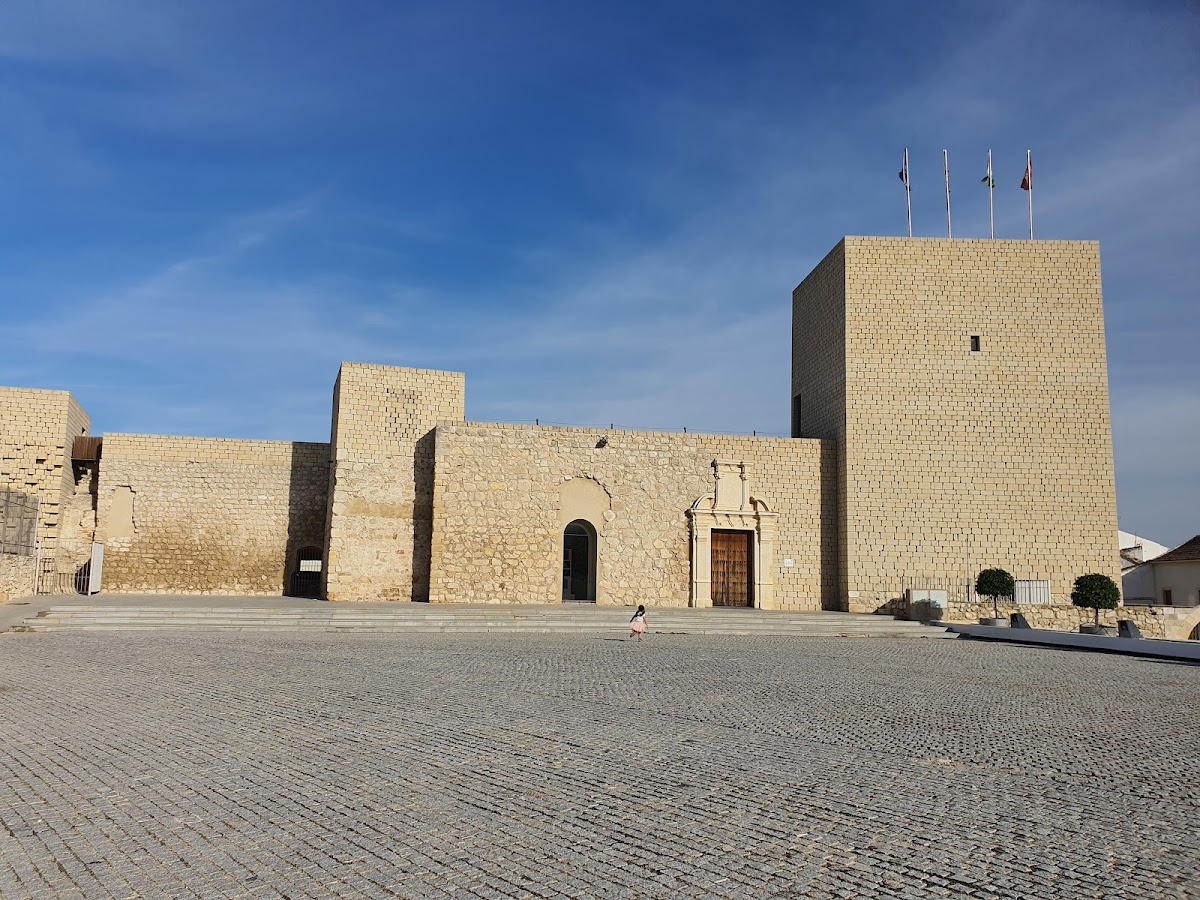
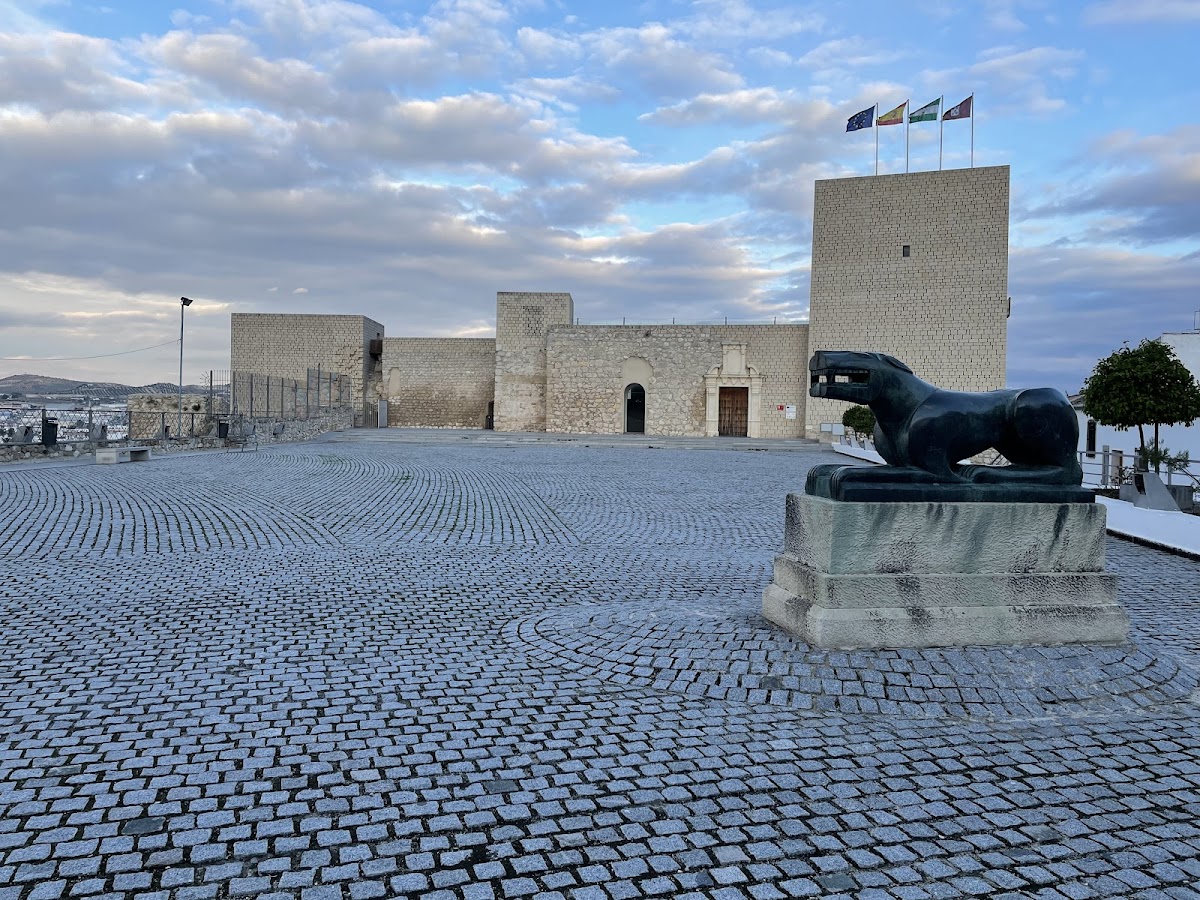
Baena Castle occupies the highest point of the municipality. It was separate from the larger wall circuit that surrounded Baena, standing within that wider defensive enclosure. The castle had a square plan measuring approximately 70 metres by 37 metres. Limited remains survive, including wall sections built with ashlar, or regularly cut stone blocks, and rubble masonry, which uses irregular stones set in mortar. Three of the four corner towers also remain: the Tower of the Secret, the Tower of the Bells, and the Tower of the Five Corners.
Tower of the Five Corners
The Tower of the Five Corners, also known as the Tower of the Archers, is built of brick and mortar. Arrow slits pierce two of its sides, while a lobed window has been blocked with cement. Oral tradition identifies the tower as the place where Boabdil, the final ruler of the Nasrid Kingdom of Granada, was imprisoned. Between the sixteenth and seventeenth centuries, the structure was extensively altered and converted into a chapel.