Castle Katzenzungen: A Historic Renaissance Castle in Tesimo, Italy


Visitor Information
Google Rating: 4.5
Popularity: Low
Google Maps: View on Google Maps
Official Website: www.castel.katzenzungen.com
Country: Italy
Civilization: Medieval European
Remains: Military

History
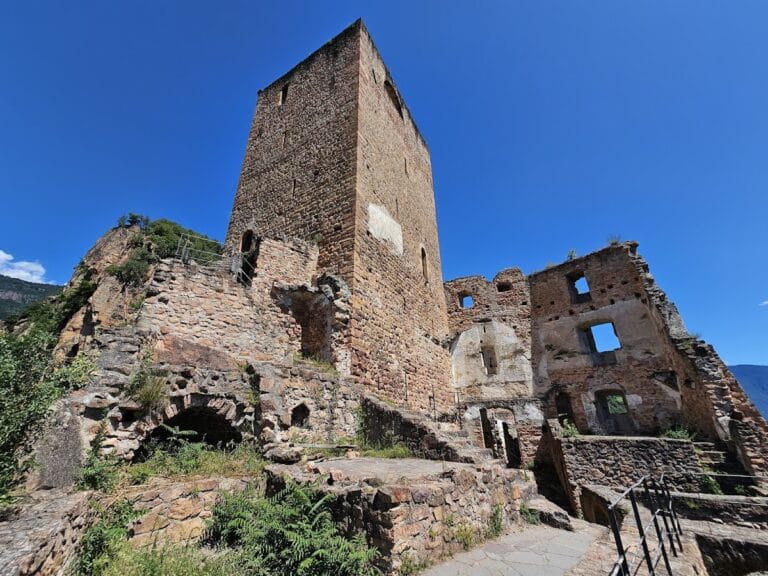
Castle Katzenzungen is situated in the municipality of Tesimo, Italy. It was originally established by a ministerial family named Katzenzungen (also known as de Cazenzunge), who constructed it before the 13th century on the site of a previous fortified tower. This early foundation suggests the location’s longstanding strategic importance in the region.
The first recorded mention of the castle dates back to 1244, when ownership was transferred to the lords of Schlandersberg. These lords are linked by local tradition to the planting of the Versoaln vine in the nearby vicinity, a vine renowned for being among the oldest and largest in Europe. The association of the Schlandersberg family with the vine has become part of the castle’s historical narrative, intertwining natural heritage with noble lineage.
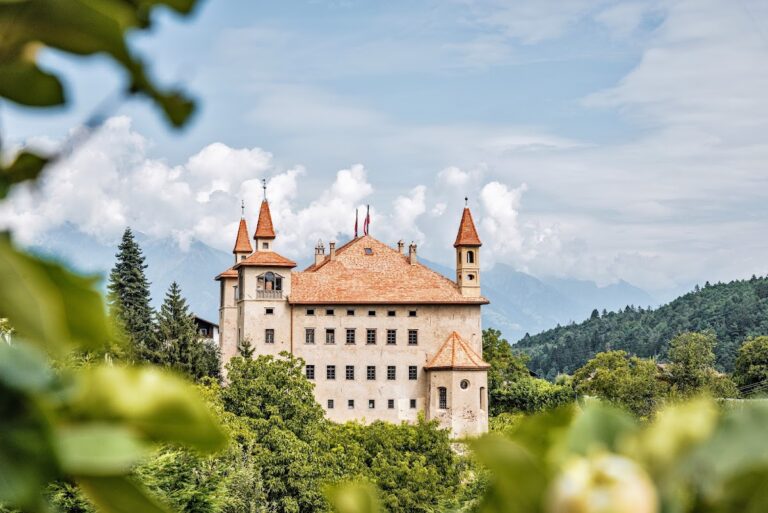
Over the following centuries, the castle passed among several prominent families. After the Schlandersbergs, it came into the possession of the Thun and then the Fuchs families. Significant transformation occurred in 1535 when the Breisach family acquired the castle. During the 16th century, they carried out notable renovations in the Renaissance style, which gave the structure much of its present appearance. These modifications reflected the architectural tastes of the time and adjusted the castle’s form for both defensive and residential purposes.
The Breisach family line ended in 1706, leading to successive changes in ownership. Notable proprietors included Jakob Lidl von Mayenburg and Alois Graf von Sarnthein. The castle was eventually auctioned in 1795, and by the 19th century, its grounds were divided and held by local peasant families. This period marked a shift from noble ownership toward more fragmented, private use.
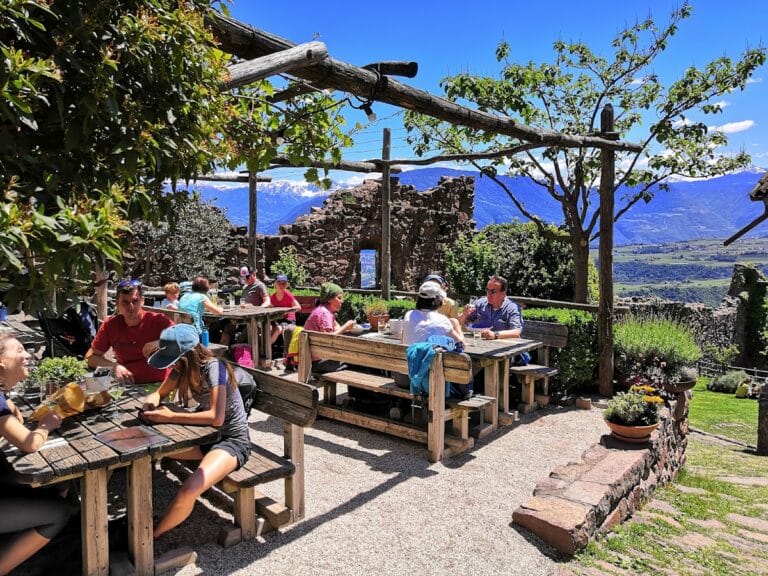
In 1978, the Pobitzer family purchased and undertook a complete restoration, reviving the castle’s condition. Since then, the site has been adapted for use as a venue hosting various events, affirming its continued presence within the local cultural landscape.
Remains
Castle Katzenzungen today showcases a unified building complex that reflects Renaissance architectural influence, a result of 16th-century enhancements made under the Breisach family. All parts of the structure are covered beneath a single roof, indicating a coherent and integrated design uncommon in earlier medieval castles, which often grew in separate segments over time.
A prominent feature encircling the castle is a ring of machicolations, known locally as “Pechnasen.” Machicolations are openings built into the projecting parapets of defensive walls, allowing defenders to drop stones or boiling substances on attackers below. This defensive element dates to the period of Renaissance renovations and demonstrates the castle’s fortified character despite its evolving residential functions.
Above the main entrance, framed by a rounded arch gate, is the coat of arms of the Breisach family, bearing the date 1548. This heraldic display not only marks the era of significant rebuilding but also ties the castle’s identity closely to the Breisach lineage. The gateway represents both an architectural and symbolic threshold, preserved in good condition through subsequent restorations.
Though the castle stands on the footprint of an earlier fortified tower, specific details regarding the original tower’s size or internal layout have not been documented. The current structure respects this historical continuity, incorporating earlier defensive concepts into the later Renaissance redesign.
Near the castle, the Versoaln vine grows adjacent to a stone bridge, maintaining its place as a living heritage element connected to the site’s medieval past. Recognized as one of the oldest vines in Europe, it remains a significant botanical landmark directly linked with the castle’s historical narrative.
Thanks to the comprehensive restoration led by the Pobitzer family in the late 20th century, the castle is well-preserved today. Its structural and decorative features have been maintained for modern use, retaining the historical details that speak to its layered past.
Nearby sites