Hocheppan Castle: A Medieval Hilltop Fortress in Italy

Site at a Glance
- Rating
- 4.7
- Popularity
- Medium
- Country
- Italy
- Primary era
- Medieval
- External website
- Open
- Eras represented
- Medieval, Early Modern
- Civilizations
- Habsburg, Holy Roman Empire
- Site type
- Military
- Remains
- Castle
On this page10 sections
History
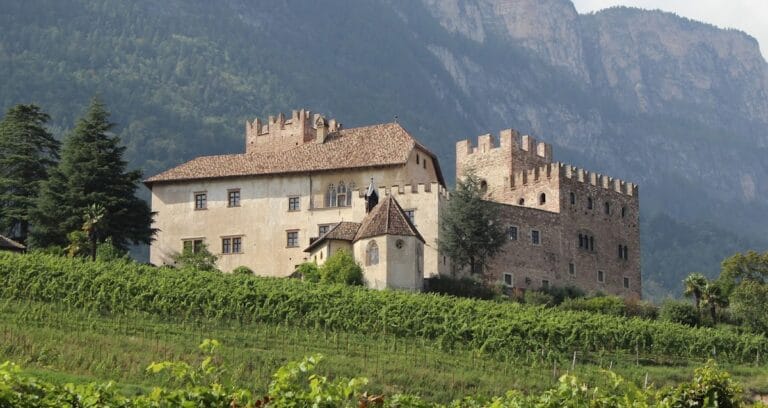
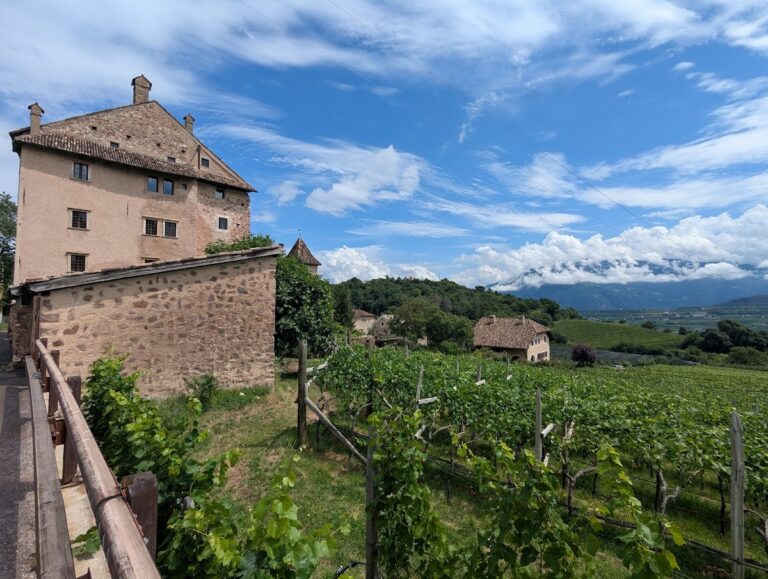
Hocheppan Castle is a medieval hilltop fortress in Italy, above Missiano in the municipality of Eppan, South Tyrol. Built and developed by the counts of Eppan, it is regarded as one of the region’s most important medieval defensive works. The castle’s foundation is now considered most likely to have taken place shortly after 1200, and its first certain written reference dates to 1211, when it appears as in castro de Epan.
Early occupation and the counts of Eppan
The rocky hill had already been occupied or fortified during the period of the Rhaetians, an ancient population of the central and eastern Alps whose archaeological culture in the region is associated with the Fritzens-Sanzeno tradition. Finds from the hill support the possibility of this early activity, approximately two thousand years ago.
An earlier interpretation placed the medieval fortress around 1125 and credited its construction to Count Ulrich II of Eppan, a medieval member of the dynasty traditionally associated with the castle’s foundation. More recent research instead favors a foundation shortly after 1200, drawing on the castle’s architectural form and the documentary evidence.
Before Hocheppan became the principal residence, the counts of Eppan held a seat near St. Pauls. Its exact location remains uncertain, although it has been identified either with Altenburg or, more probably, with Freudenstein. The move to Hocheppan was probably connected with the insecurity of the earlier residence during the counts’ conflict with the counts of Tyrol.
Conflict, territorial control, and judicial use
In 1158, members of the Eppan family ambushed a papal embassy traveling to the imperial court of Frederick Barbarossa. The incident led to a retaliatory expedition by Henry the Lion, the powerful twelfth-century duke of Saxony and Bavaria. An Eppan castle, possibly Freudenstein but not certainly identified, was destroyed during the campaign and later rebuilt. The event provides an important setting for understanding the military pressures surrounding the Eppan family, although the destroyed castle cannot be securely equated with Hocheppan.
Hocheppan passed to the territorial rulers of Tyrol in 1315. They subsequently granted the castle as a fief to various noble families, including the counts Fuchs of Fuchsberg. Hocheppan and Altenburg later formed a single judicial district, recorded in 1490 as Alltenburg vnd Hocheppan. A legal record from this court survives from 1650.
Later ownership and conservation
In 1834, Emperor Francis I granted Hocheppan as a fief to Martin Teimer of Wildau. The castle passed to the counts of Enzenberg in 1911. They consolidated endangered parts of the structure and undertook partial restoration, helping preserve the surviving buildings.
The municipality of Eppan acquired Hocheppan in 2016. The ruins have since been consolidated and partly restored, retaining the principal remains of the medieval fortress and its later defensive additions.
Remains
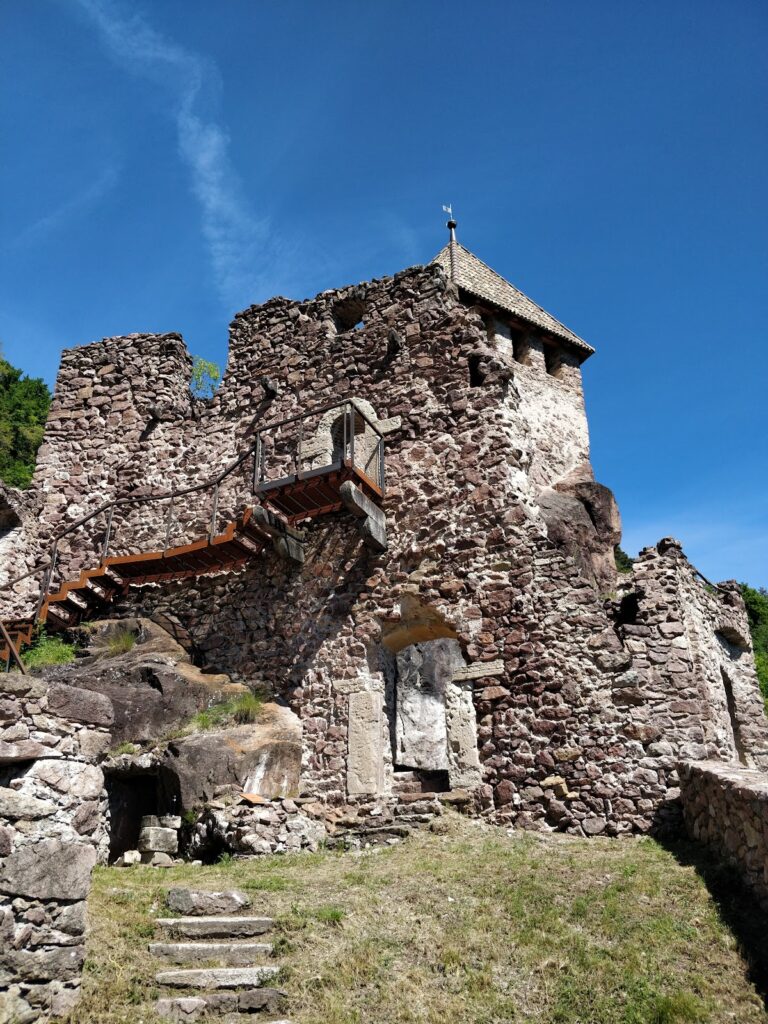
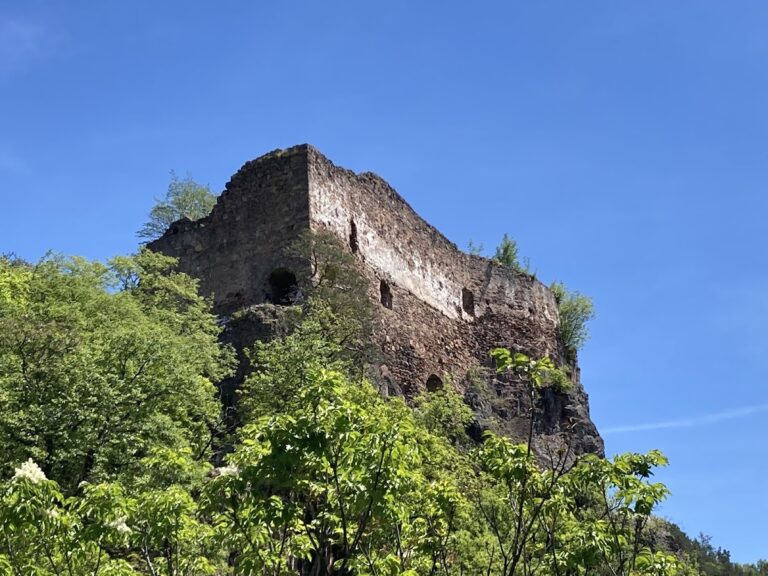
Hocheppan occupies steep rock at approximately 600 metres above sea level. The hilltop complex is organized around a main fortified enclosure, with defensive outworks and towers protecting the northern approach. Its elevated position overlooks the Adige Valley and faces several other castles, including Corba, Boymont, Greifenstein, and Neuhaus. The fortress was expanded and altered over several centuries, and much of the surviving northern defensive system dates from the sixteenth century.
Main fortress
Defensive outworks
Beyond the main curtain wall stands a semicircular, open-backed tower known as a rondel. This projecting defensive structure was designed to protect the wall and approach while accommodating firearms. The northern side of the castle is further protected by a complex arrangement of outworks and guard towers, whose surviving form largely belongs to the sixteenth century.
Keep and palace
The palace remains relatively well preserved within the complex. The dominant keep, or principal defensive tower, is a tall pentagonal structure, an unusual form in Tyrol. A deep crack once threatened its masonry, but the tower has undergone consolidation and restoration.
Castle chapel
The small rectangular chapel predates the fortress and was incorporated into the castle at a later stage. Three apses, or rounded sanctuary ends, are formed within the thickness of one short wall, while the entrance is placed on the side of the building.
The chapel preserves Romanesque frescoes, a medieval artistic style that preceded Gothic painting and favored rounded forms, robust construction, and strongly outlined religious imagery. The exterior paintings appear to recall the legend of King Theoderic, whose soul was lost while hunting a stag. Inside, painted scenes draw from the Old and New Testaments and include episodes from the lives of Jesus and the apostles. The apse contains the cycle of the wise and foolish virgins, a biblical parable in which five women prepare for the bridegroom’s arrival while five remain unprepared, traditionally representing spiritual readiness.
Kreidenturm
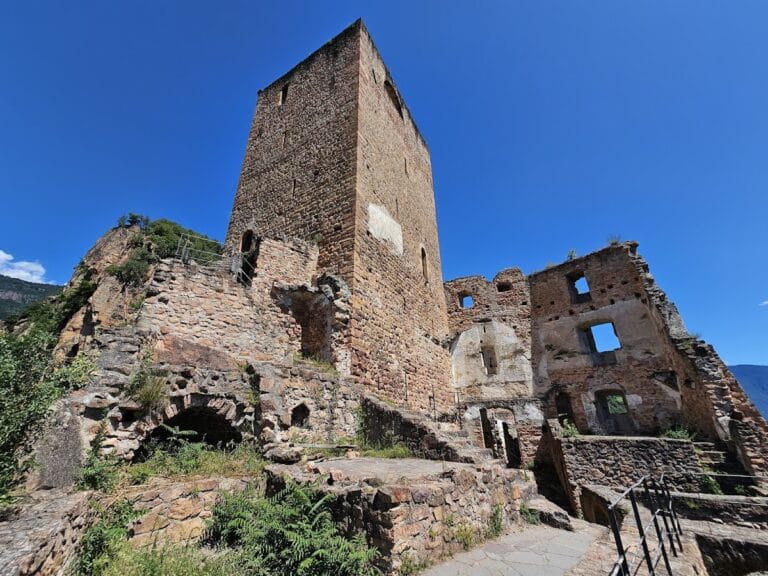
The isolated Kreidenturm stands separately from the main castle as an advanced defensive post. It is a very tall, square-plan tower probably built to its full height in the thirteenth century. Its entrance is elevated above ground level, and a small curtain wall surrounds the structure. A second round-arched opening once led to a wooden parapet walk that is now lost. Traces of the tower’s original white plaster survive.
The tower’s name has been connected either with this plaster or with an earlier signaling role involving signal fires. The interpretation associated with Josef Weingartner, that the Kreidenturm primarily served as a strategic outpost of Hocheppan, is considered more likely.