Castillo de La Guardia: A Historic Fortified Site in Jaén, Spain

Visitor Information
Google Rating: 4.2
Popularity: Low
Official Website: www.laguardiadejaen.com
Country: Spain
Civilization: Unclassified
Site type: Military
Remains: Castle

History
The Castillo de La Guardia is situated in the municipality of La Guardia de Jaén, Spain. Its earliest known origins trace back to an ancient fortified settlement that predates the current castle, linked to both Iberian and Roman civilizations.
Archaeological research indicates that the site corresponds to the ancient city of Mentesa Bastia, later referred to as Mantisa in medieval Arabic sources. During Roman times, Mantisa was an important military post along the route connecting Acci (modern-day Guadix) to Cástulo and Aurgi, serving strategic communication and defense purposes. This place was also a bishopric seat from at least the early 4th century AD until the late 7th century, reflecting a significant early Christian presence.
During the Islamic period, the settlement evolved into a fortified city within the Cora of Yayyan, benefiting from strong defenses, plentiful water, and fertile surroundings. The castle’s main defensive structures were established during this time, adapting earlier Roman and Iberian foundations to suit contemporary needs.
In the 13th century, the castle came under Castilian control following military campaigns in the region. After the Capitulations of Jaén in 1246, which marked the Christian reclaiming of Jaén territory, the fortress regained strategic importance as a frontier stronghold bordering the Nasrid Kingdom of Granada. It shared its defensive role with the nearby fortress of Pegalajar, maintaining border security for over two centuries.
Starting in the 14th century, control of the castle shifted from municipal authority to private noble families. Don Lope Ruíz de Baeza was one of the notable early private owners, followed by the prominent Mexía (or Messía) family, who retained possession until the abolition of lordships in the 19th century. By the late 14th century, the castle’s military function diminished, and it was converted into a palatial residence. During this period, substantial changes were made to the fortification, including remodeling the Alcázar (the inner stronghold) and adding new buildings such as the church of Santa María within the larger Alcazaba enclosure.
Although the castle remained occupied and functional during the Napoleonic Wars, it gradually fell out of use as a defensive structure afterwards. Modern restoration efforts have focused on preserving key parts like the Alcázar and the bell tower of the church, reflecting the site’s layered history from ancient times through the medieval period and into the early modern era.
Remains
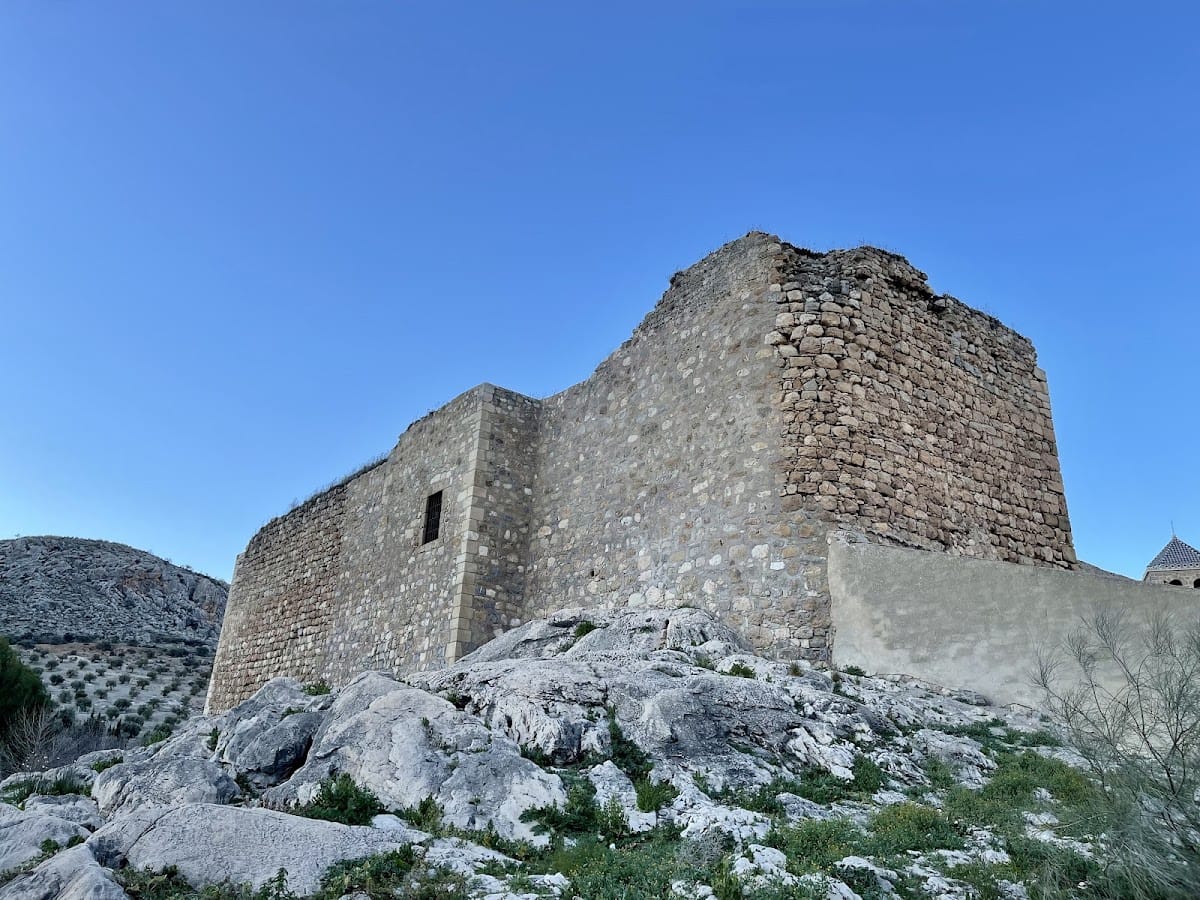
The castle complex at La Guardia is divided into two principal parts: the Alcázar, an inner fortified palace, and the Alcazaba, the encompassing defensive enclosure. The Alcázar is arranged in a rectangular plan and features multiple towers adapted to the natural terrain’s unevenness, employing a combination of masonry and rammed earth construction techniques.
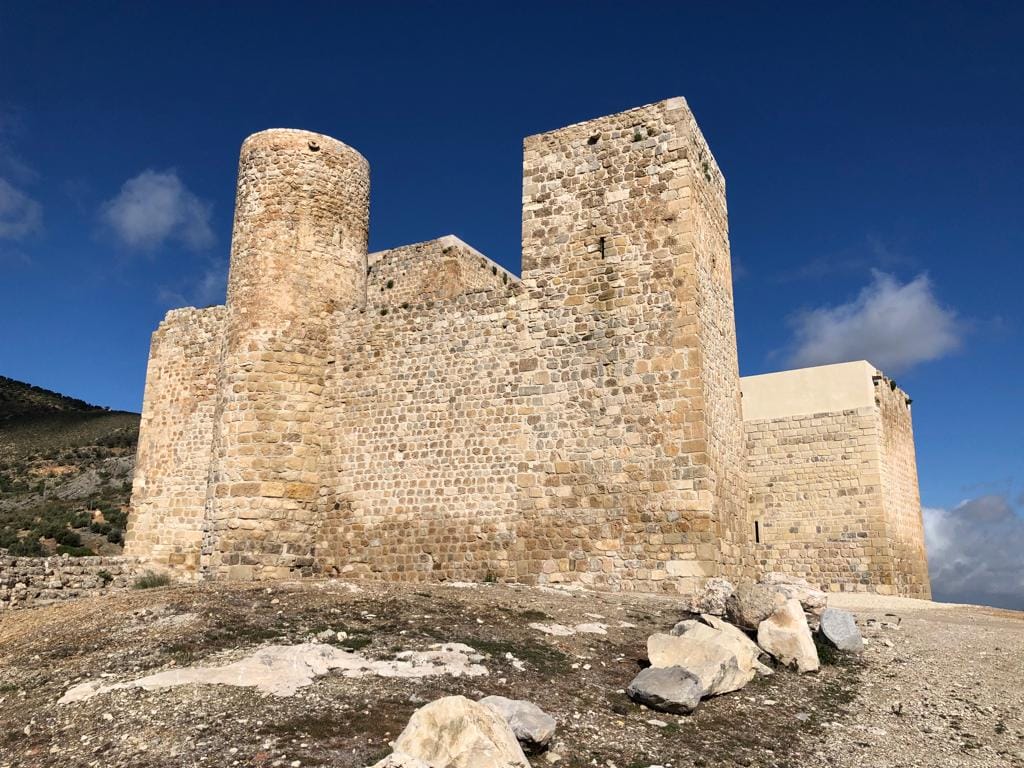
One remarkable relic from the Islamic castle period is a large circular masonry tower. This tower stands connected to walls composed of rammed earth set upon a masonry foundation. One of these walls retains a narrow walkway, known in Spanish as an “adarve,” which historically provided access along the battlements. This tower is the sole surviving original Muslim defensive structure within the castle.
Following Christian conquest, extensive remodeling transformed the Alcázar. Earthen walls were replaced or reinforced with masonry, and the towers were heightened or newly built. The circular tower was raised to three levels; the two lower floors were constructed for habitation, featuring hemispherical vaulted ceilings and connected by a staircase embedded within the wall. The middle level included openings that allowed movement between different towers and wall walkways, enhancing defensive and residential functionality.
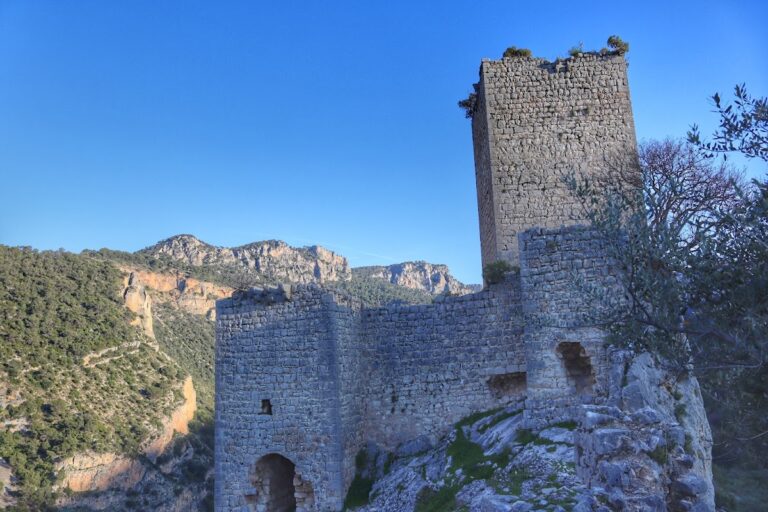
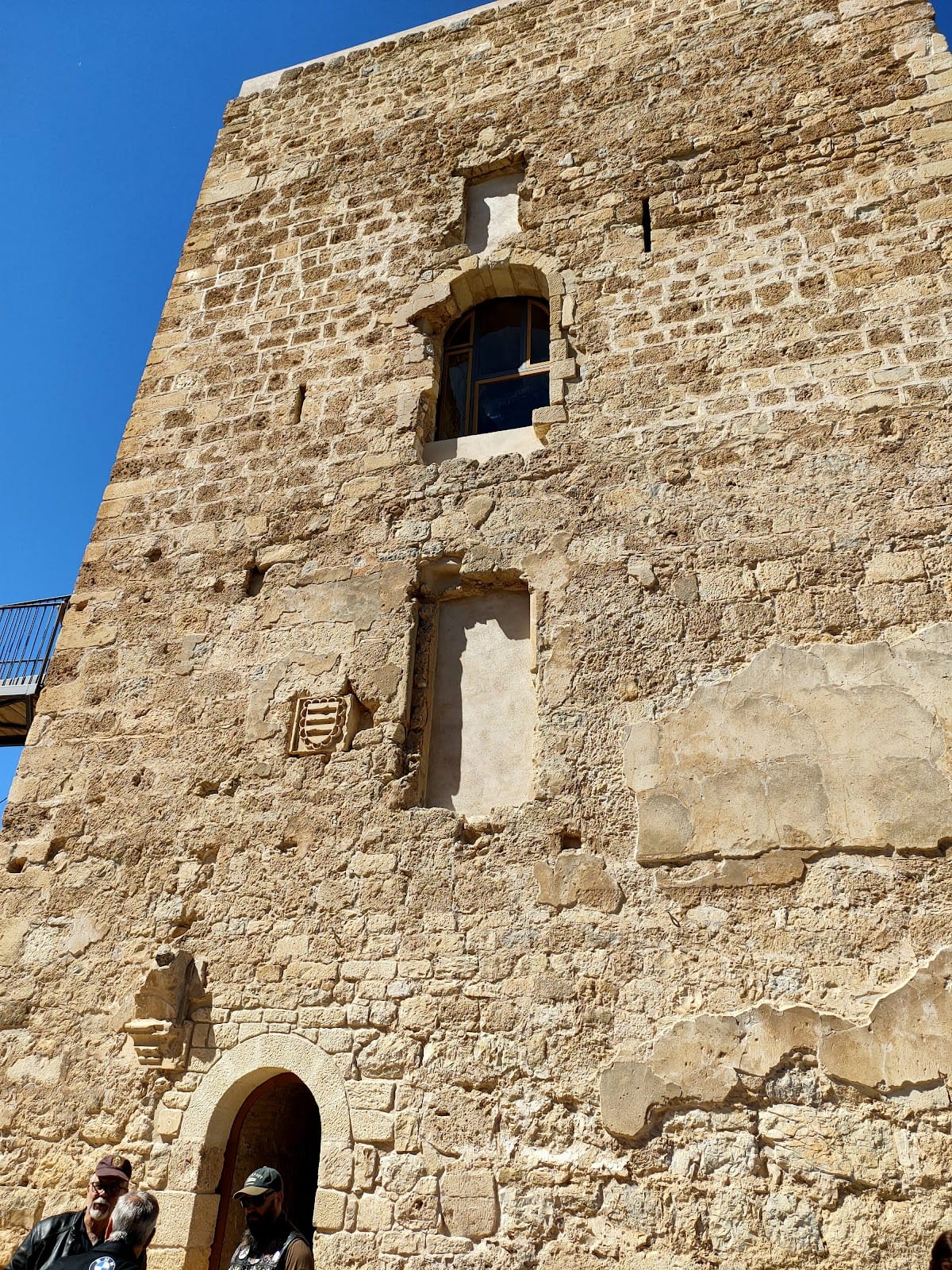
Each corner of the fortress is protected by distinct towers. The southwest corner hosts the large rounded tower previously described. On the south side stands a small square tower capped with a barrel vault, a simple arched ceiling resembling a half-cylinder. The northeast corner contains a two-story rectangular tower, whose upper floor is covered by a pointed barrel vault—an architectural element featuring a slightly angular arch rather than a smooth curve. The northwest corner is guarded by the 35-meter-high Torre del Homenaje or keep, divided into three levels. The lowest level is solid rock adapted to the terrain, the middle floor is octagonal with four openings including the main entrance and arrow slits (narrow vertical apertures once used for shooting projectiles), and the top level is vaulted with ribs—arches that support the ceiling—and illuminated by four windows.
Access to the Alcázar was through two gates: a main entrance on the eastern wall and a smaller postern gate near the keep on the western side. The main gate has been altered over time and today features a horseshoe-shaped arch, a style often associated with Islamic architecture but here a later restoration addition.
Inside the Alcázar, two primary sectors stand out. To the south are cisterns, called “aljibes,” used for water storage and built across different periods using varied techniques. One cistern reflects Islamic construction, employing lime and gravel combined with rammed earth, while its adjoining cistern dates from the Castilian period and features thick masonry walls. The northern sector includes a small courtyard granting access to the keep and the opposite tower, highlighting the castle’s complex internal circulation.
Surrounding the Alcázar, the Alcazaba forms a large enclosed area defined by high masonry walls. These walls, likely built as a facing to earlier rammed earth fortifications, have an irregular contour that provides defense without the abundance of towers seen in some castles. Only one tower is present on the eastern wall, securing the principal entrance. This gate leads through a narrow passage next to the walls into a rectangular enclosed space that controls access to the fortress’s interior.
In the late medieval period, a new two-level building was introduced adjacent to the keep and the opposite tower. This structure adapted to the slope of the terrain and included a cellar below and living quarters above. Archaeological excavations have also uncovered service areas dating to the 16th and 17th centuries, such as cellars, storage rooms, courtyards for movement, corridors, and kitchens, supporting the castle’s use as both a residence and a fortified noble estate.
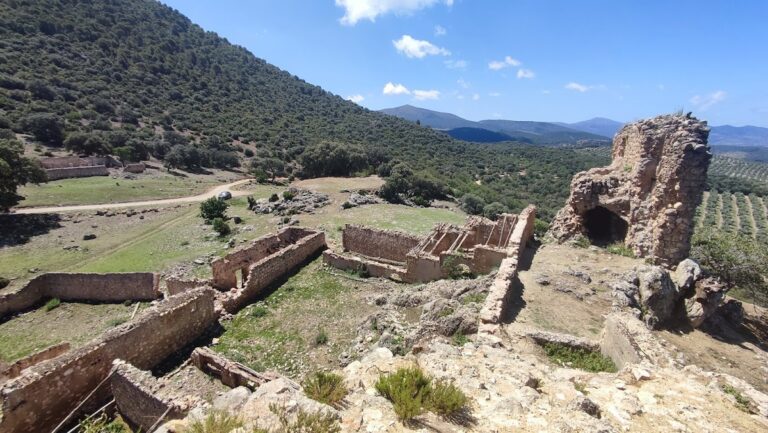
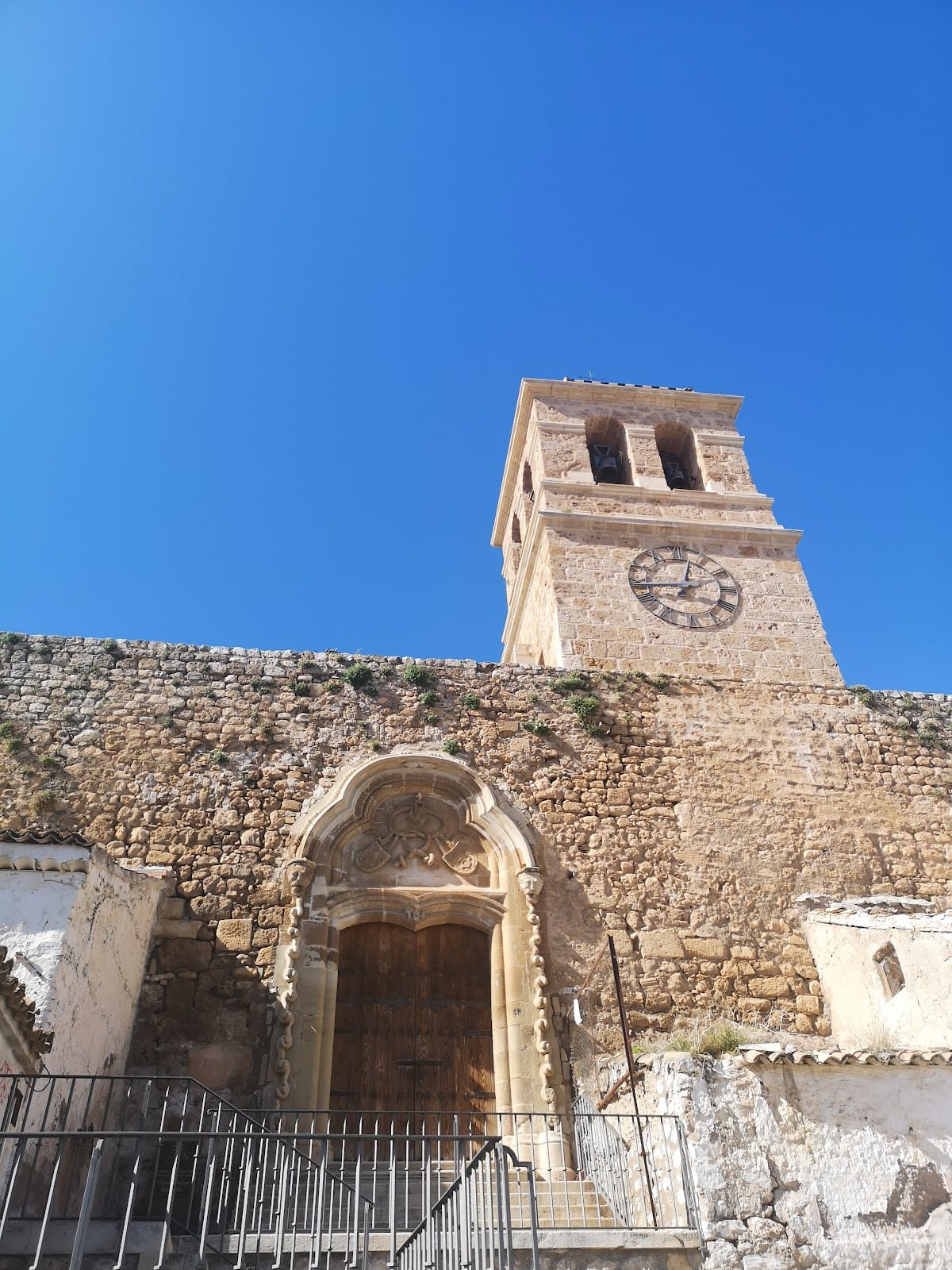
The church of Santa María, constructed within the northeastern external enclosure, rests on a rectangular floor plan. It houses six side chapels and integrates the former defensive tower of the Alcazaba within its apse, the semicircular or polygonal end of the church where the altar stands. Furthermore, its bell tower was built atop earlier structural elements that once formed part of the castle’s entrance system. Restoration projects have preserved much of the Alcázar alongside the church’s bell tower, while other sections of the castle remain partially ruined yet still convey the historical complexity of this fortified site.
Nearby sites