Castello Vagnone: A Lombard Castle and Noble Residence in Trofarello, Italy
Visitor Information
Google Rating: 4.6
Popularity: Very Low
Google Maps: View on Google Maps
Country: Italy
Civilization: Unclassified
Remains: Military

History
Castello Vagnone is situated in Trofarello, Italy, and originates from the Lombard period, having been established in the 9th century AD by a noble family known as the Vagnone, who traced their lineage to the earlier ruling Vangioni lords of the area. For centuries, the castle played a fundamental role as a fortified military stronghold in the region.
In the early 13th century, specifically in 1233, the castle became involved in a local conflict between the neighboring towns of Moncalieri and Chieri. During this dispute, the lords of Trofarello permitted Moncalieri’s forces to occupy the castle’s defenses. This strategic allowance was instrumental for Moncalieri’s retreat, illustrating the castle’s military importance in regional power struggles at that time.
The castle’s military role continued until the early 18th century when, during the War of Spanish Succession, it suffered significant damage. In 1705, French troops commanded by Marshal La Feuillade deliberately set fire to the fortress while it held munitions and supplies. This assault caused near-total destruction.
Following the French withdrawal, the castle was restored but ceased to serve a defensive purpose. It was transformed into a noble residence, retaining only the original central tower and parts of the external walls. The reconstruction expanded the building vertically to three floors, introducing large and richly furnished halls fit for aristocratic life. Concurrently, the surrounding fortifications were replaced by gardens and terraces, marking the shift from military function to leisurely estate.
By the late 18th century, the castle incorporated the chapel of San Rocco, which opened in 1792. This chapel is sometimes attributed to renowned architects Juvarra and Vittone, reflecting the castle’s architectural refinement during its residential phase.
Access to the estate was originally via two gates: a pedestrian entrance on the east side and a carriage route on the west connecting nearby towns Testona and Chieri. In 1811, plans were set in motion to create a grand avenue linking the royal road directly to the village center, highlighting evolving transport and urban connections.
The property saw further development between the late 19th and early 20th centuries. Around 1900, a western wing was added, followed by an eastern extension with neo-Gothic features built by architect Ricci between 1928 and 1938. Both wings face the park and village and are connected by a low structure.
Throughout its history, Castello Vagnone hosted notable personalities including Vincenzo Gioberti, Marquis Carlo Alfieri—who was both a senator and a writer—and Saint John Bosco, reflecting its social and cultural significance.
In the mid-20th century, part of the castle’s rear underwent partial demolition by the local municipality in 1960–1961. The family that originally owned the castle vacated the property in the 1980s, leading to several ownership changes. Eventually, local private enterprises acquired the castle in 1998 with the goal of preserving its historic character while adapting it for residential use.
A comprehensive restoration was completed in 2003, guided by careful studies of the building’s materials and construction methods. This work restored the facades and architectural harmony of Castello Vagnone, while modernizing its interior spaces to accommodate contemporary living without compromising its historic essence.
Remains
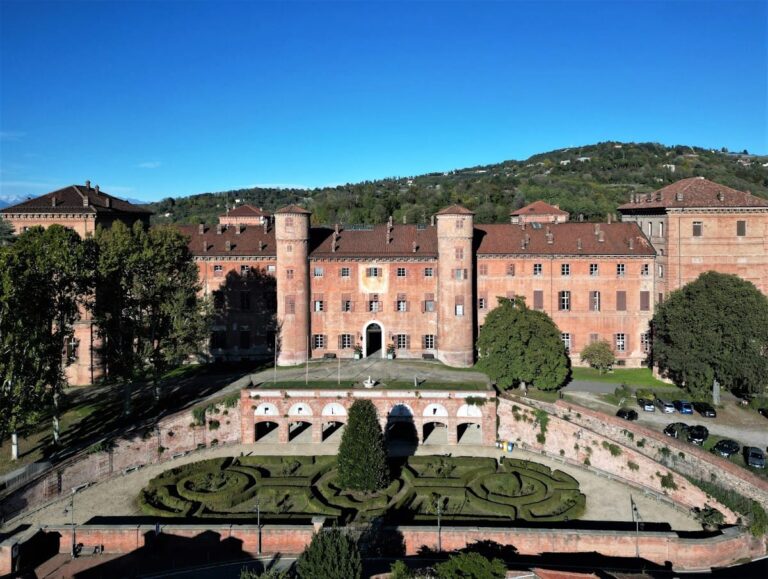
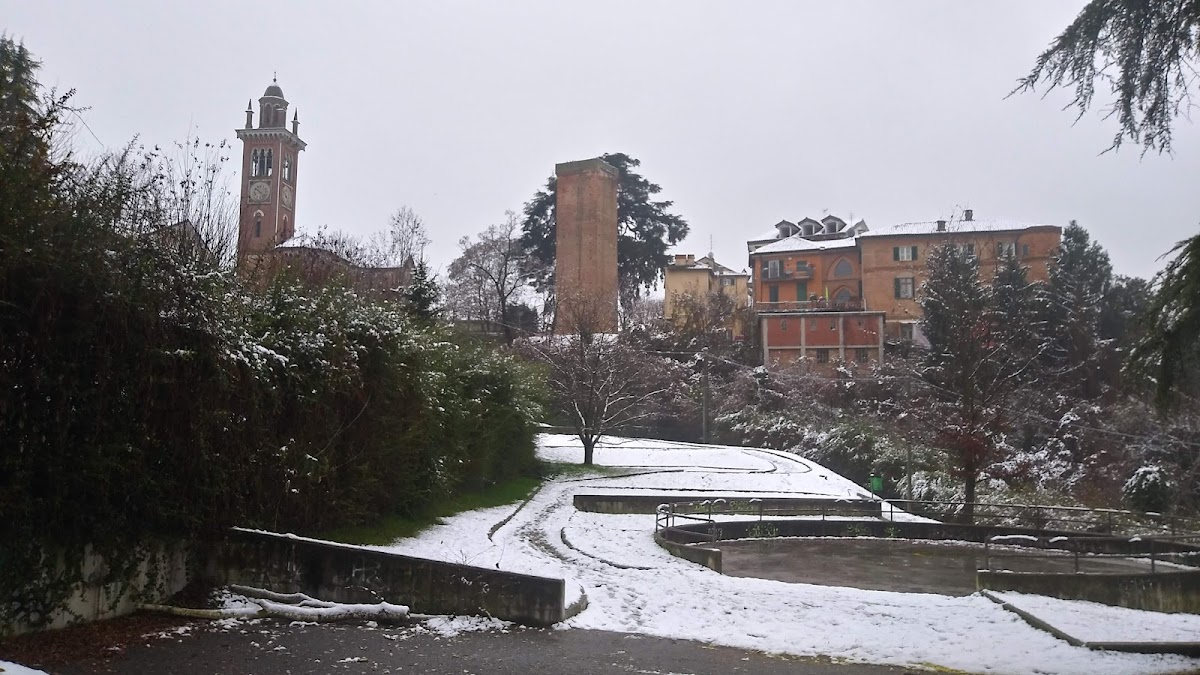
The current structure of Castello Vagnone reflects the layered history of a medieval fortress that evolved into a noble residence. The surviving central tower and fragments of the outer walls date back to the original 9th-century defensive complex. These elements have endured through centuries, anchoring the later expansions and renovations.
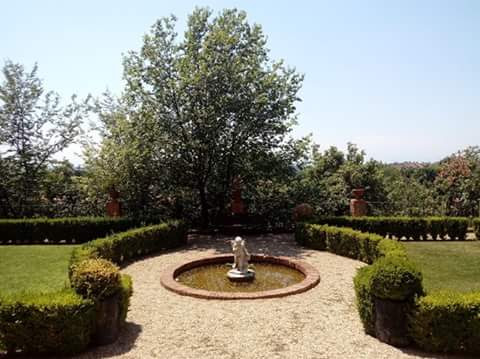
Initially, the castle’s design focused on fortification, with ramparts and defensive earthworks encircling the site. Over time, especially following the 18th-century reconstruction, these military features were removed or transformed. The former embankments now appear as terraced gardens, preserving the outline of the vanished fortifications in landscape form.
Within the main building stands the chapel of San Rocco, established in 1792 and integrated into the castle’s body. Architectural analysis suggests that this chapel may have been designed by Juvarra and Vittone, both prominent figures of Baroque architecture. This sacred space adds a religious dimension to the site, embodying the estate’s shift from a purely military outlook to a residential and ceremonial estate.
The castle’s original points of entry consisted of two accesses: an eastern pedestrian path corresponding to present-day Vicolo Fontana and Via della Chiesa, and a western carriage road, Via Torretta, that historically linked Testona and Chieri. These routes highlight the castle’s position within local transport networks and its role as a node between nearby communities.
Adjacent to the central structure, a western wing was constructed near the turn of the 20th century, expanding the residential quarters. On the opposite side, the eastern wing was added between 1928 and 1938. This newer extension features neo-Gothic stylings characteristic of that period and was designed by architect Ricci. The two wings are connected by a low-lying building, creating a cohesive complex facing the park and village.
The gardens surrounding the castle occupy several levels, reflecting the shapes of the historical defensive earthworks that once protected the fortress. These landscaped terraces now offer hints of the site’s original layout, creatively preserving its medieval outline within a peaceful park environment.
The 2003 restoration carefully addressed the castle’s physical fabric, using stratigraphic and diagnostic methods to understand its construction materials and techniques. This work achieved both the recovery of the castle’s external appearance and the respectful subdivision of internal spaces into a limited number of large residential units. The project maintained the integrity of the castle’s spatial organization while adapting it to contemporary uses.
Today, Castello Vagnone stands as a layered architectural testament to its transformation from a Lombard stronghold into an elegant noble residence set within carefully designed grounds that echo its former military presence.
Nearby sites