Castle Cavour of Santena: Historic Residence of the Cavour Family


Site at a Glance
- Rating
- 4.6
- Popularity
- Low
- Country
- Italy
- Primary era
- Early Modern
- External website
- Open
- Eras represented
- Medieval, Early Modern, Modern
- Civilizations
- Kingdom of Sardinia
- Site type
- Domestic
- Remains
- Elite Residence
On this page17 sections
History
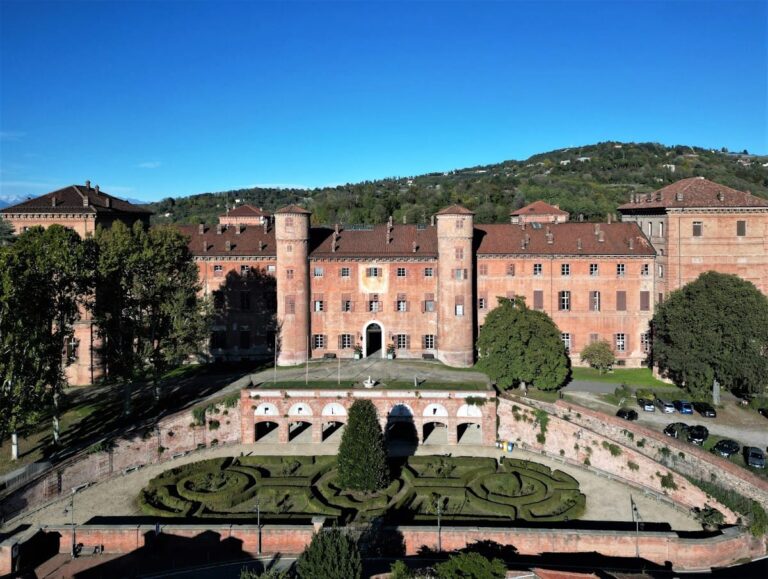
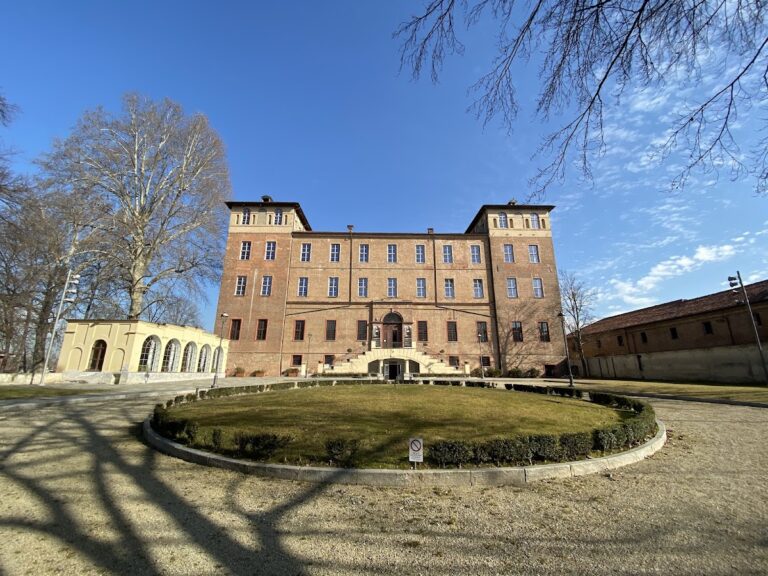
Castle Cavour of Santena is a historic residence in Italy associated with the Benso family and Camillo Benso, Count of Cavour, the Piedmontese statesman who was a leading political figure in the movement to unify Italy. The present villa was built between 1712 and 1722 after the demolition of an earlier fortified complex, and the estate is regarded as one of Piedmont’s principal castles. It preserves historical furnishings, family archives, and a library.
From Fortification to Villa
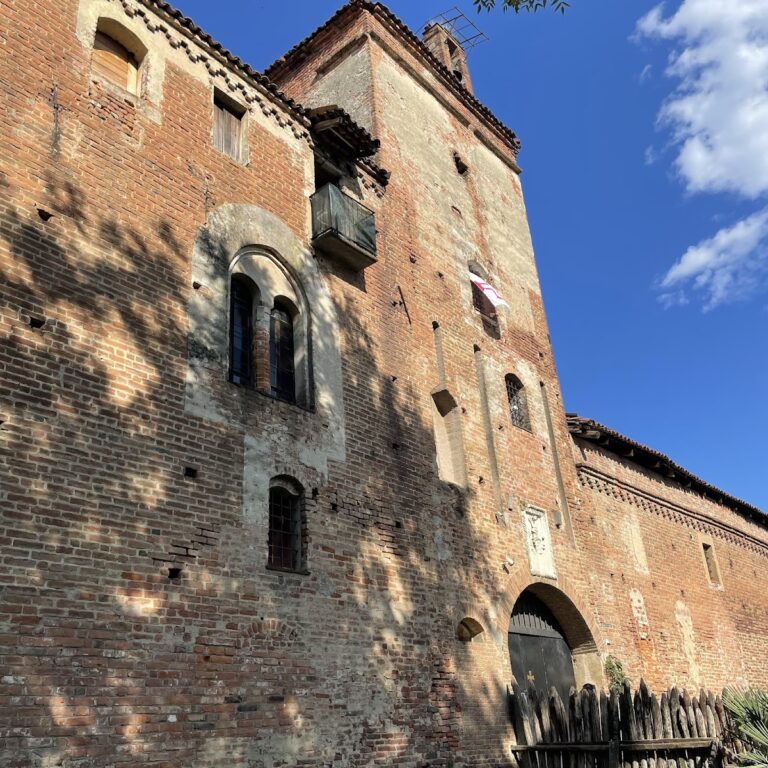
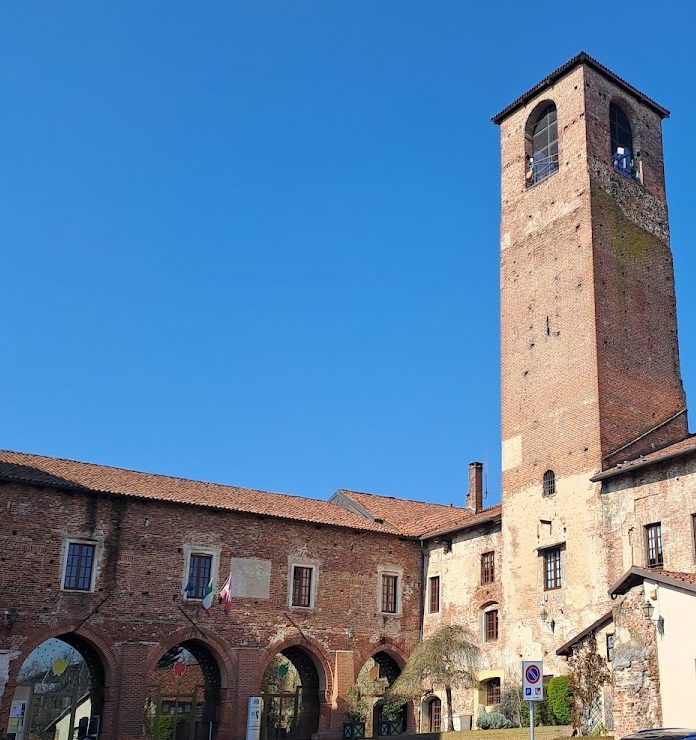
A fortified predecessor occupied the site of the present villa and adjoining church. It had towers, walls, and moats, and was administered successively by various noble families until the early eighteenth century. In 1708, Carlo Ottavio Benso, formerly Count of Santena, ordered the medieval fortification to be demolished and commissioned a new villa from Francesco Gallo, an architect active in the service of Victor Amadeus II of Savoy. Construction continued from 1712 to 1722.
The male line of the Benso di Santena family ended in 1748. The Bishop of Turin then granted the fief to Francesco Oddone Rovero di Pralormo, a nephew of the family, prompting a dispute with the Benso di Cavour family. Part of the castle was transferred to the Benso in 1760, and the entire property passed to them in 1777. Restoration work carried out between 1760 and 1770 included the stucco decoration of the Hunting Hall. Additional stuccoes were installed in the Diplomatic Hall between 1780 and 1790.
Nineteenth-Century Expansion
In 1816, the old buildings in front of the entrance were demolished, creating the small square that remains there. Around 1840, Marquis Ainardo Benso, Camillo Benso’s nephew, initiated a major enlargement under the direction of the architect Melchiorre Pulciano. The central body was raised, and the two side wings were joined to form a unified complex.
The villa and park served as the Benso di Cavour family’s summer hunting residence and were also used as a royal hunting residence. Camillo Benso convened his ministerial colleagues in the Council Hall. After Ainardo Benso died in 1875, the property passed by inheritance to his French cousin Eugène De Roussy de Sales. An agreement with the new owner in 1876 allowed Marchioness Giuseppina Alfieri, the last descendant of the Benso di Cavour family, to recover Santena.
Memorial Estate and Modern Preservation
Giuseppina Alfieri’s successors, Luisa Alfieri, wife of Marquis Emilio Visconti Venosta, and their son Giovanni Maria Visconti Venosta, donated the estate to the Municipality of Turin. Margherita Pallavicino Mossi, Giovanni Maria’s wife, later established the Camillo Cavour Foundation and the Giovanni and Margherita Visconti Venosta Centre for Cavour Studies. These institutions are connected with the estate’s preservation of Cavour’s memory, family records, and historical collections.
The chapel-tomb was declared a national monument in 1911, during the fiftieth-anniversary commemorations of Italian unification. The Cavour Memorial museum reopened on 17 March 2021, the 160th anniversary of Italian unification, after an extended restoration closure.
Remains
The complex comprises the villa, an adjoining church, the Castellazzo, the chapel-tomb, and a 23-hectare park. The villa’s interiors combine Empire-style furnishings, a neoclassical decorative style associated with the Napoleonic period, with oriental elements inspired by Asian designs. Paintings and decorative schemes frequently represent animals, members of the Benso family, and related noble lineages.
State Rooms and Family Apartments
Hunting Hall
The Hunting Hall is the central room of the villa. White stuccoes represent foliage, game, and weapons, while genuine horns of Alpine animals serve as hunting trophies. The furnishings include a round Empire-style table, a sofa and armchairs covered in badera upholstery fabric, two eighteenth-century Chinese screens, and a Sèvres porcelain bowl that Napoleon III gave to Camillo Benso at the 1856 Congress of Paris, a diplomatic conference held after the Crimean War.
Dining Room and Chinese Salon
A concealed door connects the Dining Room with the Chinese Salon. The Dining Room contains twelve animal paintings by Giovanni Crivelli, a painter associated with the circle of Filippo Juvarra, an important Italian architect and designer linked to the Savoy court. Painted-silk panels cover the walls of the Chinese Salon, which also contains an eighteenth-century Murano-glass chandelier.
Visconti Venosta Study
The Visconti Venosta Study was furnished in the second half of the nineteenth century. A copy of Francesco Hayez’s portrait of Cavour hangs on wooden boiserie, or wall paneling, decorated with paintings of members of the Carron di San Tomaso family. Other paintings represent Cavour’s paternal great-grandparents, Michele Antonio Benso and Felicita Agnese Doria di Ciriè. A large work by Vittorio Matteo Corcos portrays Emilio Visconti Venosta.
Apartment of Marchioness Filippina di Sales
The apartment of Marchioness Filippina di Sales has late-eighteenth-century oriental decoration. Decorated rice-paper wallpaper covers the walls, and a large bed with a painted-silk canopy forms its principal feature. Portraits show Baron Bernhard Otto von Rehbinder, a field marshal in the Savoy army, and his wife Cristina Margherita di Piossasco di Feys. Filippina di Sales was Camillo Benso’s paternal grandmother and the wife of Giuseppe Filippo Benso.
The apartment is linked to a small private chapel, or pregadio, containing a kneeling stool and an altar. It also holds a copy of a seventeenth-century crucifix that belonged to Saint Francis de Sales, the Catholic bishop and writer later recognized as a saint.
Clermont-Tonnerre Room
The Clermont-Tonnerre Room, also called the Bishop’s Room, takes its name from a painting of Saint Amadeus of Clermont, who was Bishop of Lausanne in 1144. Empire-style furnishings and valuable decorative objects fill the room, while its imagery refers to connections between the Benso family and other noble lineages.
Library and Bedrooms
The library holds more than 6,000 volumes. Most date from the nineteenth century, while earlier books reach back to the fifteenth century. The collection covers religion, history, literature, and art, with books in Italian and other languages. The bedrooms contain furnishings of Piedmontese and French origin, mainly from the second half of the nineteenth century. One room includes a valuable clock and a cast-iron fireplace plate dated 1792 and bearing the Benso coat of arms.
Camillo Benso’s bedroom has furnishings identical to those in the Benso di Cavour Palace in Turin. Memorial objects on its left side commemorate his nephew Augusto Cavour, who died at the Battle of Goito during the First Italian War of Independence, the 1848 to 1849 conflict in which Sardinia-Piedmont challenged Austrian control in northern Italy. Adelaide Lascaris’s bedroom contains furniture transferred from the Turin palace, a portrait of Adelaide, and a Francesco Gonin watercolor depicting her agony.
Marchioness Giuseppina Benso Alfieri di Sostegno’s room has relatively simple furnishings, numerous paintings, and two watercolors by Francesco Gonin. The Green Room takes its name from the green silk upholstery of its bed and canopy. It contains Giuseppe Pietro Bagetti’s collection of watercolored copper engravings showing views of Piedmont and the Nice region.
Commemorative and Religious Structures
Council Hall
The Council Hall is a large meeting room connected to the castle by a terrace. Bas-reliefs and stuccoes decorate it in a Hellenizing style, meaning one that evokes forms associated with ancient Greek art and architecture. The room contains a bust of Cavour presented by Tuscan patriots during the plebiscite, a popular vote used to confirm political or territorial decisions during Italian unification. A mosaic floor displays the coats of arms of the Benso and Visconti Venosta families.
Castellazzo
The Castellazzo stands beside the Council Hall and is the only surviving part of the original medieval castle. It consists of a crenellated tower. On its first floor, the Hall of Crowns displays crowns presented by one hundred Italian cities to Cavour on the twenty-fifth anniversary of his death. The fireplace hood bears painted versions of the Benso coat of arms and the family motto, “Gott will reicht.” An adjoining room contains further commemorative relics, including an olive branch sent by Benito Mussolini in 1929, as well as additional crowns.
Chapel-Tomb
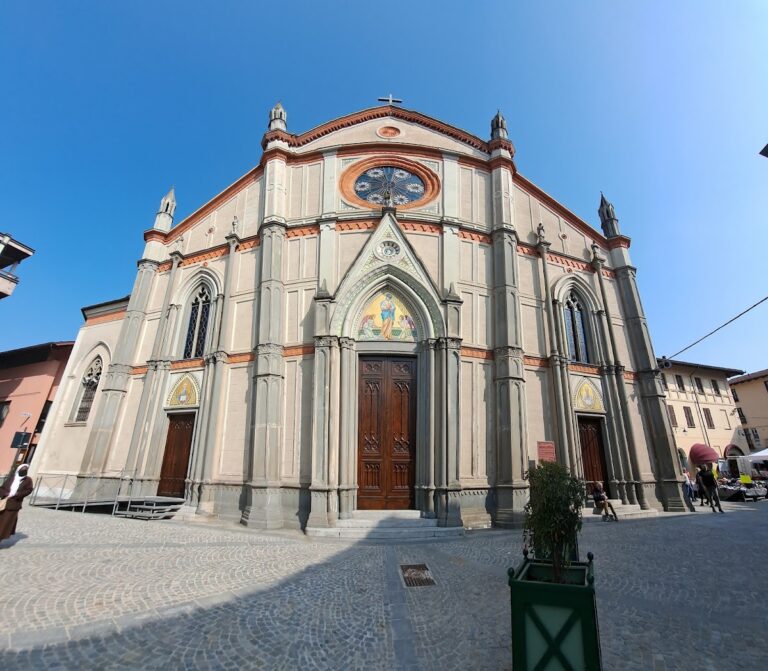
The chapel-tomb stands to the left of the church and was built in 1715 by Count Carlo Ottavio Benso. It contains the remains of Camillo Benso di Cavour and numerous members of his family. The Benso family burial place had originally been in the Church of San Francesco at Chieri. After Napoleon’s army destroyed that church, the family created a new burial crypt beneath the chapel at Santena. The chapel has a Doric-order facade, marble-lined interior walls, and a bronze altar.
Park and Landscape
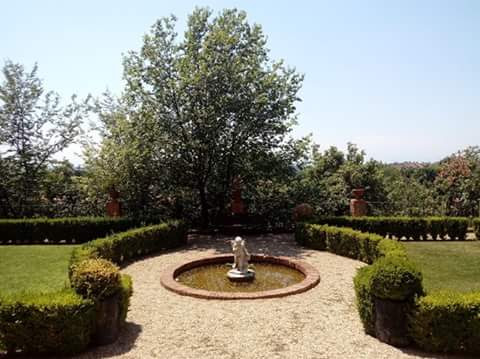
The 23-hectare park was created in the English style at the beginning of the nineteenth century at the wish of Marquis Michele Benso di Cavour. The landscape architect Xavier Kurten designed small hills and curving paths to produce changing views through the grounds. The park is bounded to the south by the bank of the Banna stream and contains native centuries-old beech, elm, oak, fir, and plane trees. Some plane trees reach 35 metres in height, including a monumental specimen known as the Cavour plane tree.