Castello San Salvatore: A Medieval and Renaissance Castle in Susegana, Italy
Visitor Information
Google Rating: 4.6
Popularity: Medium
Official Website: www.castellosansalvatore.it
Country: Italy
Civilization: Unclassified
Site type: Military
Remains: Castle

History
Castello San Salvatore stands in the town of Susegana, Italy, and was established by the medieval civilization of northern Italy. Its origins date back to the late thirteenth and early fourteenth centuries, following the city of Treviso’s grant of the San Salvatore hill to the Collalto family in 1245. This gift set the foundation for the castle and the emergence of the Collalto family as local lords.
In 1312, the Collalto family gained full jurisdiction over the counties of Collalto and San Salvatore through a formal grant by Emperor Henry VII. This recognition created a principality that maintained considerable independence, even though it remained under the broader control of Treviso and later the Venetian Republic. Over subsequent centuries, the castle served as a military stronghold of strategic importance, overseeing nearby settlements and key routes that included vital trade pathways along the Piave River. The castle was actively involved in regional disputes that shaped the dynamics among neighboring cities such as Treviso, Padua, and Venice.
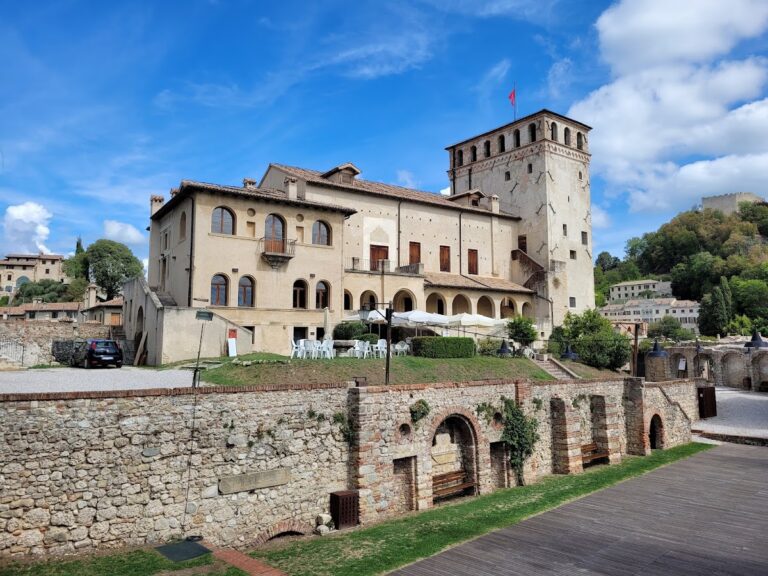
By the sixteenth century, the military role of Castello San Salvatore diminished following the War of the League of Cambrai. After this period, the fortress transitioned into a noble residence reflecting Renaissance tastes and became a center of power for the Collalto family. Significant renovations were undertaken during this time, imparting upon the castle the appearance of an urban palace, blending its defensive origins with more refined domestic architecture.
The castle faced severe destruction during the First World War due to its location near the Piave front. Intense bombardments inflicted heavy damage, including the loss of the private oratory and its artistic frescoes by noted painters Tommaso da Modena and Pordenone. Additionally, a fire destroyed the archival documents of the Collalto family, complicating the detailed historical understanding of the site. Restoration efforts commenced in 1943 and concluded by 1951, stabilizing the ruins and preserving the essential structure of the castle for future generations.
Remains
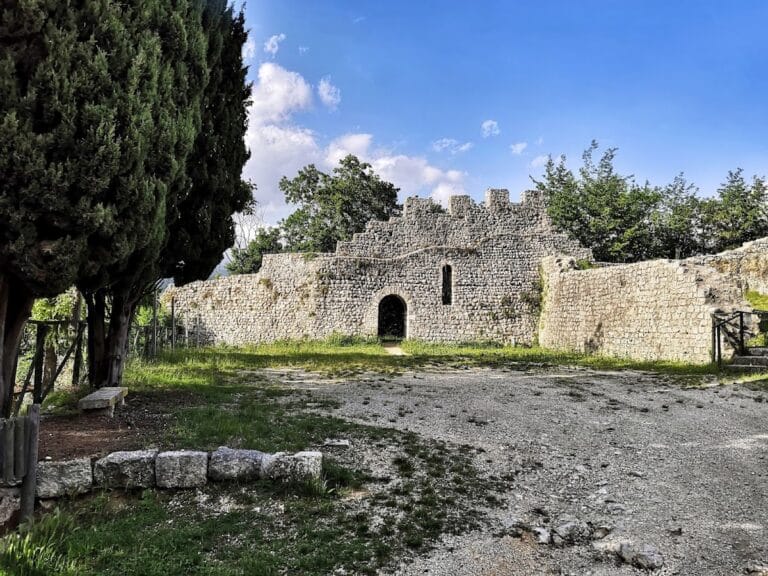
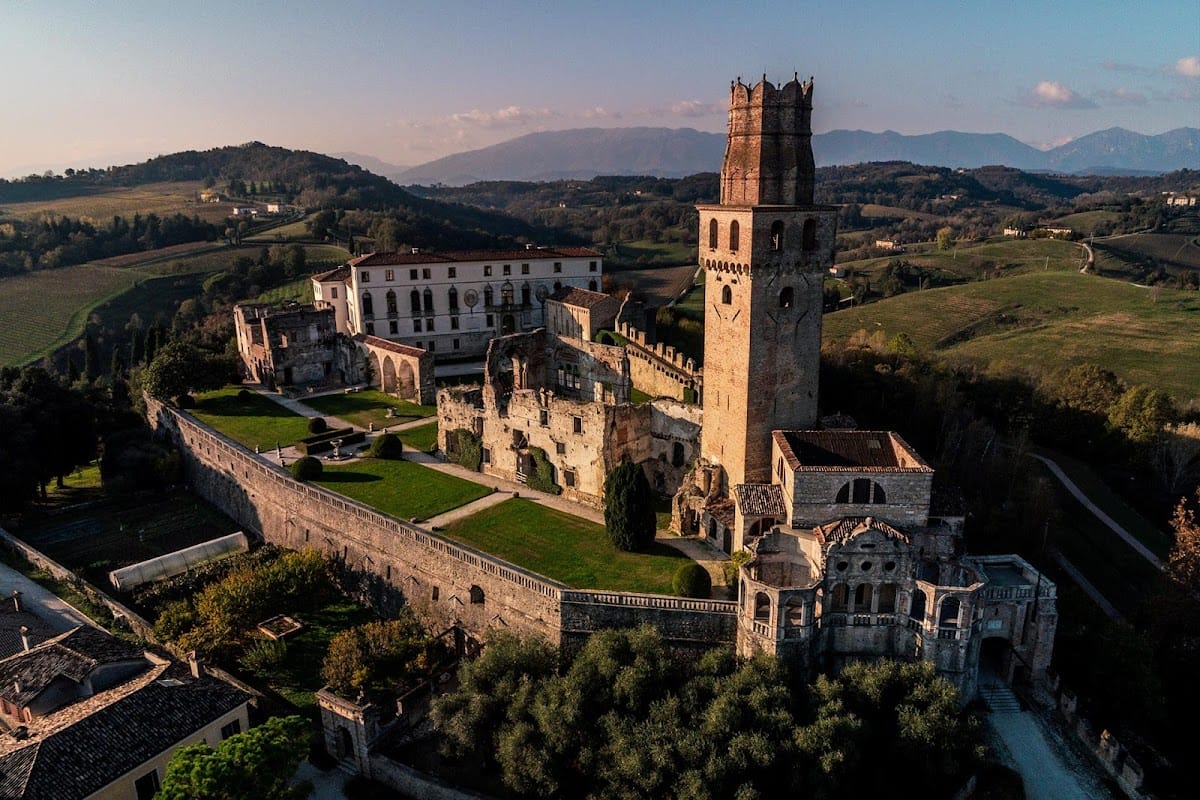
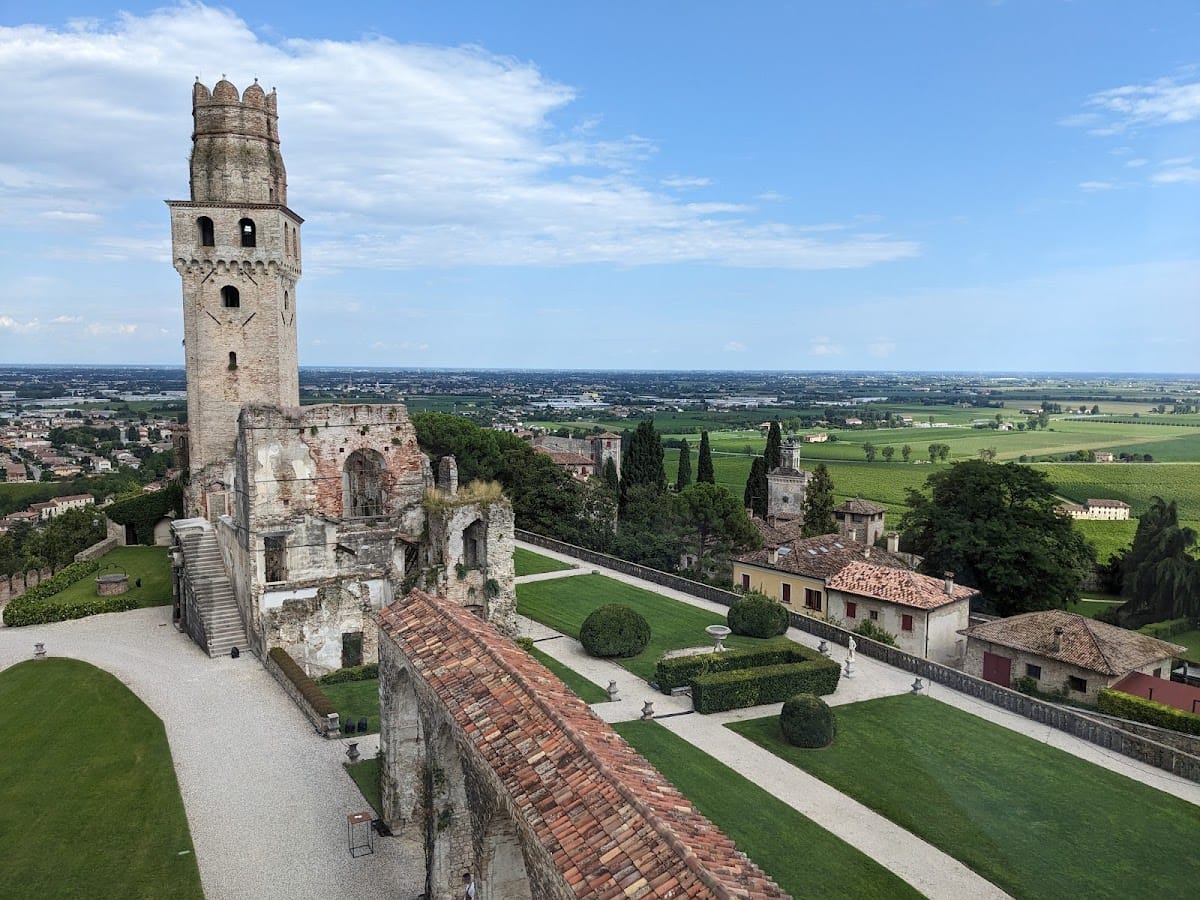
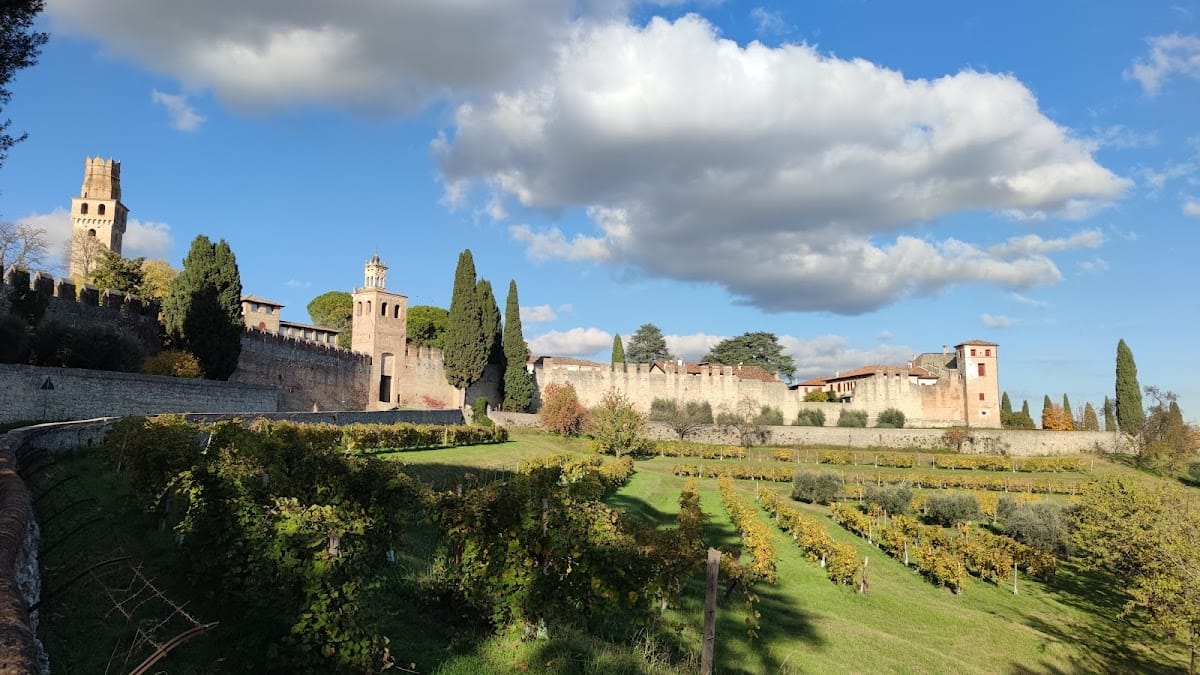
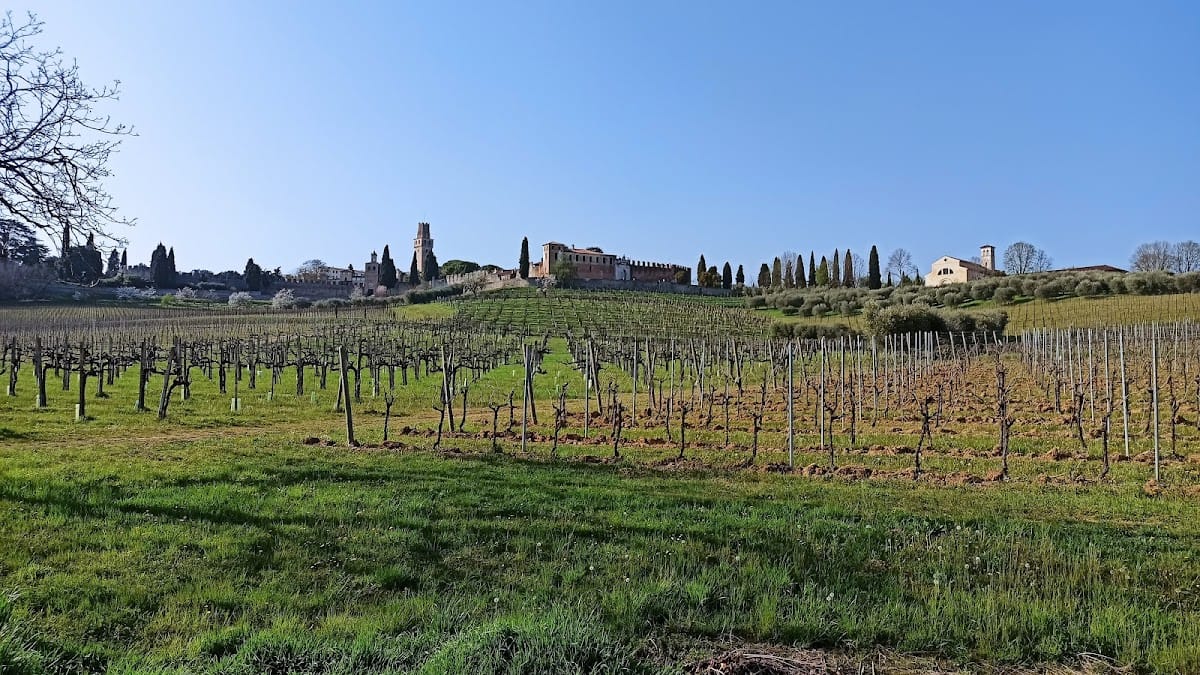
The Castello San Salvatore complex is situated atop a prominent hill, offering commanding views of the surrounding landscape, including control of nearby communities and the Piave River trade routes. The castle’s layout reflects its long history, with elements from medieval fortifications alongside Renaissance adaptations. The primary structural components include a crenellated defensive wall, designed for protection and surveillance, which dates back to the original phases of construction. These battlements were built using local materials typical of the period, providing both strength and coherence with the regional architectural traditions.
Within the fortified enclosure stands a large tower, a central feature serving as a lookout and final defensive point during military engagements. Adjacent to this, the Palazzo Odoardo represents the transformation of the castle into a noble residence during the sixteenth century. Its design incorporates stylistic elements characteristic of urban palaces from that era, with internal curtain walls displaying a diversity of architectural motifs unified through frescoed facades, reflecting a blend of defensive and domestic uses.
The church of Santa Croce, incorporated within the castle grounds, further underscores the site’s religious and social roles throughout its history. This sacred space contributed to the internal life of the castle, serving the spiritual needs of its inhabitants. Before the immense damages in World War I, the castle also housed a private oratory adorned with elaborate frescoes created by prominent artists Tommaso da Modena and Pordenone, highlighting the artistic patronage of the Collalto family.
The extensive wartime bombardments caused near-total collapse of many sections by 1919, leaving the castle in a severely compromised condition. Subsequent restoration efforts restored the main features, preserving the tower, walls, palazzo, and church, while stabilizing the ruins of other buildings found within the complex. Today, these elements paint a layered picture of the castle’s evolution from a military fortress into a Renaissance noble estate.
Nearby sites