Castello di Caneva: A Medieval Hilltop Fortress in Italy
Site at a Glance
- Rating
- 4.3
- Popularity
- Low
- Country
- Italy
- Primary era
- Medieval
- External website
- Open
- Eras represented
- Medieval, Early Modern
- Civilizations
- Holy Roman Empire
- Site type
- Military
- Remains
- Castle
On this page6 sections
History
Castello di Caneva is a medieval hilltop castle ruin in Caneva, Italy, whose strategic history is associated with the Church of Aquileia, regional warfare, and Venetian rule. The hill and surrounding area were probably inhabited during the High Middle Ages, although little is known about this early phase. Some scholars connect the castle with an earlier Roman watchtower, a type of fortification found in the foothills of Veneto and Friuli. That structure may in turn have developed from a small Paleo-Venetian fortified settlement.
The Church of Aquileia and Regional Conflict
From 1034, the castle formed part of the possessions of the Church of Aquileia, a major ecclesiastical principality whose patriarch held both religious and territorial power in northeastern Italy. Holy Roman Emperor Conrad II granted it to Patriarch Poppo of Aquileia as part of efforts to resist the Hungarians, or Magyars, whose military movements toward Veneto around the year 1000 had increased pressure on northern Italy.
Caneva’s position made the castle desirable to nobles from Friuli, Treviso, and Padua. It became an important stronghold in conflicts between patriarchal troops and forces connected with the March of Treviso, a frontier military and political district associated with Treviso. During one severe episode, Trevisan forces besieged the castle for more than fifteen days, bringing destruction and loss of life.
Venetian Rule and Decline
Caneva entered the Republic of Venice in 1419. Under Venetian rule, the castle was maintained sufficiently to withstand a Turkish siege in 1499. Parish registers from Caneva also describe the burning of the Castelat of Villa di Villa at Cordignano and the Turkish invasion of the plain between Veneto and Friuli, placing the fortress within a wider period of military danger.
The castle’s strategic purpose ended after 1500, and its decline became pronounced during the seventeenth century. It subsequently fell into ruin. Castello di Caneva is recognized as Italian national heritage.
Remains
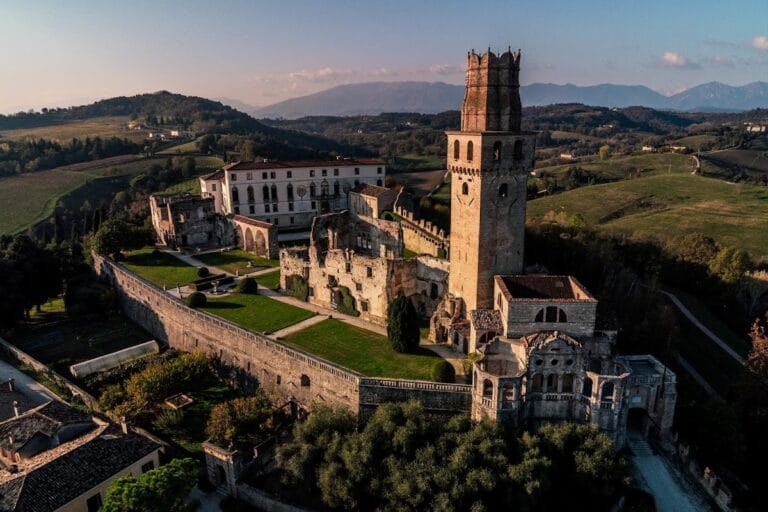
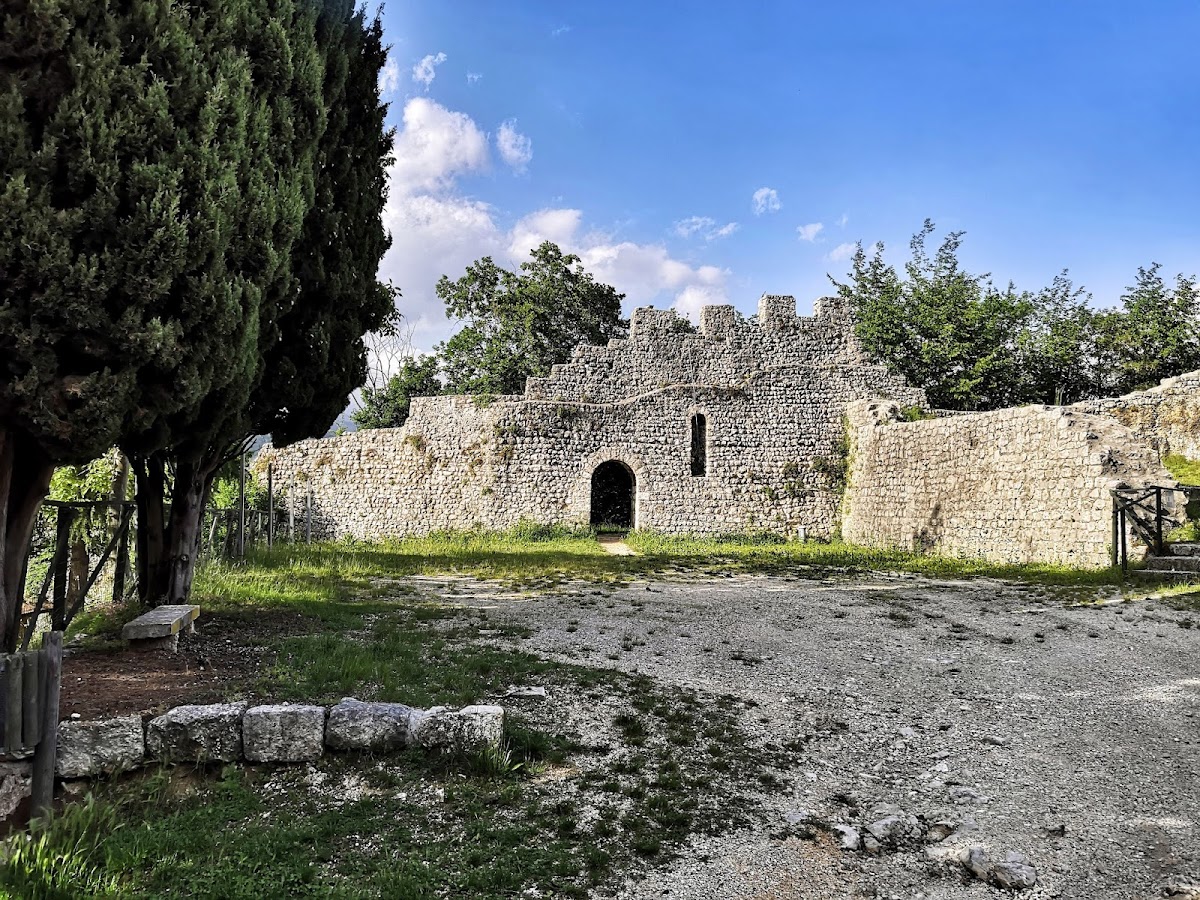
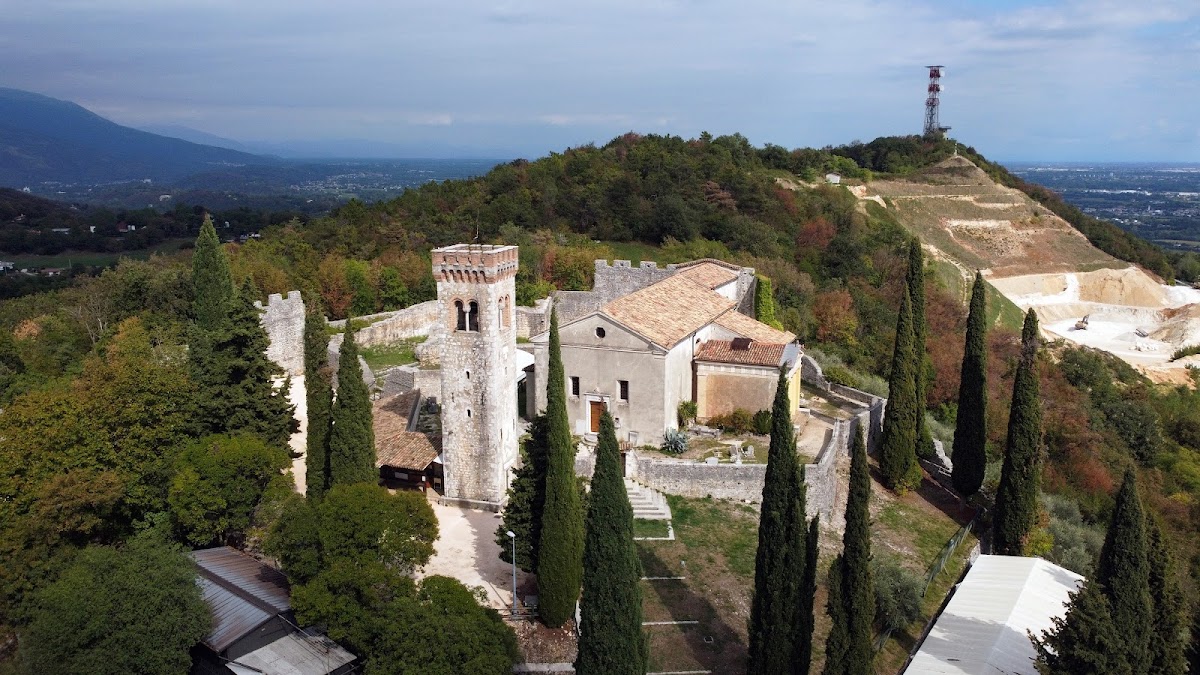
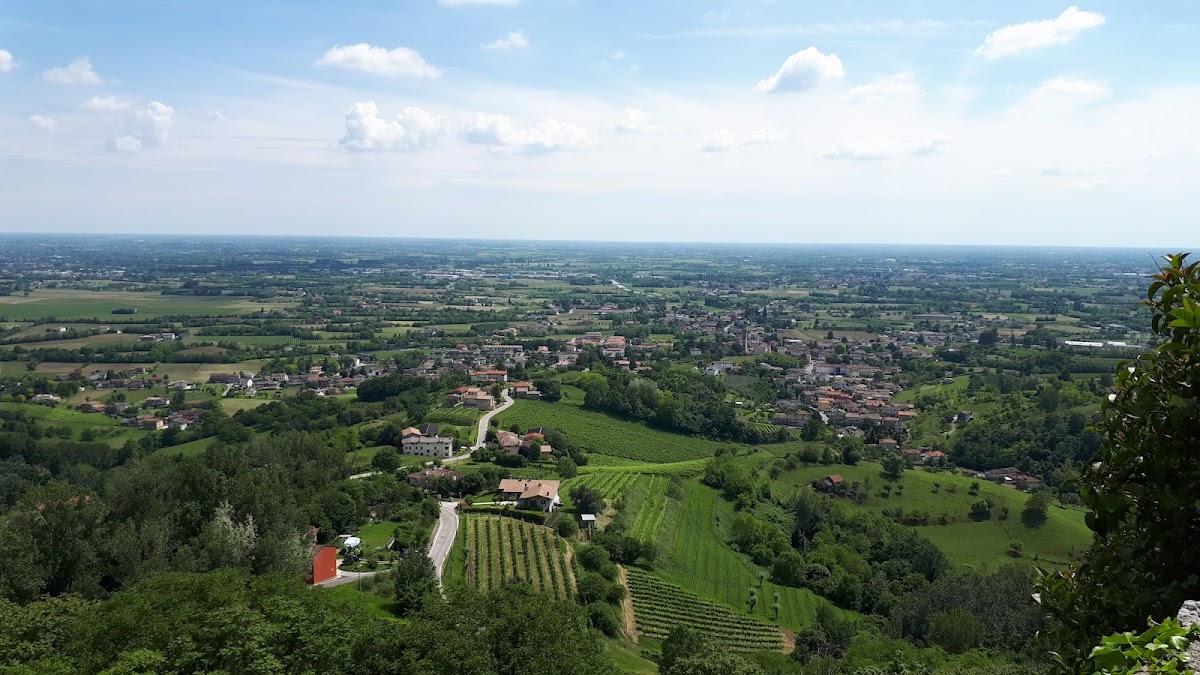
The surviving site is a ruined medieval stone fortification on a hill at approximately 213 metres above sea level. Rough-stone masonry forms the remains of the defensive circuit, with several towers still standing within the ruined enclosure. At its centre is the Church of Santa Lucia, whose position preserves the religious focus of the former fortified area.
Defensive Circuit
The castle’s physical remains consist of sections of the defensive circuit walls and several towers. Built in stone with rough-stone masonry, these structures define the surviving enclosure and represent the principal remnants of the medieval fortification. Their ruined condition reflects the site’s long decline after its strategic role ended.
Church of Santa Lucia
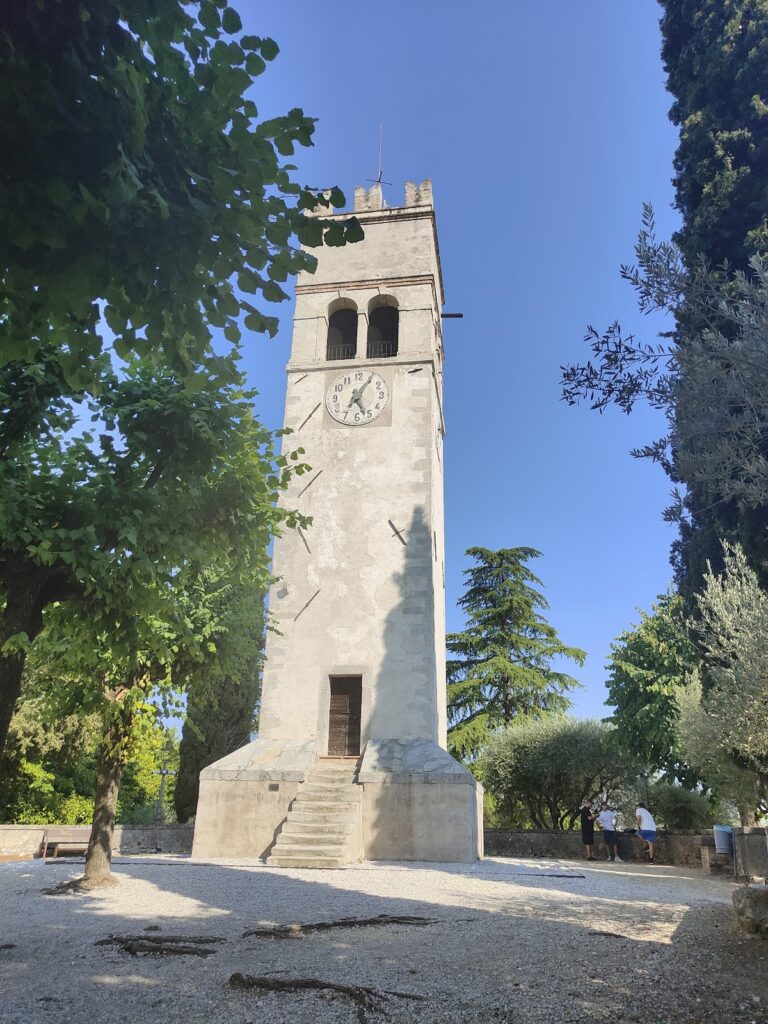
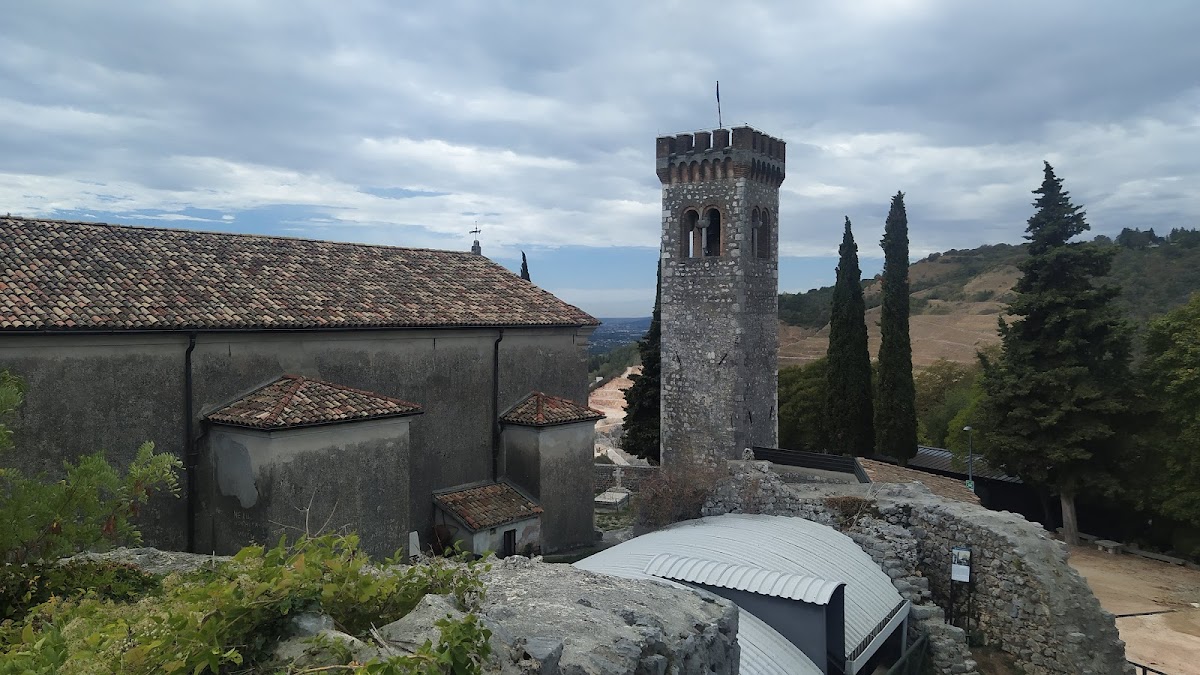
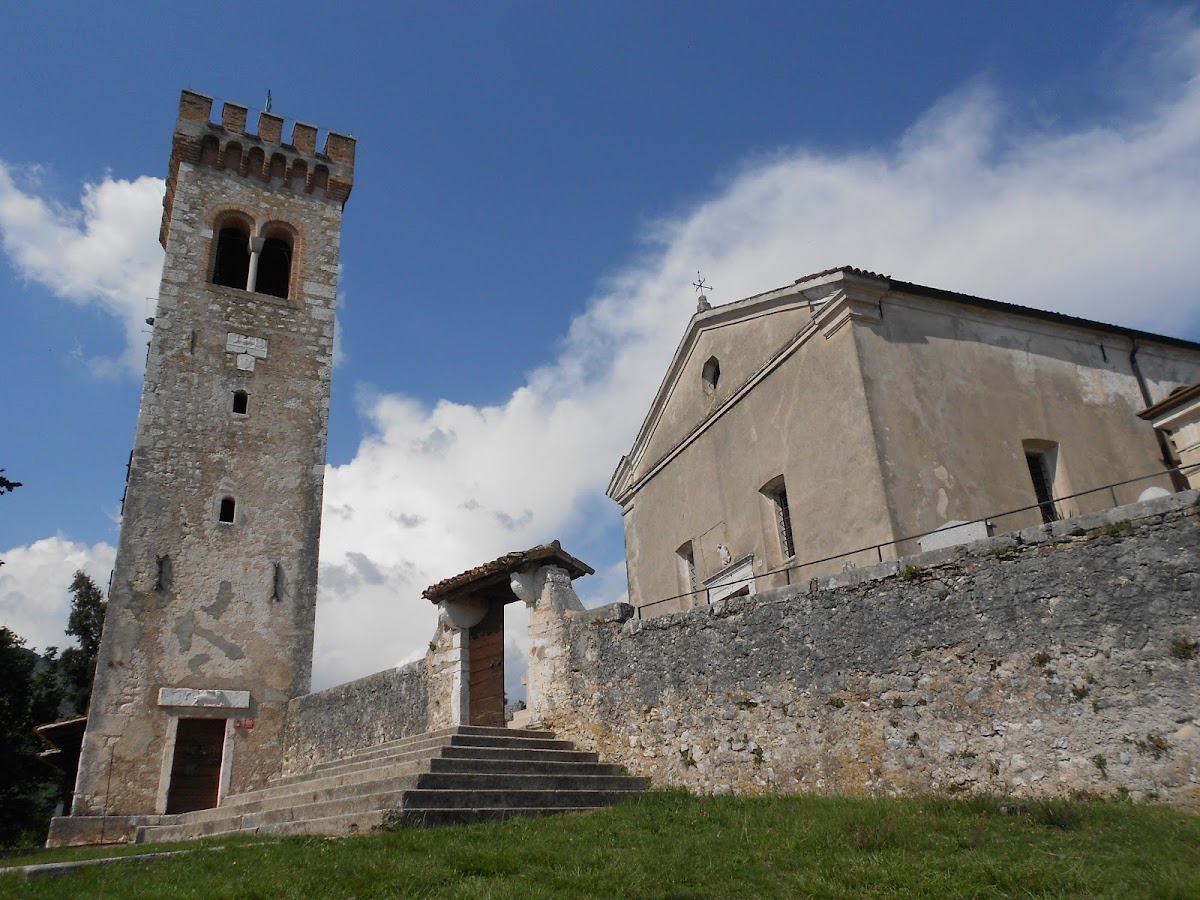
Church of Santa Lucia stands at the centre of the defensive circuit. Dating from the eleventh century, it is accompanied by a bell tower and remains associated with the castle’s medieval core. Renaissance frescoes decorate the church, including a depiction of Saint Lawrence in a niche painted by Pietro Gorizio, a painter active during the Renaissance.