Castello Pallavicino: A Historic Fortress in Varano de’ Melegari, Italy


Visitor Information
Google Rating: 4.6
Popularity: Medium
Google Maps: View on Google Maps
Official Website: www.castellodivarano.it
Country: Italy
Civilization: Medieval European
Remains: Military

History
Castello Pallavicino is a historic fortress situated in the municipality of Varano de’ Melegari in Italy. Its origins connect to early medieval efforts to guard a strategic frontier located along the Ceno Valley, where the Ceno River once marked the boundary between the rival territories of Parma and Piacenza from the 6th through the 8th centuries.
The first written record of a defensive structure on this site dates back to 1087. It appears in the Cronaca Pallavicina, which identifies Uberto Pallavicino, a descendant of an imperial vicar appointed by Emperor Otto II, as the castle’s owner. This suggests the castle was initially established by a noble family linked to the Holy Roman Empire. In 1208, the city of Parma undertook a reconstruction of the fortress, building upon earlier fortifications from the previous century.
In 1249, Emperor Frederick II granted the fiefdom of Varano to Margrave Oberto II Pallavicino, solidifying the family’s control over the area. However, Parma destroyed the castle in 1297 and imposed a ban on any rebuilding efforts, marking a period of abandonment at the site. Around 1400, the Pallavicino family defied this prohibition and undertook the castle’s reconstruction. During the regional strife between the Rossi and Terzi families, the castle came under the control of Ottobuono Terzi, who handed it over to the Visconti dynasty. The Visconti likely remodeled the fortress, adding new defensive walls and towers adapted to the evolving military technology of the time.
In 1431, Duke Filippo Maria Visconti officially recognized Margrave Rolando Pallavicino as the castle’s lord. However, political instability followed when Rolando fled in 1441 amid intrigues, resulting in the confiscation of his lands. The castle gained notoriety during this period for its role as a prison; in 1442, Annibale I Bentivoglio was held captive within its dungeons before escaping in a dramatic rescue the following year.
By 1445, Rolando had regained most of his estates by proving loyalty to the Visconti, and in 1452, he carried out renovations that gave the castle much of its present form. When he died in 1457, the fief passed to his son Niccolò. The castle later transferred briefly to the Sforza family in 1480 but was quickly sold back to Gianfrancesco I Pallavicino of Zibello. The peace of the era was shattered in 1550 when bandits attacked the fortress, killing Gianfrancesco I. His brother Roberto inherited the lands.
During the Parma War in 1551, the castle was occupied amid warfare between Duke Ottavio Farnese and his allies against Pope Julius III and imperial forces. After the conflict, the Pallavicino family reclaimed the property and maintained it through restoration efforts, including a significant refurbishment in 1770.
The Pallavicino line that held the castle ended in 1782 with the death of Margrave Ercole Pallavicino. Their estates passed to the Bergonzi family, who retained feudal rights until these were abolished in 1805 during Napoleonic reforms. In 1828, the noble Grossardi family became the new owners. Later, in the early 20th century, the Levacher family acquired the castle, with Engineer Rolando Levacher adapting the noble floor interiors to contemporary needs.
Finally, in 1965, the castle was sold to the Tanzi brothers, Giuseppe and Ermanno, and then in 2001, ownership transferred to the municipality of Varano de’ Melegari, which opened the historic fortress to the public.
Remains
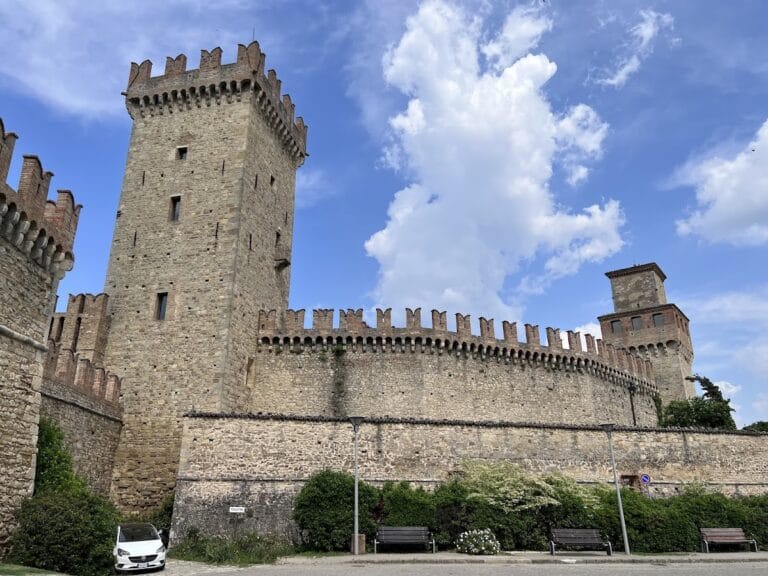
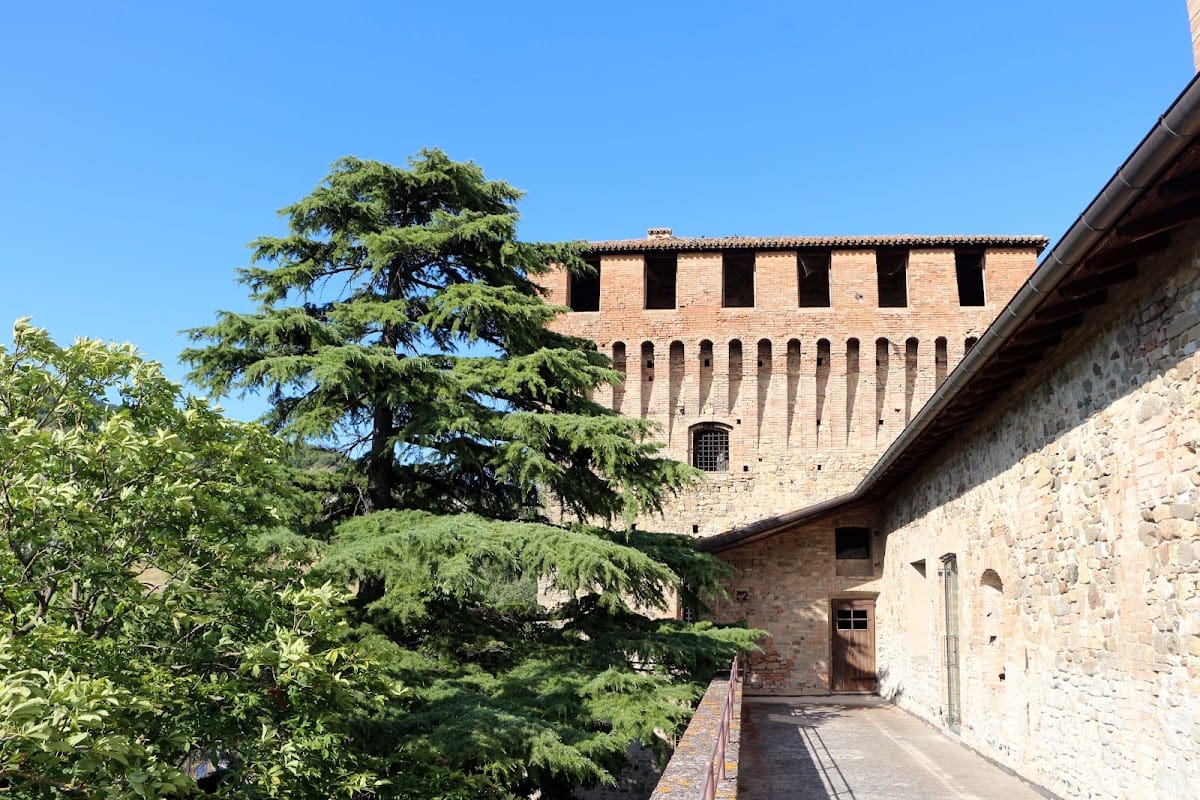
Castello Pallavicino stands prominently on a sandstone outcrop in the heart of Varano de’ Melegari. Its design centers around a square courtyard, characteristic of medieval fortress layouts aimed at both defense and daily activity. The fortress is constructed from durable local materials and speaks to centuries of architectural adaptation.
The oldest section of the castle is the massive tower located on the northern corner. Originally functioning as a bergfried—a tall fortified tower that served as the stronghold or last refuge—the keep formed the core of the defense. Access to this tower was once controlled by a drawbridge, later replaced by a permanent stone bridge. Within its ground floor lies the former prison cells, historically significant as the place where Annibale I Bentivoglio was held during the 1440s. Above, a courtroom was situated on the first floor, where judicial functions of the fortress were conducted. The second floor housed the lord’s private chambers, while the uppermost level was dedicated to servants’ quarters and grain storage. The tower’s battlements, elevated above the rest of the structure, allowed defenders to observe and repel attackers.
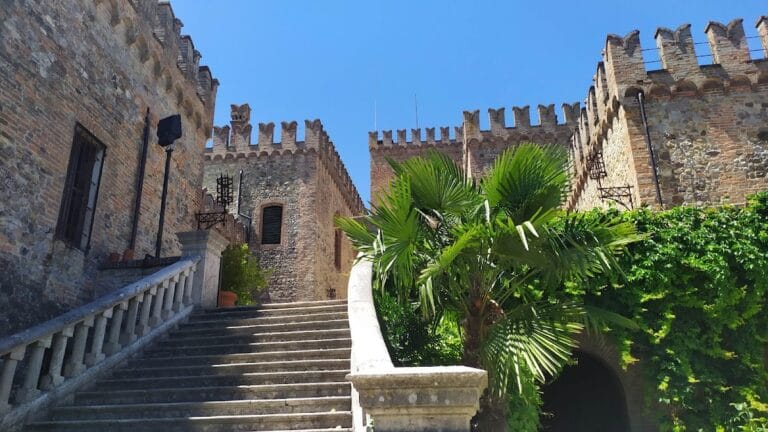
Surrounding the keep, a modest garden space connects it to the main courtyard, adding an element of enclosure and controlled access. At each corner of the courtyard, faint traces of holes mark where wooden walkways with retractable ladders once stood. These elevated passages linked multiple doorways on the noble floor, a feature emphasizing security and controlled movement within the castle. Notably, until the 18th century, the noble floor had no internal staircase connecting it to the ground level; only later was a large staircase built along the keep’s interior, allowing easier access.
On the southeast side of the castle, facing the village below, three towers stand aligned, with the main entrance located on the side of the central tower. This distinctive arrangement sets Castello Pallavicino apart from other Visconti fortresses, although the style of the battlements and towers clearly reflects Visconti influence. The western corner of the castle does not have a tower, as it sits directly above a steep cliff, providing a natural defense.
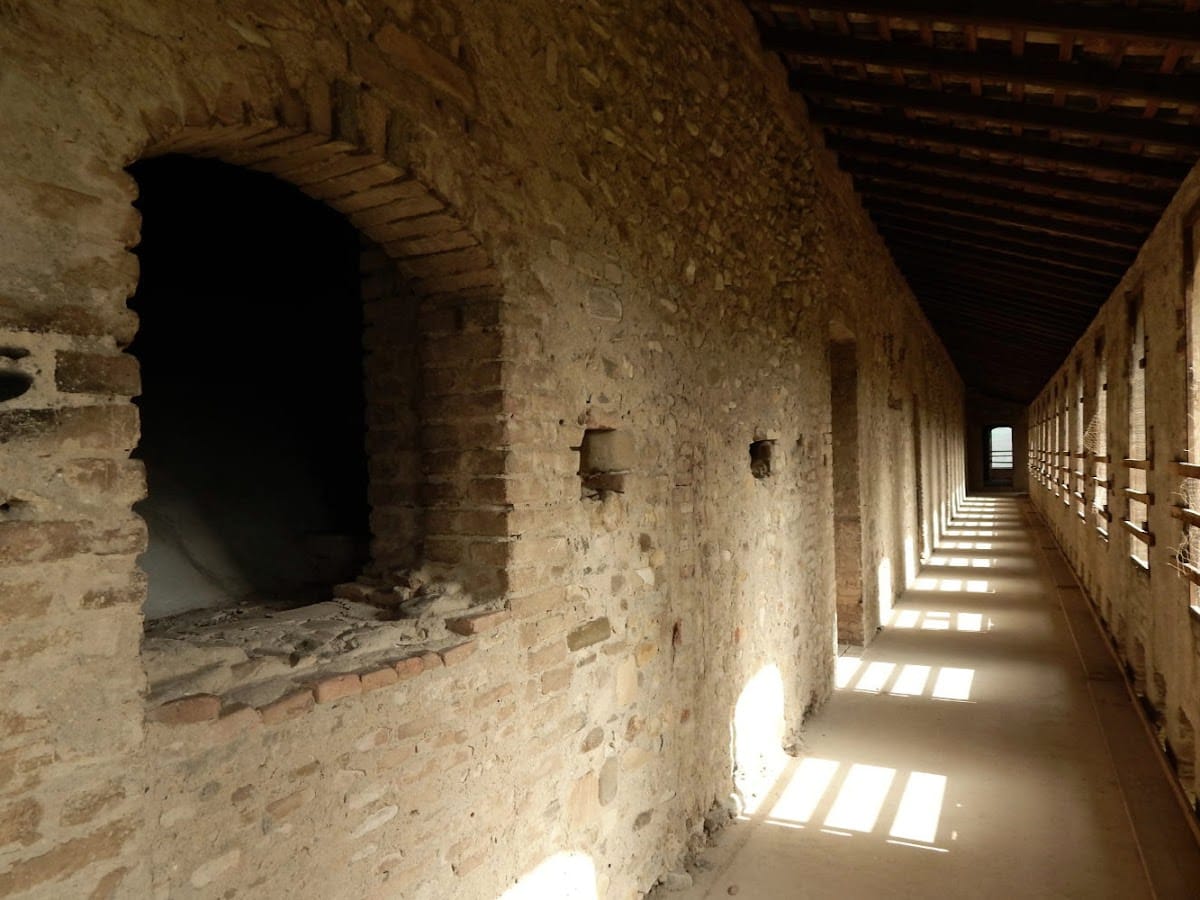
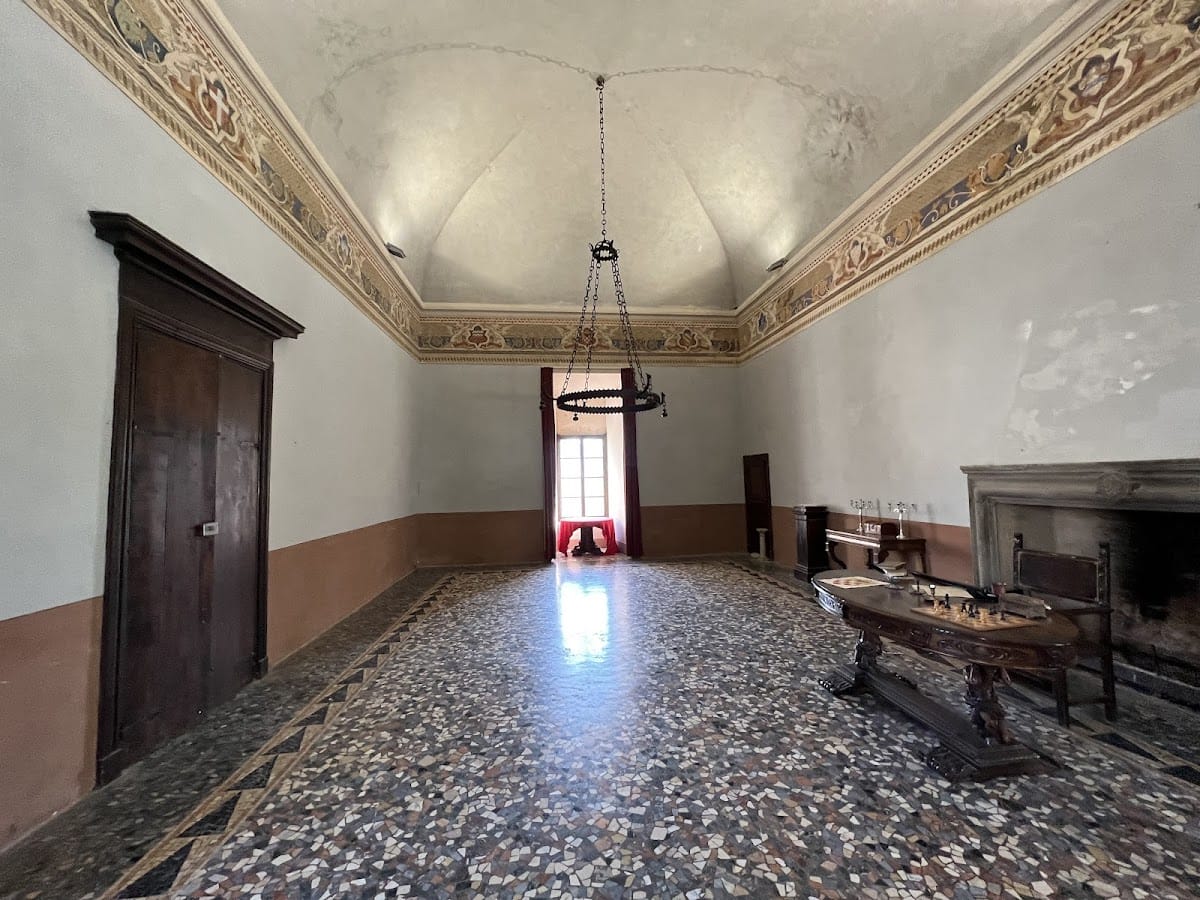
Today, visitors can explore multiple parts of the fortress, including the central courtyard, the rooms of the noble floor, the main hall, the grand staircase, the battlements where defenders once patrolled, the historic prison of Bentivoglio, and the castle’s ancient kitchens. These elements collectively illustrate the castle’s long history as a military stronghold, noble residence, and place of regional importance.
Nearby sites