Castle of Selva Smeralda: A Medieval Fortress Guarding the Sporzana Valley
Site at a Glance
- Rating
- 4.8
- Popularity
- Very Low
- Country
- Italy
- Primary era
- Medieval
- Eras represented
- Medieval
- Civilizations
- Holy Roman Empire
- Site type
- Military
- Remains
- Castle
On this page7 sections
History
The Castle of Selva Smeralda is a medieval fortified site in Italy, built to guard the Sporzana valley from its isolated hillside position. It stands in Selva Smeralda, a locality belonging to Terenzo near Neviano de’ Rossi, and its surviving medieval fabric is centered on a massive fourteenth-century keep.
Origins and disputed identification
The castle’s earlier history has long been uncertain. In 1964, historian Giovanni Gonizzi identified it with the fortress of Niviano di Rosi shown by the painter Benedetto Bembo in a fresco cycle in the Camera d’Oro, or Golden Chamber, of Torrechiara Castle. That interpretation was widely accepted for many years. Archaeologist Silvia Cerocchi later challenged it, proposing that the fortress represented in the fresco was more likely situated in the center of Neviano de’ Rossi.
In the thirteenth century, the settlement, castle, and chapel of Neviano de’ Rossi, then called Nivianus Dracorum, belonged to the Draghi family. Although the family controlled the local stronghold, the chapel depended ecclesiastically on the parish church of San Vitale Baganza. The Rossi family acquired the fief at a later date that remains uncertain.
Rossi, Terzi, and Smeraldi control
The castle was drawn into the conflicts of the region’s feudal houses. In 1409, Ottobuono de’ Terzi besieged it and forced the Rossi brothers to surrender several castles as part of a peace settlement. In 1424, Pier Maria I de’ Rossi recovered territories that had been ceded to the Terzi family from Filippo Maria Visconti, Duke of Milan.
In 1464, Pier Maria II de’ Rossi, a Rossi lord and professional military commander, left Neviano de’ Rossi and related fiefs to his son Guido. After Pier Maria II died during the Rossi War of 1482, Lorenzo Smeraldi of Parma probably acquired the castle.
War, abandonment, and later ownership
During the War of Parma in 1551, Spanish troops plundered the castle and the nearby settlement. Giovanni Smeraldi, an ally of the Farnese rulers of Parma and Piacenza, was captured and imprisoned at Tizzano Val Parma. After escaping, he was recaptured by the imperial army and executed on 24 February 1552 by order of Gian Giacomo Medici, Marquis of Marignano. Two days later, groups from Bardone, Torrechiara, and Corniglio attacked and looted the fortress.
Following these events, the Smeraldi family moved to Parma and abandoned the castle. Toward the end of the seventeenth century, the family was absorbed into the Tarasconi family, creating the counts Tarasconi Smeraldi. They probably retained Selva Smeralda until Napoleon’s abolition of feudal rights in 1805. The property later passed first to the Folli family and then to the Hungarian Orbàn family.
The castle was completely restored and converted into an agritourism establishment. After that use ended, it served mainly as a summer residence. It is recognized as Italian national heritage.
Remains
The hillside fortress
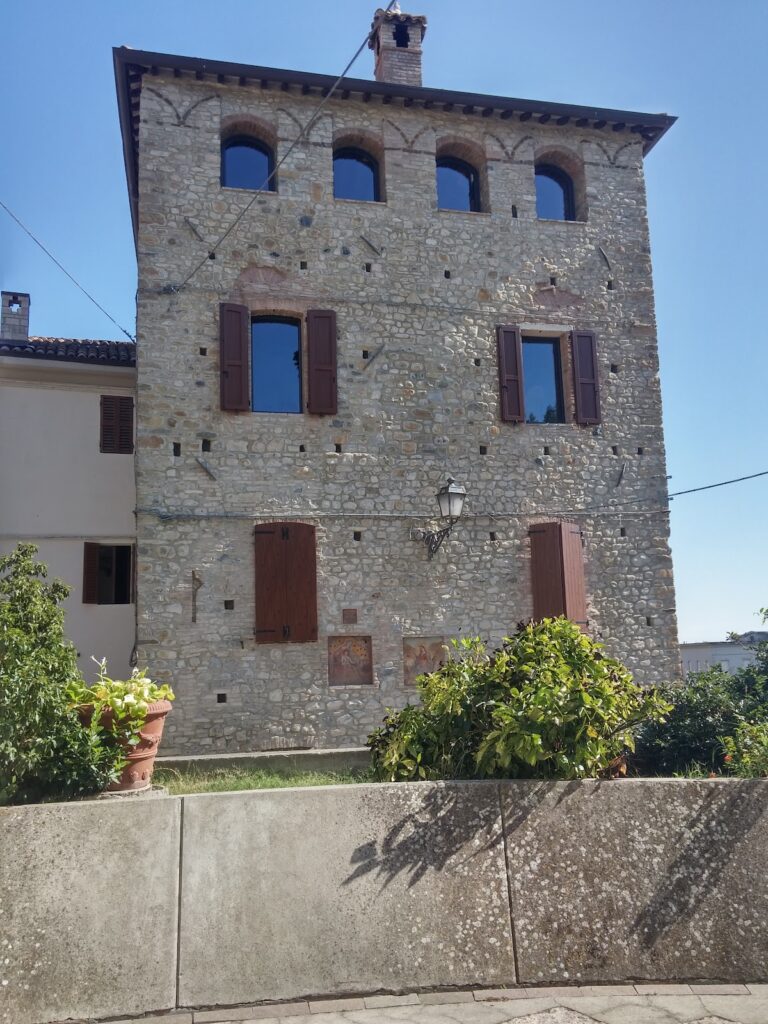
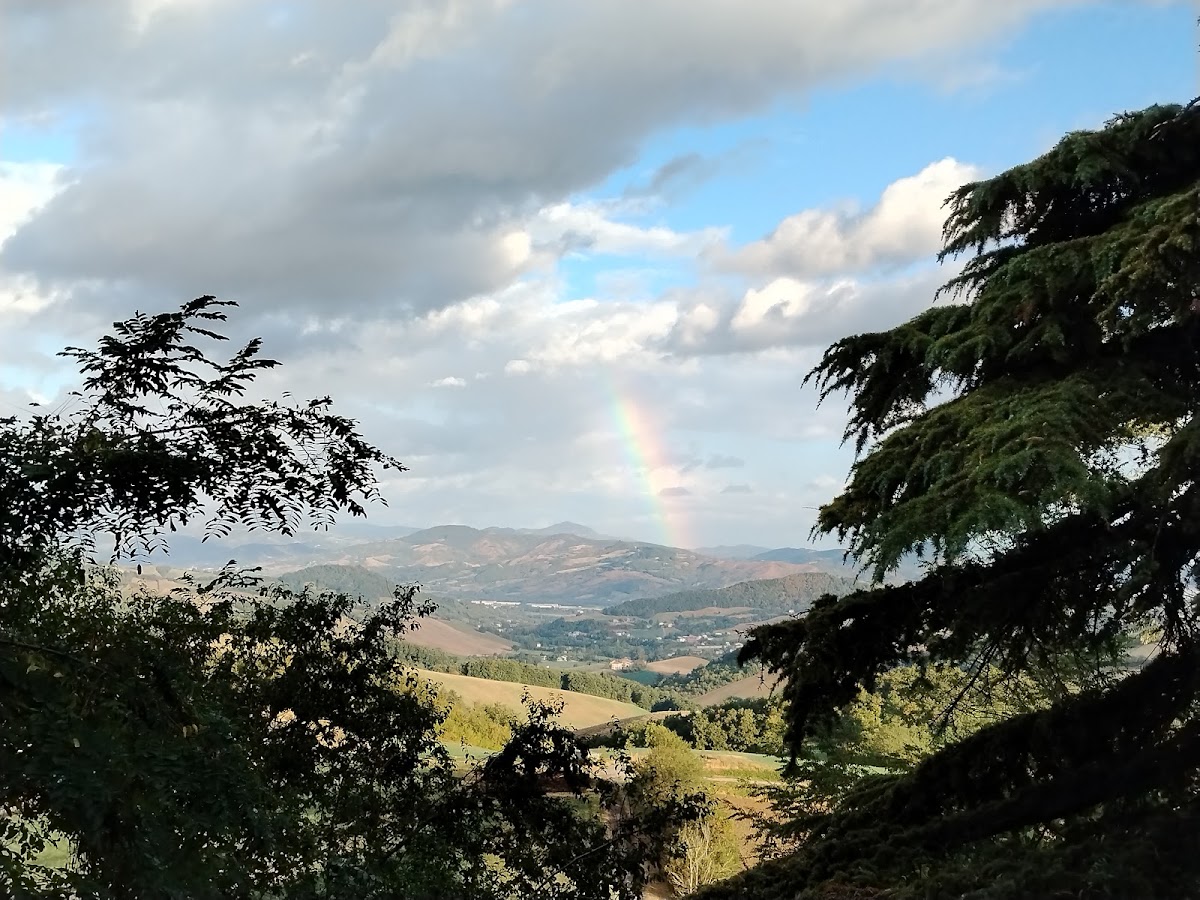
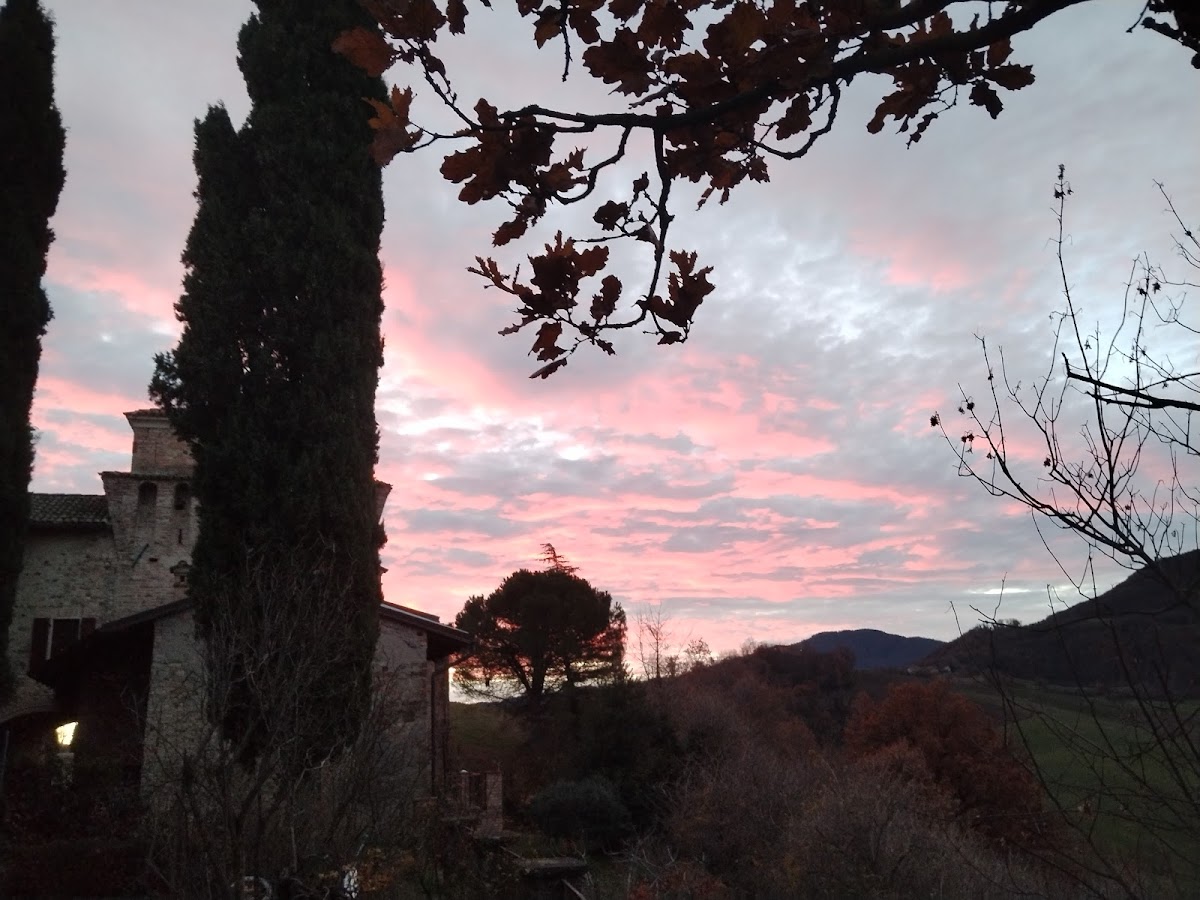
The castle stands alone among cultivated land on a steep hillside above the Sporzana stream. Its buildings belong to different periods and form a complex organized around the principal medieval tower. The keep is square in plan, faced in brick, and dates from the fourteenth century. It survives in partial form, retaining its original corbels on three sides, while its former crenellated crown has not survived.
Adjoining buildings and surrounding structures
Buildings adjoin the keep and incorporate sections of the former inner curtain wall. Their walls combine stone and brick masonry, reflecting the complex’s successive building phases. These structures were altered over the centuries and restored in the early twenty-first century.
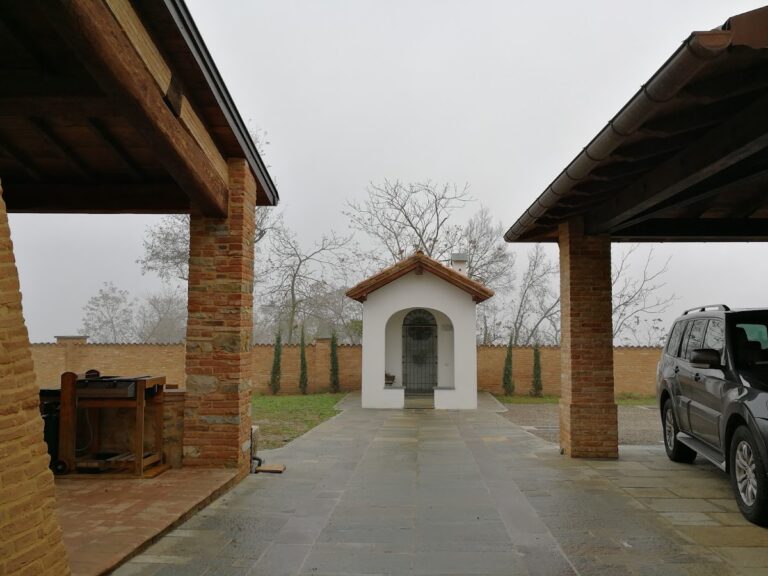
An oratory dedicated to Saint Teresa stands near the castle, while several agricultural buildings surround the complex. Together, the tower, adjoining structures, surviving curtain-wall sections, oratory, and farm buildings preserve the physical setting of the former fortified estate.