Castello Nobili Vitelleschi: A Historic Noble Residence in Labro, Italy


Visitor Information
Google Rating: 4.6
Popularity: Low
Google Maps: View on Google Maps
Official Website: www.castellodilabro.com
Country: Italy
Civilization: Unclassified
Remains: Military

History
The Castello Nobili Vitelleschi is situated in the municipality of Labro, Italy. It was originally established by the Lombard Nobili family, whose roots trace back to the Duchy of Spoleto and the historical region around Rieti. The family’s presence in Labro dates back to at least the mid-10th century, when their lordship was formally recognized by imperial authority.
In the year 956, Emperor Otto I granted Aldobrandino de Nobili the lordship over Labro along with twelve surrounding castles and settlements within the Duchy of Spoleto. Along with this grant, the family received a coat of arms featuring a crowned eagle and a fish. The crowned eagle symbolized the Holy Roman Empire’s authority, while the fish represented control over the local waters. For centuries afterward, the Nobili family maintained their dominion over Labro as noble lords, establishing the village’s medieval fortifications that included a large square tower dominating the settlement and seven other defensive towers.
A significant turning point occurred in 1498 when Giovanni de’ Nobili was involved in the killing of a priest, leading to the family’s excommunication by Pope Sixtus IV. As part of the pope’s decree, punitive measures were taken that resulted in the destruction of the large square tower and part of the village itself. Moreover, the decree stipulated that a church be constructed on the site of the demolished tower, marking a direct transformation of the fortress’s landscape under ecclesiastical authority. This dramatic event disrupted the family’s feudal standing but did not end their presence in Labro.
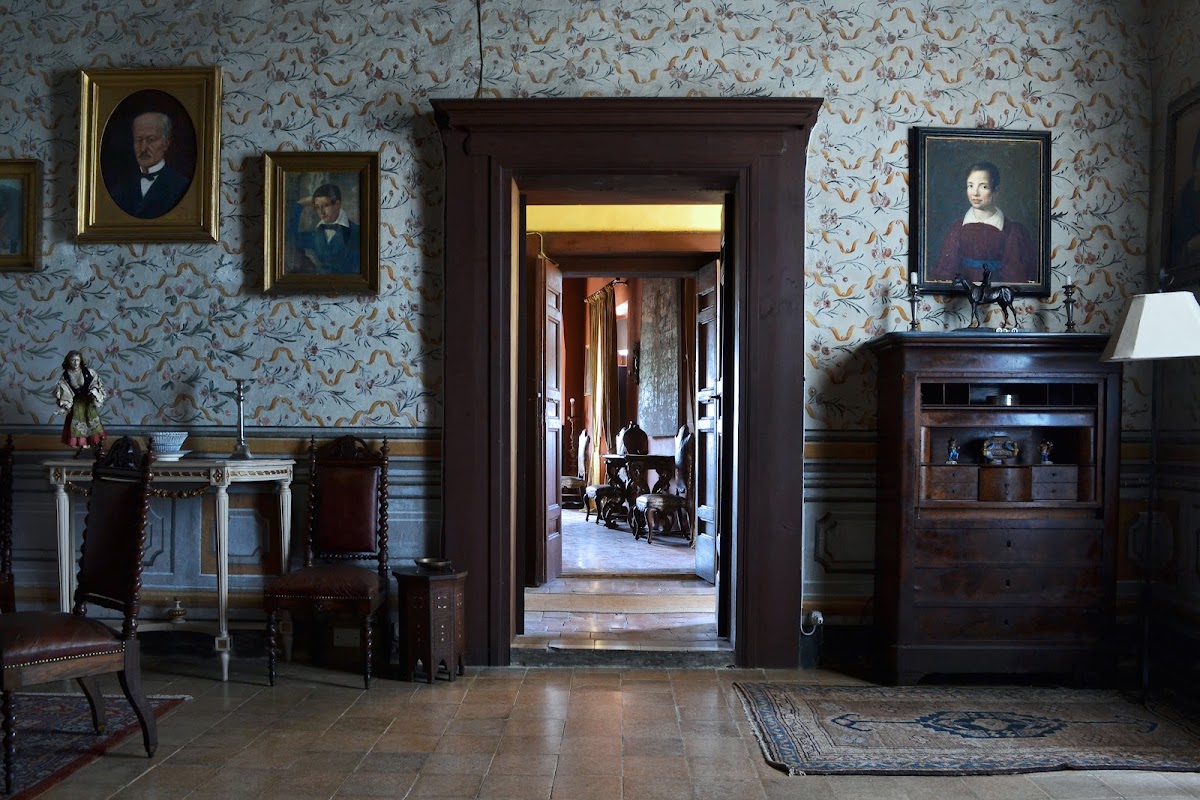
Following the lifting of the excommunication, the Nobili family retained control of the village’s remaining defensive walls. Giordano de’ Nobili then erected the present-day family residence on these surviving fortifications in the early 1500s. This structure replaced the lost fortress and continues to serve as a home for the family’s descendants, drawing a line of continuous habitation from Renaissance times to the present day.
Throughout their history, the Nobili family maintained connections to influential historical figures, such as Pandolfo de Nobili, who died in battle in 1256 fighting under King Manfred, son of Frederick II of Swabia. In 1575 a notable union took place when Gerolamo de Nobili married Virginia Vitelleschi. At the insistence of her family, particularly her brother Muzio Vitelleschi, who was the sixth Superior General of the Jesuits, the Vitelleschi surname and emblem were merged with those of the Nobili family. The official legal act confirming this fusion is preserved not only in the Capitoline archives in Rome but also as an original copy in the family archives held at the castle, symbolizing the intertwined heritage of these two noble houses.
Genealogical manuscripts preserved at the castle, such as the 1630 “Storia di Labro” compiled by the notary Ippolito Tabulazzi, document the Nobili family lineage in detail, tracing their origins and continued influence in the region up to modern times. These records highlight the castle’s dual role as both a noble residence and a custodial archive of family history.
Remains
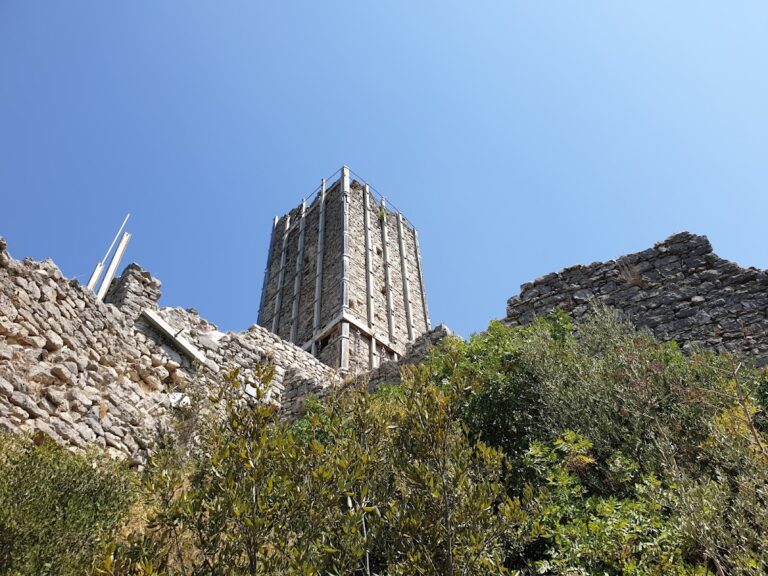
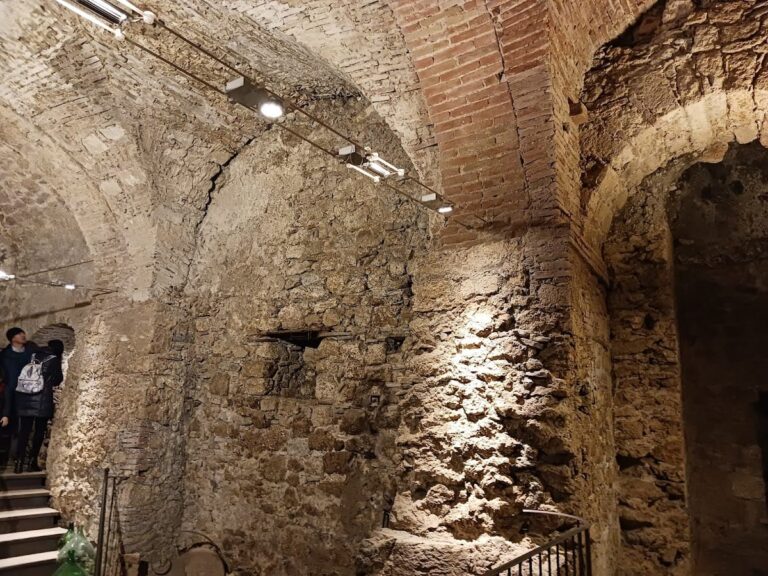
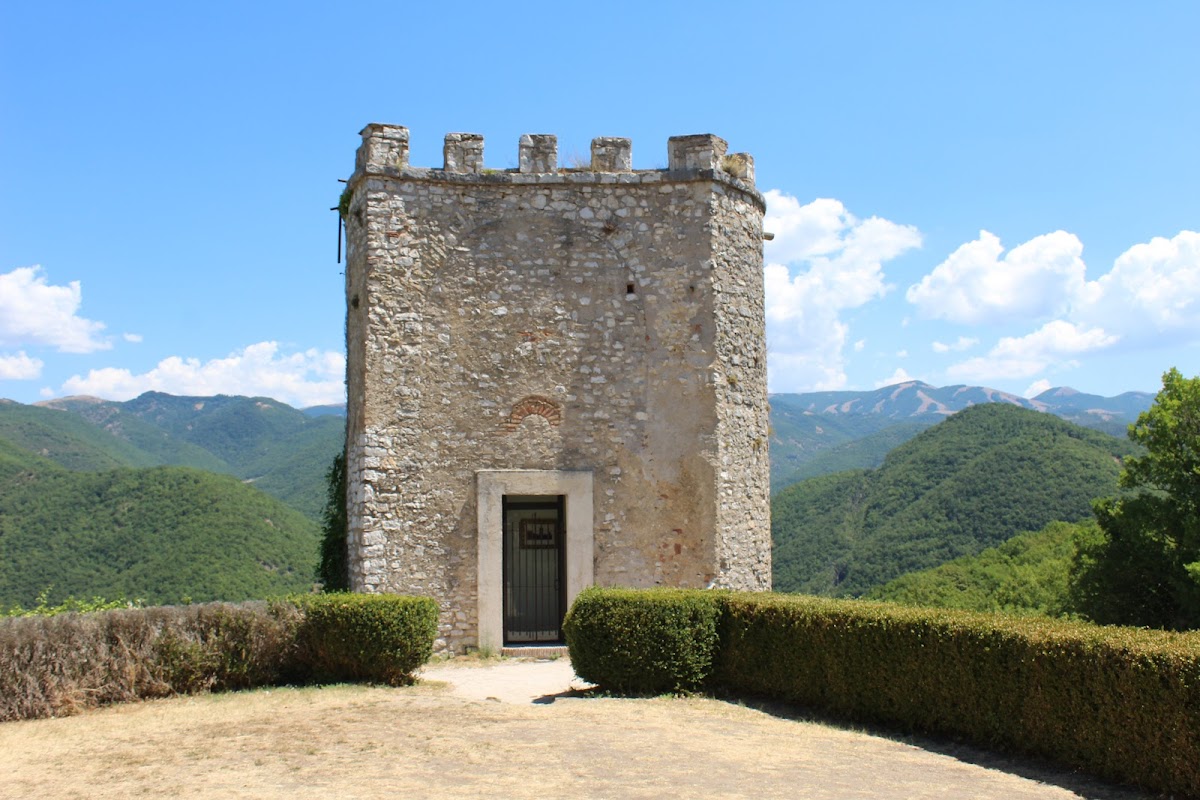
The Castello Nobili Vitelleschi is built directly adjoining the medieval defensive walls that once surrounded the village of Labro. The original fortress had a commanding large square tower overseeing the settlement, supported by seven additional towers incorporated into the city walls. Constructed primarily of local stone using traditional masonry techniques of the Middle Ages, this defensive system fortified the community against external threats for centuries.
Following the destruction of the original central square tower in 1498, as mandated by the papal decree after the family’s excommunication, a church was erected on the exact site of the tower’s ruins. This transformation from military stronghold to religious building reflects both a tangible architectural adaptation and a symbolic reordering of power in Labro’s landscape during the late 15th century.
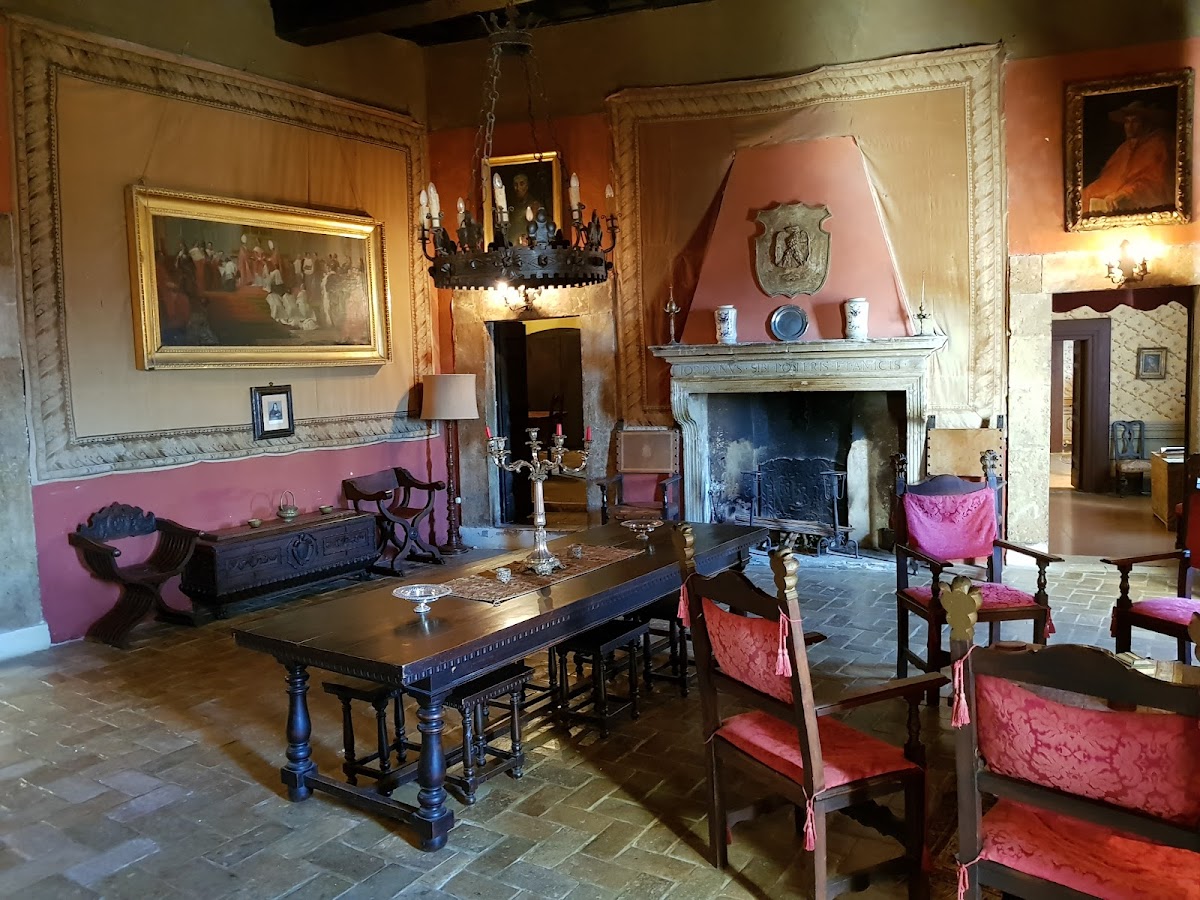
The surviving sections of the original city walls provided the foundation upon which Giordano de’ Nobili built the new family residence in the early 16th century. Constructed with sturdy stone and incorporating parts of the medieval fortifications, this residence remains continuously inhabited by the Nobili Vitelleschi descendants. Its preservation underscores the castle’s enduring function as a noble home, blending residential comfort with historic fortitude.
Inside the castle, one notable feature is the armory hall, which displays a large, wooden coat of arms combining the heraldic symbols of both the Nobili and Vitelleschi families. This emblem takes the unusual form of a heart painted in black and gold. It unites the Nobili symbols of the eagle and fish with the Vitelleschi imagery of two calves and six golden lilies. This heraldic device visually celebrates the family’s historic alliance and merged identity.
The castle’s archives hold a remarkable collection of historical documents, including the important papal excommunication decree and genealogical records that trace the Nobili lineage over centuries. These documents were collected and preserved on-site, making the castle not only a residence but a repository of the family’s legal, ecclesiastical, and genealogical heritage. Their survival has been vital in reconstructing the castle’s history and the story of the noble family that shaped the region.
Nearby sites