Matterella Castle: A Medieval Fortress in Italy
Site at a Glance
- Rating
- 4.2
- Popularity
- Very Low
- Country
- Italy
- Primary era
- Medieval
- Eras represented
- Medieval
- Civilizations
- Unclassified
- Site type
- Military
- Remains
- Castle
On this page5 sections
History
Matterella Castle is a medieval fortress in Italy, located in the hamlet of Matterella at Ferentillo, Umbria. Its original nucleus probably consisted of a square tower built between the eleventh and twelfth centuries. The fortress formed part of a defensive system that included Precetto, Monterivoso, and Ancaiano, protecting San Pietro in Valle Abbey and controlling important communication routes.
Medieval defensive system
The tower’s construction was probably connected with the rebuilding of San Pietro in Valle Abbey. In 996, the medieval Holy Roman Emperor Otto III commissioned the abbey after Saracen raids had destroyed the earlier place of worship. Matterella’s fortress, the most imposing in this group, controlled the route toward the Duchy of Spoleto, a major medieval political territory in central Italy. Together with Precetto Castle, it also controlled the route along the Nera River toward the Upper Valnerina.
Fifteenth- and sixteenth-century military use
The fortress was probably strengthened during the fifteenth century with two circular bastions. Under statutes issued by Alberico I Cybo-Malaspina, Duke of Ferentillo, it became the headquarters of the militia defending the State of Ferentillo, the territorial polity ruled by the dukes of Ferentillo. A record from the second half of the sixteenth century states that a chaplain lived at the fortress. When the chaplaincy passed to his successor, the transfer included a decapitation axe and equipment for a gallows, reflecting the site’s military and judicial functions.
Ownership and municipal acquisition
The first certain ownership records show that Matterella Fortress and Precetto Castle belonged to the Trinci family of Foligno until 1484. In that year, Pope Innocent VIII granted the county of Ferentillo, including its fortresses, to his son Franceschetto Cibo. The properties remained with the Cibo and later Cybo-Malaspina aristocratic dynasties until 1730, when Duke Alderano sold the Duchy of Ferentillo for 16,500 gold scudi to Niccolò Benedetti, Count of San Michele in Teverina. Through inheritance, ownership later passed to the Benedetti Montevecchio family of Fano.
After parts of the duchy, including the castles of Precetto and Umbriano but not Matterella Fortress, were sold, Pope Pius IX granted Louis Desirée de Montholon-Semonville the titles of Prince of Umbriano del Precetto and Count of San Michele on 1 October 1847. On 27 April 1940, Duke Benedetto Montevecchio Gualfredo sold the fortress to the Pennacchi, Argenti, and Fiorelli families. As part of the municipality’s efforts to acquire and recover both fortresses, the Argenti and Fiorelli families donated their shares on 25 July 2008. The Pennacchi share passed to the municipality after a court judgment on 16 February 2010 and payment of a small sum. Matterella Fortress consequently became municipal property and is designated Italian national heritage.
Remains
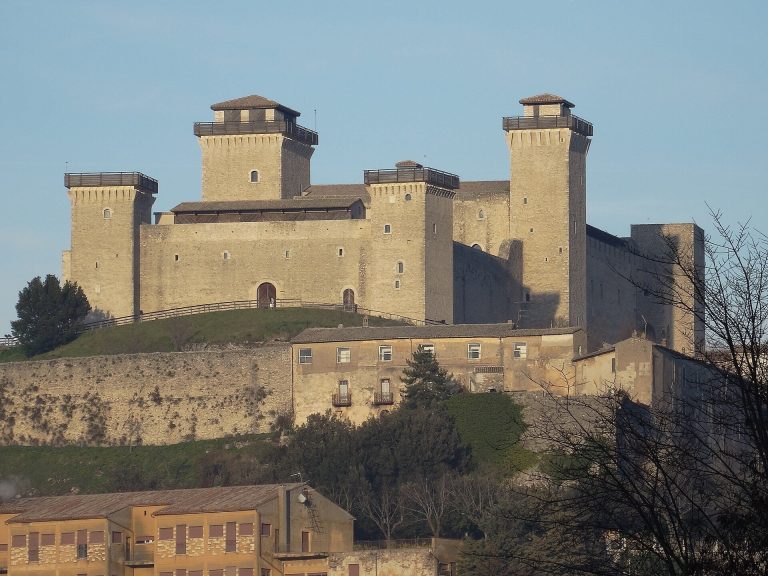
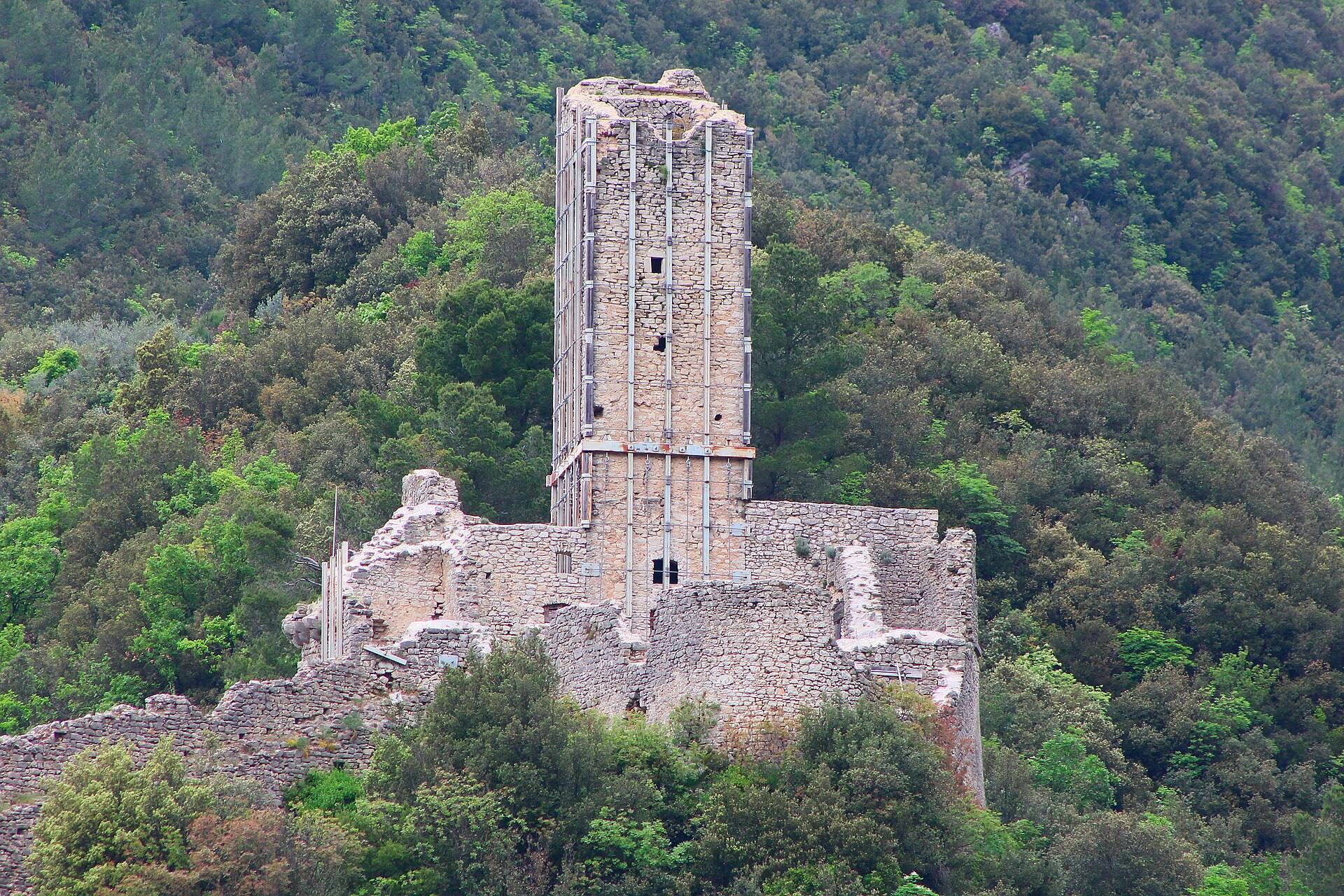
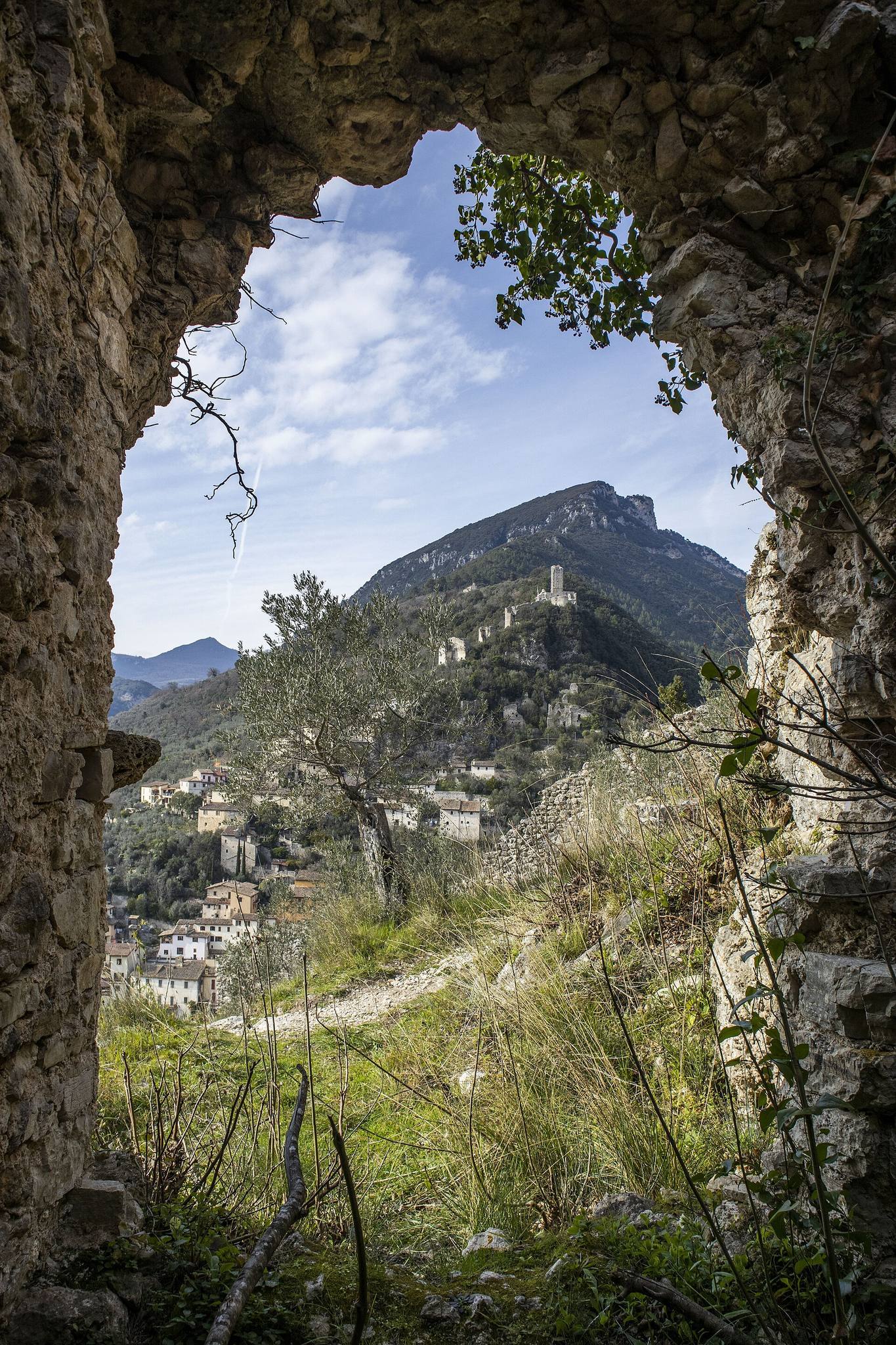
Matterella Castle stands on the lower slopes of Mount Gabbio, overlooking the hamlet of Matterella. Its surviving layout is organized around a central square keep, the enclosing wall, and two massive cylindrical bastions positioned at the keep’s corners. The square tower is the oldest and principal element of the fortification, probably representing the original eleventh- or twelfth-century nucleus. The two circular bastions were added later, probably in the fifteenth century, as a defensive strengthening of the tower. Together, these elements form the physical remains of the fortress that controlled the routes through this part of the Valnerina.