Castello di Latera: A Historic Fortress in Italy


Visitor Information
Google Rating: 4.6
Popularity: Very Low
Google Maps: View on Google Maps
Country: Italy
Civilization: Unclassified
Remains: Military

History
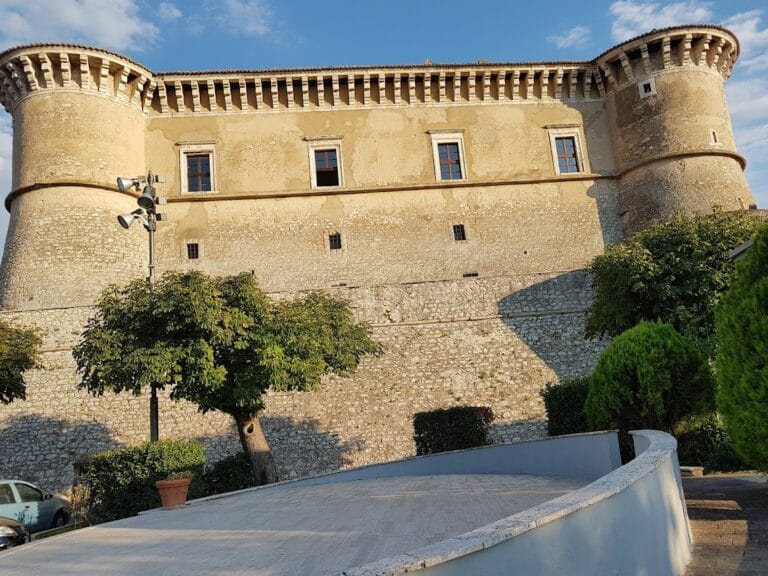
The Castello di Latera is located in the municipality of Latera, Italy. Its origins trace back to the period of Lombard control in the region, when the first fortified structure was likely established on the highest point of a rocky spur to oversee the surrounding territory. Although this earliest building no longer survives, it laid the foundation for the castle’s strategic significance.
During the 12th century, the castle underwent a major rebuilding phase that reinforced its role as a defensive stronghold and a center for regional control. This reconstruction included the establishment of a customs post near what is now the Ponte del Piscero, a crucial point guarded by a permanent military presence to monitor trade and movement. Originally, the castle featured four fortified gates, with the main northern entrance known as Porta del Buon Consiglio; today, only three of these gates remain intact.
In 1408, the central part of the fortress was further developed with the construction of the Palazzo Farnese, which became the castle’s heart. Over the subsequent centuries, from the 15th through the 18th, this building underwent several modifications, including a notable renovation in the 18th century that transformed its external appearance. Despite these efforts, the castle was largely abandoned in the early 1700s. It experienced restoration during the late 20th century, after which part of Palazzo Farnese was adapted to serve as the seat of the local municipal government. Meanwhile, some of the former fortified entrances were converted for residential use.
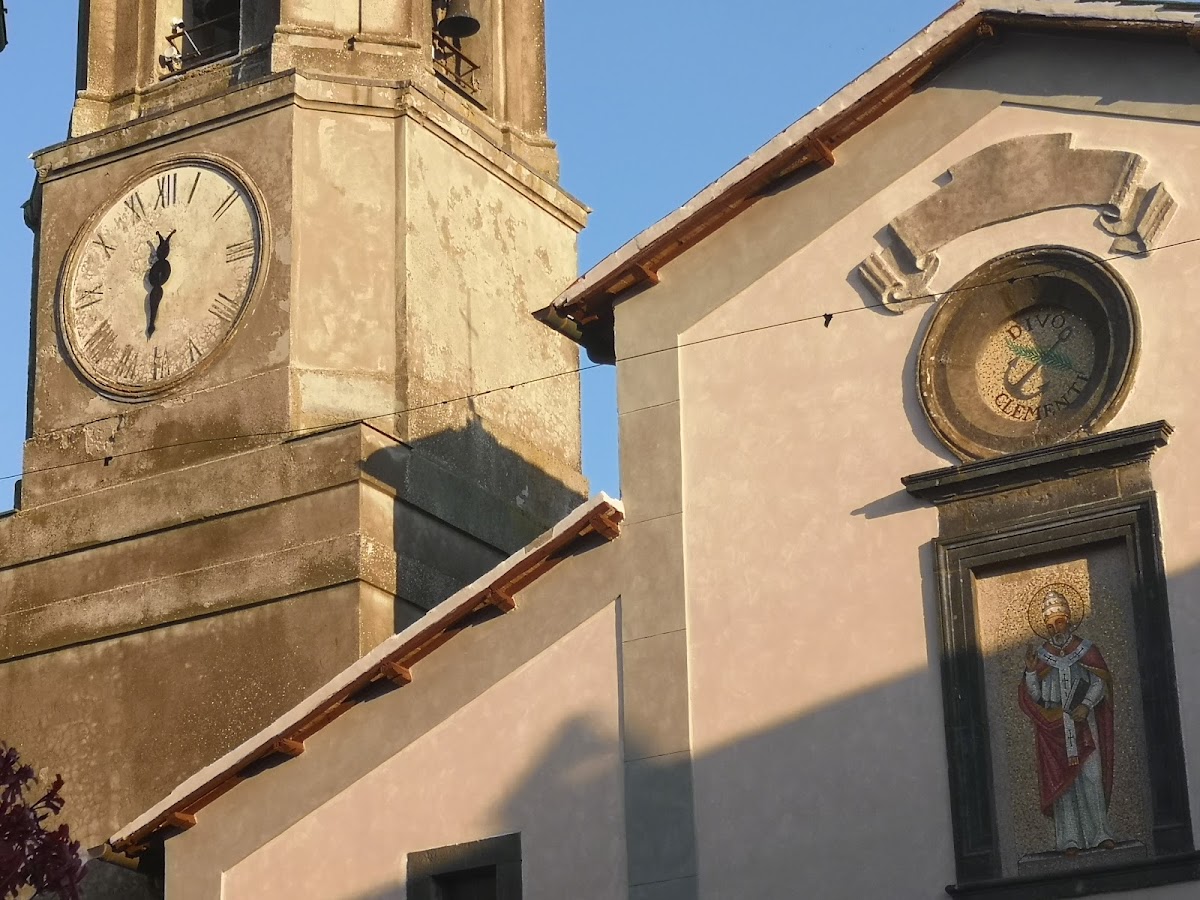
Associated with the castle is the Pieve di San Clemente, originally built by local inhabitants as a modest chapel. In response to population growth, this church was expanded in 1603, involving the relocation of its façade and the addition of a bell tower in 1790. Historically, the church was connected internally to the residence of the castle lords, providing private access between the two, until the connecting door was sealed in 1835.
Remains
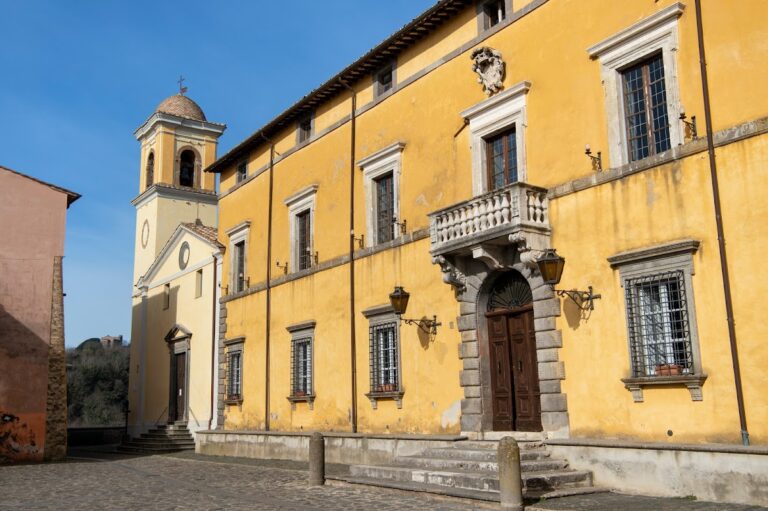
The Castello di Latera occupies a rugged rocky spur, with the main complex dominated by two interconnected structures: the Palazzo Farnese and the Pieve di San Clemente. The church is situated at the highest point of the castle and reflects its 17th-century reconstruction through its three-nave layout. The central nave rises higher than the side aisles and is lighted by a series of five windows per side placed in the upper attic area. Inside, the ceiling features a coffered design and prominently displays a painting of two cherubs holding the symbols of the Pope and Saint Clement, highlighting the church’s religious significance. The semicircular apse includes a small window installed in 1645, while the main altar honors Saint Clement. Additional side altars pay tribute to saints Gregory the Pope, Francis of Assisi, John the Baptist, and the Madonna of the Rosary.
Palazzo Farnese, also referred to as “La Rocca,” is a three-level structure comprising a ground floor, a noble first floor, and an attic. It includes a small courtyard oriented toward its southern façade and three warehouses opening onto the adjacent square. The palace’s windows are characterized by their low height and are set within finely crafted basalt stone frames. The oldest section is the portion attached to the church’s apse. The building’s 18th-century modifications introduced a second main entrance on the west side facing the square, accompanied by a newly constructed staircase leading to the noble floor.
Surrounding the main complex are ancillary service buildings, including facilities for grain storage, which supported the castle’s self-sufficiency and administrative functions. The former fortified gates of the castle have endured in various states and have been adapted for residential purposes, maintaining their presence in the castle’s outer defenses. The integration of fortification, religious, and residential structures exemplifies the multifaceted role of Castello di Latera throughout its history.
Nearby sites