Castello di Alviano: A Renaissance Fortress and Aristocratic Residence in Italy


Site at a Glance
- Rating
- 4.6
- Popularity
- Low
- Country
- Italy
- Primary era
- Medieval
- External website
- Open
- Eras represented
- Medieval
- Civilizations
- Holy Roman Empire
- Site type
- Military
- Remains
- Castle
On this page9 sections
History
Castello di Alviano, also known as Castello Doria Pamphili, is a Renaissance fortress and aristocratic residence in Alviano, Italy. Built on an earlier medieval stronghold, it combined military and residential functions and stood at the center of the village and the County of Alviano.
The County of Alviano
The castle was linked to the Alviano family from the tenth century, when its progenitor Offredo received the county’s investiture from Emperor Otto III of Saxony. The family governed the county for centuries. Bartolomeo d’Alviano’s relatives also used the name Liviani, a form preferred by Bartolomeo.
Bartolomeo d’Alviano’s transformation
Bartolomeo d’Alviano (1455–1515), Count of Alviano, was a condottiero, a professional military commander, as well as a military engineer and fortification designer. In 1470, he radically remodeled the fortress, retaining its military character while reshaping it into a sumptuous Renaissance residence inspired by the Orsini castle at Bracciano. The Renaissance castle is also assigned a construction date of 1490.
Bartolomeo spent only brief periods at Alviano. After his death, his second wife, Pantasilea Baglioni, stayed there for longer periods with their children. Through their son Bernardino, Bartolomeo’s family established a cannon foundry at the castle, which became an important foundry in the surrounding area. Bartolomeo was also Lord of Pordenone from 1508 to 1515.
Later ownership and uses
The Alviano family governed the county until 1543, when Bartolomeo’s niece Isabella Cesi exchanged it for the County of Acquasparta. After the fortress lost its military role and passed under the authority of the Papal States, territories governed by the pope in central Italy, it was leased as housing to several families, including the Clementini and the Genoese Raimondy.
In 1654, Olimpia Maidalchini Pamphili, Princess of San Martino and sister-in-law of Pope Innocent X, bought the fief at auction for 265,000 scudi. She stayed at the castle only briefly and died three years later. She preferred the palace of San Martino al Cimino, where she was buried at the abbey. The Doria Pamphili family held the castle until the nineteenth century, when ownership passed to the Municipality of Alviano.
The castle now contains the municipal offices, the Audiovisual Documentation Center on the Alviano Oasis, the Museum of Rural Civilization, and a multimedia museum devoted to Bartolomeo d’Alviano and military captains. Its unusual residents also gave rise to local stories and legends in Alviano.
Remains
Fortress and Renaissance palace
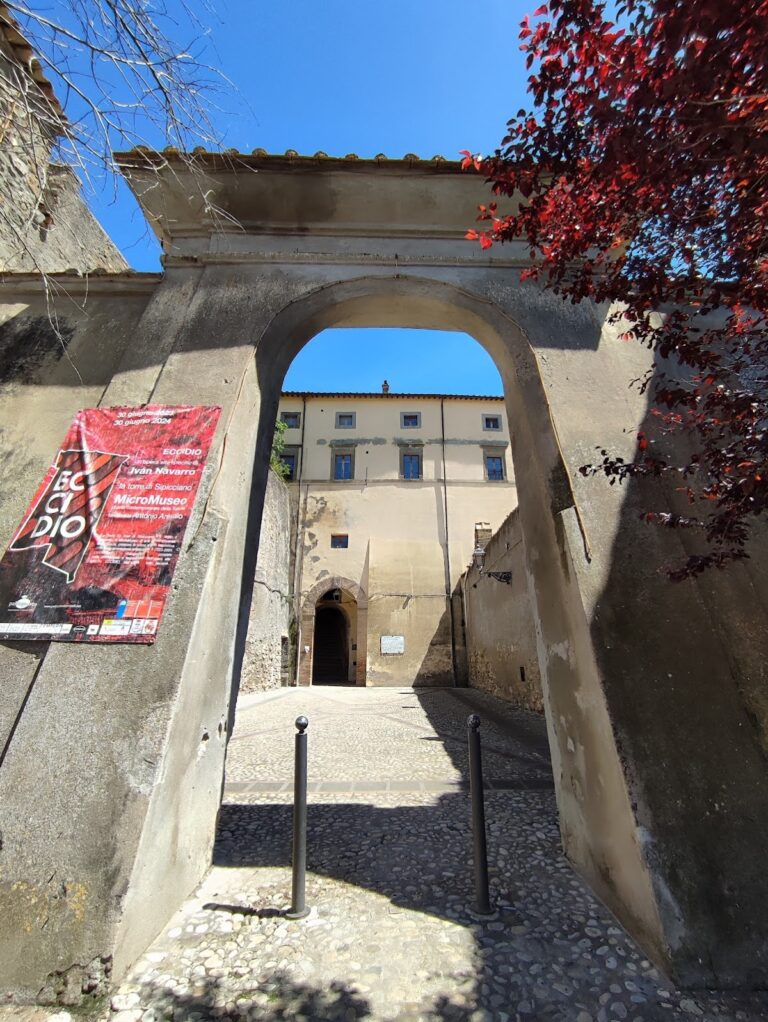
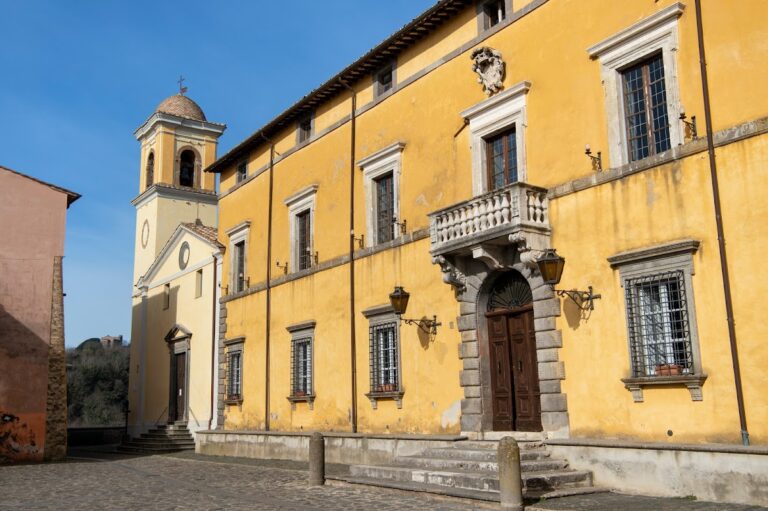
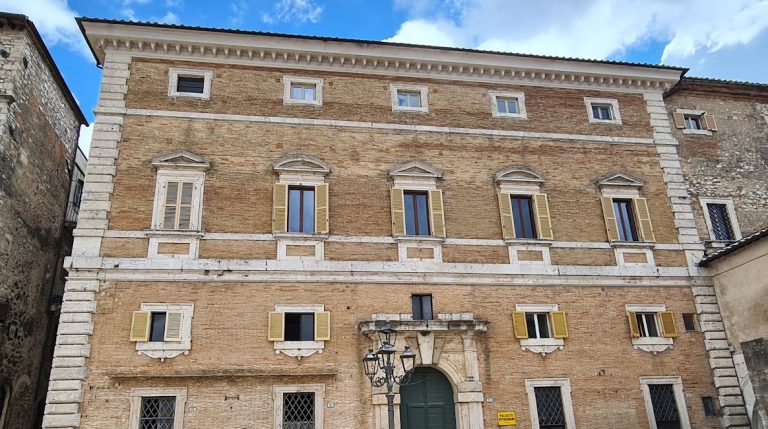
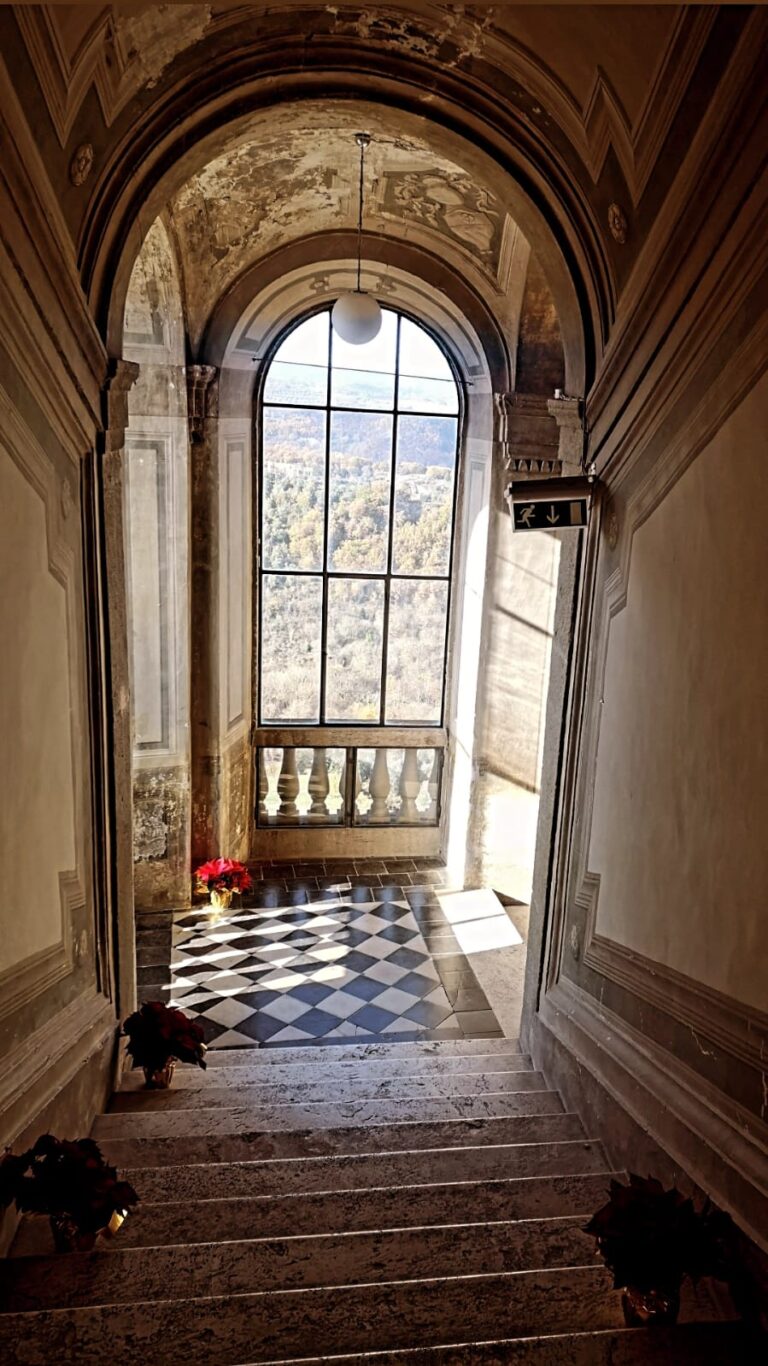
Castello di Alviano has a trapezoidal plan with four circular bastioned towers at the corners. Built of stone and brick, the Renaissance structure reused the foundations and some towers of the medieval fortress. The complex is surrounded by the settlement of Alviano. Its entrance portal is accompanied by a stone lion and a stone head of Medusa, and opens onto a court from which the main building rises through three stories and an attic.
Courtyard and painted interiors
Porticoed courtyard and mythological rooms
The architectural center of the palace is a porticoed courtyard in a distinctly Renaissance style. Two rooms opening onto it retain fragmentary frescoes with mythological friezes and coats of arms. The paintings are attributed to Il Pordenone, the Renaissance painter, although that attribution remains uncertain.
Private chapel
A private chapel also opens onto the courtyard. Its frescoes depict episodes from the life of Saint Francis and are attributed to Giuseppe Bastiani, an Italian painter associated with the decoration. One scene includes a recognizable representation of Olimpia Maidalchini Pamphili.