Castle of Rocchette di Fazio: The Fortified Historic Core of an Italian Village

Site at a Glance
- Rating
- 4.5
- Popularity
- Low
- Country
- Italy
- Primary era
- Medieval
- External website
- Open
- Eras represented
- Medieval
- Civilizations
- Republic of Siena
- Site type
- Military
- Remains
- Fortified Town
On this page10 sections
History
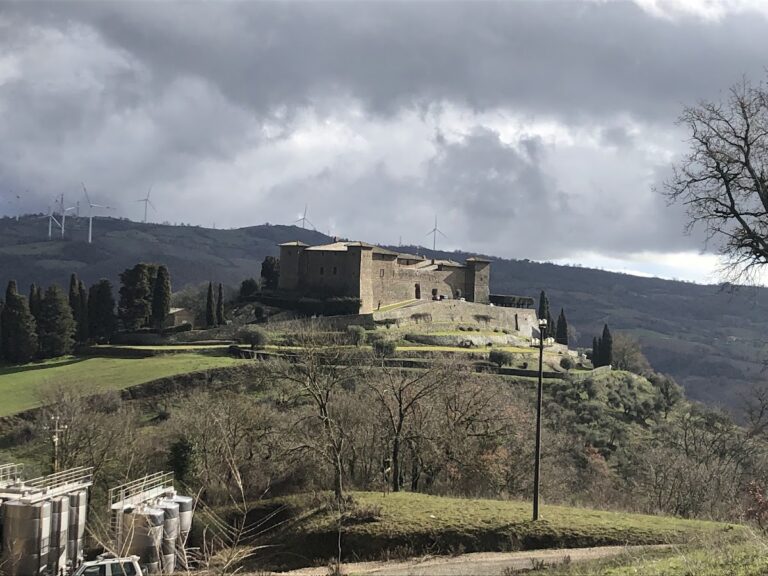
The Castle of Rocchette di Fazio is a fortified historic complex in Italy, forming the upper core of Rocchette di Fazio, a hamlet of Semproniano in Tuscany. The Aldobrandeschi, a powerful medieval noble family with territories in southern Tuscany, built it between the twelfth and thirteenth centuries on the site of a settlement dating almost certainly to around the year 1000. Enclosed within Rocchette di Fazio’s defensive walls, the complex brought together the settlement’s principal civic and religious buildings.
Medieval lordships
In 1274, the castle became part of the County of Sovana. Around the turn of the fourteenth century, it was temporarily transferred to the Baschi family of Orvieto before passing during the following century to the Orsini of Pitigliano. The Orsini were a major Italian noble house, and their branch at Pitigliano ruled territories along the Tuscan-Lazio border.
Sienese conquest and reconstruction
At the beginning of the fifteenth century, Sienese troops captured the complex after a successful siege and severely damaged it. The castle then entered the Republic of Siena, the independent Tuscan state centered on Siena before its absorption into the Medici state in the sixteenth century.
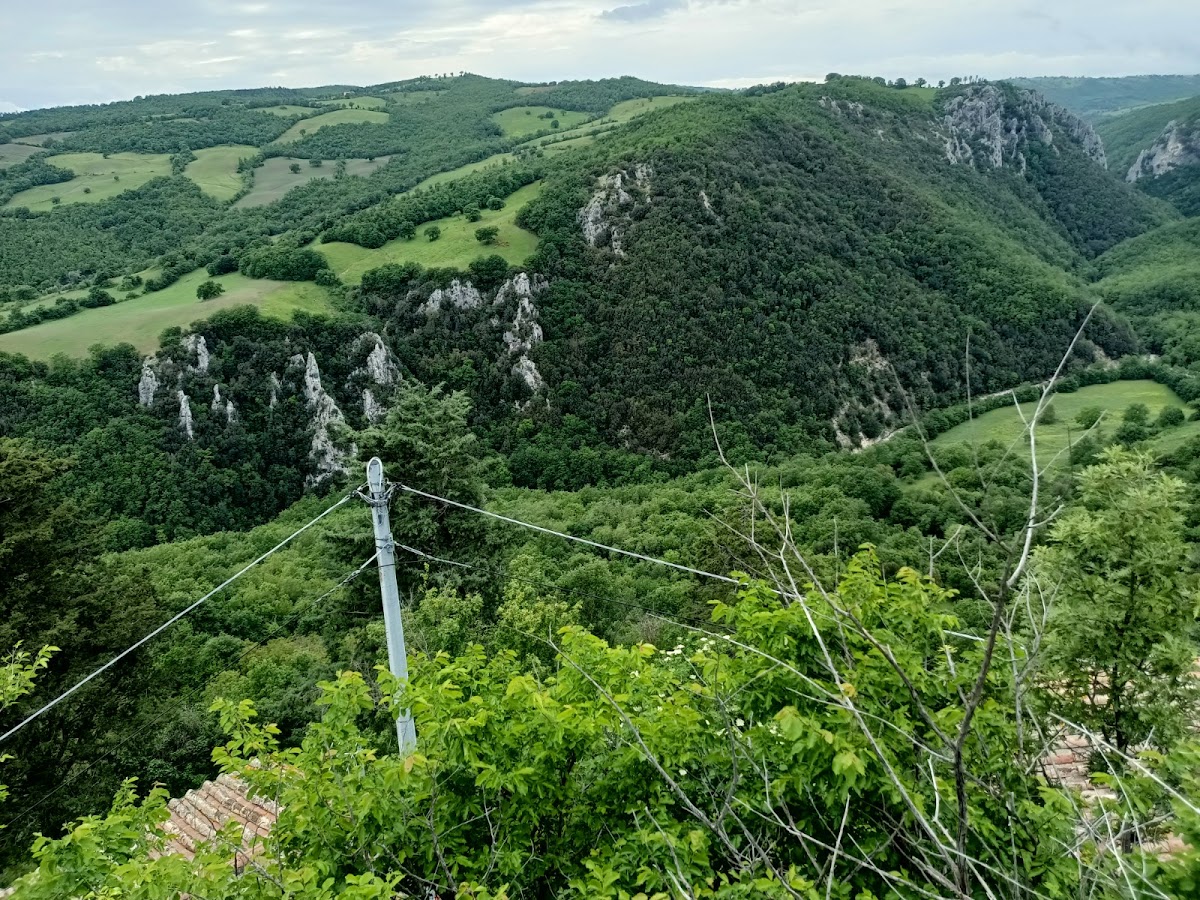
During the Renaissance, damaged or destroyed sections were rebuilt. The settlement also expanded down the limestone hill, while the castle remained the fortified core. In the mid-sixteenth century, Rocchette di Fazio and its castle became part of the Grand Duchy of Tuscany, the Medici-ruled state established in central Italy in 1569.
Deterioration and recovery
The castle and its walls deteriorated during the late seventeenth century and the eighteenth century. Recent restoration work recovered the historic core of the settlement, preserving the area in which the castle, religious buildings, and civic structures had been grouped.
Remains
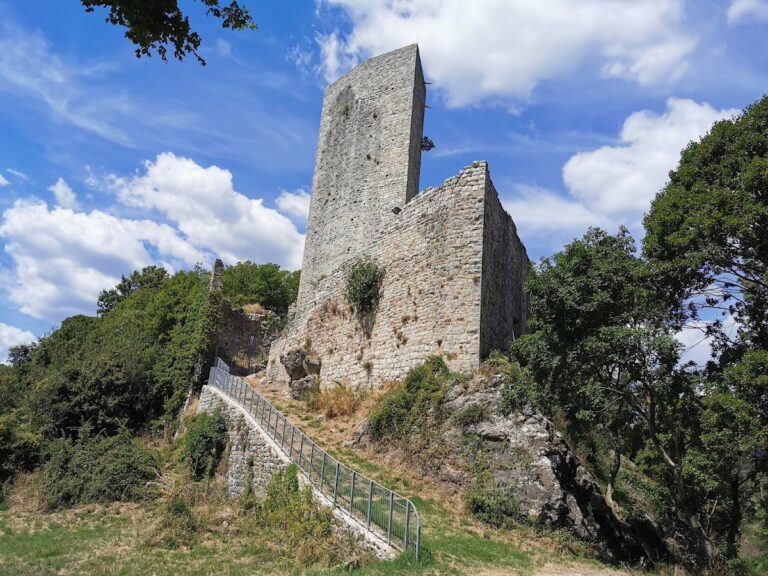
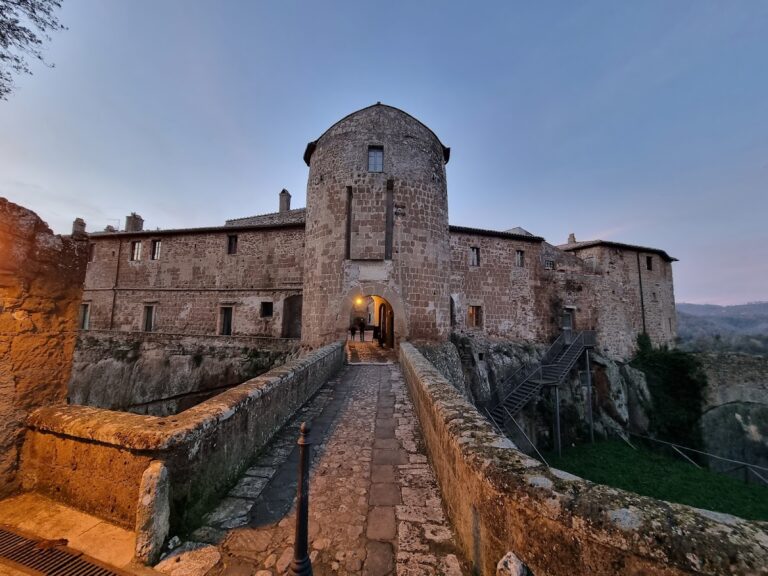
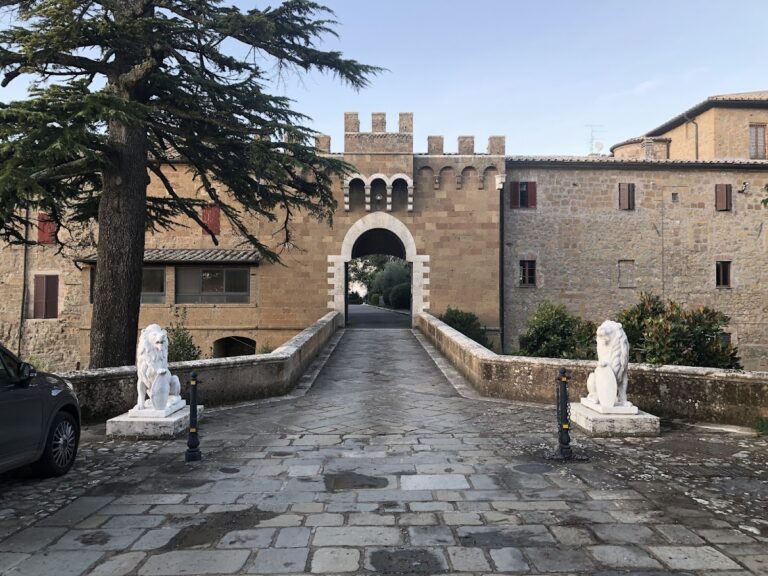
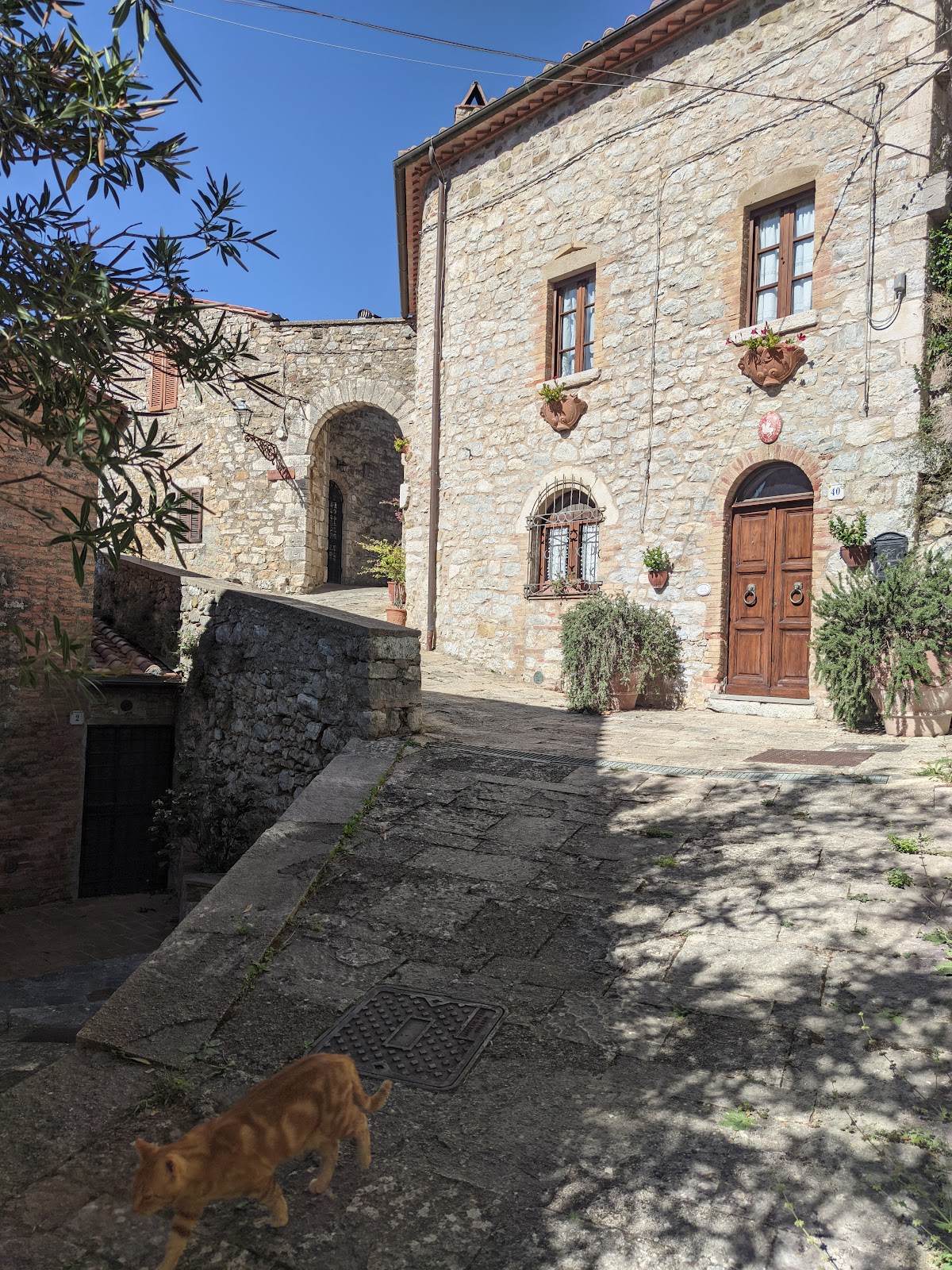
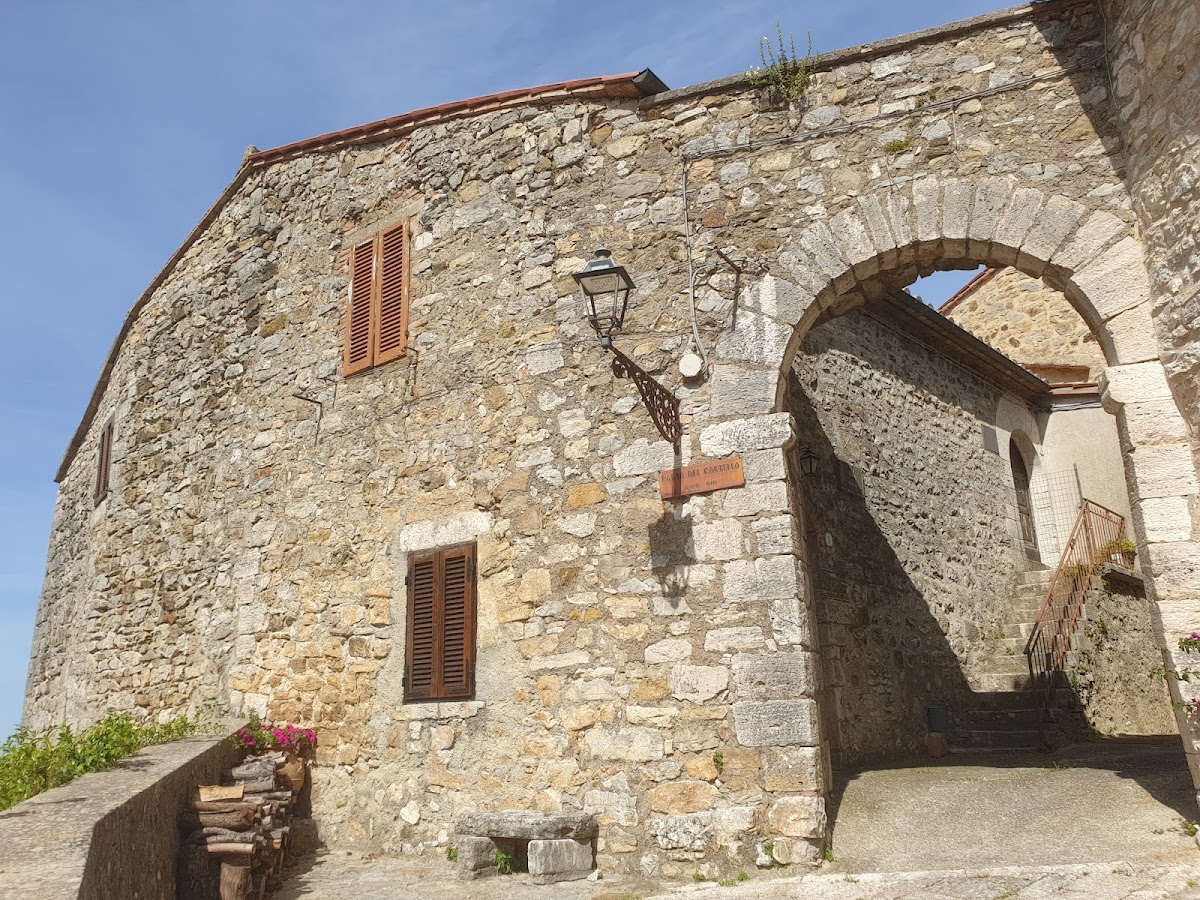
The complex occupies the upper part of Rocchette di Fazio and represents the village’s fortified area rather than an isolated castle in the strict sense. Defensive walls completely enclose the area, incorporating four watchtowers and several gates, including the entrance known as the Porta del Castello. Along the eastern side of the wall perimeter, the Aldobrandeschi fortress survives as ruins.
Religious and civic buildings
Santa Cristina
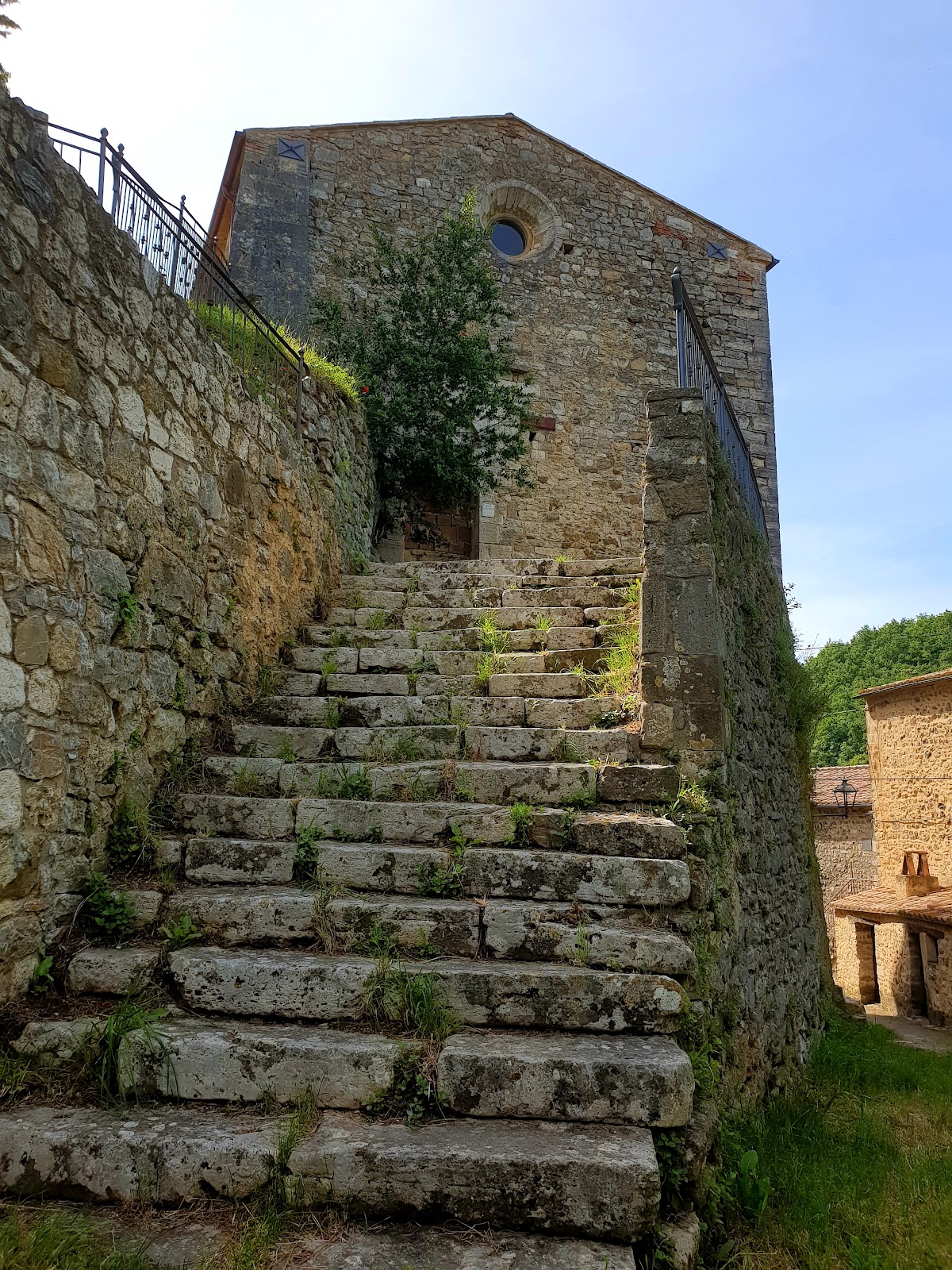
The pieve, or medieval rural parish church, of Santa Cristina holds a prominent position within the enclosure. It is now deconsecrated, but it formerly served as the principal religious building for the entire village.
Praetorian Palace
The Praetorian Palace is one of the notable civic complexes inside the fortified area, alongside the other buildings that formed the settlement’s historic administrative center.
Palace of Justice
The Palace of Justice is another prominent civic building within the complex. Together with the Praetorian Palace, it reflects the range of public functions accommodated inside the walled area.
Water supply
A cistern-well, combining a water-storage cistern with a well, supplied water to the complex. It was renovated during the sixteenth century, providing evidence of continued attention to the settlement’s water infrastructure during the Tuscan period.