Castell d’Ascó: A Historic Fortress in Spain


Visitor Information
Google Rating: 4.1
Popularity: Very Low
Google Maps: View on Google Maps
Official Website: www.asco.cat
Country: Spain
Civilization: Unclassified
Remains: Military

History
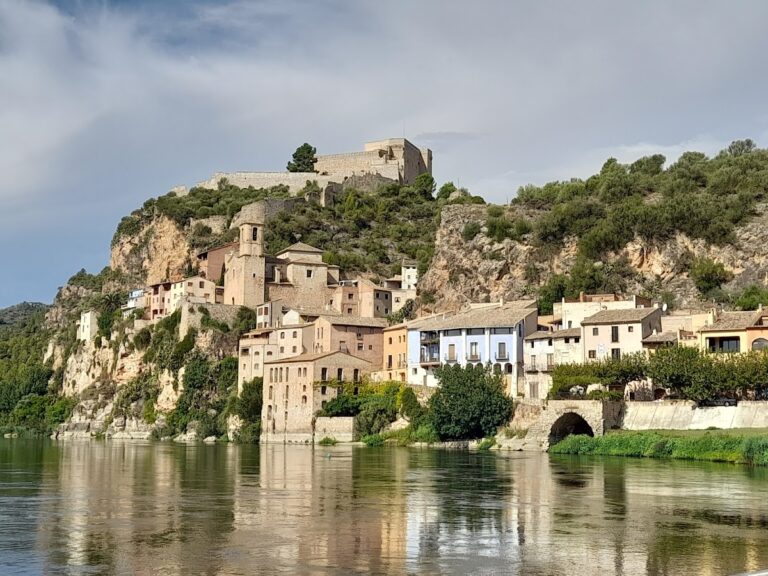
Castell d’Ascó is a historic fortress located in the municipality of Ascó in Spain. Its origins trace back to the early medieval period, when it occupied a strategic position on a hill overlooking the Ebro River. This vantage point allowed control over river traffic and positioned the castle within a key area defined by the towns of Reus, Tortosa, Casp, and Lleida.
During the Muslim rule from the 8th to the 12th centuries, the fortress served as the residence of the valí (governor) of Siurana, overseeing an extensive territory that stretched to the foothills of the Montsant mountains. This period established the site’s early administrative and military role in the region.
In 1148, the castle entered into documented Christian hands through a treaty between Ramon Berenguer IV, Count of Barcelona, and Ermengol VI, Count of Urgell, by which the fortress was granted as a feudal possession to Ermengol VI. Subsequently, from 1167 to 1174, Ramon Berenguer IV made several loans involving the castle that led to the influence of the Knights Templar, who held Ascó as part of their holdings. In 1174, King Alfonso the Chaste declared Ascó a dowry for his wife, Sancha of Castile, further intertwining royal authority with the fortress.
The year 1182 marked a significant change when the king transferred the castles and towns of Riba-roja and Ascó to the Templars in exchange for a monetary pledge. While the Templars likely established their commandery in Ascó that year, ownership was shared with the monarch and Queen Sancha, indicating a complex arrangement of rights. The Templars maintained control until their suppression in 1312.
Following the disbandment of the Templar order, the castle was besieged in 1318 by King James II, who subsequently handed it to the Knights Hospitaller. This military-religious order retained a presence at Castell d’Ascó through the centuries, up until the 19th century.
Castell d’Ascó continued to serve a military function during several conflicts. It was involved in the Reapers’ War in 1640, during which it sustained considerable damage. Later, it was dismantled amidst the War of Spanish Succession and the Carlist Wars. Notably, the fortress played a role during the Third Carlist War in the 1870s, at which time an optical telegraph tower was erected on its grounds, modernizing its military communications.
In recent history, Castell d’Ascó entered public ownership in the spring of 2013, leading to archaeological excavations beginning in 2014 that aimed to study and stabilize the site.
Remains
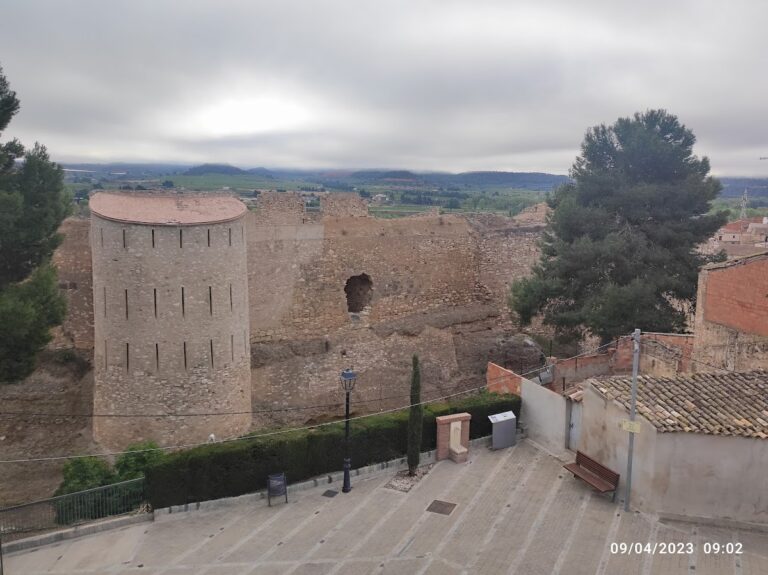
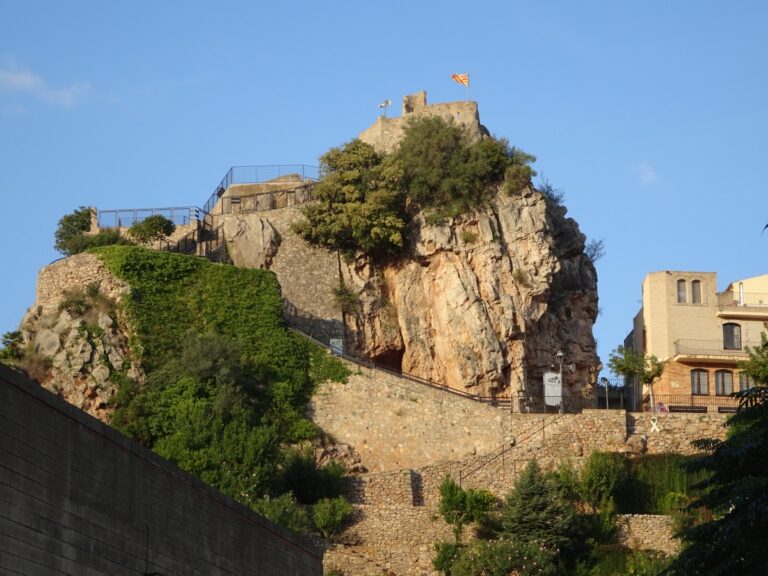
The remains of Castell d’Ascó reveal a fortress complex consisting of a prominent tower perched atop the hill, accompanied by an expansive enclosure southeast of the tower. To the east, traces of heavily degraded walls suggest late medieval construction, reflecting the castle’s ongoing evolution.
The main tower stands around fourteen meters tall and bears evidence of significant modifications accumulated over centuries. It features robust northeast and southeast walls, measuring approximately 3.35 by 2.2 meters thick, and 3.55 by 1.5 meters thick, respectively. A transverse wall of thinner construction likely represents a later addition. The tower’s entrance, located on the northeast side, is elevated about 2.5 meters from the outside ground, spanning 1.6 meters in width. Above the door are two offset ledges spaced at roughly 3.5 and 4 meters, which likely correspond to internal floor levels. Inside, the oldest section exhibits carefully cut square stone blocks set in mortar, contrasting with upper floors built from rammed earth—a technique where earth is compacted into a solid wall—added in a later phase.
Beside the tower, the southeastern enclosure measures roughly 60 meters long and 20 meters wide, enclosed chiefly by remnants of a southwestern wall made from regularly sized stones approximately 20 by 30 centimeters, bonded with mortar. The southern area of the enclosure preserves remains of several finely crafted ashlar structures, including a polygonal building with three visible corners situated southeast of the tower. These constructions likely date from the late medieval period and suggest enhanced defensive or residential features.
Some wall fragments around the perimeter appear to date back to the Andalusian era, potentially built using opus spicatum, a herringbone pattern of stonework typical of Roman and later Mediterranean architecture. After the Christian reconquest, parts of the older tower walls and inner enclosure were reconstructed, alongside the addition of new buildings such as the polygonal structure, indicating a layered history of repairs and adaptations.
Excavations carried out in 2014 near the tower uncovered substantial vestiges of the Templar fortress. These include concentric structural remains reaching up to two meters high, large worked ashlar stones, some dressed with precision, and functional features like a water cistern and a wine vat. These discoveries highlight the castle’s complex architectural composition and its role as a fortified residence and economic hub during the Templar period.
Nearby sites