Castel Belfort: A Historic Castle in Spormaggiore, Italy


Visitor Information
Google Rating: 4.3
Popularity: Medium
Google Maps: View on Google Maps
Official Website: www.prolocospormaggiore.tn.it
Country: Italy
Civilization: Unclassified
Remains: Military

History
Castel Belfort is located in the municipality of Spormaggiore, Italy, and was originally constructed in the early 14th century by a local noble family. The site’s foundation traces back to 1311 when Tissone, son of Geremia I, obtained permission from Count Enrico of Tyrol to build a defensive tower, marking the castle’s initial establishment during the medieval period. This early phase firmly places Castel Belfort within the context of feudal fortifications in the Val di Non region, associated with territorial disputes among noble families.
In 1334, the castle became involved in regional conflicts among local nobility, reflecting its strategic importance. Upon Tissone’s death in 1339, ownership transferred to his heirs, who maintained control until 1350. That year, the heirs sold Castel Belfort to the Thun family, an influential noble line in the region. The Thun entrusted the captaincy of the castle to the Reifer family, who managed it until 1415. However, the local lords of Sporo seized the castle in that year, holding it until the death of Pietro Sporo, after which authority reverted to Frederick IV of Austria, the Count of Tyrol.
Between 1427 and 1429, Frederick IV granted Castel Belfort successively to Giovanni Uber and then to Judge Andrea Vogt. By 1429, the Thun family regained ownership and in 1450 reinstated the Reifer family as the castle’s captains. The Reifers maintained their stewardship until their family line ended in 1470. Following this, the Neideck family acquired Castel Belfort. Alongside this castle, the Neidecks expanded their estates to include several other properties in the region, emphasizing their growing influence.
At the turn of the 16th century, the Neideck family’s extinction led to a series of ownership changes. The castle passed through diverse hands including the Concini family, Leonardo Nogarola from Verona in 1543, Antonio Pezzen in 1607, and the Terlago family. Later in the 17th century, Domenico Vigilio Spaur became owner in 1642, and eventually the castle came under the possession of Antonio del Monte and the Saracini counts.
A devastating fire ravaged the castle in 1670, severely damaging its medieval structures. Following this event, the Saracini counts chose to demolish the ruined sections and constructed a new fortress at the site. This reconstruction adopted contemporary military architectural styles of the 17th century, modifying the castle’s purpose from primarily a noble residence to a defensive stronghold suitable for the period’s evolving warfare.
By 1785, administrative reforms merged the jurisdiction of Castel Belfort with that of nearby Castel Sporo and Castel Flavon. The administrative center was moved to the nearby town of Spormaggiore, which led to Castel Belfort being abandoned and gradually falling into ruin. Despite this decline, the Saracini family retained ownership throughout the subsequent centuries. Eventually, the site was acquired by the municipality of Spormaggiore in the late 20th century. In the early 21st century, efforts were made to stabilize and consolidate the ruins, improving accessibility and preserving the remains of the site.
Remains
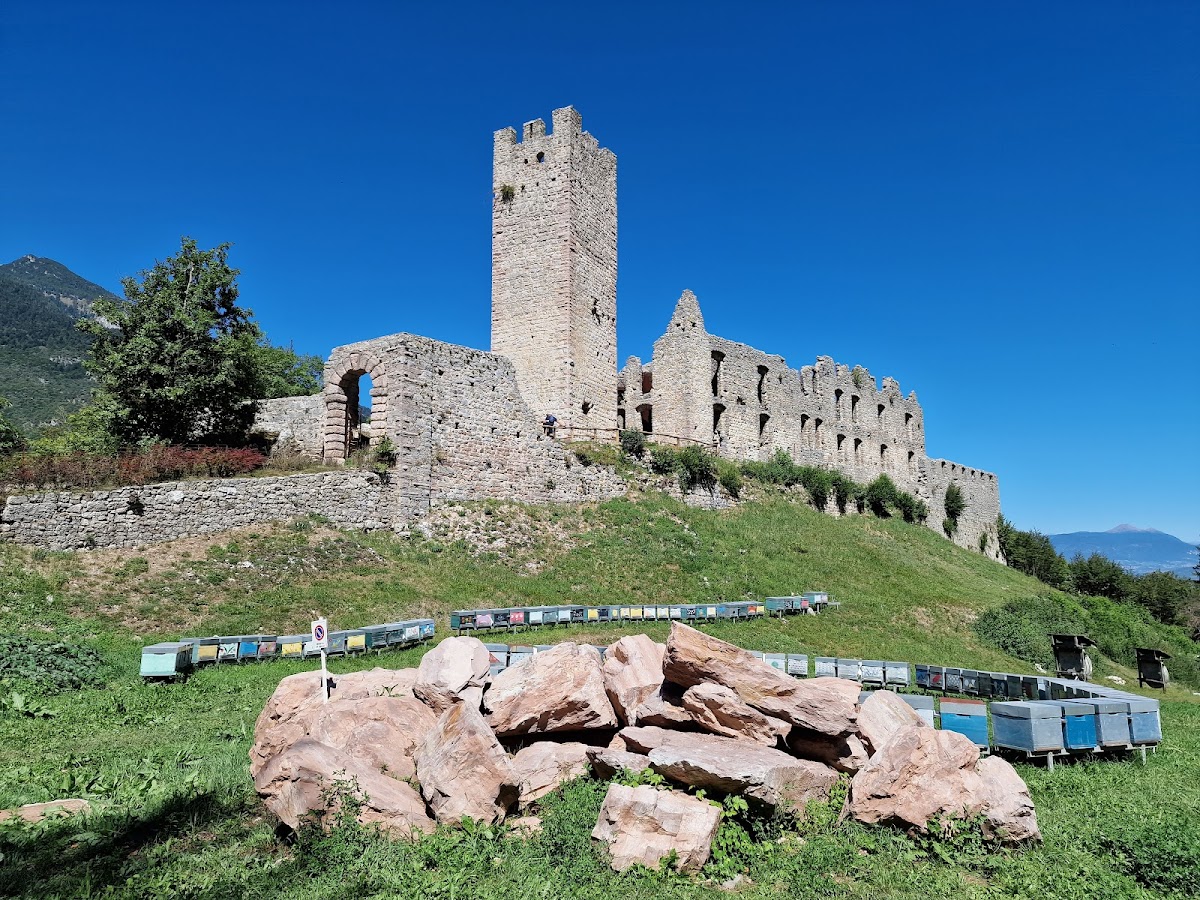
The surviving remains of Castel Belfort illustrate the complex history of a structure that evolved from a medieval tower into a 17th-century fortress. The original medieval castle, founded in 1311, featured a defensive tower authorized by the Count of Tyrol. This tower formed the nucleus of the early fortress and was built using construction techniques typical of the Middle Ages, likely involving local stone and mortar suited for regional defensive needs.
After the catastrophic fire of 1670, much of the medieval fabric was destroyed and subsequently replaced by a fortress designed in accordance with 17th-century military architecture. This later construction employed updated methods to resist artillery and to accommodate soldiers and defensive operations of the early modern period. The structure was adapted to reflect contemporary military requirements through thicker walls and angled bastions, though specific architectural details remain generalized in the sources.
Today, the castle stands in a ruined state but has undergone significant consolidation to arrest decay and to permit safer public exploration. These preservation efforts have stabilized remaining walls and structural elements without extensive reconstruction, maintaining the authenticity of the ruins. While no detailed descriptions of decorative features, inscriptions, or interior layouts are documented, the accessible ruins retain enough form to convey the castle’s transformation across centuries.
The conservation work culminated in recognition through the “Costruire il Trentino” award, acknowledging the quality of interventions that respect the castle’s historical layers while facilitating educational engagement. The remains of Castel Belfort serve as a tangible link to the region’s medieval and early modern history, presenting the layered legacy of territorial power struggles and evolving defensive architectures.
Nearby sites


