Castel Belfort: A Medieval Castle and Later Fortress in Italy


Site at a Glance
- Rating
- 4.3
- Popularity
- Medium
- Country
- Italy
- Primary era
- Early Modern
- External website
- Open
- Eras represented
- Early Modern
- Civilizations
- Habsburg, Holy Roman Empire
- Site type
- Military
- Remains
- Castle
On this page6 sections
History
Castel Belfort is a medieval castle in Italy, in the municipality of Spormaggiore, whose history began in 1311 with the construction of a tower authorized by Henry of Tyrol, Count of Tyrol. The site later became a possession contested by noble families and territorial lords before being rebuilt as a fortress in the seventeenth century.
Foundation and Noble Conflicts
Tissone, the son of Geremia I, built the tower after Henry of Tyrol granted him permission to construct it. Tissone became involved in the noble conflicts of Val di Non in 1334 and died prematurely in 1339. Castel Belfort then passed to his heirs, who were compelled to cede it to the Thun family in 1350. The Thuns installed the Reifer family as captains of Castel Sporo.
The Reifers held Castel Belfort until 1415, when the lords of Sporo conquered it in the hope of receiving it as a fief, a property granted by a superior lord in return for service or allegiance. After Pietro Sporo died a few years later, the castle returned to Frederick IV of Habsburg, the Habsburg ruler and Count of Tyrol. Frederick granted it first to Giovanni Uber in 1427 and then to Judge Andrea Vogt in 1428 and 1429.
Changing Dynasties
In 1429, Castel Belfort returned to the Thun family. The Thuns transferred it back to the Reifers in 1450, and in 1456 members of the family were recorded there as Reifer de Altspaur. The Reifer line ended in 1470, after which the castle passed to the Neideck family.
The Neidecks were ministeriales, dependent administrative and military nobles who served territorial lords. They expanded their power and acquired the castles of Anger, Malosco, Wellenberg, and Fragenstein. When their line became extinct in 1500, Castel Belfort passed to the Concini family. The Concinis sold it in 1543 to Leonardo Nogarola of Verona, and it was sold again in 1607 to Antonio Pezzen, a notary from Val di Non whose family originated in Brescia.
Destruction and Decline
After the last member of the Pezzen family died, the castle passed to the related Terlago family. Domenico Vigilio Spaur purchased it in 1642 and sold it eight years later to Antonio del Monte, who was married to Antonia Saracini. The couple had no children, so after Antonio’s death the castle became part of the possessions of the Counts Saracini.
A major fire in 1670 almost completely destroyed Castel Belfort. The Counts Saracini demolished the surviving remains and rebuilt the complex entirely as a fortress, using seventeenth-century construction techniques and planning. In 1785, the castle’s jurisdiction was merged with those of Castel Sporo and Castel Flavon. The seat of the new jurisdiction moved to Spormaggiore, reducing Castel Belfort’s administrative importance. It was abandoned and soon became a ruin.
Conservation
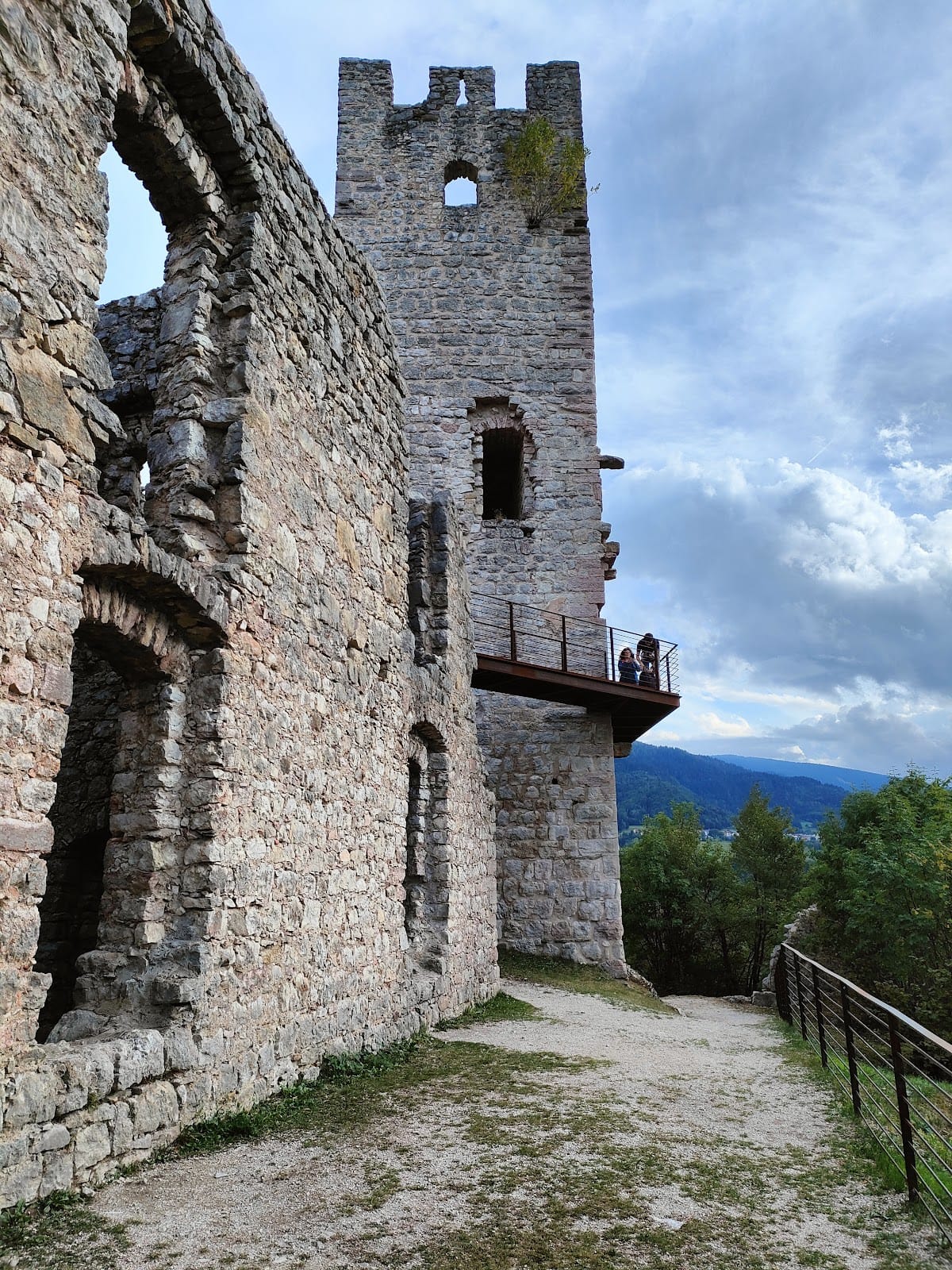
The Counts Saracini retained ownership until the 1990s, when the municipality of Spormaggiore acquired the castle. In 2013, the ruins were consolidated and made more accessible to the public. The conservation restoration received the Costruire il Trentino award promoted by the Circolo Trentino Architettura Contemporanea. Castel Belfort is identified as Italian national heritage, a designation for culturally significant property recognized as part of the country’s protected heritage.
Remains
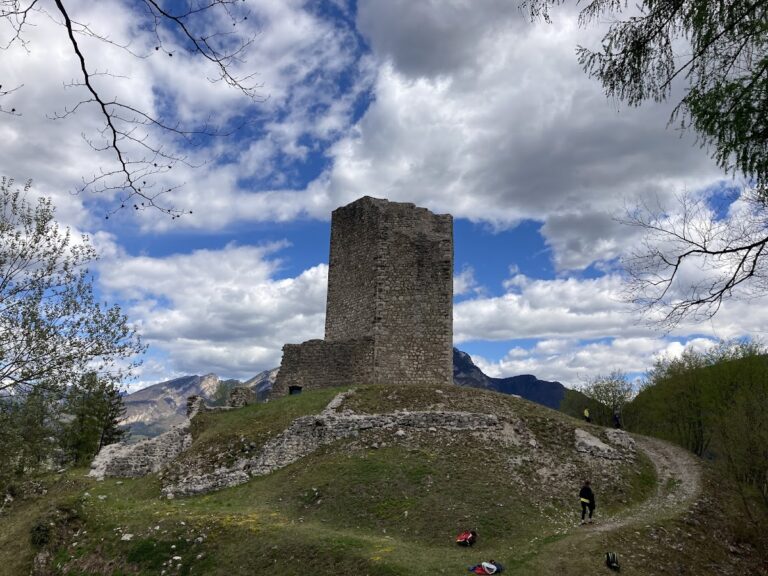
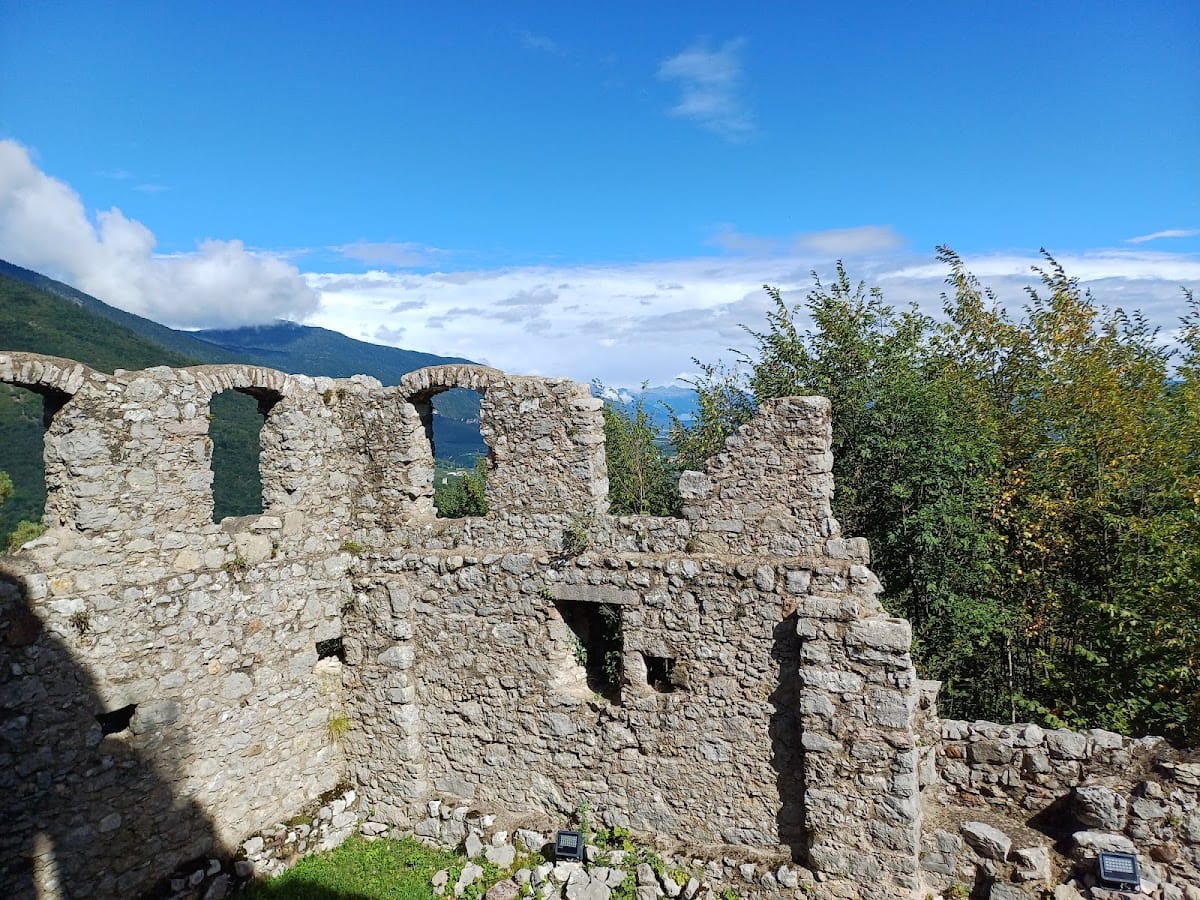
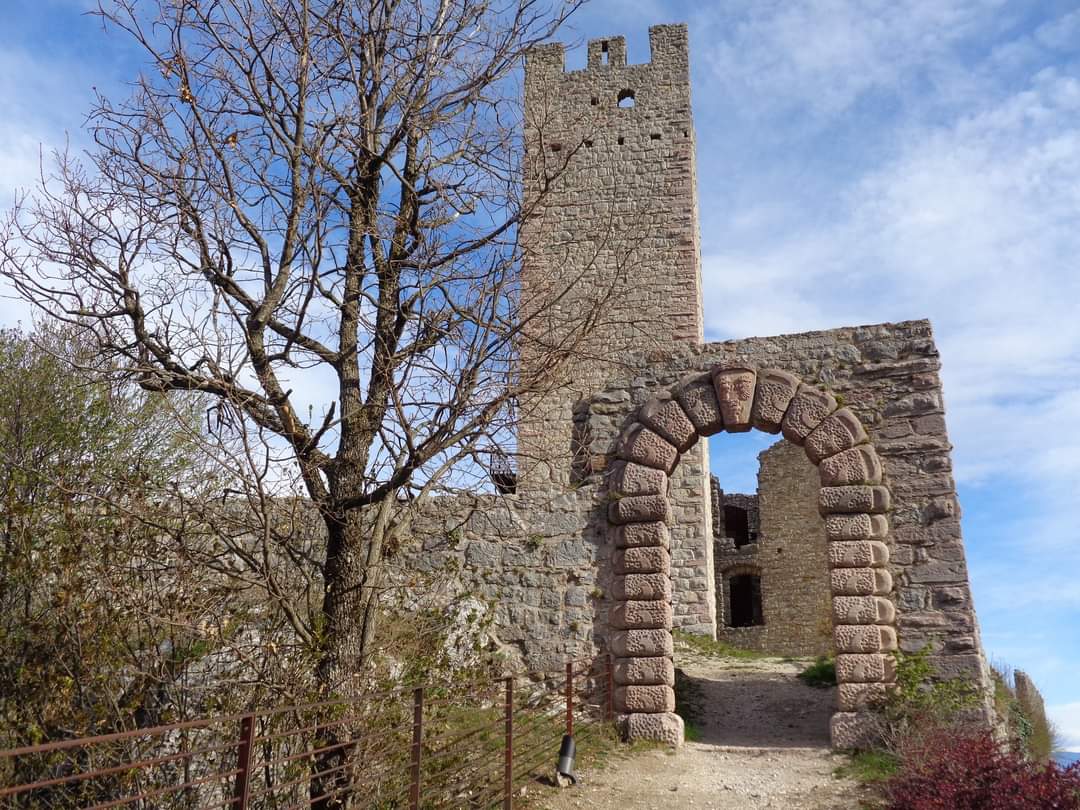
Castel Belfort survives as the ruins of a complex that began with a medieval tower and was later transformed into a fortress. The first building phase belongs to 1311, when Tissone received authorization to erect the tower associated with the castle’s foundation.
The surviving form also reflects the rebuilding that followed the fire of 1670. The medieval fabric that remained after the destruction was demolished, and the complex was reconstructed entirely as a fortress according to seventeenth-century construction methods and planning. The site is now preserved as consolidated ruins.