Castel Thun: A Medieval Fortress and Aristocratic Residence in Italy


Site at a Glance
- Rating
- 4.6
- Popularity
- Medium
- Country
- Italy
- Primary era
- Early Modern
- External website
- Open
- Eras represented
- Medieval, Early Modern
- Civilizations
- Holy Roman Empire
- Site type
- Military
- Remains
- Castle
On this page11 sections
History
Castel Thun is a medieval castle in Italy, located in the municipality of Ton at the entrance to Val di Non. The Thun family established it as its principal seat around the middle of the thirteenth century, and the fortress later became one of the best-preserved monuments in Trentino. Its history combines feudal expansion, military rebuilding, aristocratic residence, and modern conservation.
Origins and the rise of the Thun family
The castle was originally known as Castel Belvesino, a name derived from the hill on which it stood. The lords of Thun had held another stronghold, Castel Visione on the hill of Vision near the Rochetta pass, from 1199, but that was a predecessor possession rather than the present castle. The Thun family obtained Castel Belvesino through an investiture from the Prince-Bishops of Trent in 1267. An investiture was a formal feudal grant through which a superior lord conferred rights or possession on a subordinate. The castle first appears in written evidence in 1268 as Castro Belvesini.
Over the later Middle Ages, the Thun family expanded its authority across much of the Noce valley. It acquired castles and jurisdictions, becoming one of the region’s most powerful feudal families. Its possessions included Castel Bragher, Castel San Pietro, and Castello di Castelfondo. Castel San Pietro, situated about 1.8 kilometres away in Valle San Pietro, had been abandoned by the end of the seventeenth century. The name Castel Thun developed from the family’s surname, which was later Germanized from Tono as Thun.
Fortification and aristocratic transformation
The castle suffered repeated fires and underwent major military rebuilding. After a fire in 1529, it was reconstructed with defenses suited to firearms, including gun ramps, ramparts, and large bastion towers. A bastion is a projecting fortified structure designed to permit defensive fire along the faces of a wall. Further strengthening followed during the 1540s, when a new gate was built at the moat. Around 1600, a wall fitted with 30 cannon was recorded.
A later fire in 1569 had a personal cost for the family. Sigismondo Thun, who served as an imperial speaker at the Council of Trent, died during the disaster. The Council of Trent was a major sixteenth-century Catholic council held in Trent during the Reformation era, while an imperial speaker represented the emperor at a formal assembly.
From 1792 to 1794, extensive interior work changed the character of Castel Thun. The former medieval fortress was remodelled as a contemporary aristocratic residence. The castle nevertheless remained the family seat from the second half of the thirteenth century until the death of Count Zdenko Franz Thun Hohenstein in 1982.
The Thun-Hohenstein period and preservation
In 1629, a Bohemian branch of the family received the title of imperial counts and the aristocratic predicate Thun-Hohenstein for the entire family. Imperial counts were counts recognized within the Holy Roman Empire. In the nineteenth century, Count Matteo Thun gave substantial support to Giuseppe Garibaldi, contributing to financial difficulties that placed the castle at risk of sale or decay.
The Bohemian branch remained wealthy in the early twentieth century and repurchased the castle in 1926 under Zdenko Thun. He worked to preserve the building and its furnishings and used it as a residence. After his death in 1982, Castel Thun passed to the Borga family of Mezzolombardo. The family sold the castle, together with its historic contents, to the Autonomous Province of Trento in 1992.
The province then carried out more than 18 years of restoration. The work included cataloguing the furnishings and extensive library and making an inventory of the family archive. Castel Thun opened to the public on 17 April 2010 as the fourth site of the Buonconsiglio Castle museum system, alongside Buonconsiglio Castle in Trento, Castel Beseno, and Castello di Stenico. The system is the provincial museum institution responsible for these historic castles and collections in Trentino.
The castle is now used as a museum, with its furnishings and library helping to convey the character of a residence used continuously across successive centuries and into the second half of the twentieth century. On 14 June 2011, it hosted the signing of the founding act of the European Region of Tyrol–South Tyrol–Trentino, a cross-border regional association linking the historical territories of Tyrol in Austria and Italy.
Remains
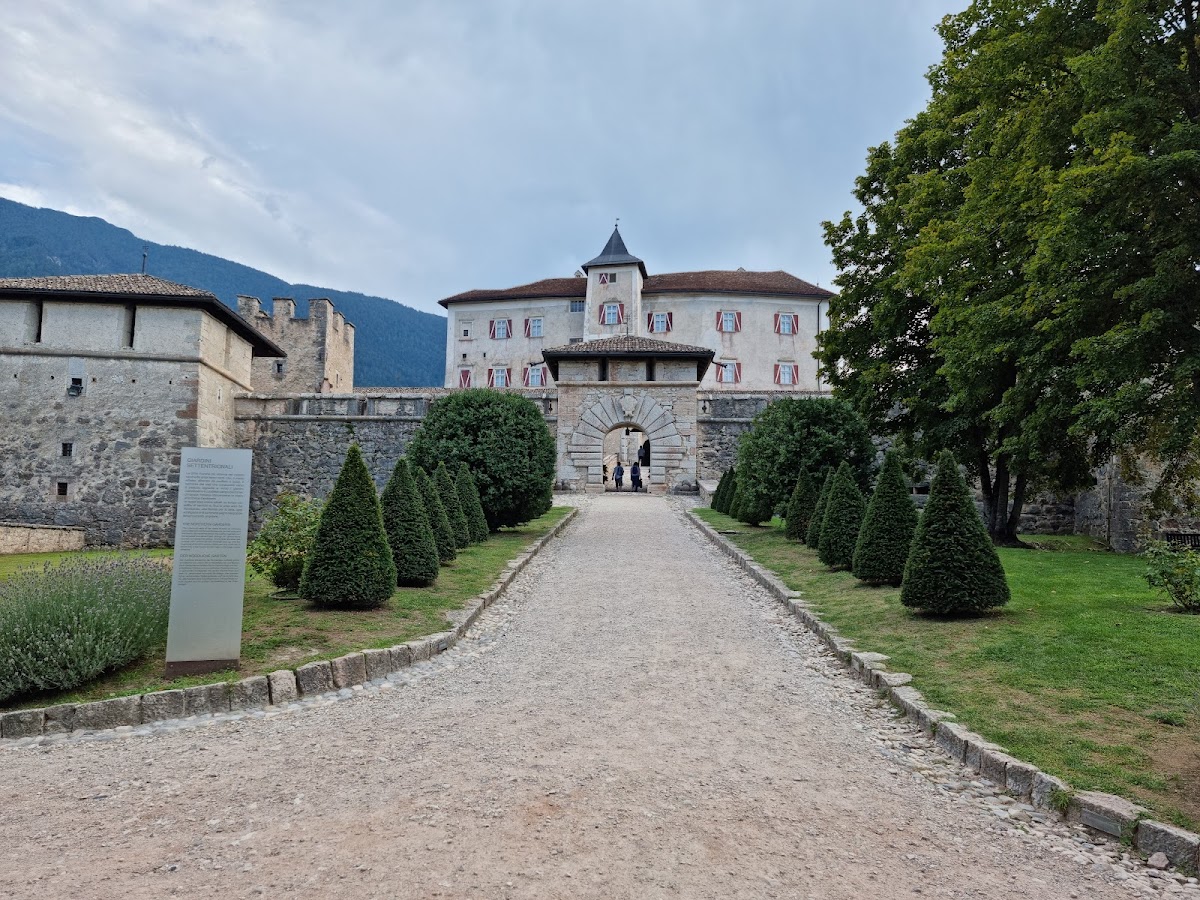
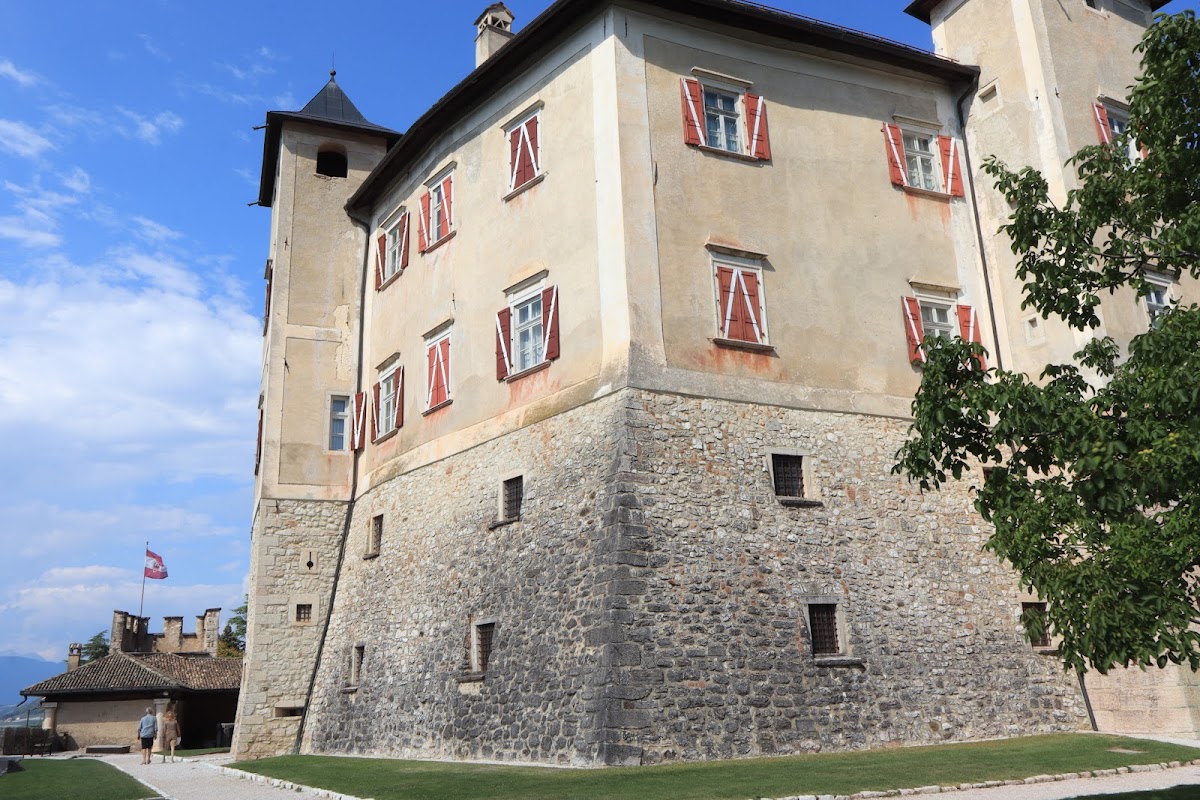
Castel Thun is a hilltop fortress at approximately 605 metres above sea level, positioned above Vigo di Ton on the left bank of the Noce and overlooking Val di Non. The valley is a broad basin and high plateau in Trentino drained by the Noce. The complex follows the north to south axis of the hill of Novesino and adapts to the site’s landform. Towers, enclosing walls, bastions, and a moat form the principal defensive structure, while the surviving appearance reflects especially the alterations made during the sixteenth and seventeenth centuries.
Defensive circuit and entrances
Porta Spagnola
The 1566 Porta Spagnola forms the approach across the drawbridge to the first courtyard. A drawbridge is a movable bridge used to control passage across a moat. The gate was built in a Moorish style and was traditionally attributed to Giorgio Thun after his journey to Spain. Its position at the entrance connects the controlled crossing with the inner organization of the castle.
Bastions and fortified walls
The defensive circuit includes the moat, enclosing walls, gun ramps, ramparts, and massive bastion towers. These elements belong chiefly to the military rebuilding of the sixteenth century, when firearms altered the requirements of castle defense. The south side contains the defensive bastions, while a wall described around 1600 as carrying 30 cannon formed part of the castle’s artillery system. Stone and masonry construction include both bossed ashlar blocks and rubble stone.
Courtyards and principal buildings
Courtyards and northern entrance
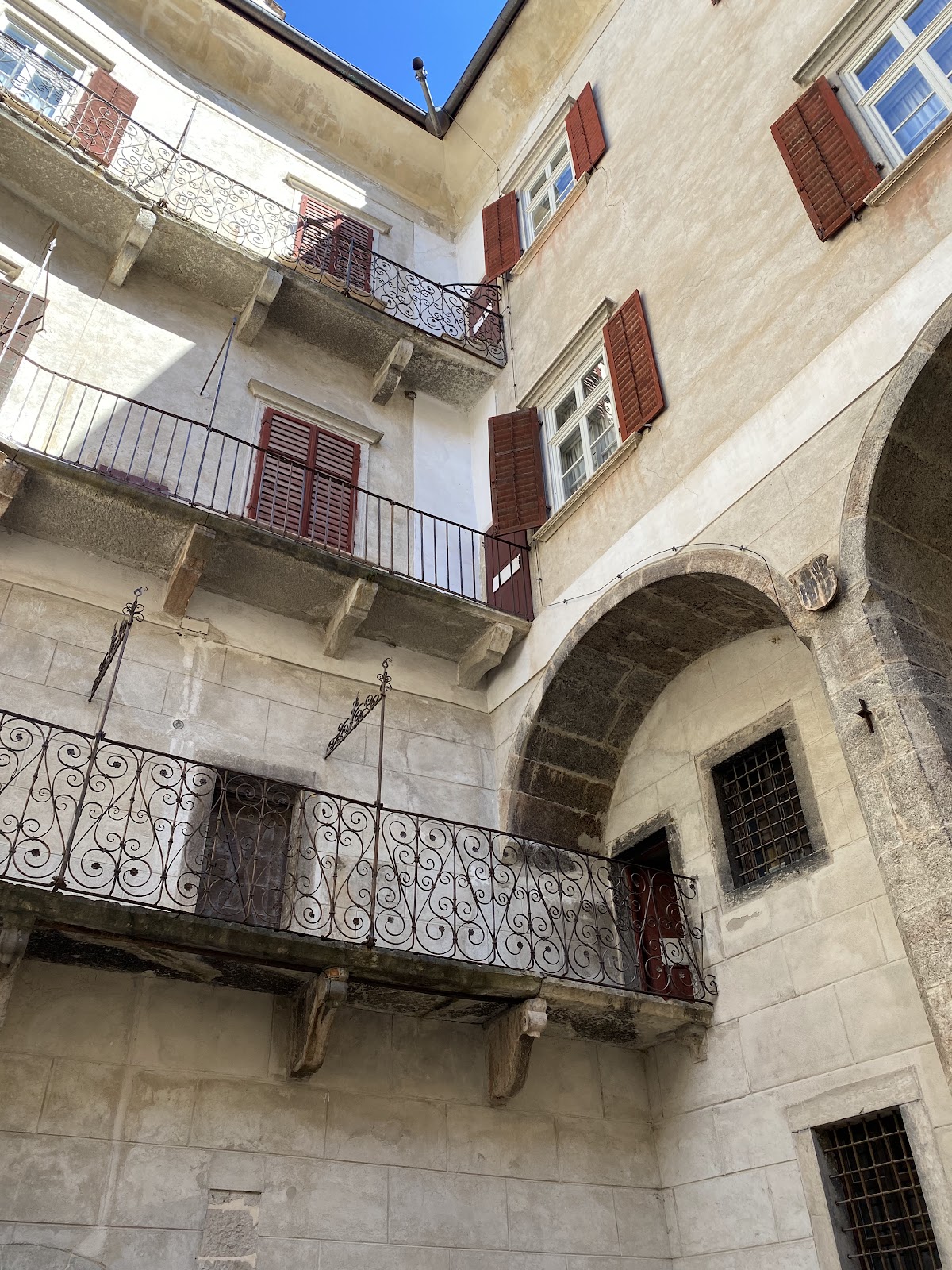
Beyond the drawbridge lies the first courtyard. The main gate and principal facade stand on the north side of the complex, while the defensive bastions occupy the south. Together, these features express the castle’s combination of controlled access, fortified perimeter, and residential interior.
Interior residence and chapel
Inside the fortified enclosure are salons and a castle chapel, reflecting the building’s later use as an aristocratic residence as well as its earlier defensive purpose. The complex combines Gothic and Renaissance characteristics. Its historic furnishings, extensive library, and family archive remain associated with the interpretation of Castel Thun as a long-used family seat. The best-known interior is the seventeenth-century Stanza del Vescovo, or Bishop’s Room. It is lined entirely with Swiss stone pine, an alpine conifer whose wood was traditionally used for paneling and furnishings, and contains a coffered ceiling and a majolica-tiled stove.