Castel Giovo: A Medieval Castle and Strategic Stronghold in Italy
Site at a Glance
- Rating
- 4.9
- Popularity
- Very Low
- Country
- Italy
- Primary era
- Medieval
- External website
- Open
- Eras represented
- Medieval
- Civilizations
- Holy Roman Empire
- Site type
- Military
- Remains
- Castle
On this page8 sections
History
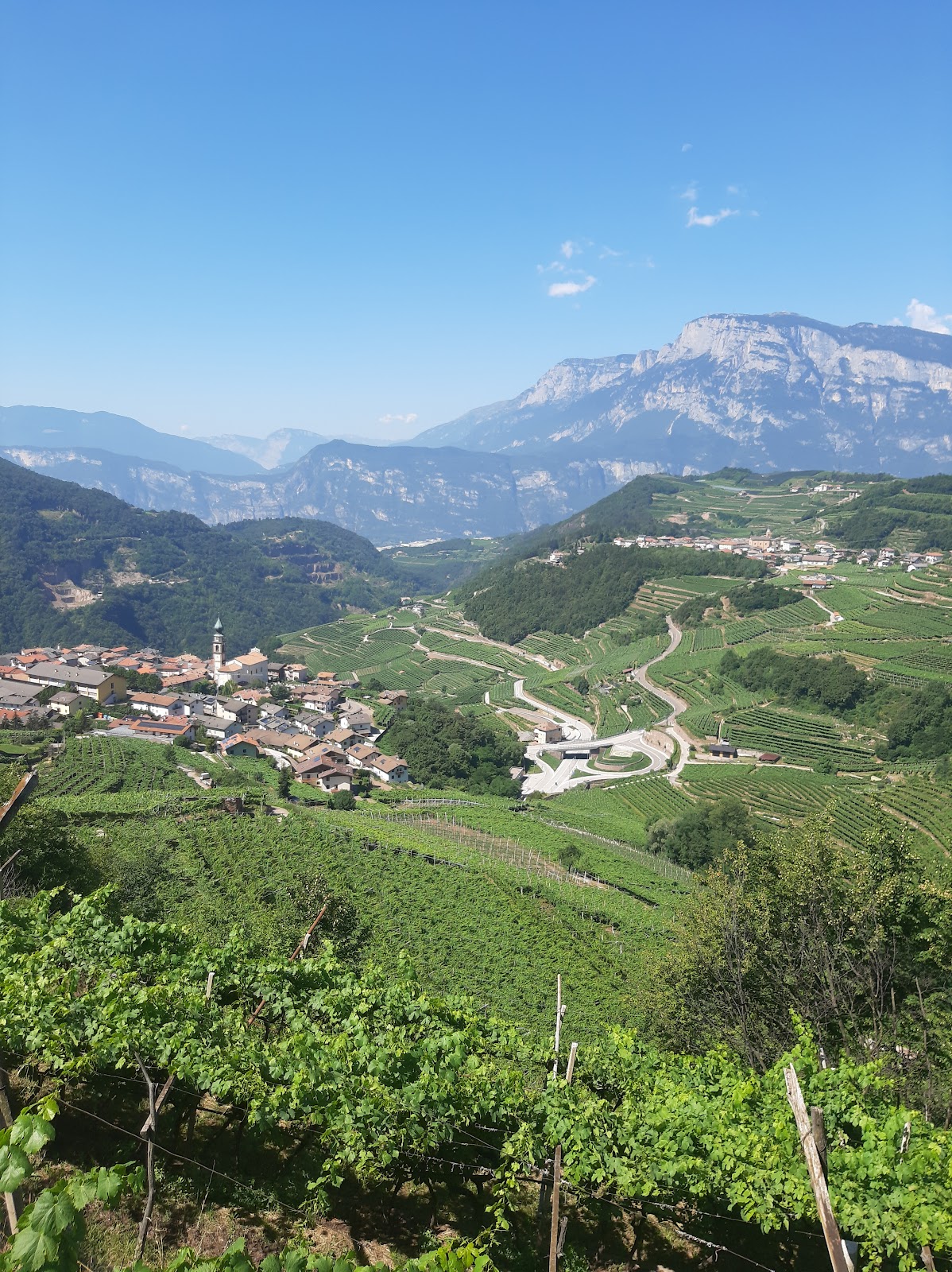
Castel Giovo is a medieval castle in Italy, located at Ville di Giovo in Trentino. Probably begun in the thirteenth century, it was first recorded in 1305 as the “house of Vesino.” The castle stood on the route connecting the Adige Valley with the Valsugana through the Cembra Valley, giving it a strategic role in controlling local mines, commercial traffic, and movement through the area.
The lords of Giovo
Castel Giovo was the residence of the lords of Giovo, who were connected with the Counts of Appiano and their territorial and political influence across parts of the Alpine region. Olivario, son of Montanario, was the first recorded member of the ruling family to live at the castle. Ownership later passed to the Counts of Tyrol, the Moremberg family of Sarnonico, and other noble families.
During the fifteenth century, the castle had a fortified enclosure, a defensive perimeter surrounding the stronghold’s buildings and internal spaces. The enclosure surrounded the watchtowers then in existence and reinforced the site’s role as a local point of strategic control.
From fortress to ruin
In the seventeenth century, Castel Giovo became a noble residence and lost much of its military function. The A Prato, Spaur, and Prugger families were among its owners during this period. The Prugger family, originally from Termeno, lost control of the castle during the period of the Napoleonic invasion. The complex was then converted into a barracks, suffered extensive damage, and fell into ruin.
Names, restoration, and tradition
The castle has carried several names. “Castel Giovo” refers to its geographical position, while “Castle of the Rose” refers to a rose emblem on the masonry. “Castel Vesino,” also called the “Tower of Vesina,” derives from the former Villa of Vesino, which, together with Lavat, formed one of Giovo’s four original quarters. In recent years, the surviving tower has also been called the Tower of the Rose.
The rose name has also been linked speculatively with ladies of the castle who bore the name Rosa, but its historical association is the emblem on the masonry. A local legend says that on some full-moon nights, a blonde noblewoman in a long, light white dress wanders around the tower searching for the entrance to the castle’s vanished chapel.
Edilferretti restored the castle in 1987. Castel Giovo is designated Italian national heritage, preserving its importance as part of the historical landscape of Trentino.
Remains
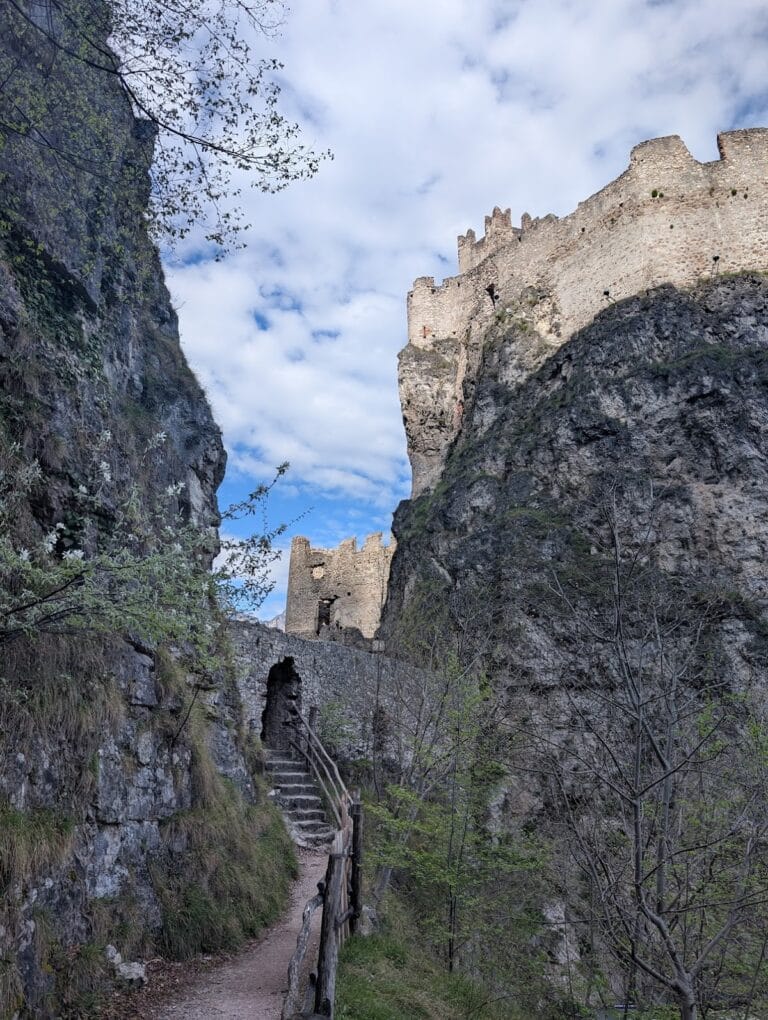
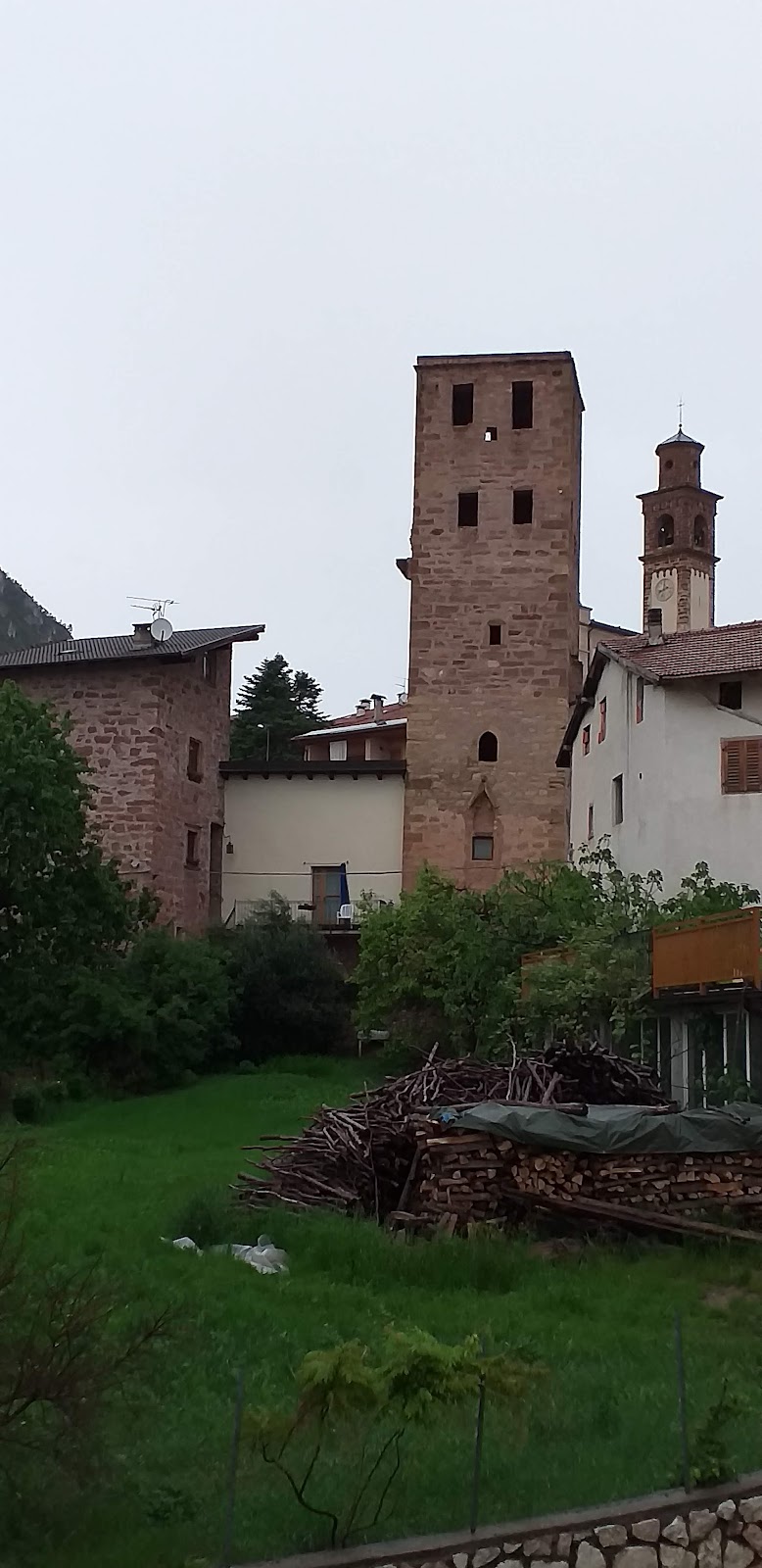
At approximately 680 metres above sea level, the surviving complex is centered on a massive medieval tower and the western part of the former noble palace. The earlier castle included several buildings, two or possibly three towers, a garden, a well, service buildings, and the palace. The remaining structures show the division between the castle’s defensive element and its aristocratic residential spaces.
Surviving medieval structures
Watchtower
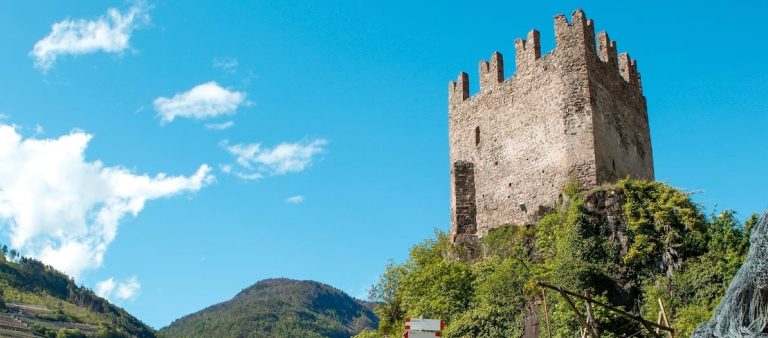
The surviving watchtower retains its original structure. It is approximately 24 metres high and rises through five floors. A watchtower was a fortified tower intended mainly for observation and control rather than residential use, matching Castel Giovo’s strategic position along the route through the Cembra Valley. Its exterior wall facing the road is 1.40 metres thick, giving the tower its massive character.
The floors are linked by movable iron stairways and by trapdoors set into the floor structures. The staircase leading to the first floor dates from the beginning of the twentieth century. The tower is also known as the Tower of the Rose, recalling the rose emblem associated with the castle’s masonry.
Noble palace
The western part of the noble palace survives as medieval fabric within the complex. A noble palace was the residential and representative part of an aristocratic castle, distinct from its defensive towers and service buildings. This palace section is now a privately owned rural dwelling, retaining the connection between the surviving structure and the residential phase that followed the castle’s earlier military use.