Castel Belasi: A Medieval Castle in Campodenno, Italy


Visitor Information
Google Rating: 4.5
Popularity: Low
Google Maps: View on Google Maps
Official Website: www.castelbelasi.it
Country: Italy
Civilization: Unclassified
Remains: Military

History
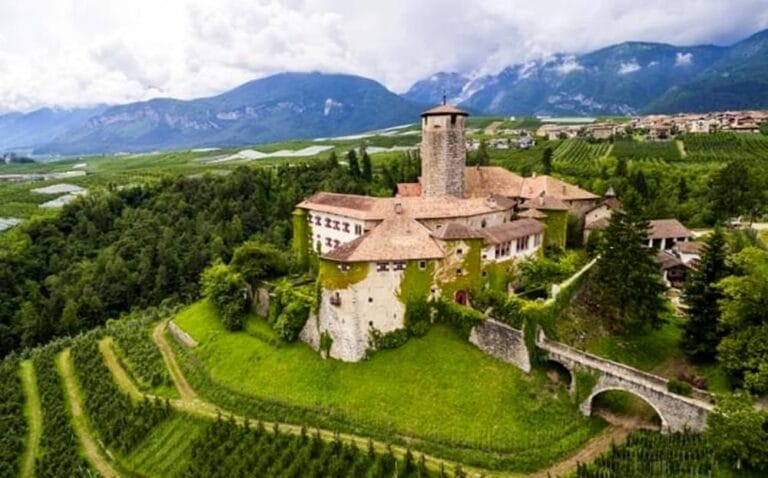
Castel Belasi is situated in Segonzone, a locality within the municipality of Campodenno in Italy. The castle was constructed during the latter half of the 13th century, established by the Counts of Tyrol to secure control over the Val di Non valley at a time when they were engaged in disputes with the Prince-Bishops of Trento.
Contrary to earlier assumptions that Castel Belasi dated back to the 12th century and was associated with an ancient Belasi family, research has clarified that the castle’s origins lie with the Rubein-Ragogna family from the Burgraviate of Merano. This family was loyal to the Tyrolean counts and founded the castle to strengthen their regional influence. Following the extinction of this family line, in 1291 the castle was granted as a fief to Ulrico di Ragogna, who served as a trusted military captain for the Counts of Tyrol.
In 1368, ownership passed to Corrado Khuen from Termeno, who acquired the castle from Simone Rubein. This marked the beginning of the Khuen-Belasi family’s long-standing association with Castel Belasi. The family incorporated the castle’s name into their own and rose to prominence during the 15th and 16th centuries, becoming one of the wealthiest and most influential noble houses in the region. Members of the Khuen-Belasi dynasty held important positions as bishops, politicians, and military leaders, not only locally but also within the broader Habsburg realms.
During this period, the castle was extensively expanded and embellished, evolving from a small stronghold into a formidable fortress with impressive external walls and richly decorated interior halls. The castle faced military challenges as well: it was captured by the Spaur family between 1415 and 1420 during local rivalries and was seized once more in 1525 by peasant rebels during the Rustic War, during which its granaries were plundered.
The Khuen-Belasi family held significant feudal rights over the surrounding countryside, collecting tithes and managing vast agricultural estates centered on the castle. These estates included farmland, vineyards, meadows, and forests, making the castle an important administrative and economic center.
In the 18th century, as the Khuens achieved the rank of Counts of the Holy Roman Empire, they further enhanced the castle’s interiors with elegant stucco work and decorative ceramic stoves known as majolica, reflecting contemporary artistic styles. By this time, the castle had largely lost its military function, transforming into a key agricultural estate supported by large stables, barns, and storage buildings integrated into the castle’s fortified walls.
The 19th century brought decline following the Napoleonic Wars and the abolition of noble privileges. The castle became a seasonal residence while its owners pursued careers elsewhere. The Khuen family returned to the castle between the world wars, but it was ultimately abandoned in the 1950s. Over the following decades, the castle was stripped of its furnishings and fell into severe disrepair.
In 2000, the municipality of Campodenno acquired Castel Belasi along with the nearby chapel dedicated to Saints Philip and James. Restoration efforts have stabilized the structure and preserved key architectural elements, preparing the castle for renewed use in the 21st century.
Remains
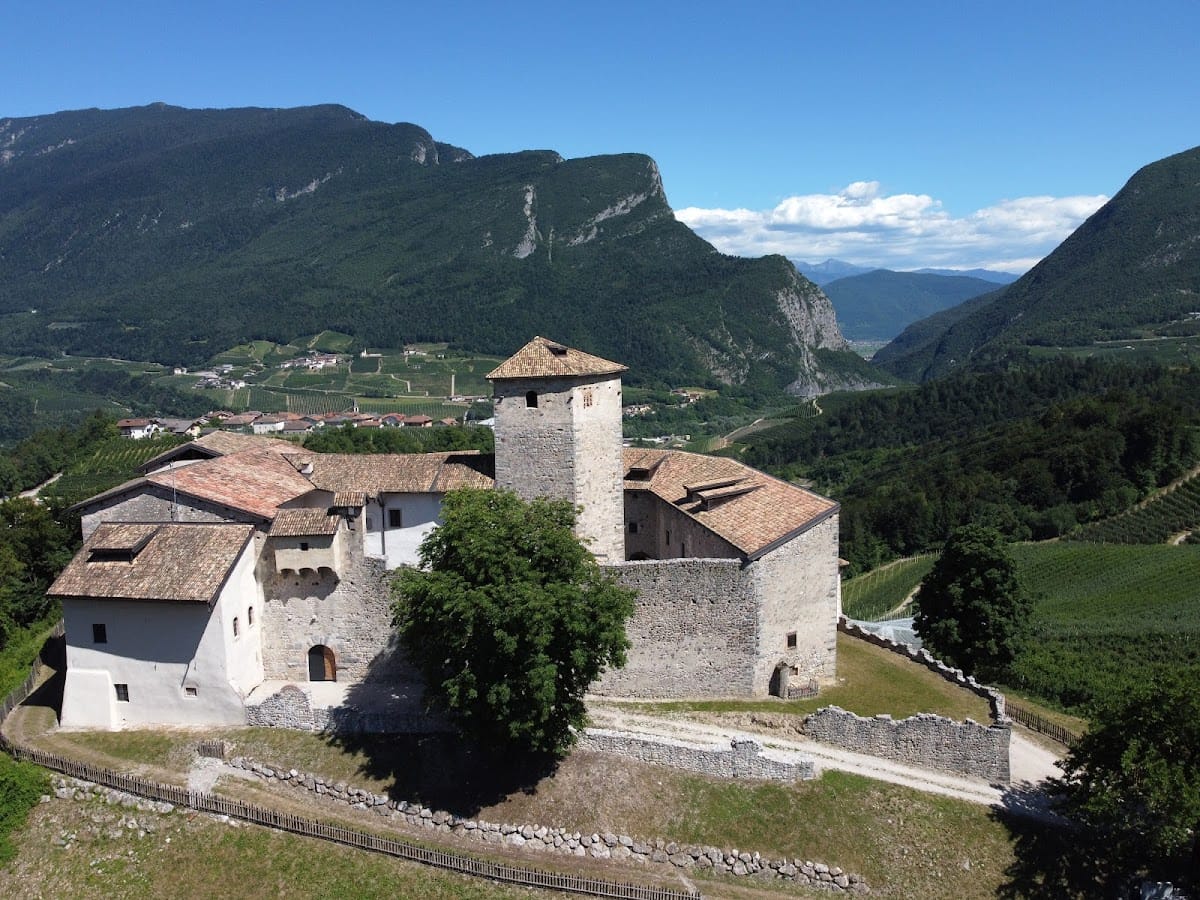
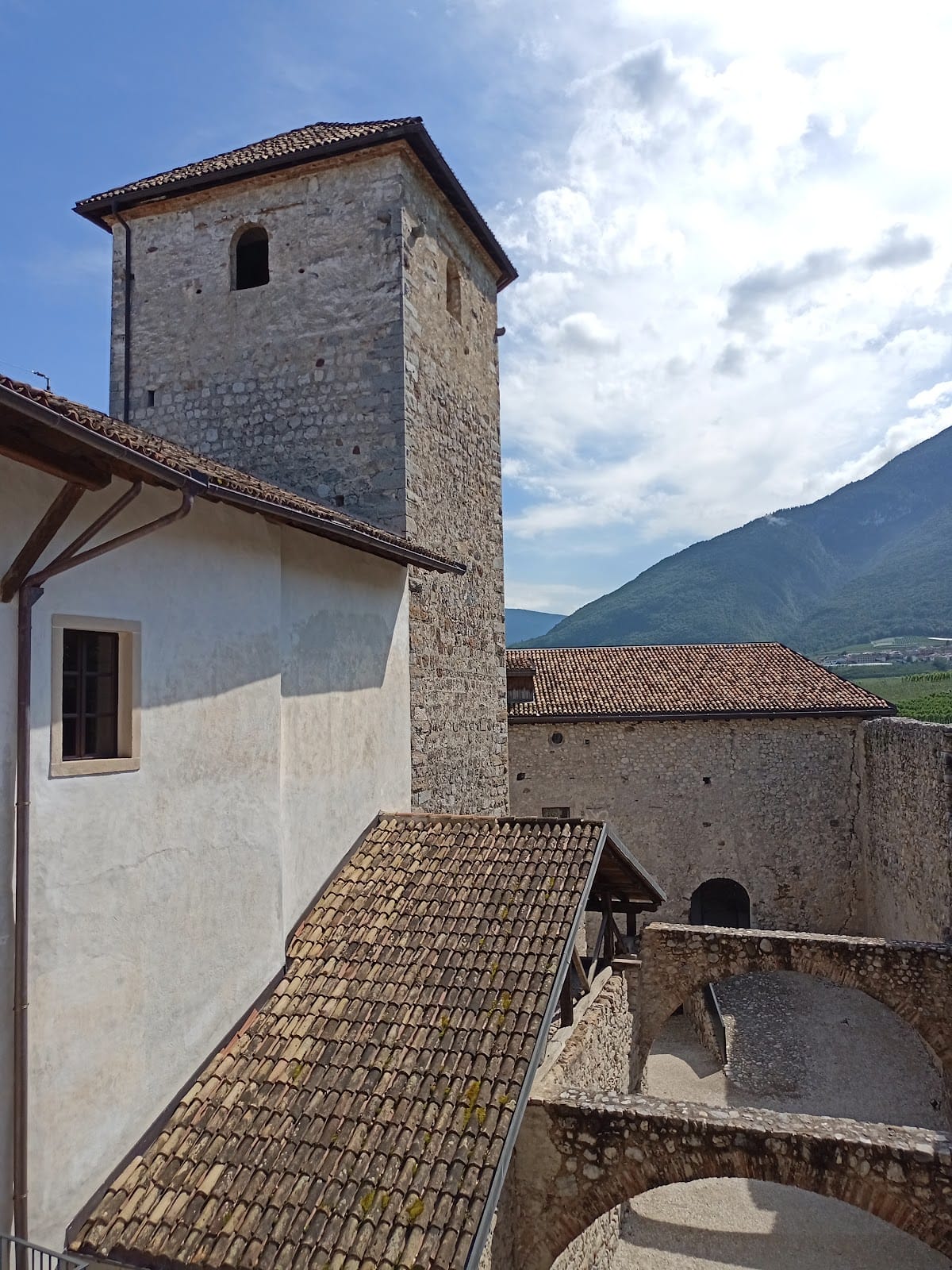
Castel Belasi stands on a gentle hillside surrounded by orchards and woods, maintaining much of its original layout despite the loss of all interior furnishings. The castle’s most striking external feature is a massive pentagonal keep, or mastio, a fortified tower that served as the last stronghold in defense. Encircling the castle is a high curtain wall—a defensive stone barrier—to which various buildings from different historical stages are attached.
Enhancing the castle’s defenses are two bartizans, which are small, overhanging turrets placed on the curtain wall near the main entrances. These allowed defenders to monitor and protect the gateways effectively. On the southern slope of the hill, two smaller curtain walls connected by a ravelin—a low triangular fortification designed to defend the main entrance road—guard the principal approach to the castle, demonstrating advanced medieval military architecture.
Inside, the castle’s walls bear significant frescoes dating mostly to the 16th century. During restoration, earlier 15th-century decorative paintings were uncovered on a corridor wall, depicting scenes common in late medieval castles such as knightly tournaments, coats of arms, family crests, and musicians, connecting the imagery to the castle’s long noble heritage.
One notable interior space is the “Music and Fruits” hall, adorned with mid-16th-century frescoes featuring parapets draped with fabrics that support images of musical instruments alongside fruits and vegetables. Nearby, a room houses a sophisticated fresco of the Judgment of Paris, attributed to the German artist Bartlmä Dill Riemenschneider and dated to the same century. The “Hall of Metamorphoses” contains a later set of frescoes illustrating various stories from Ovid’s Metamorphoses, highlighting the Renaissance interest in classical mythology.
A large painted family coat of arms is found on the central palace façade, historically significant for being surmounted by the arms of Archduke Ferdinand II of Austria from the 1560s, underscoring the castle’s connection to Habsburg authority.
Attached to the central palace walls within the western courtyard is the family chapel dedicated to Saint Martin of Tours. This chapel features frescoes from the 15th and 16th centuries and includes a notable architectural detail: a window connecting the chapel with a first-floor chamber in the main building. This design allowed the castle’s lords to attend religious services even when confined indoors due to illness.
Surrounding the castle are extensive agricultural buildings such as stables, haylofts, and warehouses constructed against the curtain walls. These structures reflect the castle’s evolution into a large farming estate during later centuries, supporting its economic importance beyond military purposes.
Nearby sites