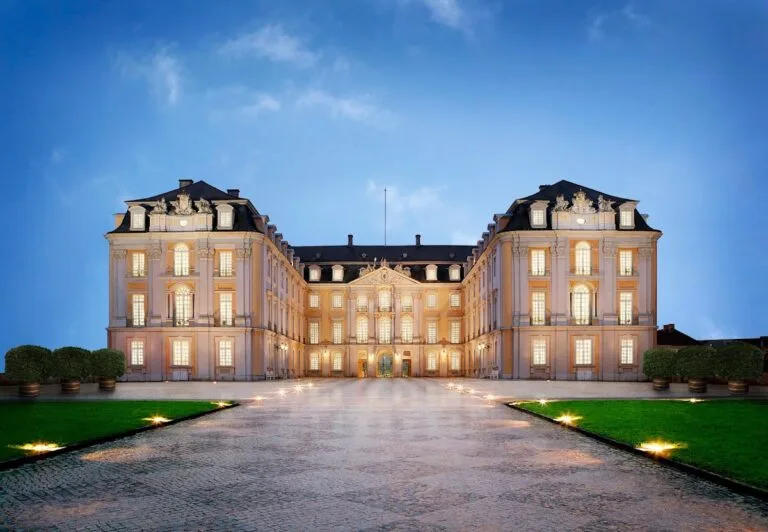
Burg Hemmersbach: A Historic Water Castle in Kerpen, Germany


Visitor Information
Google Rating: 4.5
Popularity: Low
Google Maps: View on Google Maps
Official Website: www.chateauform.com
Country: Germany
Civilization: Unclassified
Remains: Military

History
Burg Hemmersbach is a water castle located in the municipality of Kerpen, Germany. It was originally established by medieval German nobility and has witnessed numerous phases of construction, ownership, and conflict over the centuries.
The earliest known reference to Burg Hemmersbach dates back to around the year 980, when a nobleman named Wigmannus von Heymenbach took residence there. The site’s original name, Heymenbach, gradually transformed into Hemmersbach, giving the castle and its surroundings their lasting identity. This initial medieval fortress eventually fell into decay, prompting the construction of a new castle on the site around 1100. This second structure was occupied for nearly four centuries, serving as a noble residence throughout the High Middle Ages.
Ownership changed in 1326 when the castle passed to the Scheiffart von Merode family following the extinction of the original Hemmersbach lineage. A significant setback occurred in 1366 when the earlier castle was destroyed by forces of the Maas-Rhein Landfrieden alliance, a regional coalition seeking to enforce peace and order. This destruction led to the beginning of a new building phase during the 14th century. The first surviving written record mentioning this later castle comes from 1483, marking its establishment in historical sources.
In the early 17th century, Burg Hemmersbach came under the authority of Heinrich von Vercken, who held it as a fief under the Palatinate count in 1620. During the brutal Thirty Years’ War (1618–1648), the castle endured significant hardship. It was captured and its chapel was set ablaze, causing not only structural damage to the castle itself but also devastation in the surrounding village of Horrem.
The 18th century brought both inheritance and misfortune. In 1751, the castle became the property of Franz Adolph Berghe von Trips, a descendant of the Scheiffart von Merode family, by family ties. However, a major fire in 1793 severely damaged the main castle house, burning it down to its walls. Just a few years later, in 1797, another fire destroyed the outer bailey (known in German as the Vorburg), further impairing the estate.
Reconstruction efforts resumed in 1837 when descendants of the Berghe von Trips family restored much of the castle. Later renovations between 1899 and 1900 shaped the castle’s current historic appearance, blending these 19th-century rebuilding efforts with early 20th-century modifications.
In the 20th century, Burg Hemmersbach became linked to Wolfgang Graf Berghe von Trips, a prominent Formula 1 racing driver born in 1928, who was the last of the von Trips line. After his death in 1961, his mother took residence in the nearby Villa Trips. This villa also housed a foundation bearing the von Trips family name and hosted a motorsport museum until 2016. Part of the museum’s collection was transferred to Schloss Loersfeld in 2018.
From the late 1980s until 1999, the castle served as both a residence and the headquarters of Herbert Hillebrand’s company until his insolvency. In 1999, the castle was sold to the Breuer brothers for 17.5 million Deutsche Marks. Despite plans supported by the state government and efforts involving the software designer Kai Krause to establish a startup incubator at the site, these ambitions were never realized.
Around 2011, Burg Hemmersbach was implicated in a subsidy fraud scandal linked to Gustav Adolf Schröder, the chairman of the local Sparkasse bank. At that time, the castle remained privately owned and was closed to the public. After extensive renovations completed in 2017, the property entered a new phase as a venue for corporate events and seminars, operated by the French company Châteauform’ under a long-term lease agreement.
Remains
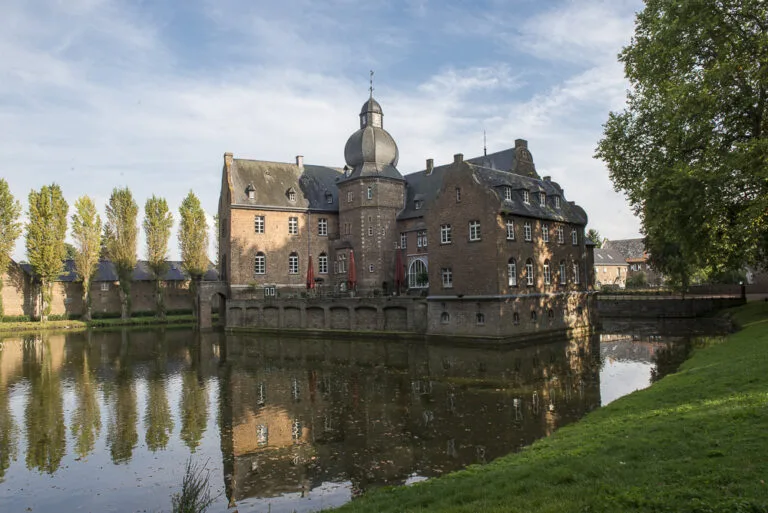
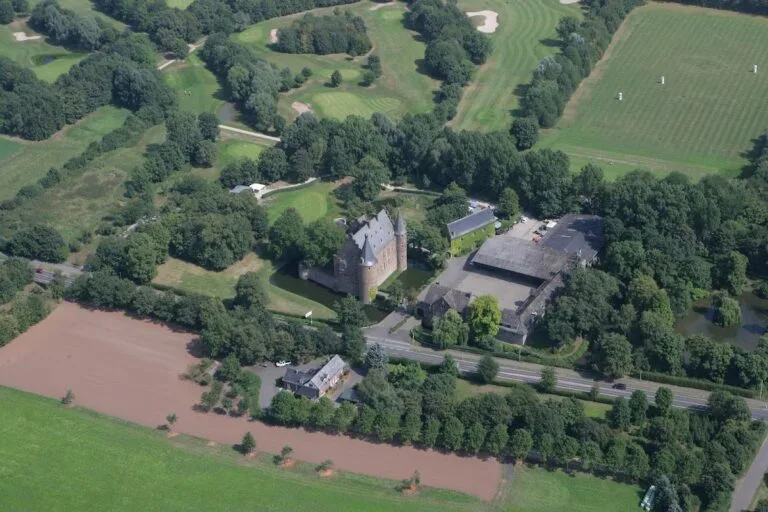
Burg Hemmersbach presents as a classic example of a water castle, designed to be surrounded by a moat which provides natural defense. It is situated at an elevation of approximately 78 meters above sea level within a gently flat landscape near the city of Köln. The castle’s layout and construction reflect a long history of development, particularly visible through its medieval origins combined with 19th and early 20th-century renovations.
One of the earliest structural elements at the site is the medieval motte—a raised earthwork mound which once supported a fortified tower or keep. This motte is a key remnant illustrating the castle’s initial defensive function during its earliest phase. The present visible buildings mostly date to the extensive rebuilding campaigns of the 1800s and the remodeling around the turn of the 20th century.
The castle complex originally included a main castle house and an outer bailey, the latter known as the Vorburg. Both these structures suffered catastrophic fires in the late 18th century: the main house was burned down to its walls in 1793, and four years later the outer bailey was destroyed as well. Today, the remnants consist largely of stone masonry walls that mark the footprint of these former buildings.
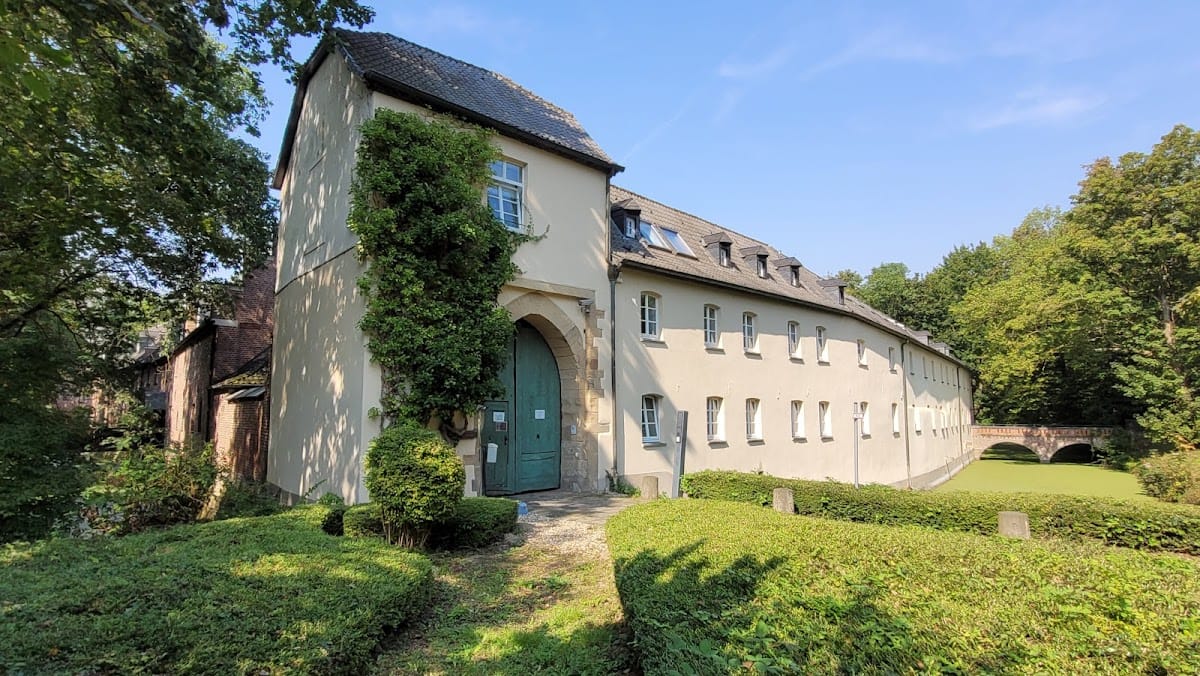
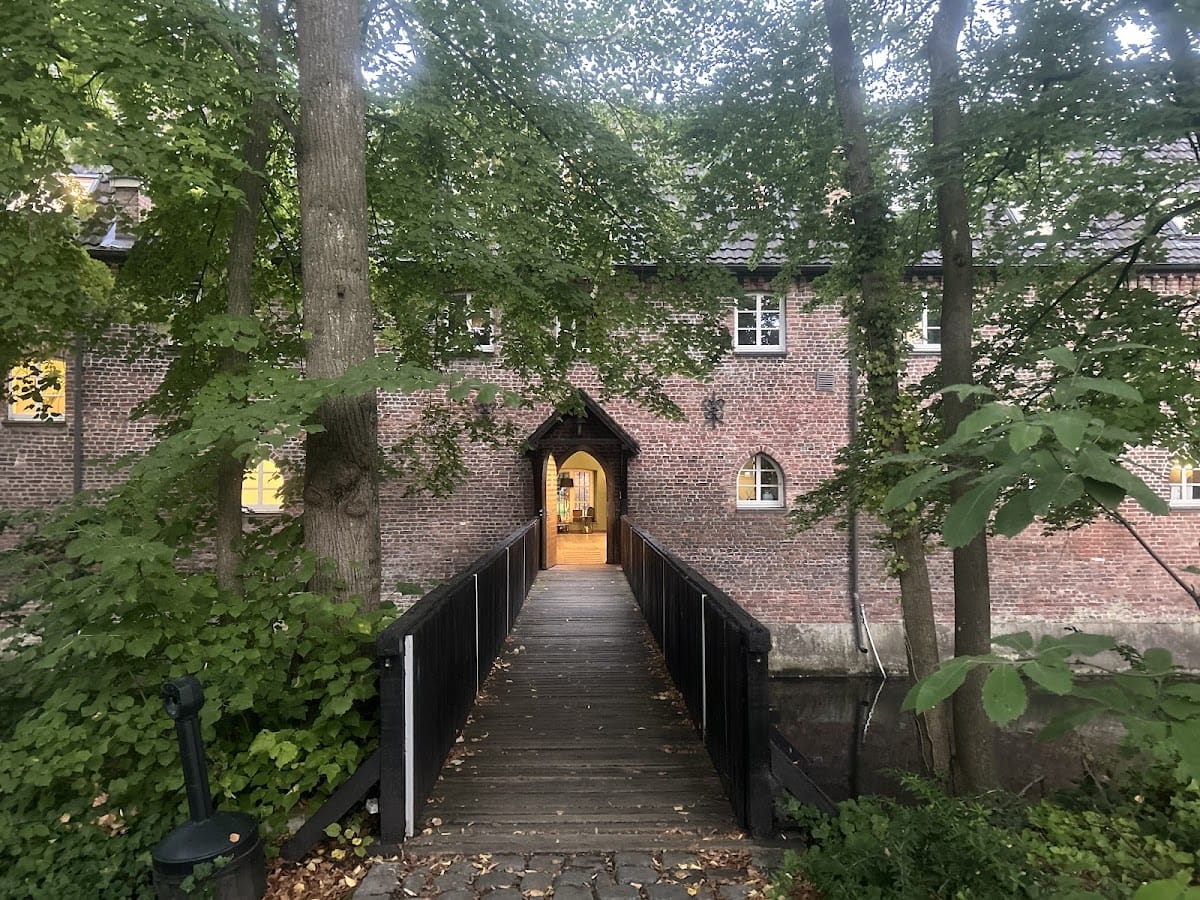
The castle’s defensive arrangement is underscored by a well-preserved gate and a water-filled moat, which together emphasize its purpose as a watercastle designed to deter attackers. The walls visible today are substantial and built from stone, demonstrating traditional medieval masonry techniques adapted over time. These fortifications include a gatehouse, a feature that has served both for security and controlled access.
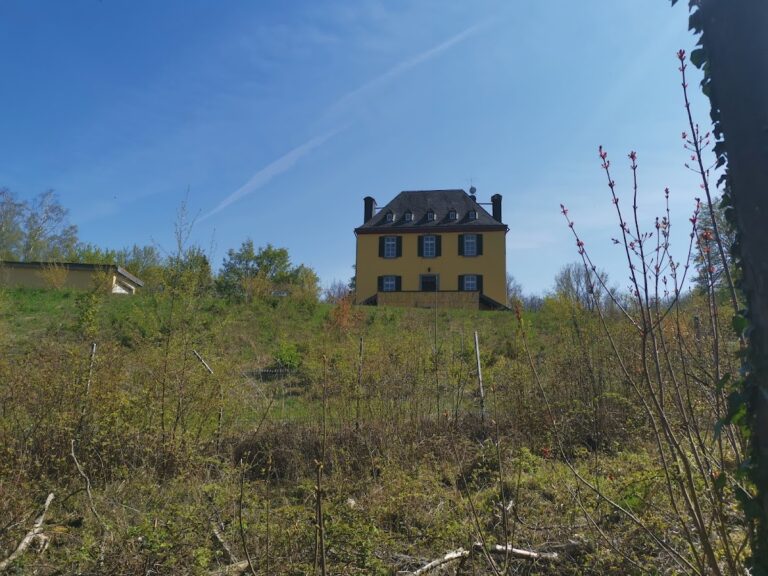
Adjacent to the castle lies Villa Trips, a separate but spatially connected property which historically functioned as the residence of Wolfgang Graf Berghe von Trips’s family and housed the motorsport foundation and museum in the 20th century. This proximity illustrates the continuing evolution of the site’s use beyond its medieval origins.
Overall, Burg Hemmersbach’s remains provide a layered architectural narrative. The enduring water defenses, medieval motte, and stone walls all reflect its complex past. Continuous renovations have preserved these elements, allowing the castle to retain its characteristic water-surrounded form that links it directly to its origins as a medieval noble residence and fortification.
Nearby sites