Cologne Roman City Wall


Site at a Glance
- Rating
- 4.4
- Popularity
- Very Low
- Country
- Germany
- External website
- Open
- Eras represented
- Classical
- Civilizations
- Roman
- Site type
- Military
- Remains
- Wall
History
The Roman city wall of Cologne was built at the end of the 1st century AD by the Romans to protect their settlement along the Rhine River. This defensive structure enclosed the growing colony with a perimeter close to four kilometres, marking the boundary of the Roman urban area. The wall included multiple gates and towers, reflecting the military and administrative importance of the city within the Roman Empire.
During the Roman period, the wall served as a major fortification, controlling access and safeguarding the inhabitants. The Mars Gate, also known as Marspforte, was the main entrance facing the Rhine and played a key role in trade and defense. Over time, the gate became known as the Markttor, or Market Gate, a name that survived into the medieval era and is still found in local place names and inscriptions.
By the mid-16th century, the Mars Gate was demolished, reflecting changes in the city’s layout and defensive needs. Archaeological excavations in later centuries uncovered parts of the wall and gates, including beneath the Cologne Cathedral and in the Deutz area, revealing the extent and complexity of the Roman fortifications. Plans have been made to display sections of the harbour gate and associated sewer system, highlighting the infrastructure connected to the wall.
Remains
The Roman city wall of Cologne originally stretched nearly four kilometres and included at least nine gates and 19 round towers. It was constructed using Roman building techniques typical of the late 1st century AD, combining stone and mortar to create a sturdy defensive barrier.
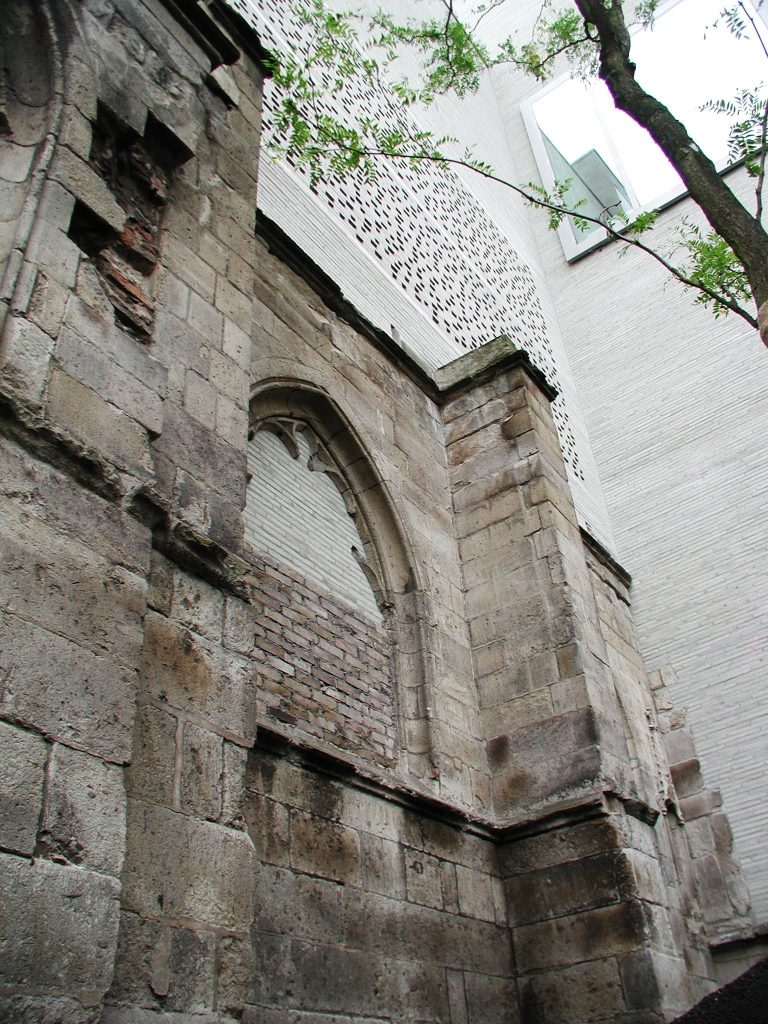
Today, several wall sections remain visible. A 32-metre-long stretch includes the Lysolph Tower, while near the Cologne City Museum, a 90-metre curtain wall stands alongside the Prussian guardhouse. The Roman Tower marks the northwest corner of the wall and has been a notable landmark for centuries.
The Helena Tower on St.-Apern-Strasse rises about 10 metres, though only its lower parts and foundations date back to Roman times. Between Alexianer-Strasse and Mauritiussteinweg, a 160-metre segment with remnants of a round tower leads to the southwest corner at the Griechenpforte gate. Another preserved section near Mühlenbach runs 78 metres long and is over six metres high, following the former course of the Duffesbach river.
Beneath the underground garage near Cologne Cathedral, foundations and partial remains of the northern gate and defensive wall have been uncovered. The harbour gate area includes a sewer system, with a 12-metre-long section planned for public exhibition.