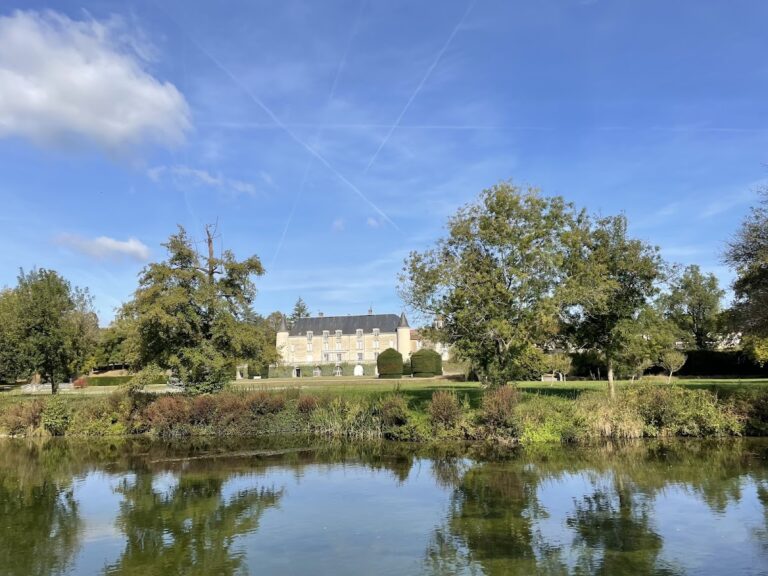
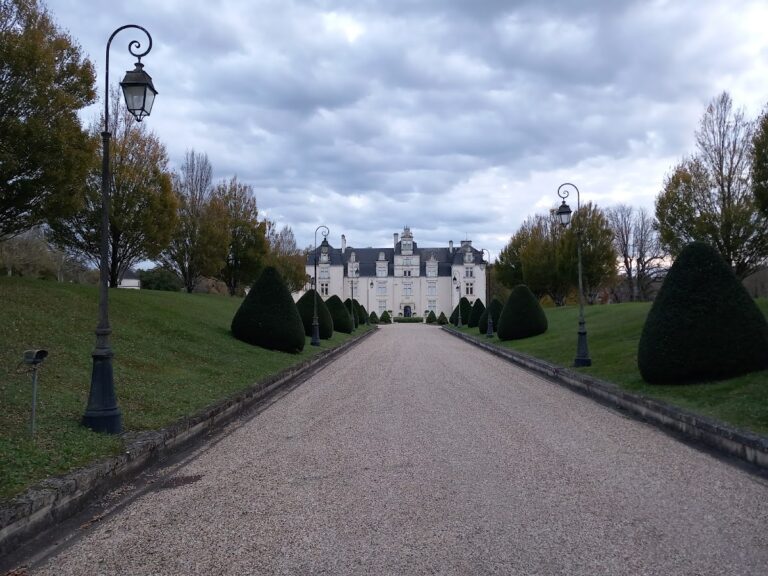
Château de Bouteville: A Fortified Castle in France


Site at a Glance
- Rating
- 4.4
- Popularity
- Low
- Country
- France
- Primary era
- Early Modern
- External website
- Open
- Eras represented
- Medieval, Early Modern, Modern
- Civilizations
- French
- Site type
- Military
- Remains
- Castle
On this page10 sections
History
Origins and Medieval Lordship
Château de Bouteville is a fortified castle in Bouteville, France, established on the site of a Gallo-Roman villa, a settlement of Roman Gaul and local communities living under Roman rule. A first fortified castle was built around the year 1000 in connection with the Counts of Angoulême and was recorded in 1028. In the early eleventh century, it belonged to Geoffroy Taillefer, son of William IV, Count of Angoulême. Geoffroy received Bouteville through his marriage to Pétronille, daughter of Maynard le Riche, lord of Archiac, who brought the estate as her dowry.
Geoffroy and Pétronille continued construction of the church and founded the priory. The castle and its lordship later passed to the Lusignan family, a medieval noble dynasty with possessions in France and the eastern Mediterranean. When Angoumois became part of the French crown, Bouteville entered the royal domain in 1308, at the beginning of the fourteenth century. It subsequently passed to Joan II of Navarre and then to Aimery III de La Rochefoucauld, who received it as a reward for service against the English.
English Rule and the Hundred Years’ War
John of England, also known as John Lackland, stayed at Bouteville several times. He ruled as king of England from 1199 to 1216 and was the husband of Isabella of Angoulême. French forces recovered the castle around 1355, but the Treaty of Brétigny in 1360 returned Angoumois to the English crown. This settlement temporarily transferred extensive territories in southwestern France during the Hundred Years’ War.
Under John Chandos, an English military commander and administrator, Bouteville became one of the nine castellanies of the seneschalship of Angoumois. A castellany was a territorial lordship organized around a castle, while a seneschalship was a major administrative and judicial district governed by a seneschal. Angoumois was itself one of the thirteen castellanies of Aquitaine. Edward of Woodstock, known as the Black Prince, frequently visited the castle from Angoulême, where he often resided.
In 1378, Richard II granted Bouteville and Merpins to Archambaud de Grailly, Count of Foix, co-prince of Andorra, and Viscount of Béarn. Bouteville changed hands repeatedly during the Hundred Years’ War. English forces still held it in 1445, before their final withdrawal, and the conflict left the castle severely damaged.
Rebuilding and Renaissance Residence
In 1400, Bouteville formed part of the apanage granted to Louis de Valois as Count of Angoulême. An apanage was land or revenue assigned to a member of a ruling dynasty. His son, Jean d’Orléans, began rebuilding the castle after his release from English captivity in 1444, and the restoration was completed in 1453.
Charles d’Orléans, Count of Angoulême, and his wife Louise of Savoy frequently resided at Bouteville or favored the estate. Charles was the father of the future king Francis I, while Louise was Francis’s mother. After Louise’s death in 1531, Bouteville passed to the Montmorency-Fosseux family. François de Montmorency-Bouteville made the castle his residence before being executed in Paris in June 1627 after a duel.
Religious Conflict and Early Modern Reconstruction
During the Wars of Religion, the sixteenth-century conflicts between Catholics and Protestants in France, both sides contested control of Bouteville. In July 1577, part of the garrison arrested and killed Charles Danowitz, also known as Besme, near Jarnac. He had been detained at Bouteville while returning from Spain and was known as the assassin of Admiral Coligny.
The castle was again in ruins by 1598. Bernard de Béon du Massès, the king’s governor in Saintonge and Angoumois, acquired the estate in 1593 and began rebuilding it. After his death in 1608, his widow, Louise de Luxembourg, continued the work until 1624. The main structural work was then complete, although the interior decoration remained unfinished.
The Béon family retained Bouteville until 1726, when the estate passed to Henri de Bruzac-Hautefort, a major in the king’s bodyguard. He lived there until 1736 and carried out major alterations. He died in 1751.
Revolutionary Damage and Modern Preservation
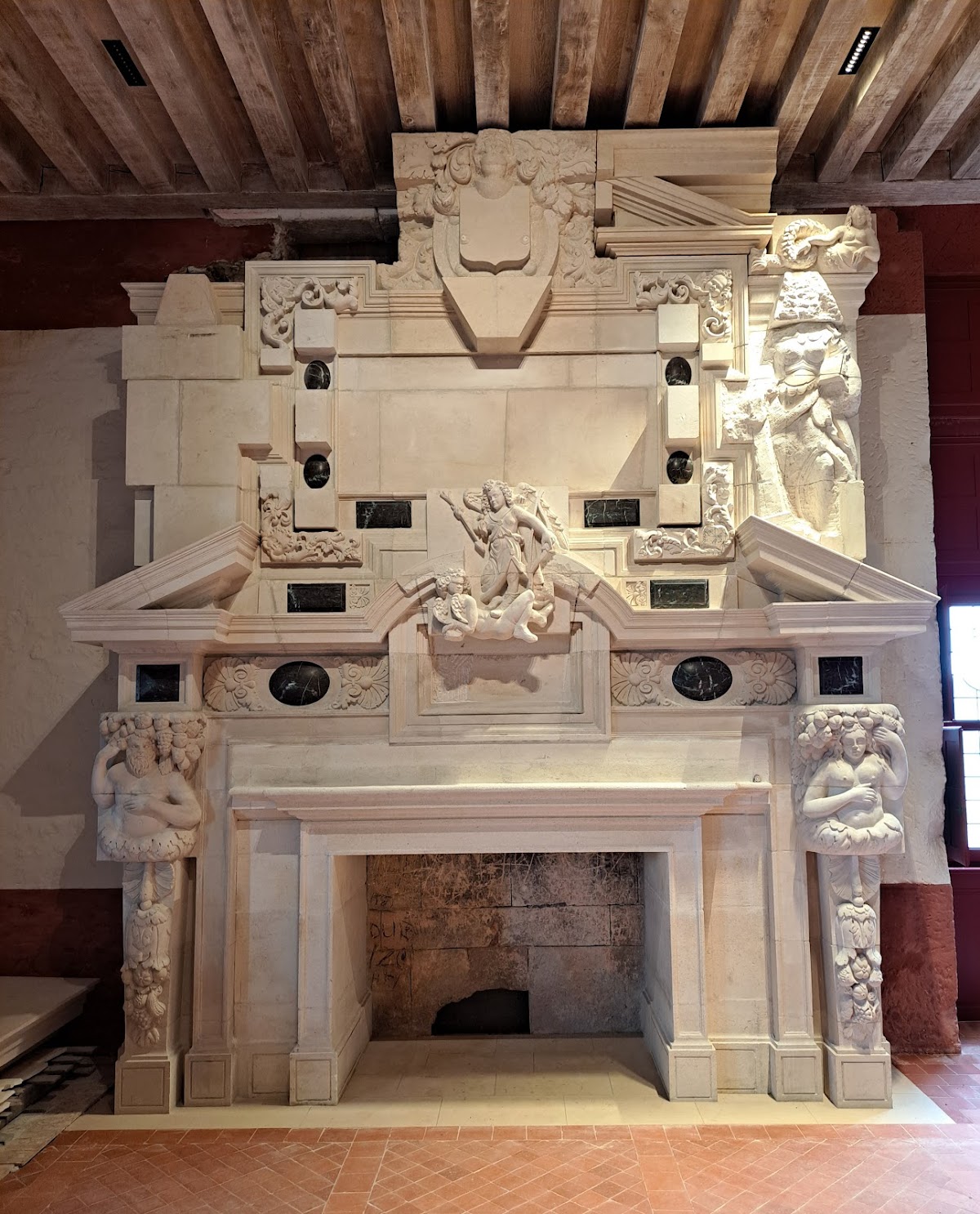
In 1788, Bouteville passed in very poor condition into the apanage of the Count of Artois, who began renovating it. The work was complete when the French Revolution began. Because the count had emigrated, the castle was placed under state seizure and then sold to Antoine Marcombe, a merchant from Bouteville, who began demolishing it. The castle’s monumental fireplace was dismantled and reassembled at Château de Bourg-Charente.
Richard de Segonzac undertook further works in 1929 and 1930. These included work on the roof framework of the great hall, demolition of the remaining south-wing fabric, creation of the terrace of the main wing, and demolition of the entrance porch to the courtyard. The estate belonged to the de Joyet family from 1935. It was classified as a French historic monument in 1984, a legal protection applied to buildings and sites recognized as architectural or historical heritage, and became the property of the commune of Bouteville in 1994. In 2018, it was selected by a national mission identifying endangered immovable heritage.
Remains
Hilltop Layout and Fortifications
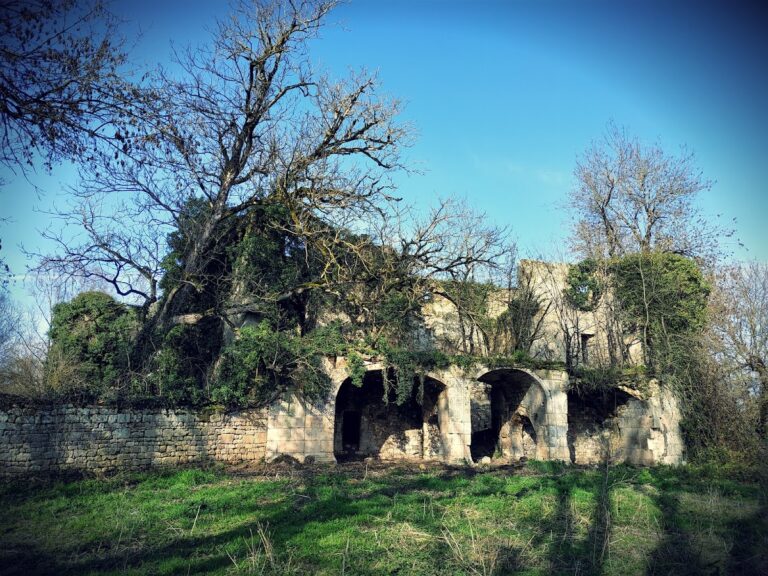
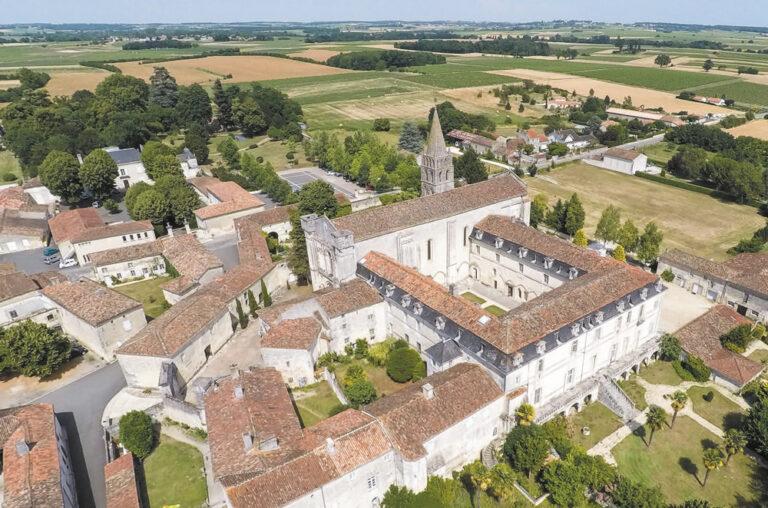
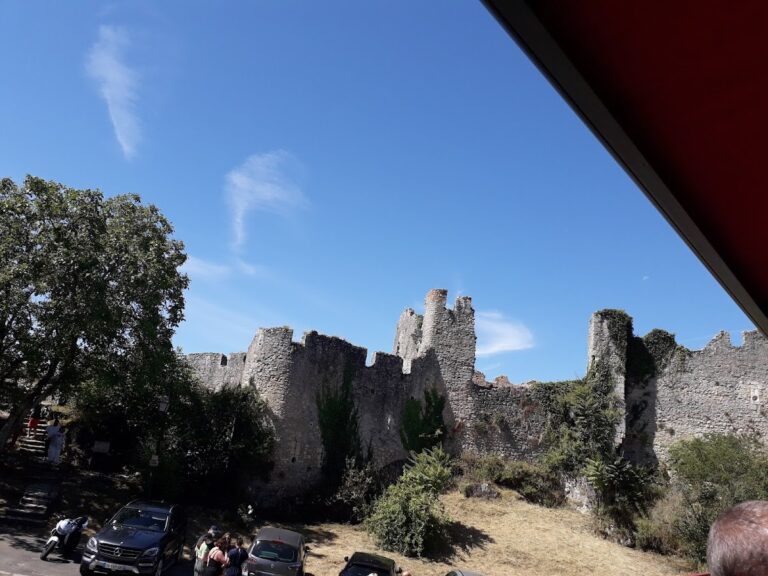
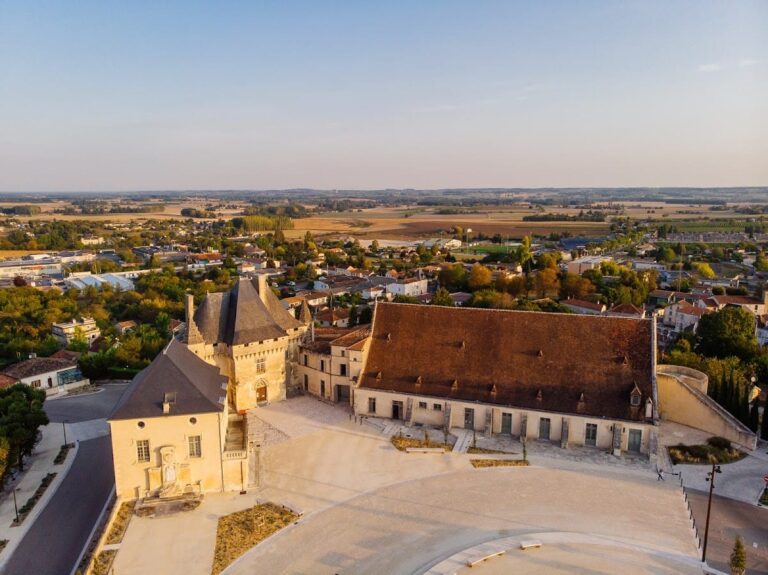
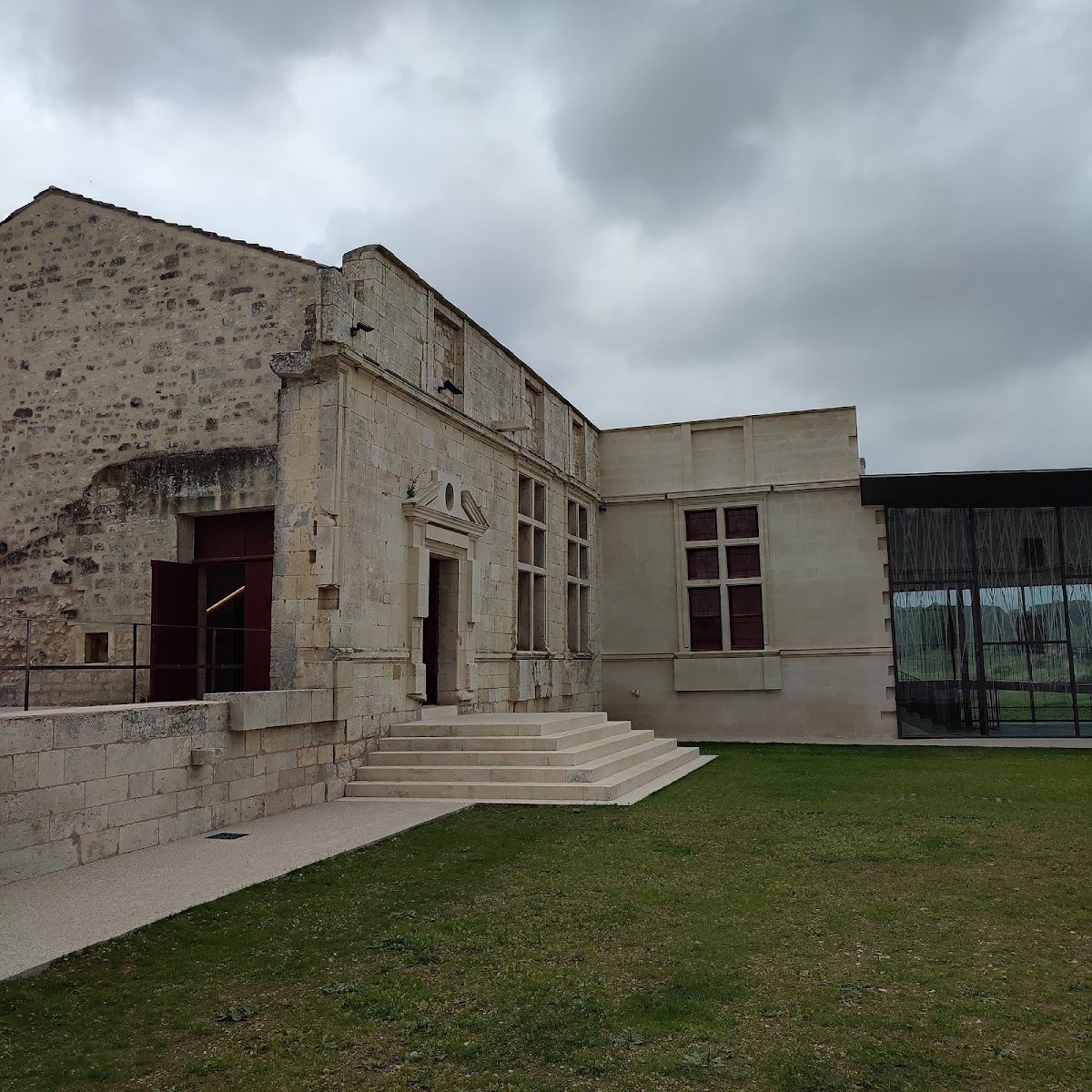
Château de Bouteville survives as a group of ruined buildings on a hill near the ancient Roman road from Saintes to Périgueux. The position was described as providing views toward the city walls of Angoulême. The surviving complex is arranged around a large courtyard, with buildings occupying three sides and a wall closing the fourth. A bridge and a postern, a small secondary entrance used for discreet passage, provided access. A tower and a turret stand at two corners of the complex.
Great Hall and Main Wing
Decorative work remains in places, particularly above the surviving windows. The roof framework of the great hall was worked on in 1929 and 1930. The same campaign created a terrace along the main wing. The south wing survives only in partial remains after the demolition of its remaining sections during those works, while the entrance porch leading into the courtyard was also removed.
Moved Fireplace
The castle’s monumental fireplace was removed during the post-Revolutionary demolition and reassembled at Château de Bourg-Charente. Its present location reflects the dispersal of parts of Bouteville after the estate was sold.
Nearby sites