Budva Necropolis: An Ancient Burial Site in Montenegro



Visitor Information
Google Rating: 4.2
Popularity: Low
Google Maps: View on Google Maps
Country: Montenegro
Civilization: Byzantine, Greek, Roman
Remains: Burial

History
The necropolis near Budva’s Old Town, located in present-day Montenegro, was established by the ancient inhabitants of the region, including Greeks and Romans. Its use spans from the Hellenistic period, beginning in the 4th century BC, through to the early Byzantine era in the 6th century AD.
During the Hellenistic period, the necropolis served the local Greek communities, who practiced burial customs involving stone sarcophagi and offerings. As Roman influence grew, especially in the 1st and 2nd centuries AD, Budva experienced significant Romanization. This period is marked by the adoption of Roman burial rites, including cremation, and the construction of more elaborate tombs.
By the 3rd century AD, burial practices shifted from cremation to inhumation, or body burial, reflecting broader changes in Roman customs. The necropolis continued in use into the early Byzantine period, but by the 6th century, the quality and decoration of graves declined. This change corresponds with the region’s reduced wealth and influence under Byzantine rule.
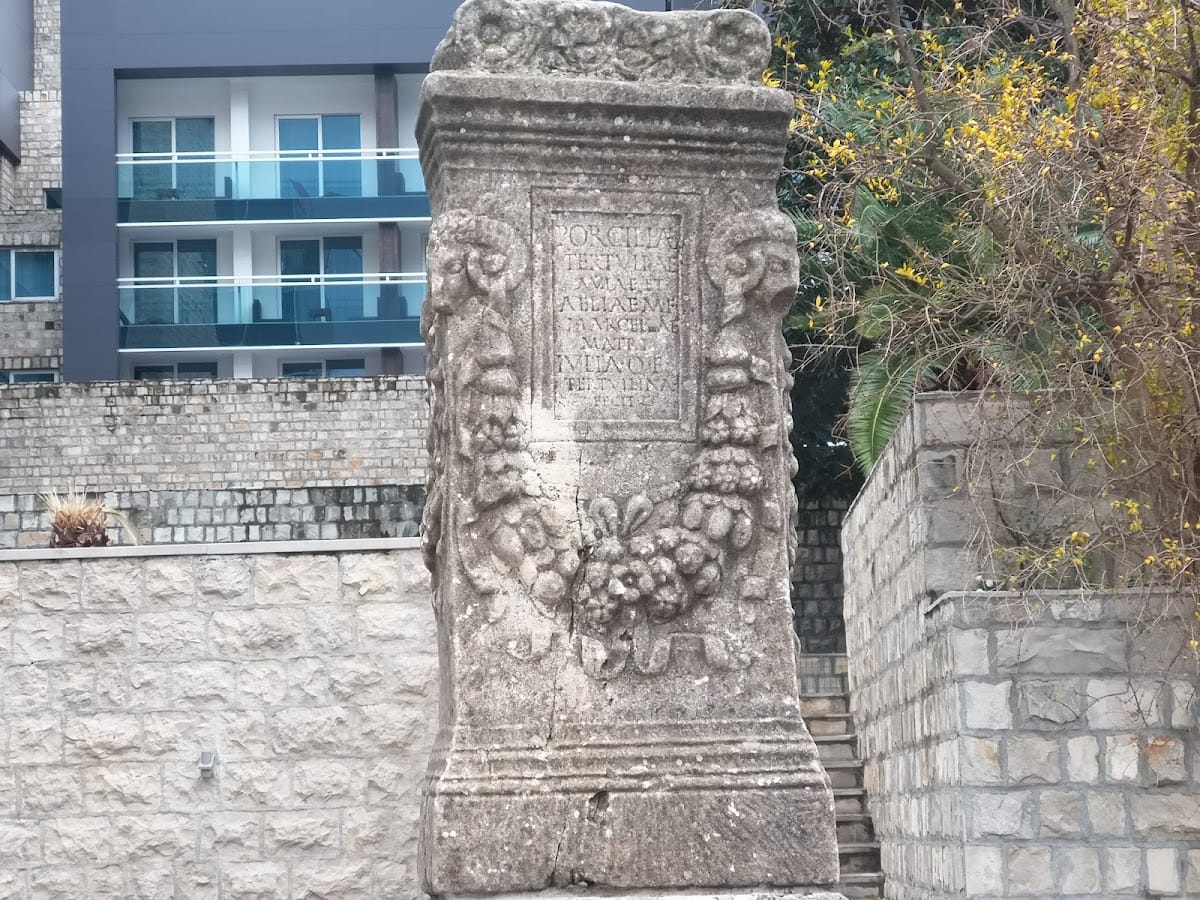
The site was rediscovered accidentally during hotel construction in the late 1930s, with formal archaeological work beginning in 1952. Artifacts and tombstones from the necropolis have since been distributed to museums in several cities. A Roman tombstone, or cippus, from the site is displayed near Budva’s Old Town entrance as a historical marker.
Remains
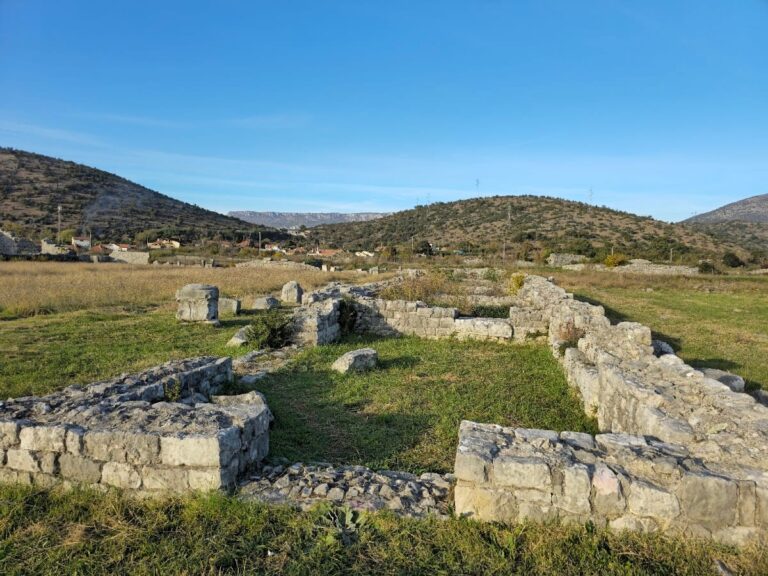
The necropolis consists of numerous graves arranged in a rectangular layout, reflecting the burial customs of different periods. The earliest tombs, dating to the Hellenistic era, include stone sarcophagi accompanied by votive offerings, which are objects left as gifts to the deceased or gods.
Roman graves predominantly contain stone urns designed to hold cremated remains, illustrating the practice of cremation common in the early Roman period. Many tombs from the 1st and 2nd centuries AD show complex architectural features, indicating the wealth and Roman cultural influence in Budva at that time.
Grave goods such as ceramics, glass items, and coins were found within the tombs. These objects help archaeologists date the burials and understand the economic conditions of the inhabitants. By the 6th century AD, tombs became simpler and less decorated, reflecting the community’s decline during Byzantine rule.
The preservation of the necropolis varies widely. Many artifacts were damaged or moved from their original locations, with only a small portion meeting modern archaeological preservation standards. Some finds are housed in museums across Budva, Cetinje, Zagreb, Split, and Belgrade, while others remain in private collections. The Roman cippus displayed near Budva’s Old Town entrance remains an important visible remnant of the site.