Shkodër Castle: The Illyrian Citadel and Fortress of Albania

Site at a Glance
- Rating
- 4.6
- Popularity
- Low
- Country
- Albania
- Primary era
- Medieval
- Eras represented
- Iron Age, Medieval
- Civilizations
- Illyrian, Venetian
- Site type
- Military
- Remains
- Castle
On this page9 sections
History
Shkodër Castle, also known as Rozafa Castle, is an ancient Illyrian fortress in Albania, above the city of Shkodër. The hill was settled from the Early Bronze Age, while its earliest detected fortification walls date to the fourth or early third century BC and formed the citadel of Scodra, the capital of the Labeatae, an Illyrian tribal power in the western Balkans.
Scodra and the Illyrian Kingdom
Scodra later became an important stronghold under the Illyrian king Gentius. During the Third Illyrian War, the conflict between Rome and the Illyrian kingdom, Gentius gathered his forces at the city and took refuge there when the Roman army commanded by L. Anicius Gallus attacked. A relief force failed to arrive, and Gentius surrendered under a truce before being sent to Rome. The Romans then captured his wife Etuta, his brother Caravantius, his sons Scerdilaidas and Pleuratus, and other leading Illyrians at Meteon.
Successive Powers and Sieges
Control of the castle changed repeatedly over the centuries. Its history includes the Illyrian tribes and kingdom, the Roman and Byzantine empires, Duklja, the First Bulgarian Empire, Serbian states, the Lordship of Zeta, the Principality of Zaharia, Venetian Albania, the Ottoman Empire, the Pashalik of Scutari, the Kingdom of Montenegro, the Great Powers, and modern Albania. The stronghold was involved in major military crises, especially the Ottoman siege of Shkodër in 1478–79 and the siege of 1912–13.
After the Ottoman capture of Shkodër following the fifteenth-century siege, a Venetian Catholic church inside the castle was converted into the Fatih Sultan Mehmet Mosque. The mosque was named for Mehmed II, the Ottoman sultan associated with the conquest of Constantinople and the expansion of Ottoman rule in the Balkans.
Rozafa and the Castle’s Legends
The name Rozafa has several proposed origins. Scholars have linked it with Resafa and with Saint Sergius, an early Christian martyr whose cult, known in Albanian as Shirgji, had a long tradition in Shkodër and the surrounding region. The site is also named after the city of Shkodër.
An Albanian oral legend about the castle’s construction was recorded as early as 1505 by Marin Barleti in De obsidione Scodrensi. Three brothers repeatedly saw their foundations collapse during the night. They were advised to immure alive the wife who first brought them food, without warning their wives of the plan. The two elder brothers broke their oath, but the youngest kept it, so Rozafa, his wife, arrived with food and accepted the sacrifice. She asked for openings for her right eye, hand, foot, and breast, allowing her to care for her infant son. She also wished for her breast to become stone while the castle flourished and her son grew into a hero and ruler.
A related Serbian epic, The Building of Skadar, was published by Vuk Karadžić in 1815 after he recorded a folk song from the Herzegovinian storyteller Old Rashko. In this version, the three brothers are Vukašin, Uglješa, and Gojko of the Mrnjavčević family. Folklorist Alan Dundes argued that the name Gojko was invented and also noted the ballad’s continuing appeal among generations of singers and scholars.
The Rozafa tradition combines themes of maternal-breast worship and immurement, the practice of enclosing a person within a wall or other structure. These elements have been interpreted as reflections of earth-mother worship in Albanian folk belief. Local tradition holds that Rozafa’s milk still flows from the stronghold’s walls. Milkweed sap and limestone stalactites at the original Illyrian gateway are associated with this belief. Local women scrape away the limestone deposits, mix them with water, and use the mixture as a medicine intended to increase breast milk and pass Rozafa’s character and patriotism to their children.
The castle and its surroundings form an Archaeological Park of Albania, preserving a site whose history extends from ancient Scodra through successive medieval, Ottoman, Montenegrin, and modern phases.
Remains
Hilltop Citadel and Fortifications
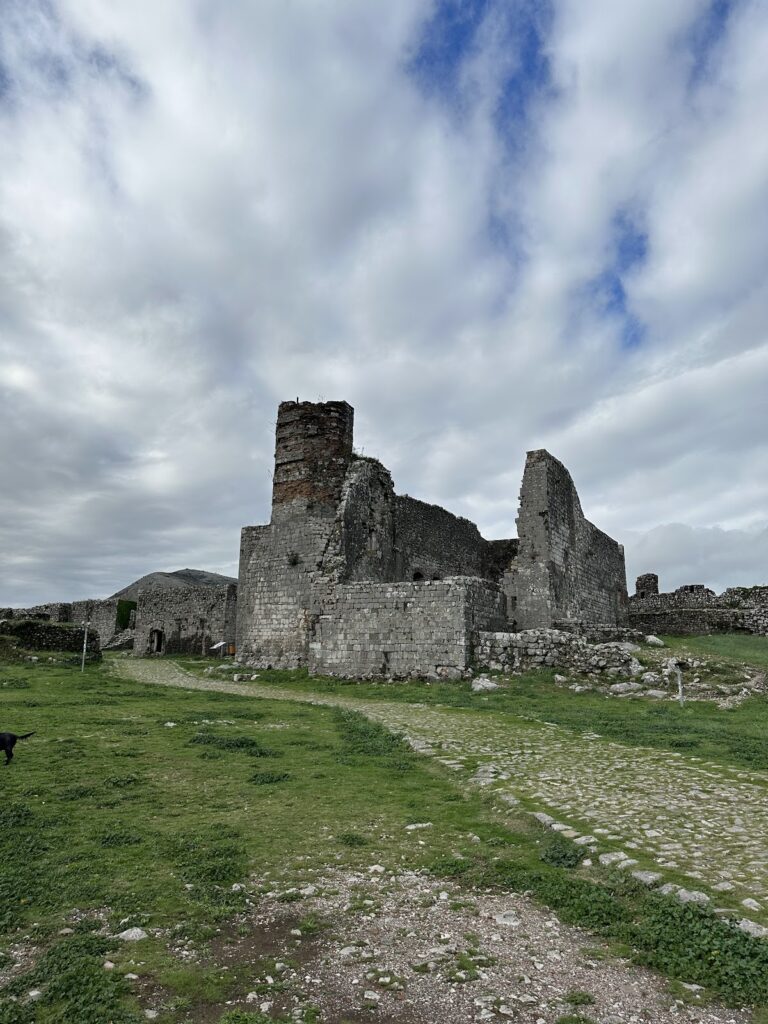
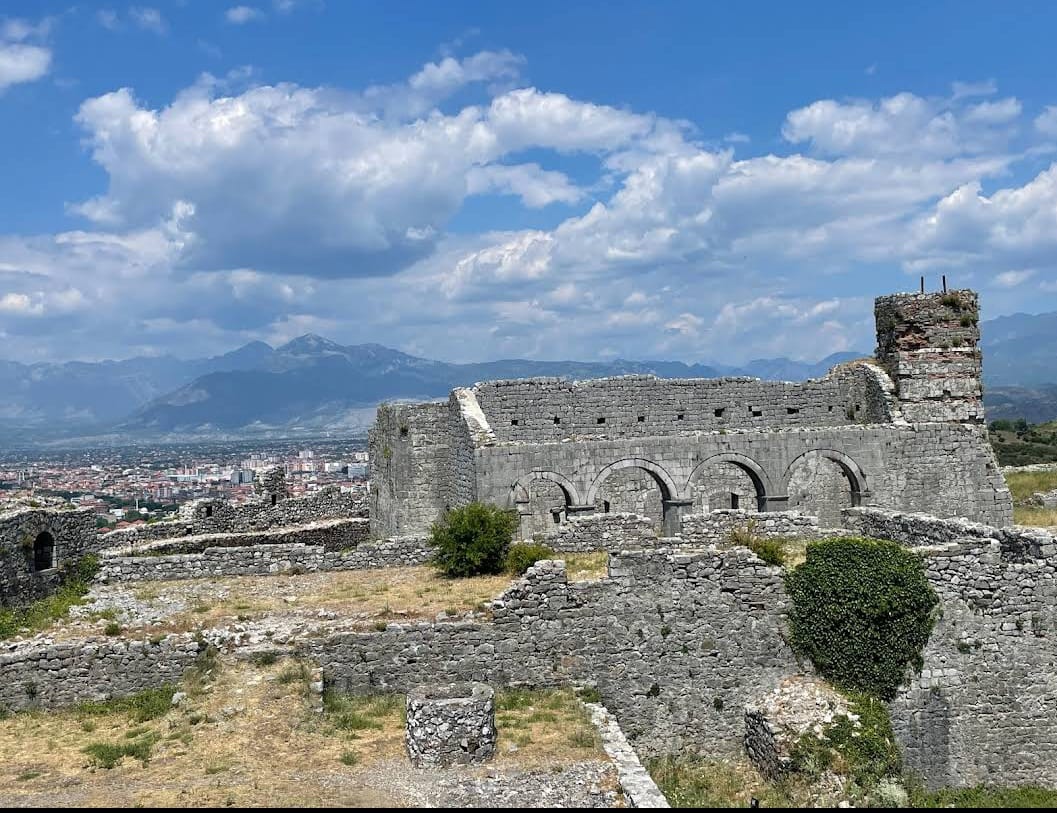
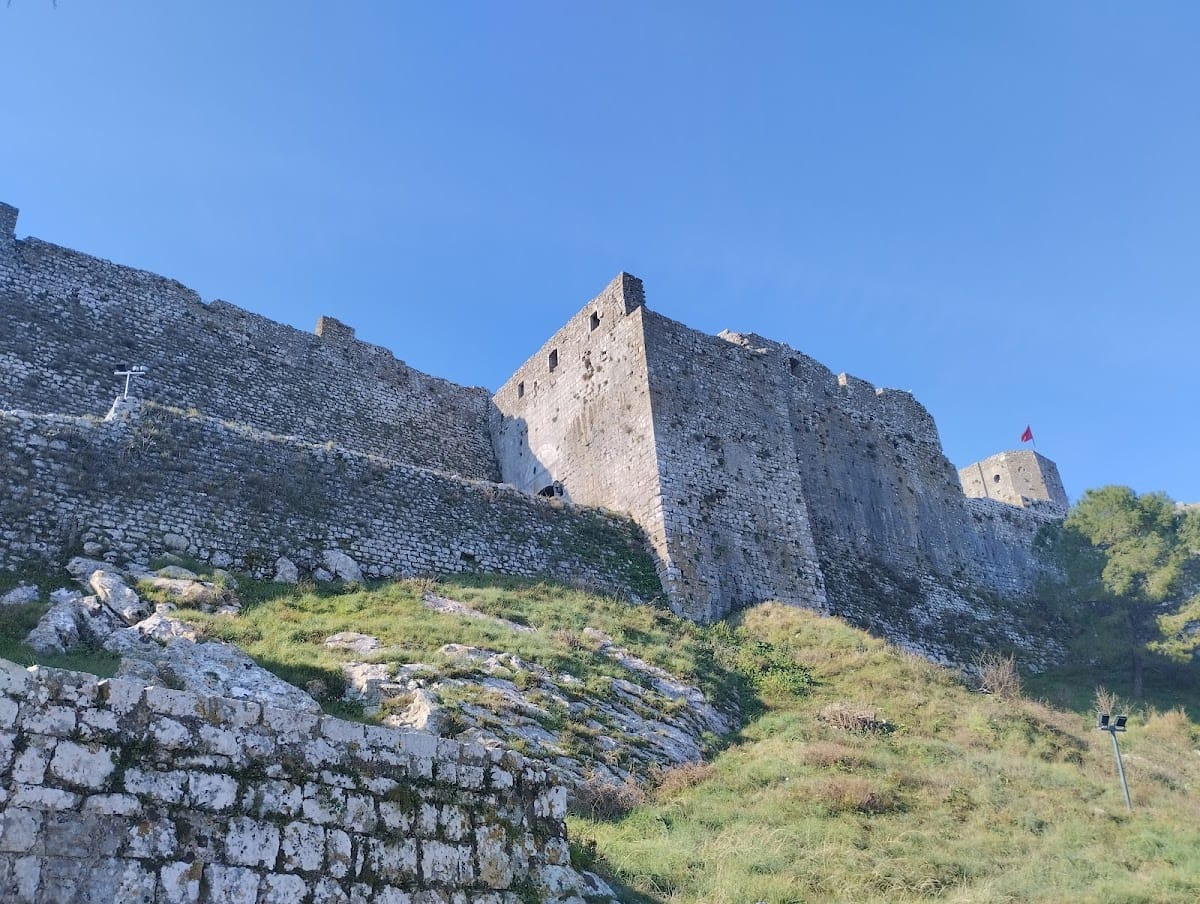
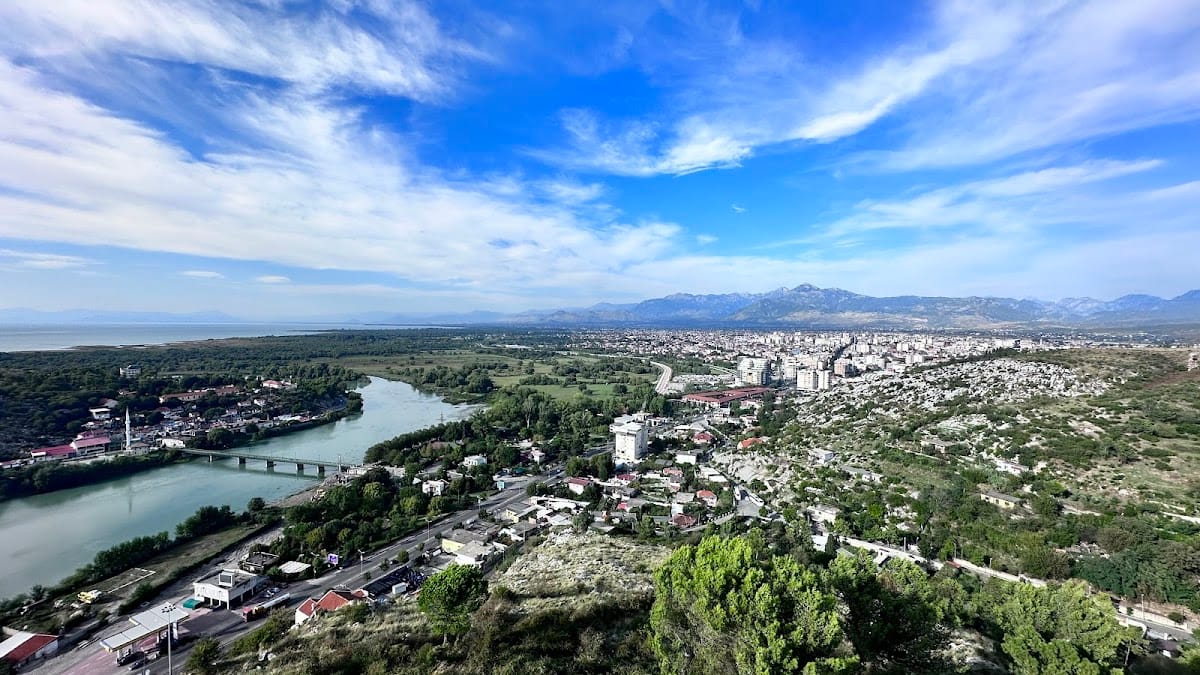
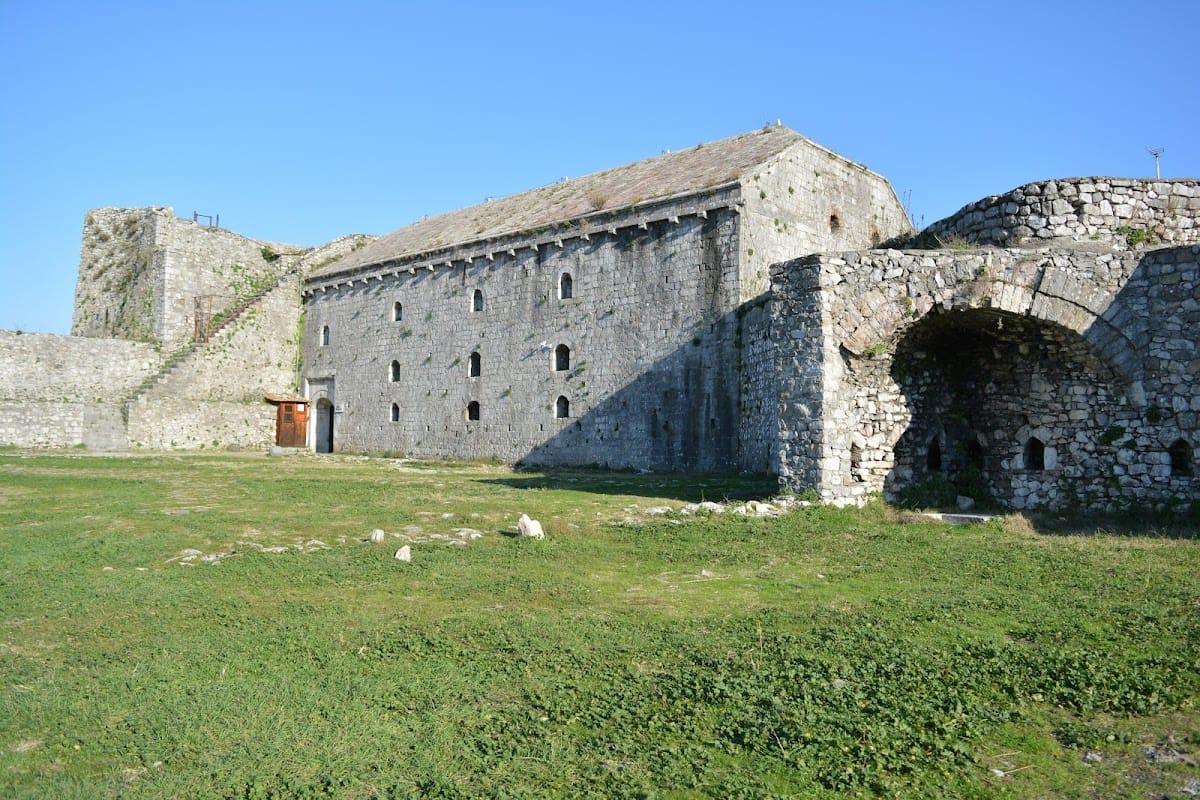
Shkodër Castle occupies a rocky hill rising about 130 metres above sea level, with the Buna and Drin rivers surrounding it. Limestone and brick are among the recorded construction materials. The earliest fortifications are walls from the fourth or early third century BC, built as the citadel of ancient Scodra. Much of the visible walling is predominantly Venetian, reflecting the castle’s later development and reconstruction under Venetian control.
Church and Mosque Remains
St. Stephen’s Cathedral
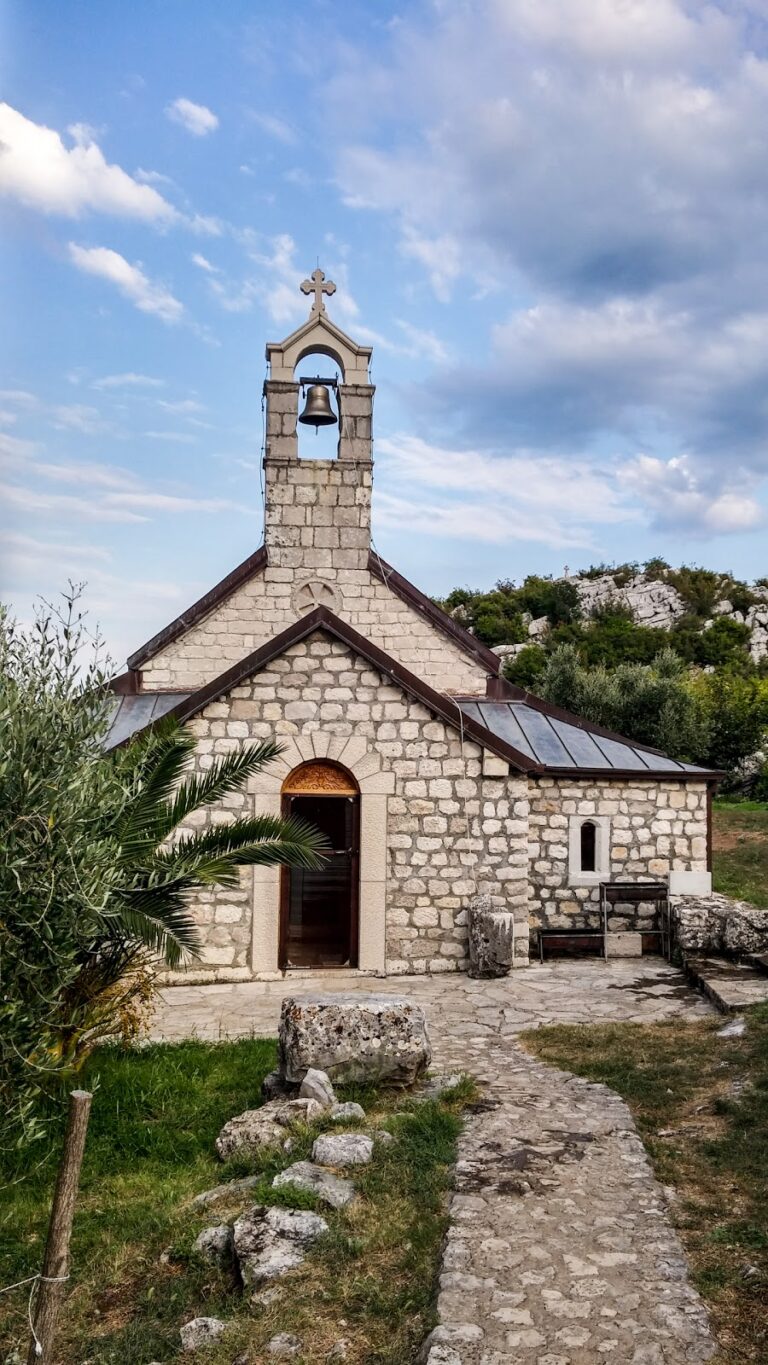
Within the castle are the ruins of a thirteenth-century Venetian Catholic church considered by scholars to have been St. Stephen’s Cathedral. After the Ottoman conquest of Shkodër, the building was converted into the Fatih Sultan Mehmet Mosque, linking the surviving structure to two successive religious phases.
Original Illyrian Gateway
Limestone stalactites occur within the original Illyrian gateway. They are physically connected with the Rozafa tradition, which identifies the deposits with the legendary mother’s milk and gives them a continuing role in local healing practices.
Nearby sites