Brunton Turret: A Roman Watchtower on Hadrian’s Wall in Northumberland


Visitor Information
Google Rating: 4.5
Popularity: Very Low
Google Maps: View on Google Maps
Official Website: www.english-heritage.org.uk
Country: United Kingdom
Civilization: Roman
Remains: Military

History
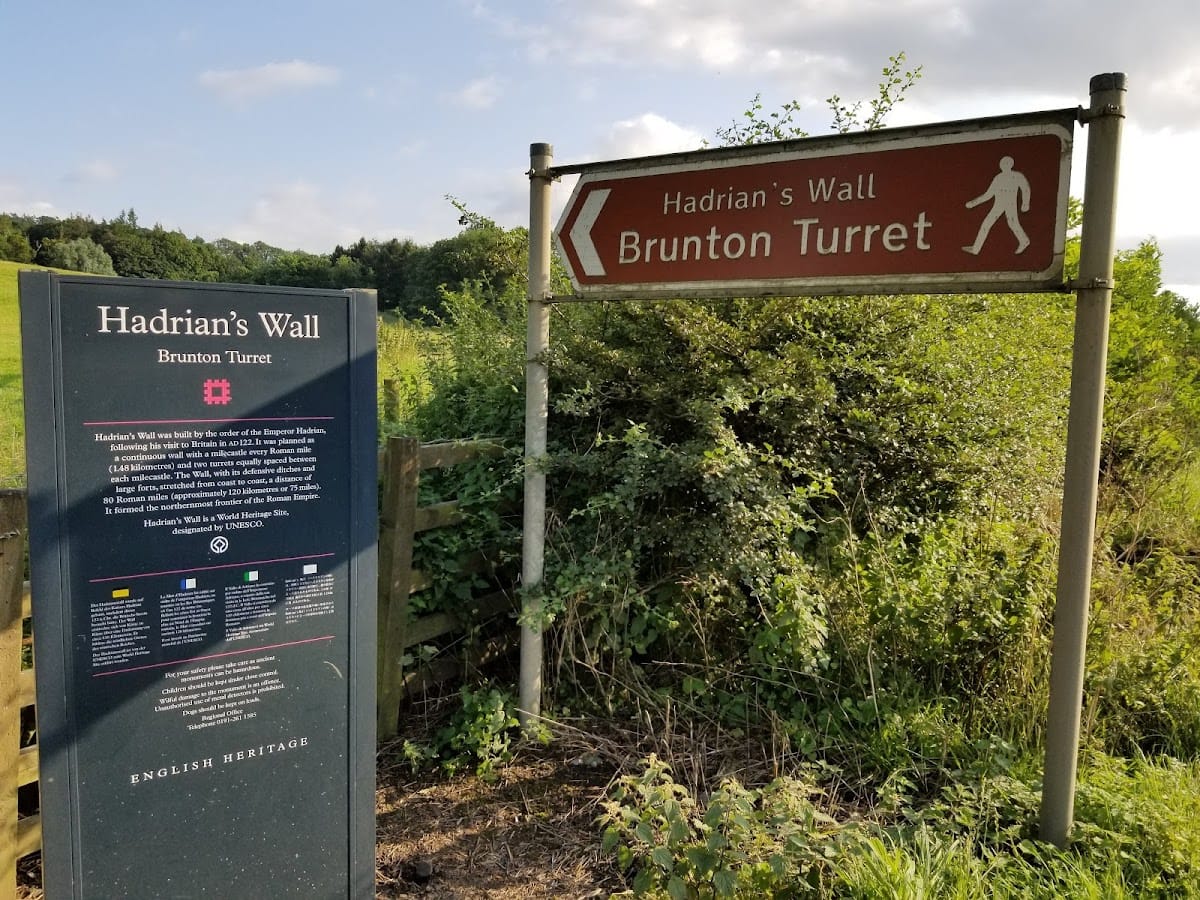
Brunton Turret is located at Brunton Bank near Hexham in Northumberland, England. It was built by the Romans as part of Hadrian’s Wall, a defensive frontier marking the north-west boundary of the Roman Empire in Britain. Construction began around AD 122 under the orders of Emperor Hadrian, who commissioned the Wall to control movement and protect Roman territories from northern tribes.
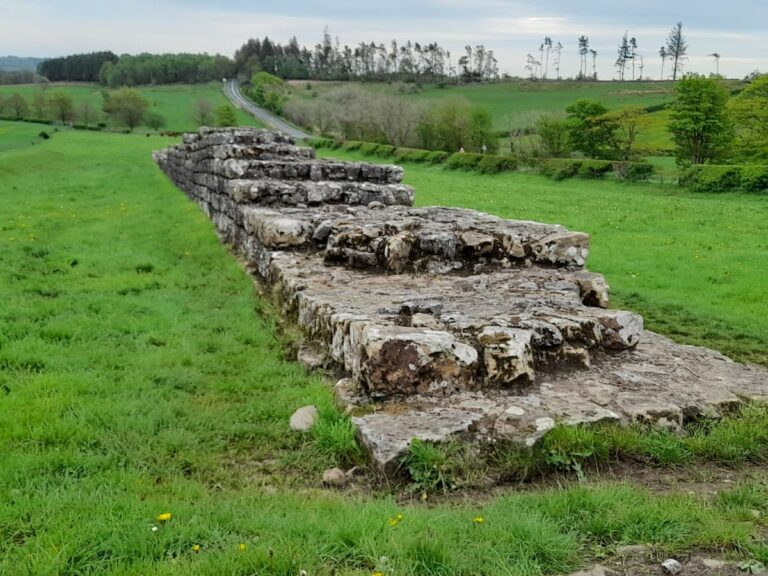
The turret was constructed early in the Wall’s building phase, before the adjoining curtain wall section was completed. During construction, the Wall’s design was altered to reduce its thickness from about three metres to 1.8 metres. This change left part of the turret’s eastern wing wall exposed, showing how the project evolved on site. A centurial stone found nearby confirms that the ninth cohort of the 20th Legion Valeria Victrix, led by centurion Paulus Aper, built this section of the Wall.
Brunton Turret functioned as a small watchtower and shelter for a few soldiers. These troops monitored the surrounding landscape and supported nearby larger forts and milecastles. The turret was part of a network of about 160 similar structures spaced at intervals of two per Roman mile along Hadrian’s Wall. It stood near Chesters Roman Fort, a cavalry base half a mile west, which patrolled the river valley and guarded a bridge over the North Tyne.
The site was first excavated in 1873 by John Clayton, a pioneering antiquarian who worked to preserve Hadrian’s Wall. Further excavation took place in 1930 under T. Hepple, followed by conservation efforts to stabilize the remains.
Remains
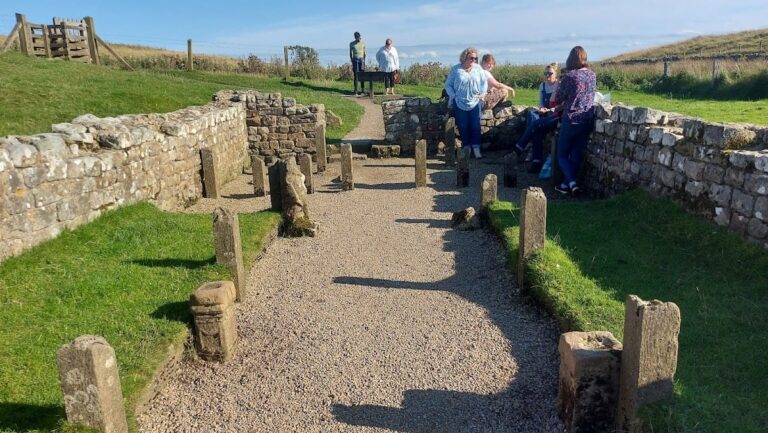
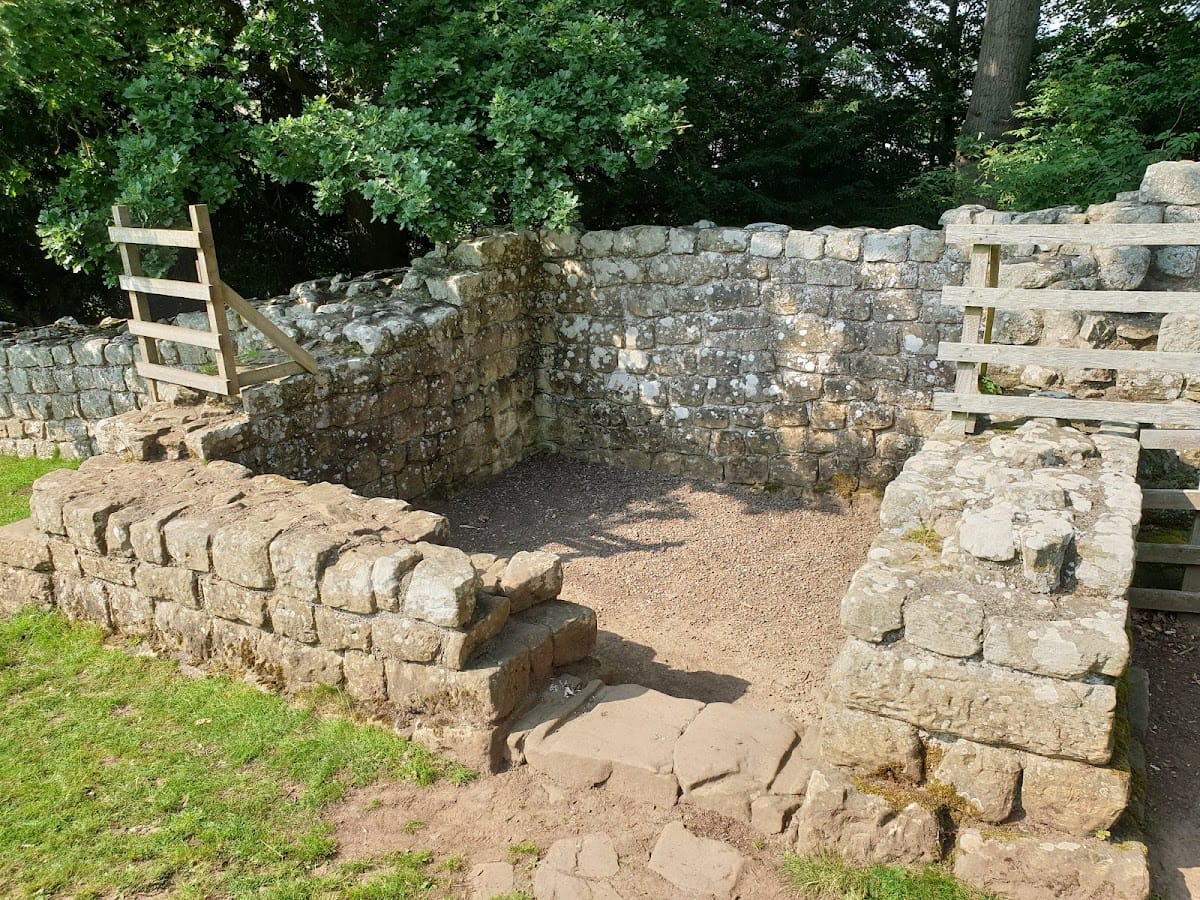
Brunton Turret is a small rectangular structure recessed into Hadrian’s Wall, which forms its north wall. It measures about 3.9 by 3.5 metres inside and was built in the early 2nd century AD using stone masonry typical of Roman military architecture. The turret’s walls are nearly a metre thick, with the north wall preserved up to eleven courses high as of the mid-20th century.
The turret’s south wall contains a doorway approximately 1.2 metres wide. The threshold shows wear, and grooves for door jambs and a pivot stone remain visible, indicating the original door’s position. The upper parts of the turret walls no longer survive, but evidence suggests access to a wall-walk along Hadrian’s Wall and either an open observation platform or a roof, possibly covered with tiles or thatch.
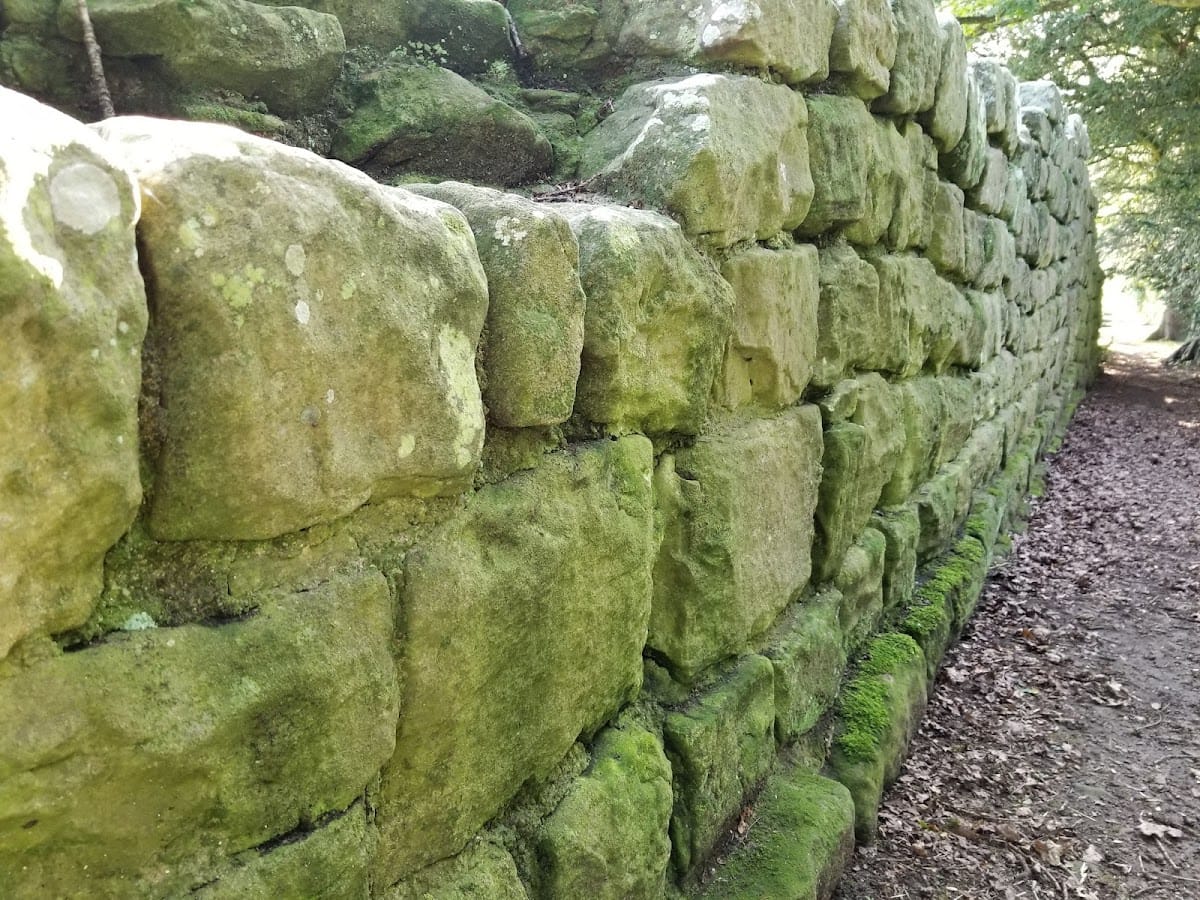
The turret was designed with short wing walls to be incorporated into the curtain wall. However, the Wall’s narrowing during construction left part of the turret’s eastern wing wall exposed. Brunton Turret stands within a 69-metre stretch of Hadrian’s Wall near Chesters, with some sections preserved up to about 2.5 metres high.
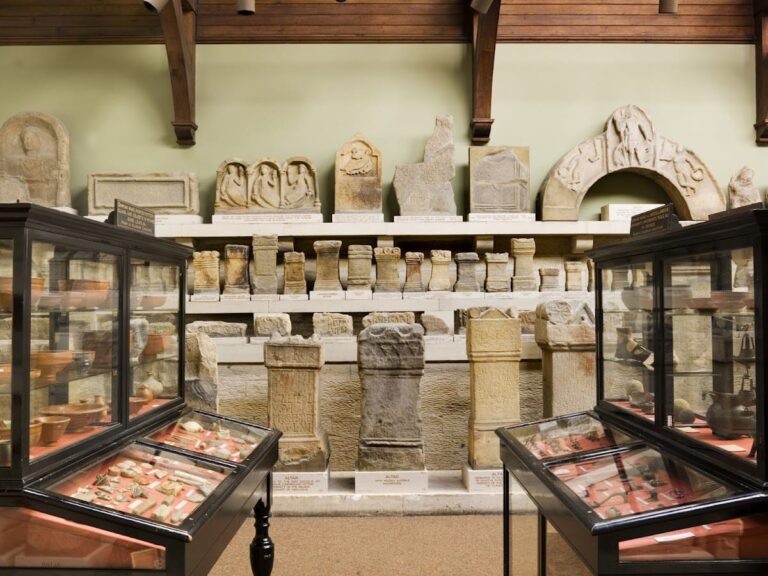
Inside the turret, a free-standing altar has been found, though its dedication is not detailed in the records. The centurial stone discovered nearby remains in situ, confirming the builders’ identity. The site’s remains have been consolidated to preserve their condition, allowing the turret to survive as a clear example of Roman frontier military architecture.
Nearby sites