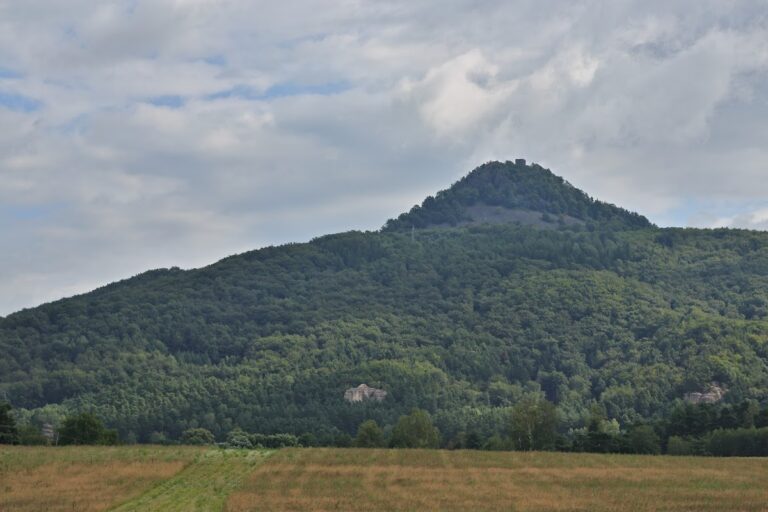
Bezděz Castle: A Medieval Czech Fortress and Monastic Site


Visitor Information
Google Rating: 4.6
Popularity: Medium
Google Maps: View on Google Maps
Official Website: www.hrad-bezdez.cz
Country: Czechia
Civilization: Medieval European
Remains: Military

History
Bezděz Castle is located in the municipality of Bezděz in the present-day Czech Republic and was constructed by the medieval Czech state. It was founded in the second half of the 13th century under the reign of King Přemysl Otakar II, with its main building phase completed by 1279. The castle was established as a royal fortress and a center of administration for a large royal estate. It also played a strategic role by overseeing a significant trade route linking Mělník to Zittau.
In 1279, during a conflict with Brandenburg, the castle was used to imprison the young Václav II and his family. The captivity lasted until November of that year, marking one of the earliest recorded events at Bezděz. During the following centuries, ownership of the castle shifted frequently among various noble families, including the Berkové of Dubá, Michalovice, Cimburk, Vartenberk, and Valdštejn. In the mid-14th century, King Charles IV held possession of Bezděz and is known to have stayed within its walls on multiple occasions.
Throughout the Hussite Wars in the 15th century, Bezděz served as a bastion for Catholic forces. Interestingly, it was never besieged by Hussite armies despite the surrounding conflicts. Post-war, the castle passed through different noble hands, often becoming subject to financial pledges and disputes. In the early 1600s, the turmoil of the Thirty Years’ War brought damage to the site by imperial troops. Although Albrecht of Valdštejn planned to transform Bezděz into a modern fortress, these efforts were abandoned. Instead, an Augustinian monastery was built on the premises in 1627.
From 1662 onward, the castle became home to a Benedictine monastery. This period saw Bezděz emerge as an important destination for pilgrims, especially after it acquired a copy of the Black Madonna of Montserrat in 1666. The number of pilgrims grew steadily, peaking in the 18th century when tens of thousands visited annually. However, the monastery was dissolved in 1785 by Emperor Joseph II, leading to the abandonment of the castle complex. Over time, Bezděz fell into ruin but attracted preservation efforts beginning in the 19th century, with more organized restoration taking place during the 20th and 21st centuries. In 1932, the Czechoslovak Tourist Club took possession, and from 1953, state protection was established, allowing for archaeological work and conservation projects to begin anew.
Remains
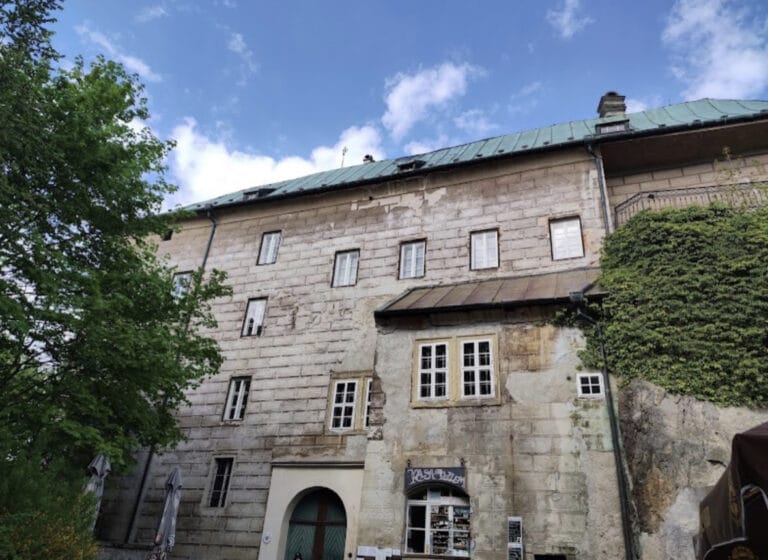
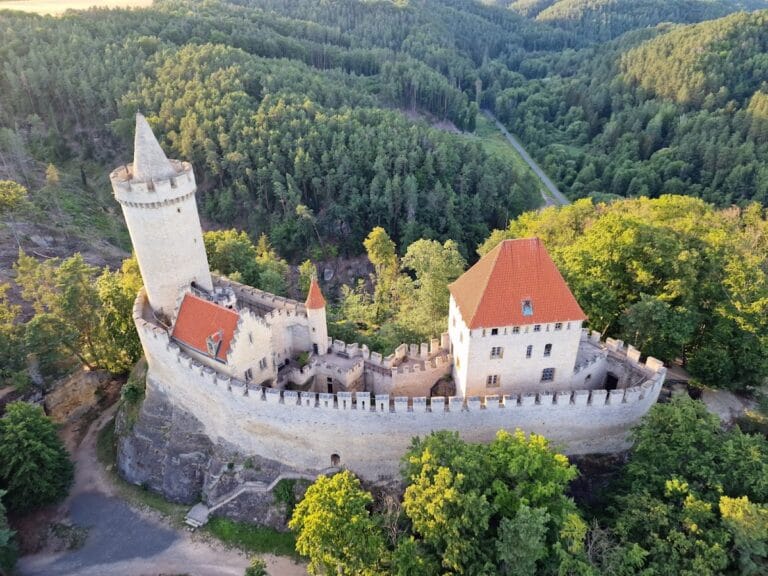
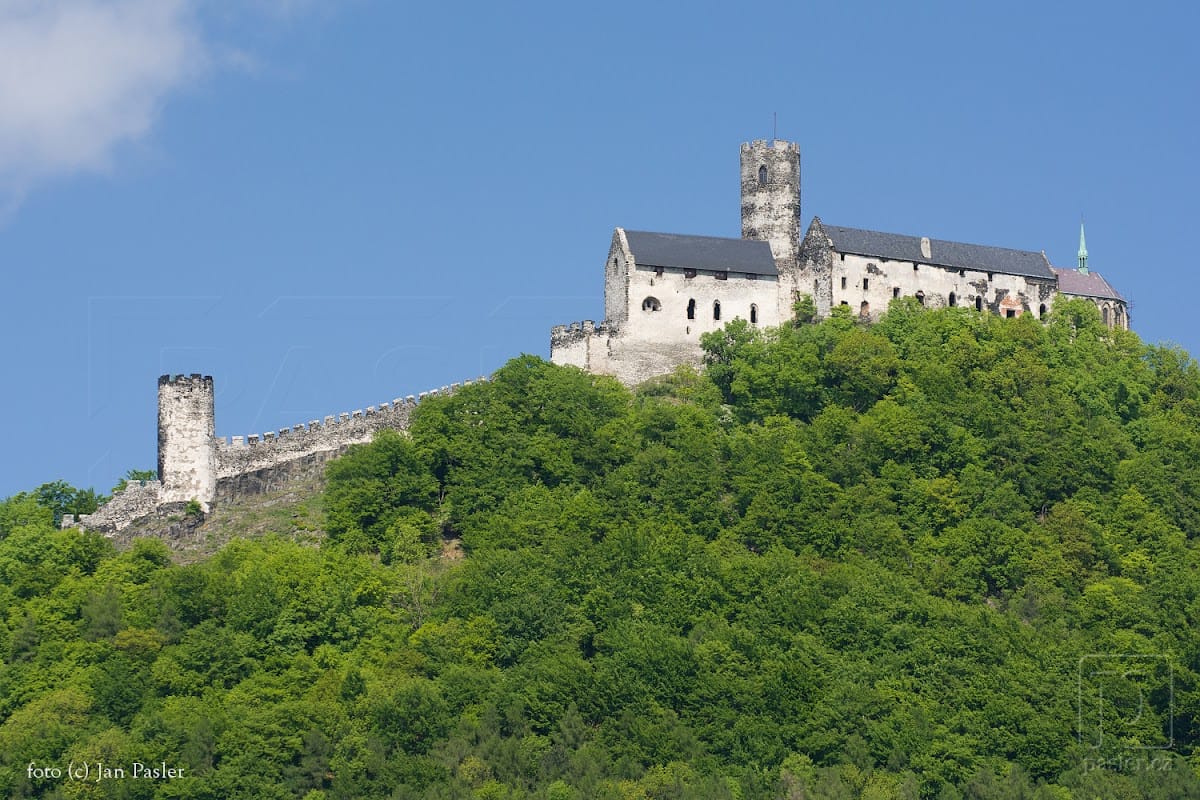
Bezděz Castle represents a well-preserved example of Gothic architecture from the 13th century, occupying a steep hill reaching 606 meters in height. The castle was largely constructed from sodalite nefelinite, a local volcanic rock extracted on site, while finer details such as window frames and vaults were made from sandstone. Its layout is elongated and narrow, optimized for defense and administrative functions.
The castle’s outer defenses feature three successive gatehouses, each fortified by ramparts and ditches, designed to delay or repel attackers. Within this system, the round tower known as the “Devil’s Tower” (Čertova věž) stands out. This bergfried, with a diameter of 8.5 meters, was intended as a stronghold and refuge during sieges. It is a massive structure, with five floors supported by timber ceilings resting on ledges integrated into the thick walls. Its original entrance is set approximately 1.8 meters above the current ground level, emphasizing its defensive design.
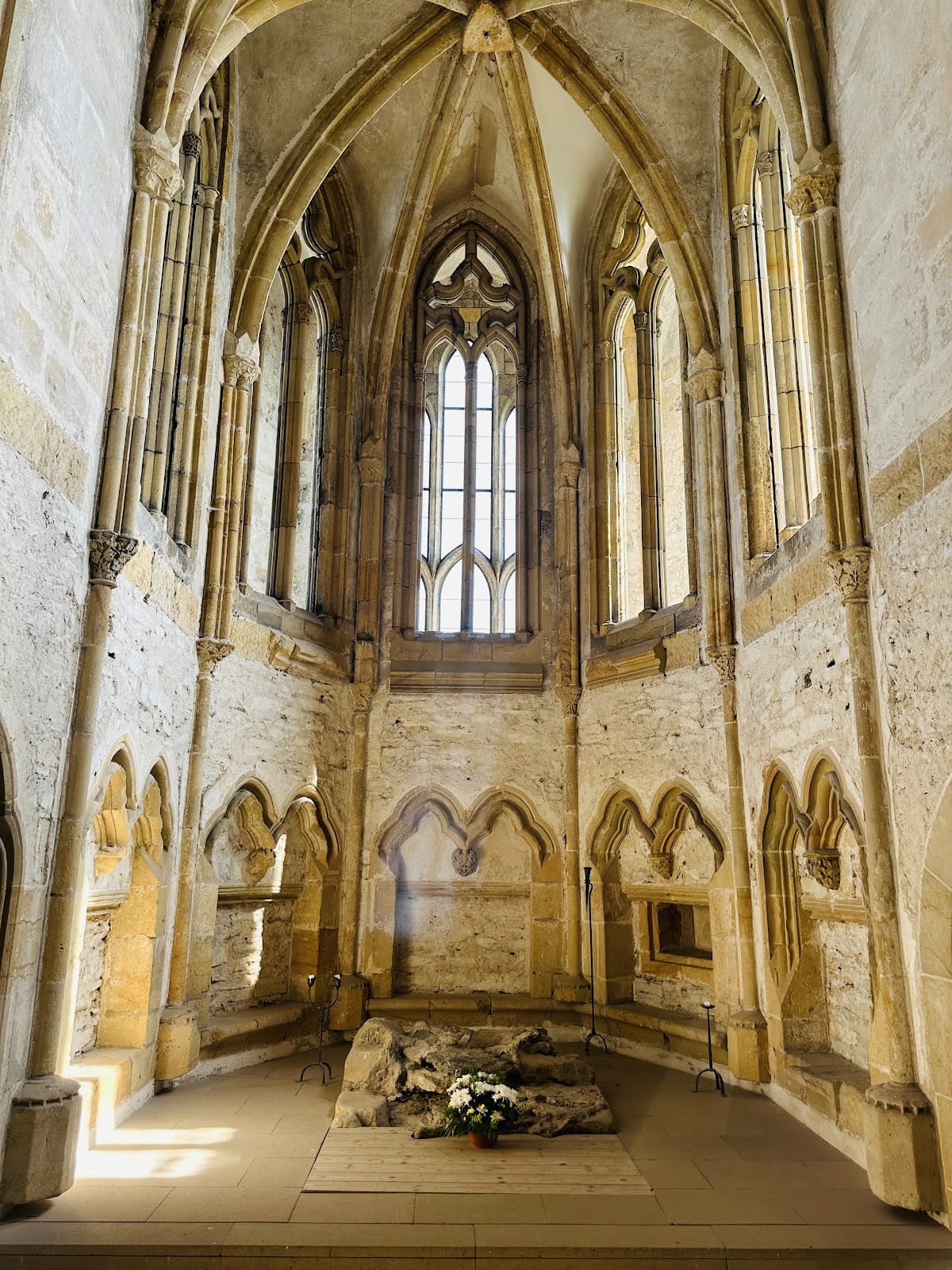
Inside the inner castle, the Royal Palace stretches 50 by 8.6 meters and adjoins a Gothic chapel dedicated to St. Michael. This chapel features a single nave with a slightly skewed axis, a porch bearing a tympanum decorated with vine motifs, and a pentagonal presbytery. The chapel’s nave is covered by a ribbed vault composed of two square bays, and a gallery or emporium surrounds part of the structure above the main floor. The chapel’s walls are nearly three meters thick and contain windows and stone seats known as sedilia.
Opposite the Royal Palace across a narrow courtyard lies the smaller Burgrave’s Palace. The courtyard includes a rock-cut cistern which collected rainwater, compensating for the lack of a natural well due to geological factors. This cistern played an essential role in securing the water supply during sieges or dry periods.
The lower castle section comprises two opposing buildings called the Manský Palaces, separated by a broader courtyard. Movement between the upper and lower parts of the castle was controlled by a small gate near the bergfried, adding an additional layer of defense.
Architecturally, the castle’s palaces share a similar interior plan. Ground floors, with flat ceilings, were used for service functions, while the first floors contained vaulted halls accompanied by one heated chamber and one wooden-paneled chamber. The second floors held auxiliary rooms accessed by spiral staircases, suitable for storage or other non-representational uses.
In the 17th century, the northwest outer defensive wall, stretching about 250 meters, was reinforced with three triangular bastions in response to changing military needs. Nearby, on a smaller hill called Malý Bezděz, remains of a 14th- to 15th-century outwork survive. These fortifications include stone and dry-laid masonry and traces of rock-cut structures, indicating the castle’s broader defensive network.
Religious features from the post-medieval period include a Baroque Stations of the Cross erected in 1686 along the path leading to the castle, consisting of 15 chapels. This devotional route was restored in the 18th century and linked the monastery with the surrounding landscape.
Modern preservation efforts have stabilized and restored key elements such as the roof of the Royal Palace and the chapel of St. Michael. The large bergfried tower also underwent conservation, ensuring its enduring presence as a central architectural feature. In the southern part of the castle, the Manský and Templar Palaces were reconstructed, with the latter now housing exhibitions displaying instruments used for torture and findings from archaeological research.
Access between the steep forested hill and the castle is aided by a cableway originally built in 1982 and replaced in 2024. This system continues to facilitate the transport of materials and supplies needed for maintenance, underscoring ongoing efforts to preserve this historic monument.
Nearby sites