Augustusburg Palace: An 18th-Century Rococo Residence in Brühl, Germany

Visitor Information
Google Rating: 4.6
Popularity: Medium
Google Maps: View on Google Maps
Official Website: www.schlossbruehl.de
Country: Germany
Civilization: Unclassified
Remains: Military

History
Augustusburg Palace, located in Brühl, Germany, was constructed in the early 18th century by Archbishop Clemens August of Bavaria, a member of the Catholic ecclesiastical principality that once ruled the region. The palace site originally held a castle that was destroyed in 1689 by invading foreign troops and subsequent fires. This destruction provided the opportunity to replace the former military fortress with a grand residence reflecting changing tastes among the European nobility.
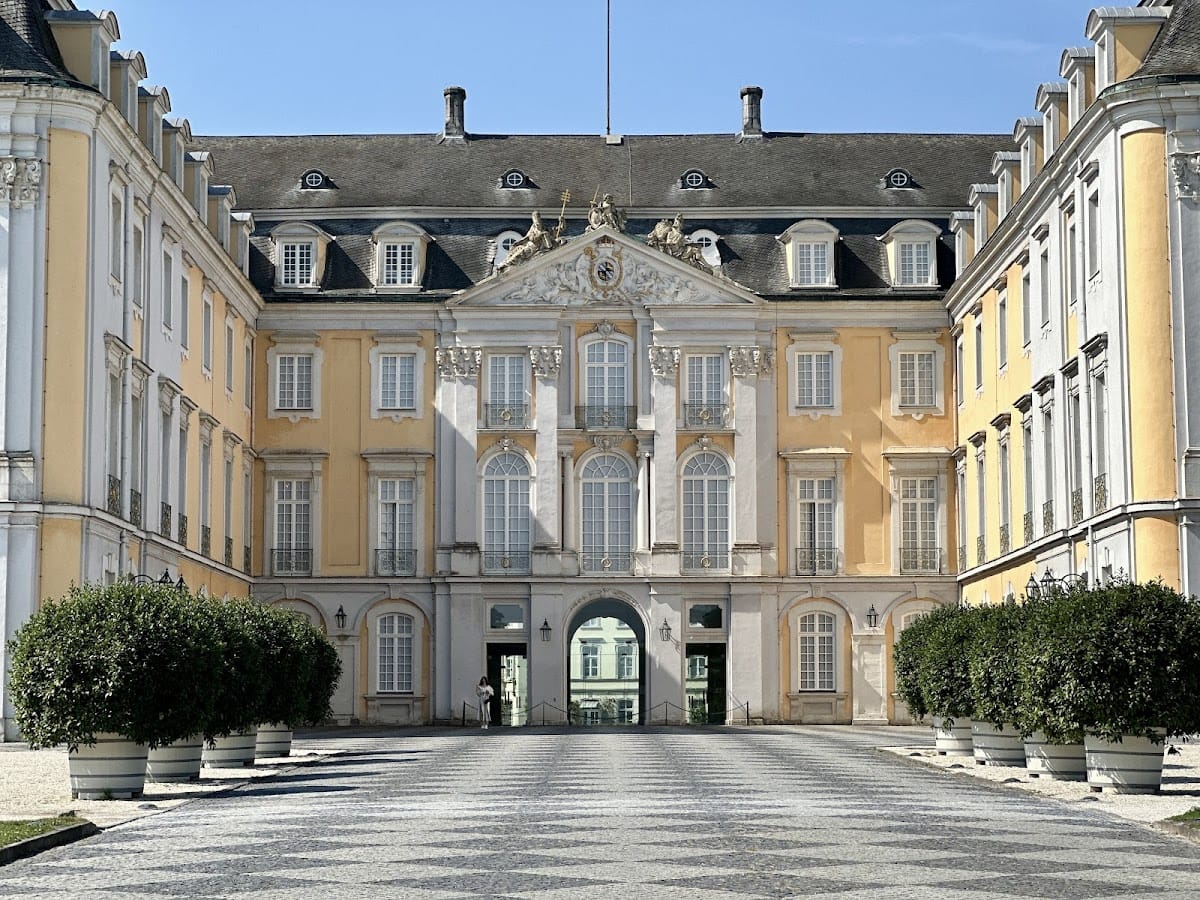
Construction began in the early 1700s with initial designs by Conrad Schlaun, aiming to rebuild the castle, but after 1728, François de Cuvilliés undertook significant modifications to shift the structure from a defensive stronghold into a modern, Rococo-style palace inspired by the Palace of Versailles in France. This transformation illustrated a move toward aesthetic refinement over fortification, aligning with the tastes and social ambitions of the archbishop.
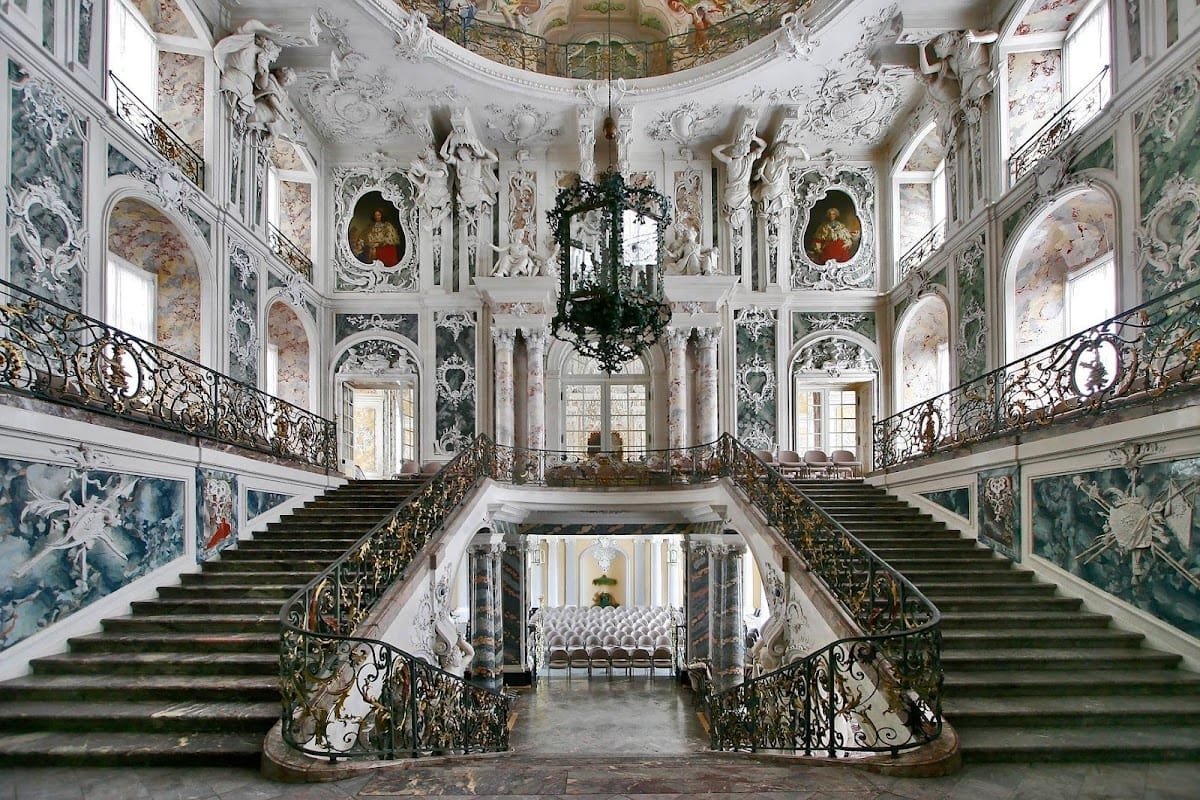
Between 1740 and 1750, key artistic contributions included the design of the famous staircase by architect Balthasar Neumann, whose meticulous planning lasted several years. Frescoes by Carlo Carlone adorned the staircase ceiling and adjacent rooms during this period, as well as the Nepomuk chapel, lending the palace an elaborate decorative program. After Archbishop Clemens August’s death in 1761, his successor Max Friedrich von Königsegg completed the main interior rooms. The palace’s construction concluded in 1769 after over four decades of ongoing work.
Following the upheavals of the French Revolution, the Electorate of Cologne, which had governed the region, was dissolved. The palace was occupied and plundered by French troops and later granted by Napoleon Bonaparte to Marshal Davout. Under Davout’s ownership, maintenance was neglected, marking a period of decline. In 1815, control transferred to the Kingdom of Prussia. King Frederick William IV visited in 1842 and ordered renovations, reflecting renewed royal interest. The palace became a residence again in 1876 and 1877 when Emperor Wilhelm I stayed there during nearby military exercises.
World War II caused serious damage to Augustusburg, particularly from bombings in 1944 and 1945 that affected the north and main wings. Urgent restoration efforts began immediately after the war and continued until the palace was fully restored. In 1984, Augustusburg Palace, along with Falkenlust Palace and the surrounding parkland, was officially recognized as a UNESCO World Heritage Site, acknowledging its historical and cultural importance. Today, the palace remains under the ownership of the state government of North Rhine-Westphalia and serves official functions for the German federal government.
Remains
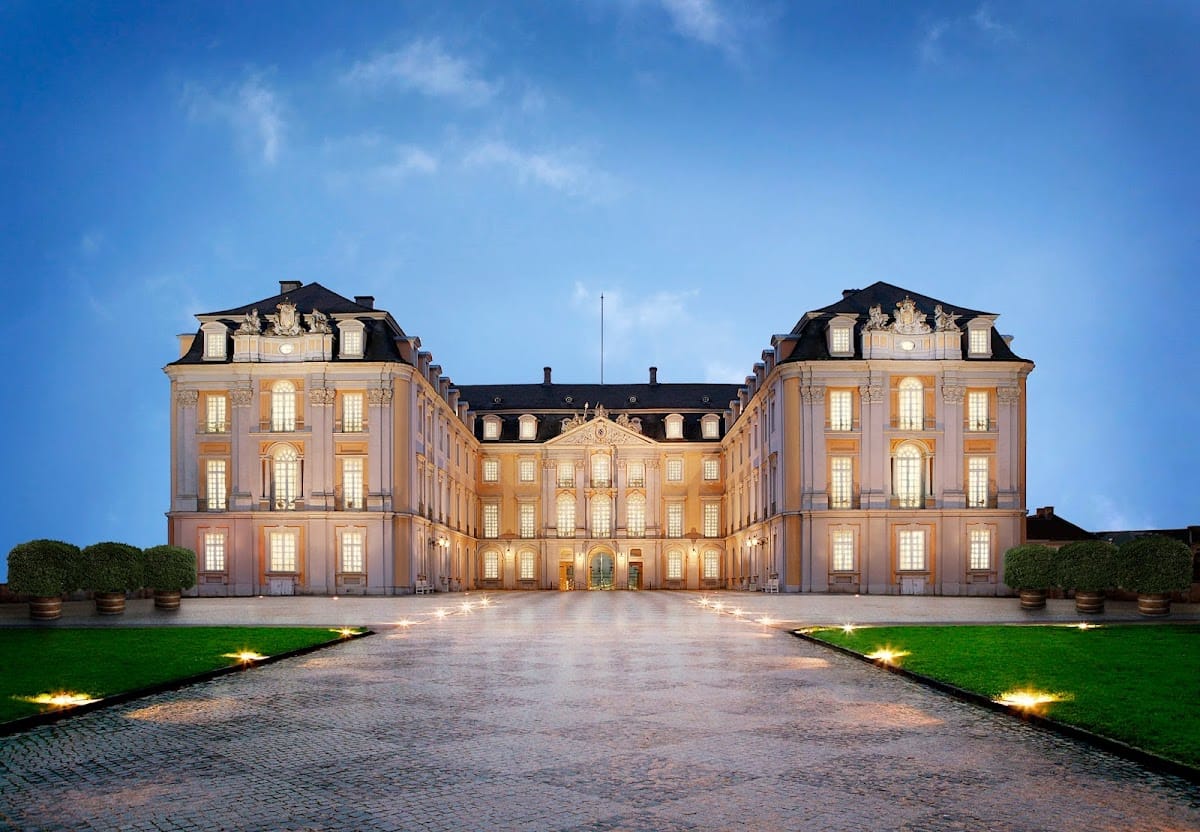
The layout of Augustusburg Palace reflects its evolution from a former castle into an elegant Rococo residence. Originally a fortified stronghold, the structural plan was extensively altered to serve residential and representational purposes, consistent with the tastes of the early 18th century. François de Cuvilliés’s redesign introduced a more open and lighter architectural scheme that abandoned defensive features in favor of spacious and richly decorated rooms.
One of the most notable features is the grand staircase, designed by the acclaimed architect Balthasar Neumann after careful study and planning beginning in 1740. This staircase exemplifies Rococo artistry, combining innovative structural engineering with elaborate decoration. The ceiling above the staircase is covered in frescoes painted by Carlo Carlone between 1747 and 1750. Carlone also extended his decorative work to adjacent rooms and the small Nepomuk chapel within the palace, adding a cohesive artistic program to the interior.
The surviving palace buildings have undergone extensive restoration due to severe wartime damage that compromised the north and main wings. These restorations aimed to preserve the original architectural character while repairing structural weaknesses caused by bombing. Today, the palace stands largely restored, retaining its Rococo elegance and providing insight into the transition from fortified castle to luxurious residence.
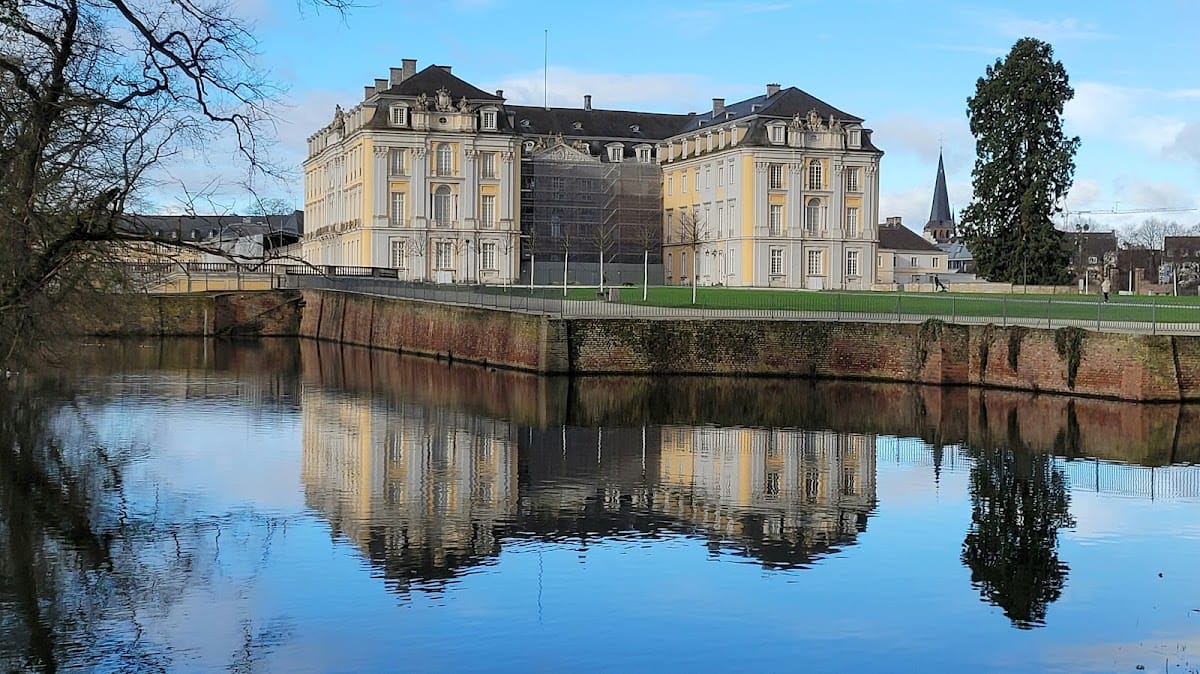
The palace is situated in a generally flat landscape about 69 meters above sea level, near the city of Cologne, roughly 12 kilometers to the north. The park surrounding Augustusburg, together with nearby Falkenlust Palace, forms a carefully maintained ensemble recognized for its cultural and historical value. This landscape complements the architecture and illustrates the integration of designed nature and residence common in 18th-century aristocratic estates.
Nearby sites