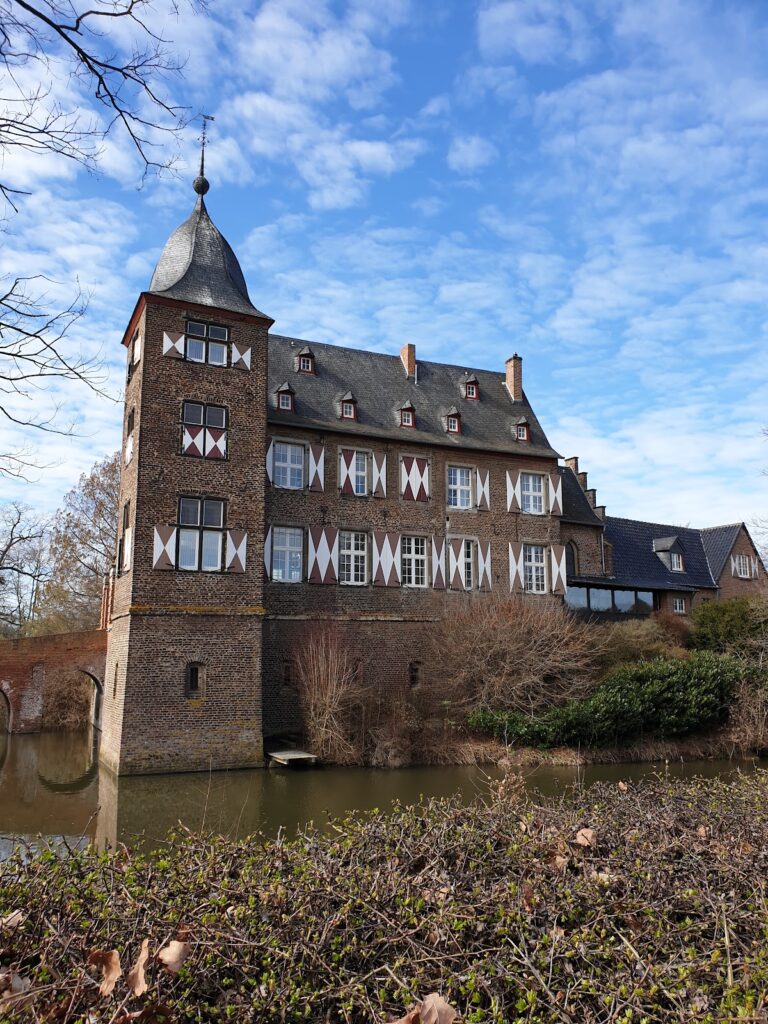
Burg Hemmerich: A Former Aristocratic Castle in Germany

Site at a Glance
- Rating
- 3.9
- Popularity
- Low
- Country
- Germany
- Primary era
- Medieval
- External website
- Open
- Eras represented
- Medieval, Early Modern, Modern
- Civilizations
- German, Holy Roman Empire
- Site type
- Domestic
- Remains
- Castle
On this page6 sections
History
Burg Hemmerich is a former aristocratic castle in Germany, located in Hemmerich, a district of Bornheim, with origins predating 1210 and a later Rococo character. Its earliest recorded name was Hemberg, and the castle was held in 1210 by the knight Albero von Hemberg, a member of an influential noble family.
Medieval noble seat
In 1392, Burg Hemmerich became an “open house” of Friedrich von Saarwerden, the medieval Archbishop of Cologne. An open house was a castle placed under a lord’s protection and made available for that lord’s use or military purposes. The arrangement followed Werner von Bachem’s surrender of the hereditary chamberlain’s office to his son-in-law Pawin von Hemberg, a descendant of Albero von Hemberg. A hereditary chamberlain was a court official whose office passed through a family line.
Marriage brought the hereditary chamberlaincy and the castle to the von Aldenbrück family, also known as Velbrück, in 1468. After Johann von Velbrück, the family’s last male heir, died in 1611, ownership passed to his son-in-law Gumprecht von Gevertzhans, who was married to Johann’s daughter, Anna von Velbrück.
Ownership and eighteenth-century transformation
The castle changed hands several more times. Johann von Francken-Sierstorff acquired it in 1677, Caspar von und zum Pütz in 1705, and Baron Karl von Nordeck in 1825. The von Nordeck family retained Burg Hemmerich until 2008.
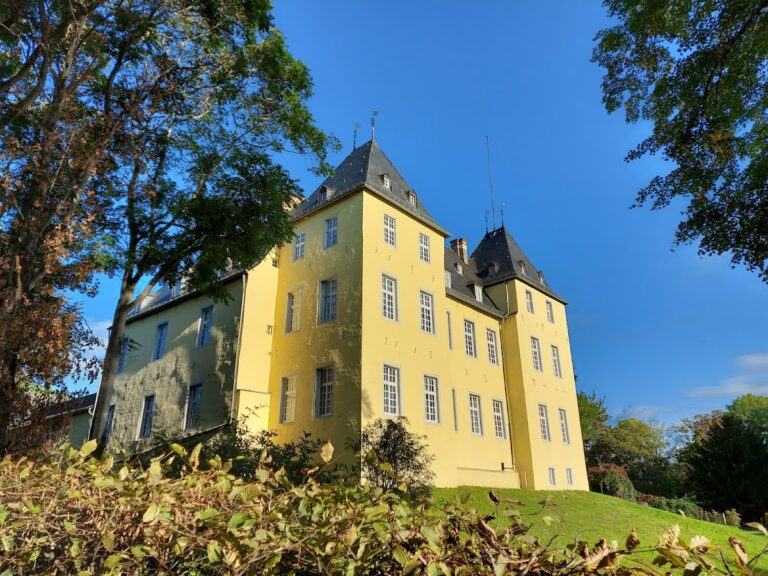
Maria Elisabeth zum Pütz, whose family included mayors of Cologne and Düsseldorf, remodeled the castle between 1729 and 1733. This work gave Burg Hemmerich its Rhenish Rococo character. Rococo was an eighteenth-century European style known for ornate decoration, asymmetry, lightness, and elaborate interiors.
Fires, rebuilding, and decline
Fires in 1869 and 1906 destroyed the castle. The manor house was then rebuilt as a Neo-Renaissance villa according to plans by the architect Wilhelm Graf Mörner. Rudolph von Nordeck, the son of Carl von Nordeck, carried out the rebuilding. Neo-Renaissance architecture revived Renaissance forms and motifs during the nineteenth century.
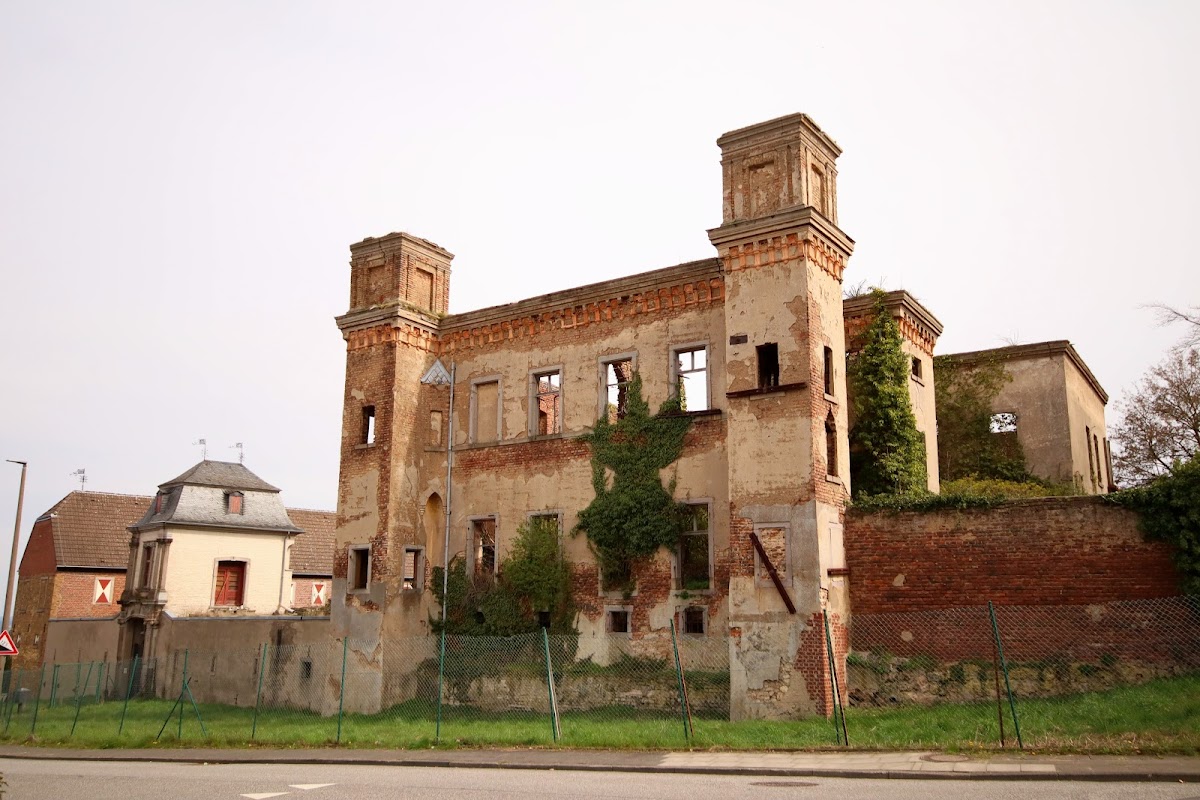
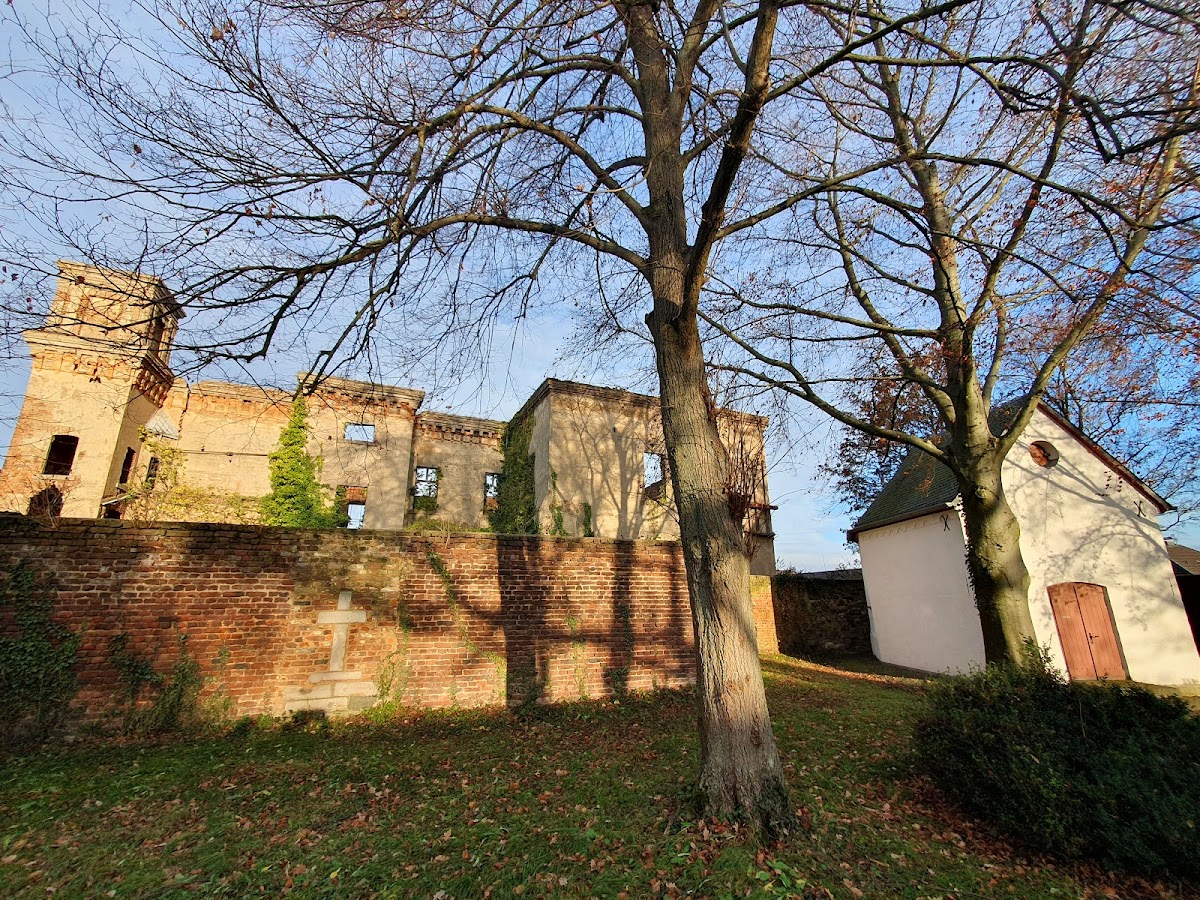
A third fire in 1945, started by dismissed forced laborers during the Second World War, left the complex in ruins. It was no longer suitable as a residence for the baronial von Nordeck family. Hunold von Nordeck zu Nordeck nevertheless lived on the site with his wife until his death in 2004 and arranged repairs to several buildings. The complex has been uninhabited since 2004.
The Stollenwerk family, owners of the Stollenwerk canning factory, acquired Burg Hemmerich after the von Nordeck period. Following Josef Stollenwerk’s death in 2016, ownership passed to a community of heirs. By 2018, no plans for a new use had been made, and the castle continued to deteriorate.
Remains
Castle complex and surviving fabric
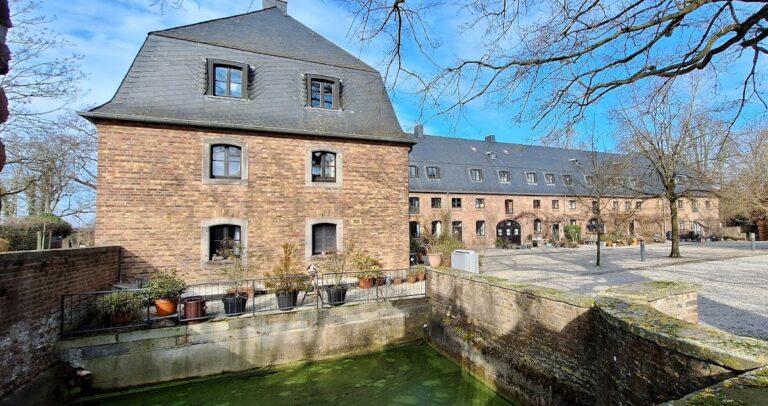
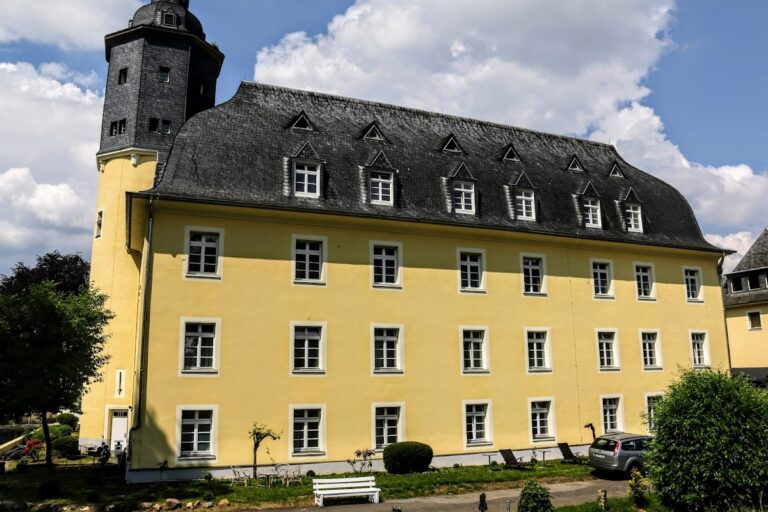
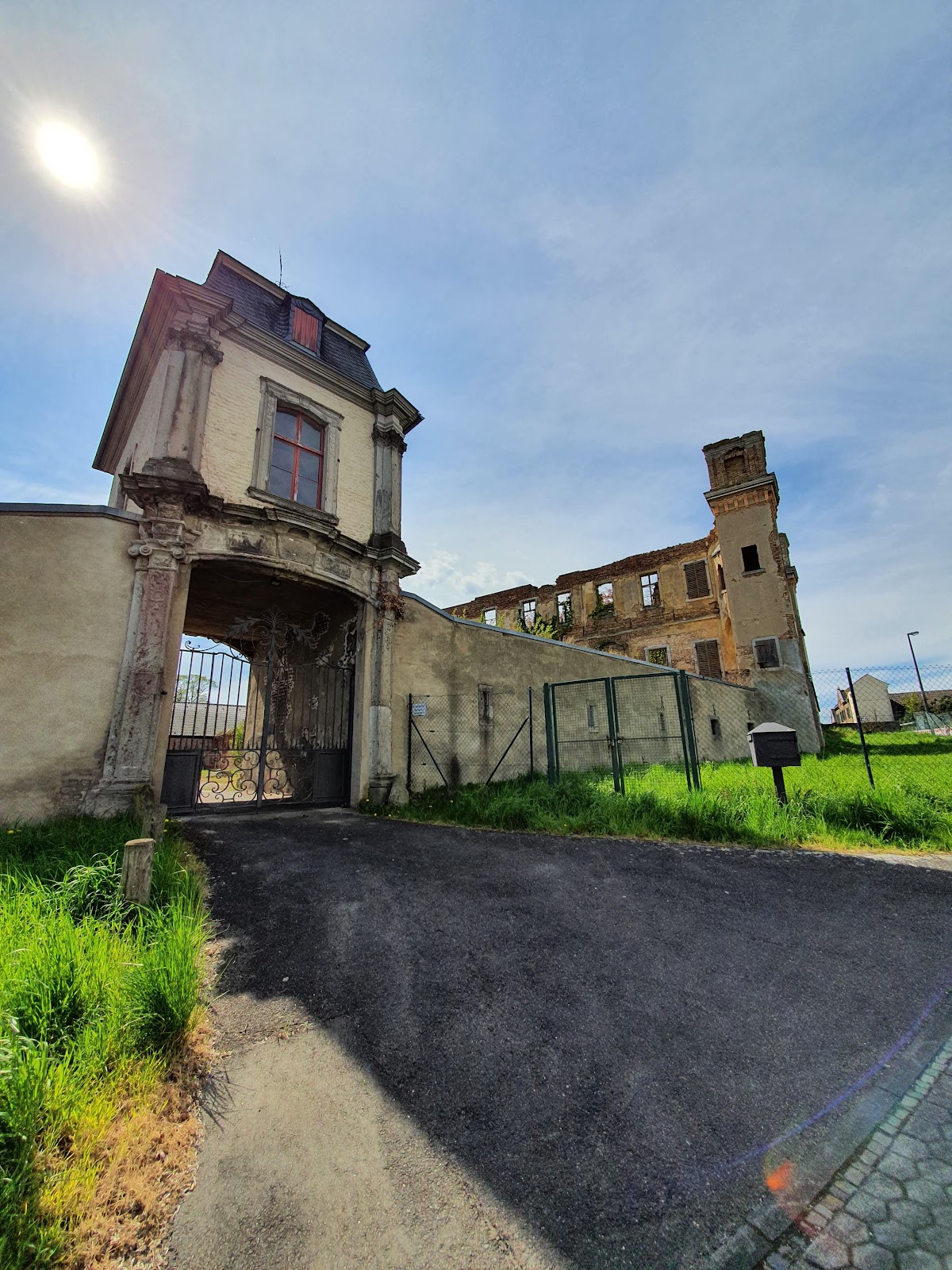
Burg Hemmerich survives as a ruined castle complex at Jennerstraße in Hemmerich, standing at an elevation of 152 metres above sea level. The castle was built on Roman remains, linking the later aristocratic seat to an earlier phase of occupation at the site.
The complex retains evidence of its eighteenth-century remodeling between 1729 and 1733, when its architectural character became Rhenish Rococo. Later rebuilding gave the manor house the form of a Neo-Renaissance villa after the nineteenth-century fires. The 1945 fire left the site in a ruined condition, although several buildings were subsequently repaired. By 2018, the complex as a whole remained a ruin and continued to deteriorate.
A nineteenth-century lithograph by Alexander Duncker depicts Burg Hemmerich and provides a visual record of the castle before its later destruction and decline.