Ategua Archaeological Enclave: A Historic Site in Córdoba, Spain


Visitor Information
Google Rating: 4.5
Popularity: Very Low
Google Maps: View on Google Maps
Official Website: www.juntadeandalucia.es
Country: Spain
Civilization: Roman
Remains: City

History
The Enclave Arqueológico de Ategua is located near the town of Santa Cruz in Córdoba, Spain. Its origins trace back to ancient times, with the earliest confirmed occupation beginning in the Late Bronze Age. Archaeologists suggest that human presence at the site may extend even further, potentially reaching the second millennium BCE, although this remains to be firmly established through ongoing investigations. The settlement grew in significance during the Iron Age, developing into a fortified community with strong defensive structures.
Ategua gained notable historical importance during the Roman Republic. It is mentioned in De bello Hispaniensi, an account of Julius Caesar’s civil wars, highlighting that the city was seized by Caesar’s troops in 45 BCE amidst the conflict with the sons of Pompey. Under Roman rule, the city expanded considerably, featuring residential homes known as domus, public buildings, and baths likely constructed between the late Republic and early Imperial periods. By the early 4th century CE, the presence of a Christian community is evident, as a representative from Ategua participated in the Council of Elvira, an early church assembly in Hispania.
Following the Roman era, Ategua entered a new phase under Islamic dominion between the 10th and 12th centuries, during which it was known as Ataba and functioned as a minor settlement within the administrative territory called the Córdoba cora. In the latter part of the Islamic period, a fortress was erected on the site’s highest point. This stronghold continued to be occupied through subsequent centuries until the site was ultimately abandoned in the 15th century, corresponding with the shifting political and military landscape of medieval Iberia.
Archaeological attention to the site began in the early 1800s, led by Colonel Eugéne-Georges Stoffel. More extensive excavations were later undertaken throughout the 20th century by scholars including Rafael Castejón, Samuel de los Santos, Félix Hernández, Blanco Ferreiro, Martín Bueno y Cancela, and José Clemente Martín de la Cruz. Their work uncovered multiple layers of Ategua’s past, ranging from ancient fortifications and domestic spaces to religious buildings and burial grounds. Recent geophysical surveys have revealed an extensive urban framework beneath the surface, uncovering a network of roughly seventy-six streets and fifty-eight city blocks that point to a substantial Roman-era city constructed over earlier settlements.
Remains
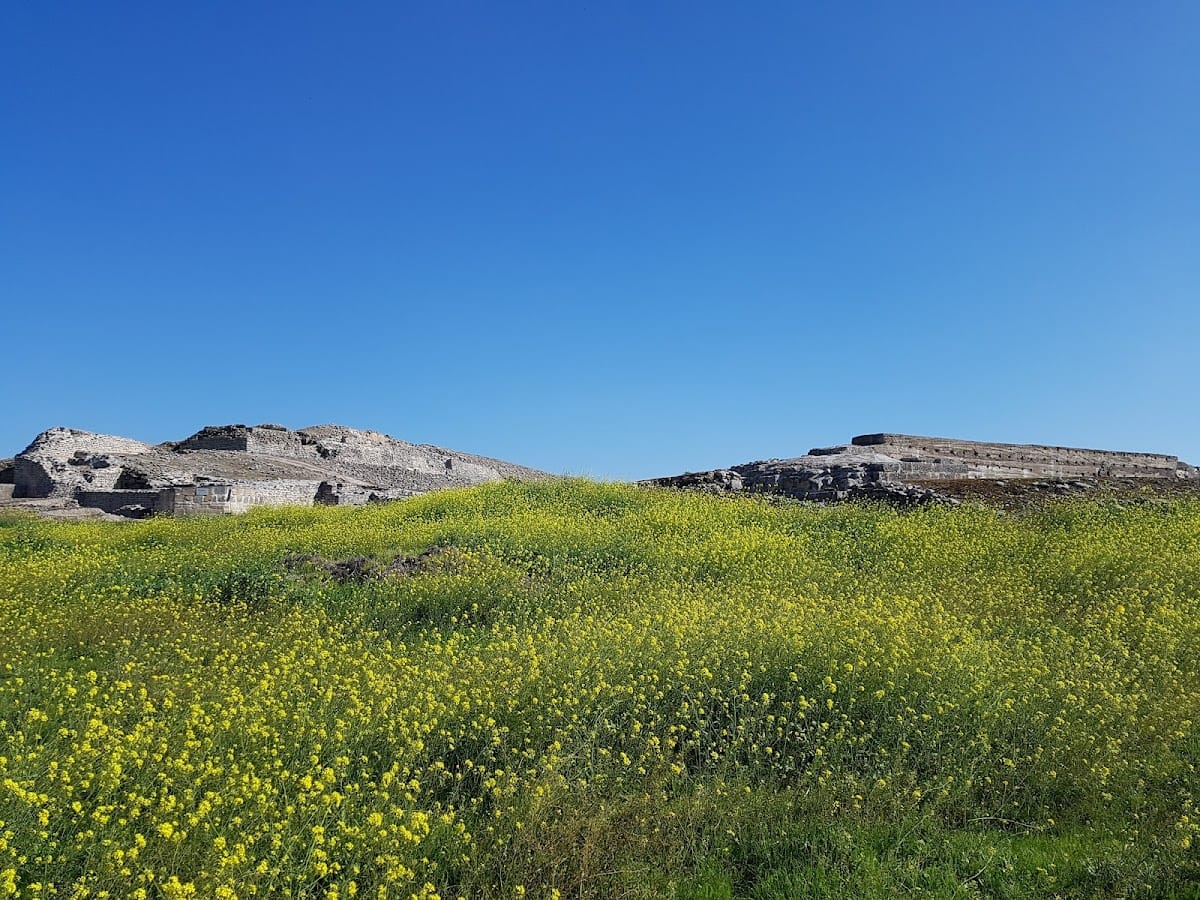
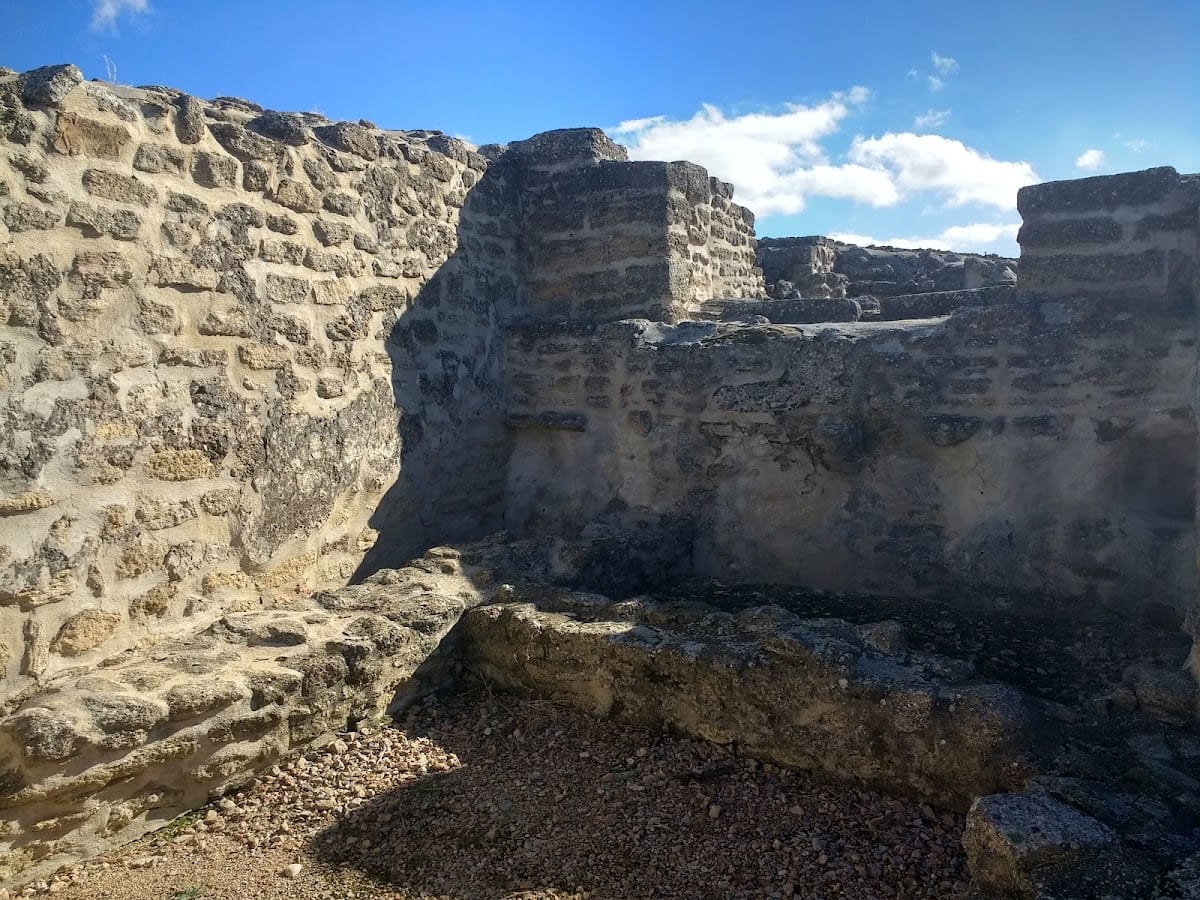
Ategua is situated on a plateau atop a hill composed of biocalcarenite, a type of sedimentary rock, which provides commanding views of the surrounding landscape along with natural springs such as the “Fuente de Teba” on its northwest slope. The oldest visible structures are the Iberian-Roman defensive walls that encircle the summit and extend down parts of the hillside. These fortifications were built using locally quarried biocalcarenitic stone arranged into horizontal layers of masonry. Large cut blocks reinforce corners and foundations, while the outer face of the walls slopes outward to add stability. The inner wall faces remain nearly vertical. Parts of these walls survive at varying heights between 250 and 290 meters above sea level, showcasing an impressive example of ancient military engineering.
Beneath the main enclosure, a second, older defensive wall attributed to the Tartessian culture has been identified on a lower southwest terrace. Although this wall lies buried, it testifies to the site’s earlier phases of fortification well before the Roman period. The surrounding slopes exhibit quarry marks where biocalcarenite was extracted; however, the precise timing of these quarrying activities has yet to be established.
On the western hill slope, a series of Roman water management installations have been unearthed. These include several pools constructed with opus caementicium, a form of concrete, which were coated internally with opus signinum, a waterproof mortar mixture made from crushed tiles and lime. These pools likely received water directly from the nearby spring. In addition to these, oval and circular cisterns were lined with similar waterproof mortar and may have been reused during medieval or even more recent periods.
Excavations on the upper plateau’s southwestern terrace revealed several Roman houses. These dwellings comprised rooms with floors finished in opus signinum, earth, or stone slabs, featuring open courtyards that contained oval cisterns and square wells for collecting water. Dating from the late Republican period, these homes show signs of abandonment by the 2nd century CE, marking a shift in the occupation or use of this area.
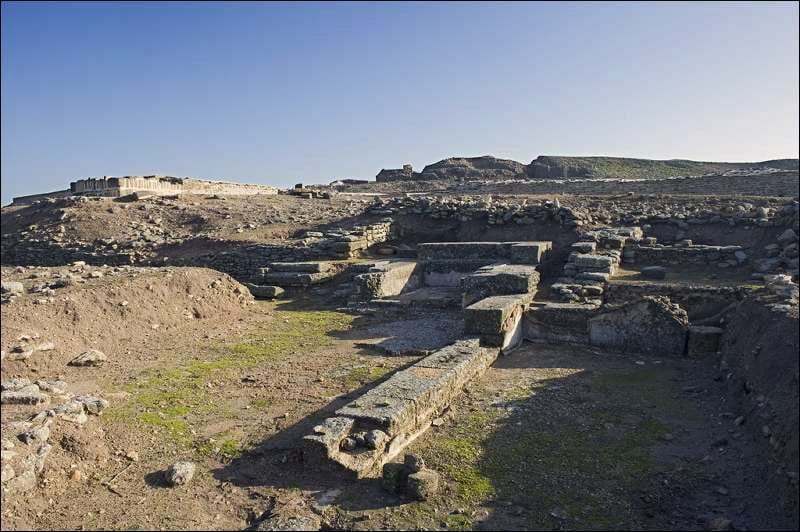
South of the acropolis stands a substantial Roman public building believed to date from the Republican era. Remnants include Attic-style column bases and smooth shafts, indicating a classical architectural influence. Later Islamic and medieval defensive walls partially cover this structure, demonstrating how successive cultures built upon and modified existing fabric.
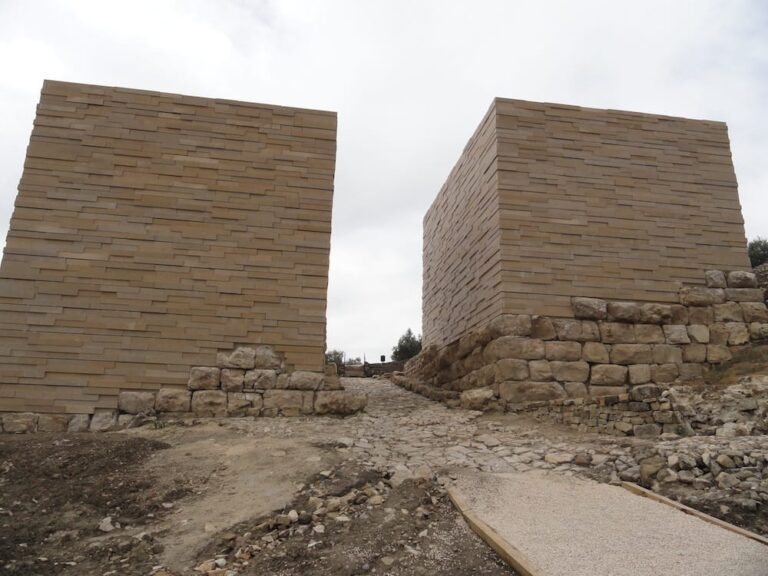
During the late Islamic period, a fortress was constructed atop the upper terrace. This stronghold incorporated segments of the older Iberian-Roman walls along its eastern side but was smaller and built using different materials, including mortared rubble and rammed earth techniques. Excavations have revealed the fortress’s north, south, and west walls, which were protected by ten regularly spaced towers. The north gate featured defensive enhancements such as an eastern bastion and a western counterfort. These were strengthened in the Christian era with the addition of an octagonal tower that created a bent entrance—a design intended to slow attackers. The south gate allowed direct access, flanked symmetrically by two square towers.
Inside the fortress, archaeologists found stone-paved rooms alongside an open courtyard housing a water well. A forward bastion at the northwestern corner, equipped with two towers, overlooked important routes linking Córdoba and Granada, underscoring the fortress’s strategic role in controlling movement through the region.
Adjacent to the Islamic walls on the southwest side, a late medieval commercial area was established between two towers. This enclosure centered on a rectangular plaza paved with irregular stone slabs and surrounded by evenly spaced shops. Drainage systems and flat stones with holes suggest the plaza was covered by a tent-like roof supported by posts, providing sheltered space for trade activities. These features illustrate the continuing adaptation of Ategua’s defenses and urban fabric even as its function evolved over the centuries.
Nearby sites