Atalaya Castle: A Historic Fortress Overlooking Villena

Visitor Information
Google Rating: 4.6
Popularity: Medium
Google Maps: View on Google Maps
Official Website: www.turismovillena.com
Country: Spain
Civilization: Medieval European
Remains: Military

History
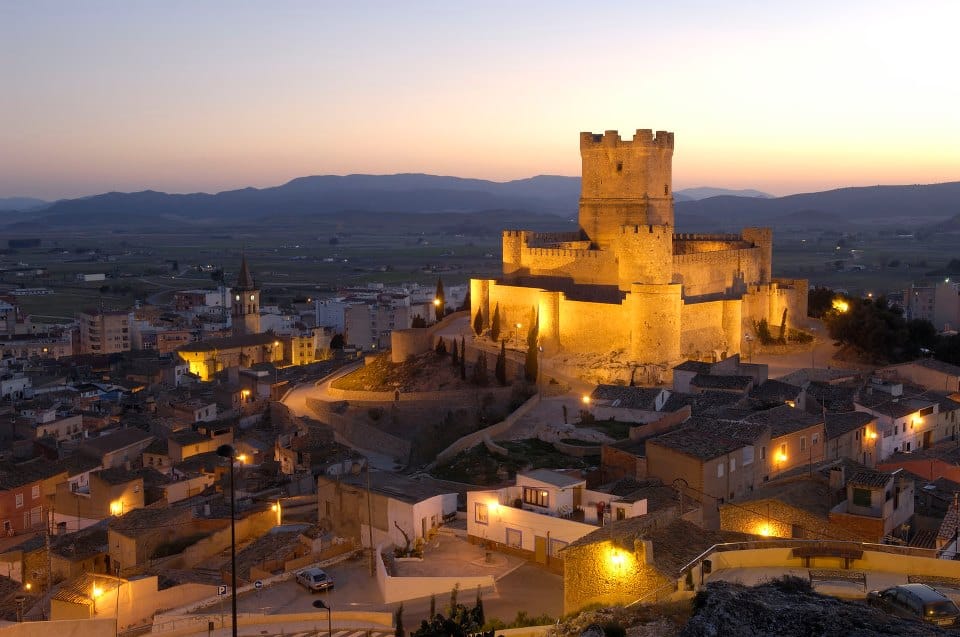
Atalaya Castle stands on a hill spur overlooking Villena, near the historic border between Castile and Aragon. It was built by Muslim forces no later than the 12th century, with written records mentioning it in 1172. Despite earlier speculation, archaeological evidence does not support the existence of a Roman fortification on this site before the castle’s construction.
The castle served as a key Muslim stronghold during the Reconquista. It withstood three sieges by the forces of Jaime I of Aragon before finally falling in 1240. The conquering army was led by Ruy Pérez Ponce de León, commander of Alcañiz, and included knights from the Order of Calatrava and Almogávar mercenaries. Although captured by Aragonese troops, Villena was assigned to Castile under the Treaty of Almizra.
Initially, the castle was held by the Calatrava knights but soon passed to Infante Manuel of Castile and then to his son Juan Manuel, Prince of Villena. Juan Manuel married Infanta Constanza of Aragon and kept her confined in the castle until she was twelve years old. This event led to improvements in the castle’s security.
Ownership later transferred to Alfonso of Aragon, the first Marquis of Villena. His successor, Juan Pacheco, the second Marquis, transformed the fortress into a castle-palace. He added wall coverings, a second curtain wall, and raised the keep by adding third and fourth floors.
In 1476, the people of Villena, encouraged by the Catholic Monarchs, revolted against Marquis Diego López Pacheco. This uprising resulted in the massacre of thousands of Jews and conversos who had sought refuge in the castle. Afterward, the city and castle came under direct royal control, and the marquisate became an honorary title.
During the Revolts of the Brotherhoods in the early 16th century, the castle served as a refuge for Viceroy Diego Mendoza and as a base for troops retaking Valencia. Later, in the War of Spanish Succession, fifty Bourbon loyalists defended the castle during an eight-day siege by Austrian forces. For this, the castle earned the title “Fidelísima,” adding to its existing honors of “Muy Noble” and “Muy Leal.”
In the Peninsular War, Marshal Suchet ordered partial demolition of the keep’s roofs, including the Almohad vaults, some of the oldest brick vaults in Spain and the Maghreb region. Following this damage, the castle was abandoned and suffered material loss due to neglect and local reuse of its stones.
Archaeological excavations and restorations began in 1958 under José María Soler García. These efforts recovered historical materials now displayed in Villena’s archaeological museum. Restoration phases included rebuilding the keep’s roofs and turrets, repairing courtyard walls, and restoring entrance towers. Minor works and urban rehabilitation continued into the 1990s, preserving the castle as a well-maintained cultural landmark.
Remains
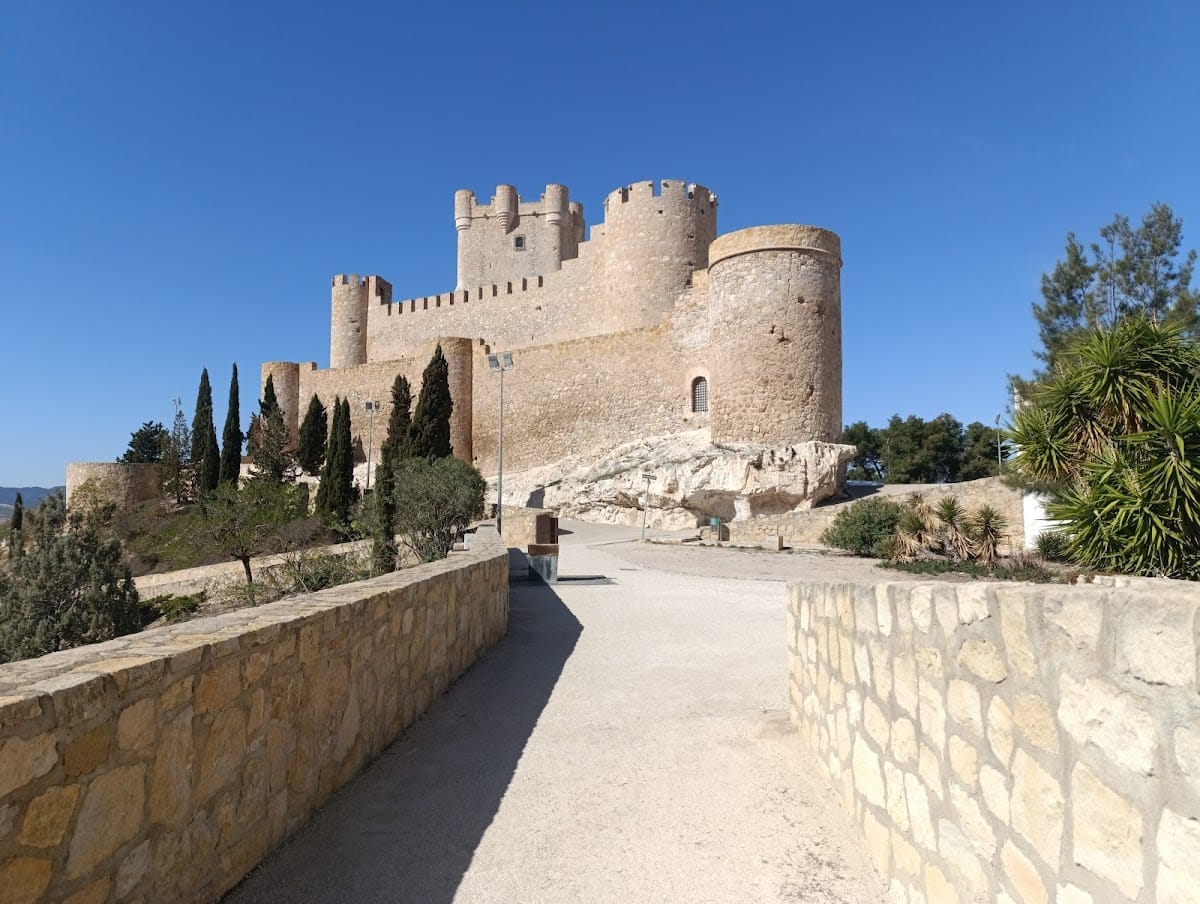
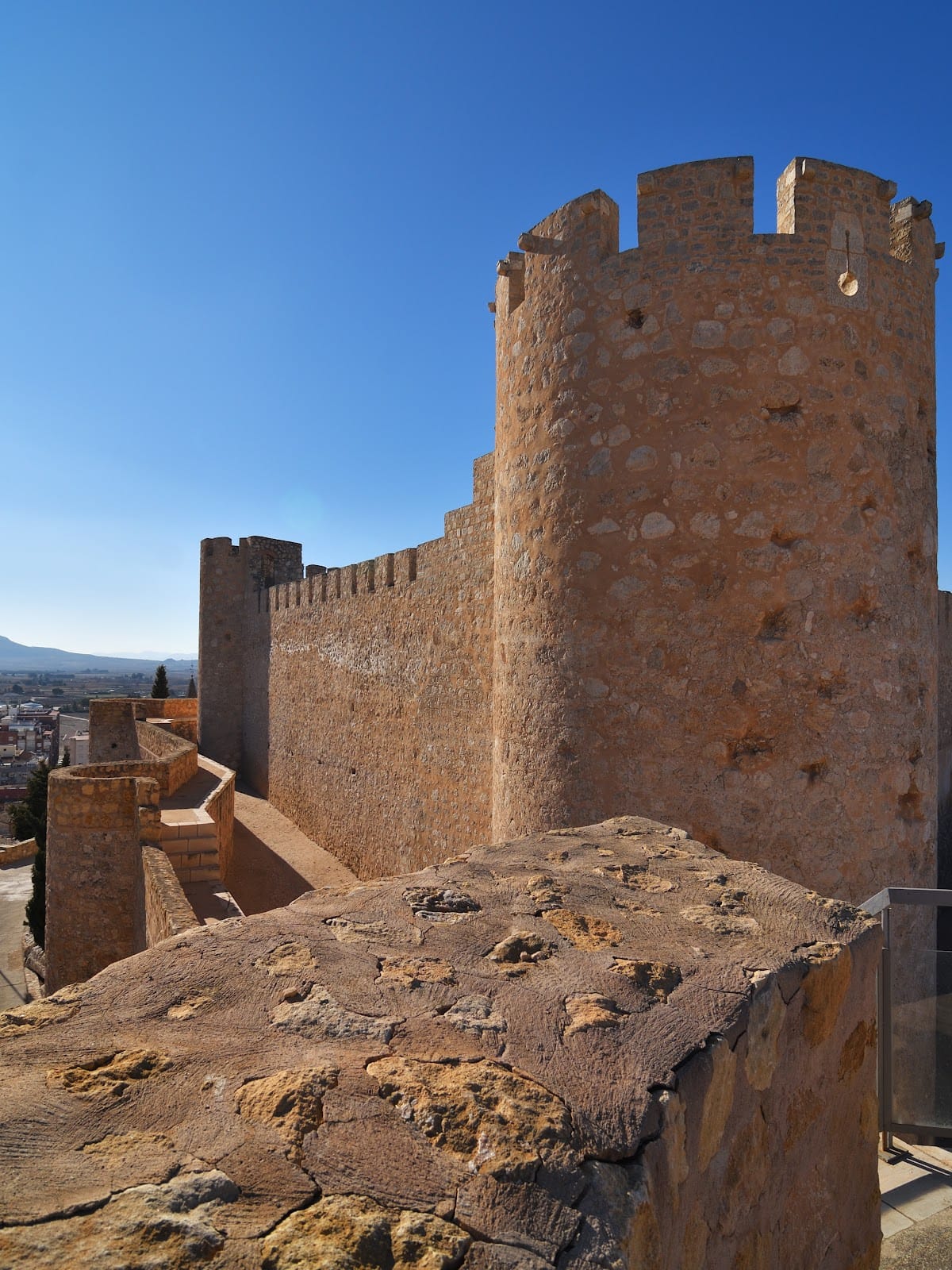
Atalaya Castle has a polygonal layout with cubic towers at most corners and a large quadrangular keep occupying one corner. The walls and towers are topped with rectangular battlements. The main gate faces northwest, with two smaller gates now blocked. A walkway runs along the outer curtain wall, connecting all towers and the keep.
The inner courtyard gate faces southwest and is flanked by a barbican. Excavations near this entrance uncovered remains believed to be the Hermitage of the Virgin of the Snows, a chapel known from historical documents. Along the courtyard walls, archaeologists found annexed rooms including storerooms, sentry posts, and stables. Near the keep’s entrance lies a vaulted cistern with a barrel-shaped roof, used for water storage.
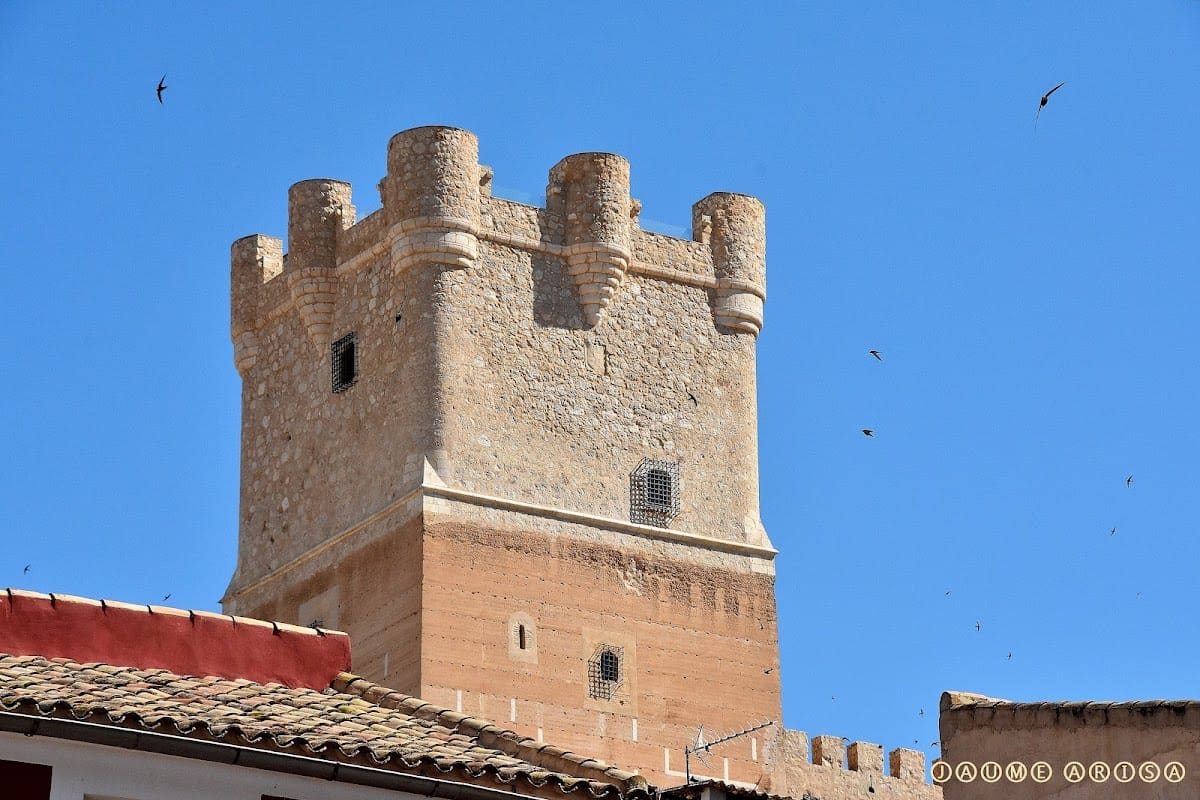
The keep rises about 27.7 meters and is the castle’s most prominent feature. Its two lower floors date to the Almohad period of the late 12th century and were built using rammed earth, a technique called tapial. The walls are finished with plaster designed to imitate stone blocks. The ground floor is a square chamber with thick walls and is lit only by the entrance. It is covered by an Almohad ribbed vault made of brick, featuring eight intersecting horseshoe arches forming an eight-pointed star pattern.
A half-point arch doorway leads to a staircase with pointed vaults, decorated with both Muslim and Christian graffiti. A reproduction of the “Hand of Fatima” graffiti is displayed at the site, while the original is preserved in the local museum. The second floor also has an Almohad ribbed vault with eleven intersecting ribs arranged in a complex pattern. This floor contains graffiti made by prisoners during the War of Spanish Succession, depicting Italian-style buildings.
The third and fourth floors were added in the mid-15th century by Juan Pacheco using masonry construction. These upper floors have separate entrances, suggesting private use. They contain additional graffiti from the War of Succession period and decorative rosettes. The third floor has a restored wooden ceiling, while the fourth floor retains its original brick barrel vault roof and features lowered arch windows for natural light.
Access to the keep’s summit is via a steep staircase with pointed vaults. The top is crowned by small overhanging turrets in the Luso-Castilian style, providing strategic views over the surrounding territory and the natural route from the coast to the central plateau of Spain.
The Almohad vaults suffered partial destruction in 1811 during the Peninsular War but were restored in 1958 and again in 2000. Recent restorations have plastered the vaults, which obscures the original rib intersections. The castle is protected as a Bien de Interés Cultural and was declared a Historic-Artistic Monument in 1931. It remains in good condition due to ongoing restoration efforts.
Nearby sites


