National Archaeological Museum of Aquileia



Visitor Information
Google Rating: 4.7
Popularity: Medium
Official Website: museoarcheologicoaquileia.beniculturali.it
Country: Italy
Civilization: Roman
Site type: Museum

History
The National Archaeological Museum of Aquileia is located in the town of Aquileia, in the province of Udine, northeastern Italy. Aquileia was founded as a Roman colony in 181 BCE by the Roman Senate. Among the magistrates involved in its establishment was Publio Cornelio Scipione Nasica. The city developed into a significant Roman settlement and a major port on the northern Adriatic coast, maintaining importance until the 5th century CE.
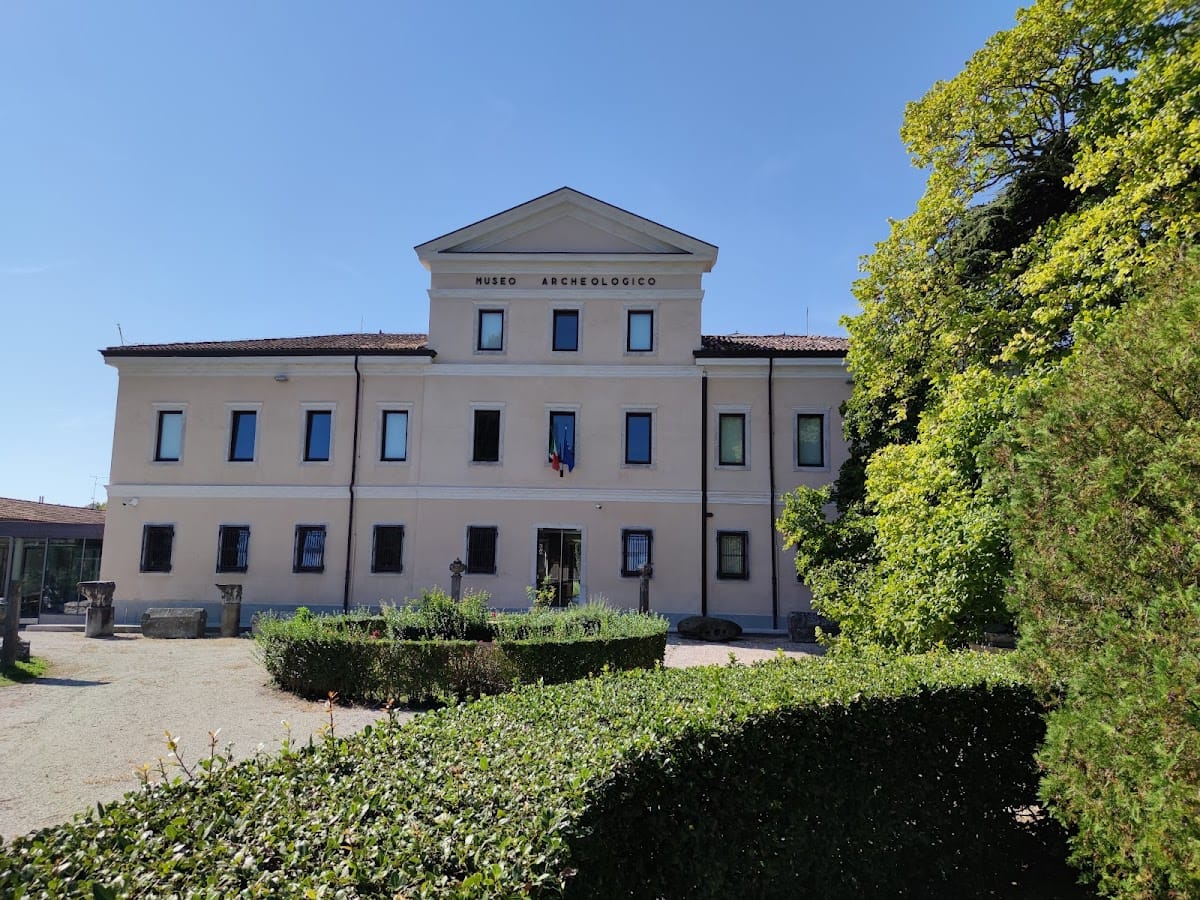
In the 18th century, canon Gian Domenico Bertoli assembled a private collection of antiquities from Aquileia. This collection formed the basis for the first public museum established in 1807, housed in the baptistery near the Basilica of Aquileia. The current museum was inaugurated on August 3, 1882, by the Austro-Hungarian authorities. It was originally named the Imperial Royal State Museum and was located in Villa Cassis Faraone, a neoclassical villa built between 1812 and 1825.
After World War I, control of the museum passed from Austro-Hungarian to Italian state administration. The museum underwent several reorganizations, including the addition of arcades around the villa’s garden in 1898 to house stone artifacts. Further modifications occurred in 1954-1955 to improve the display of objects. Since 2016, the museum has been undergoing renovations and reinstallation of exhibits, including restoration of external deposits.
The museum’s collections document Aquileia’s history from its Roman foundation through its development as a multicultural city. It preserves evidence of public, private, economic, and religious life, reflecting the presence of Roman, Egyptian, Persian, Celtic, Jewish, and Christian cults.
Remains
The museum is housed in Villa Cassis Faraone, a neoclassical building with three floors and twelve rooms, surrounded by gardens. In 1898, arcades were constructed around the garden to shelter the lapidary collection, which was later expanded in the mid-20th century. The lapidarium contains mosaics, urns, tombstones, and architectural fragments arranged in chronological order. Many of these originate from public buildings such as the forum, funerary monuments, and inscriptions.
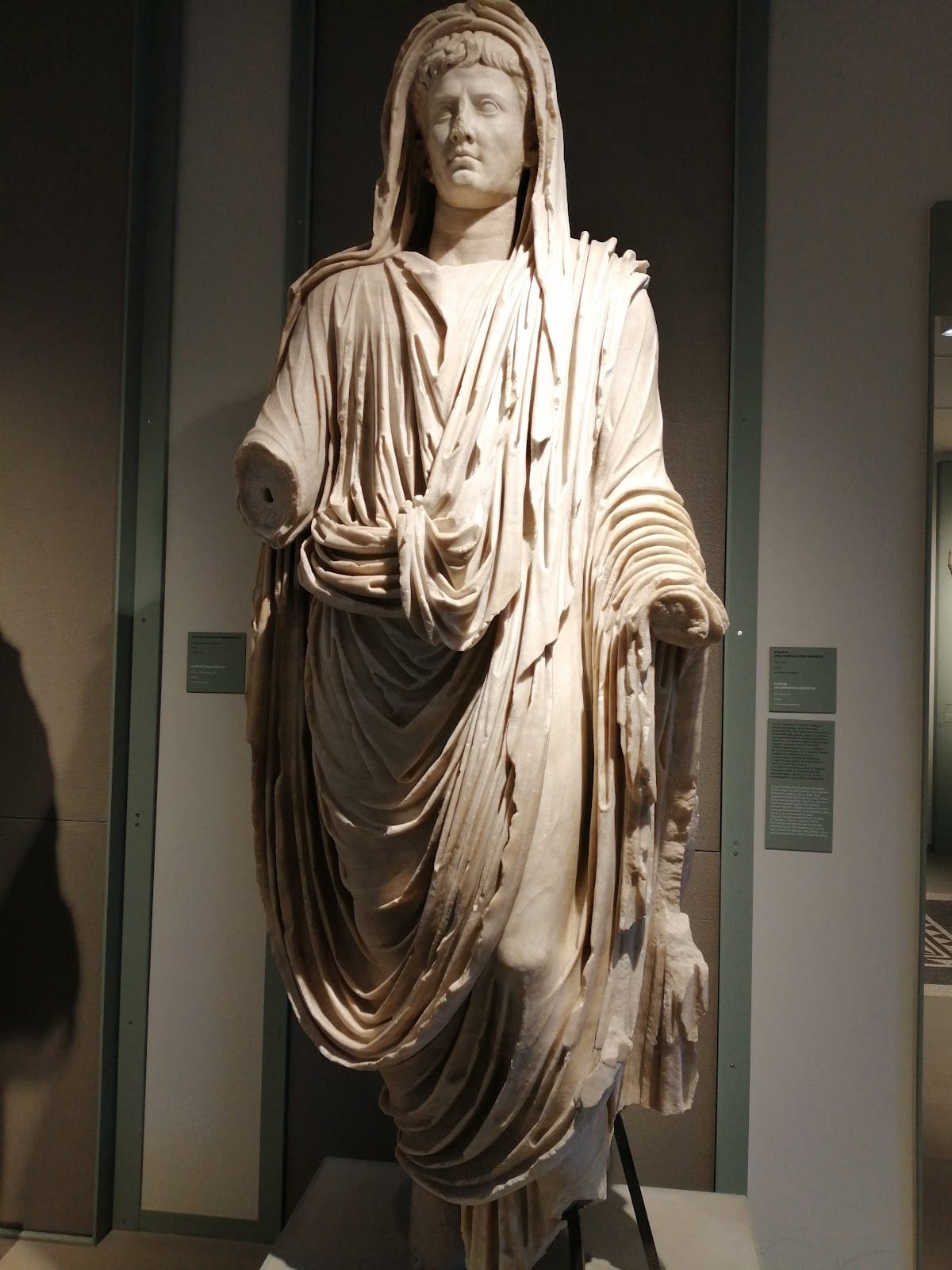
On the villa’s ground floor, stone monuments are displayed, including statues, busts, inscriptions, and reliefs. The upper floors exhibit smaller artifacts such as jewelry, glass, amber, bronze, gold, ceramics, and engraved stones that illustrate daily life in ancient Aquileia. Among the notable mosaics are floor decorations from private houses, including the Nereid mosaic and the “Asaroton oikos” mosaic. Mosaics from a large 4th-century baths complex depict marine creatures like tritons and nereids, as well as medallions featuring athlete portraits.
Funerary monuments in the collection include a large marble statue of the Navarch, a naval commander, found near Aquileia. Another funerary stele shows a blacksmith at work, with detailed representations of tools and workshop elements. Decorative marble reliefs from the forum’s attic include images of Jupiter Ammon and Medusa, symbolizing the unity of the Roman Empire under Emperor Augustus.
The museum also holds an extensive numismatic collection, with coins dating from the 4th century BCE to the 6th century CE. Its collection of Roman engraved gems is exceptional, featuring a 1st-century CE nicolo gem that depicts the mythological figures Eros and Psyche.
Nearby sites