Aquis Querquennis: A Roman Military Camp and Mansio in Galicia, Spain

Visitor Information
Google Rating: 4.6
Popularity: Medium
Google Maps: View on Google Maps
Official Website: www.querquennis.com
Country: Spain
Civilization: Roman
Remains: Military

History
Aquis Querquennis is located in Baños de Bande, within the province of Ourense in Galicia, Spain. This site was established by the Romans in the late 1st century AD. It served as a military camp during the Roman occupation of the northwest Iberian Peninsula.
The camp was built to support the construction and control of the Via Nova, a Roman road connecting Bracara Augusta (modern Braga, Portugal) and Asturica Augusta (modern Astorga, Spain). The military presence at Aquis Querquennis lasted until the early 2nd century AD, around the 20s, after which the camp was likely abandoned as a military installation.
The military unit stationed at the camp was probably the Cohors III, an infantry cohort linked to Legio VII Gemina based in León. This identification is supported by ceramic stamps found on roof tiles. Recent surveys in 2024 revealed ten infantry barracks, suggesting a force of about 800 soldiers rather than a mixed infantry and cavalry unit.
Following the military phase, the site saw continued use in the 2nd and 3rd centuries AD as a mansio, or roadside inn, serving travelers along the Via Nova. This facility provided lodging, stabling for horses, and amenities such as a bread oven and a well. The mansio reflects the shift from military to civilian use in the area.
The site was rediscovered in the 1920s by Florentino López Cuevillas and first excavated then. After being submerged by the As Conchas reservoir in 1949, excavations resumed in 1975 under Antonio Rodríguez Colmenero, focusing on the northwest area. Archaeological work continues today under Santiago Ferrer Sierra.
In September 2018, Aquis Querquennis was declared a Bien de Interés Cultural, a status recognizing its cultural importance. The site lies along the “Ruta da Rainha Santa,” a pilgrimage route to Santiago de Compostela that follows the initial stretch of the Via Nova.
Remains
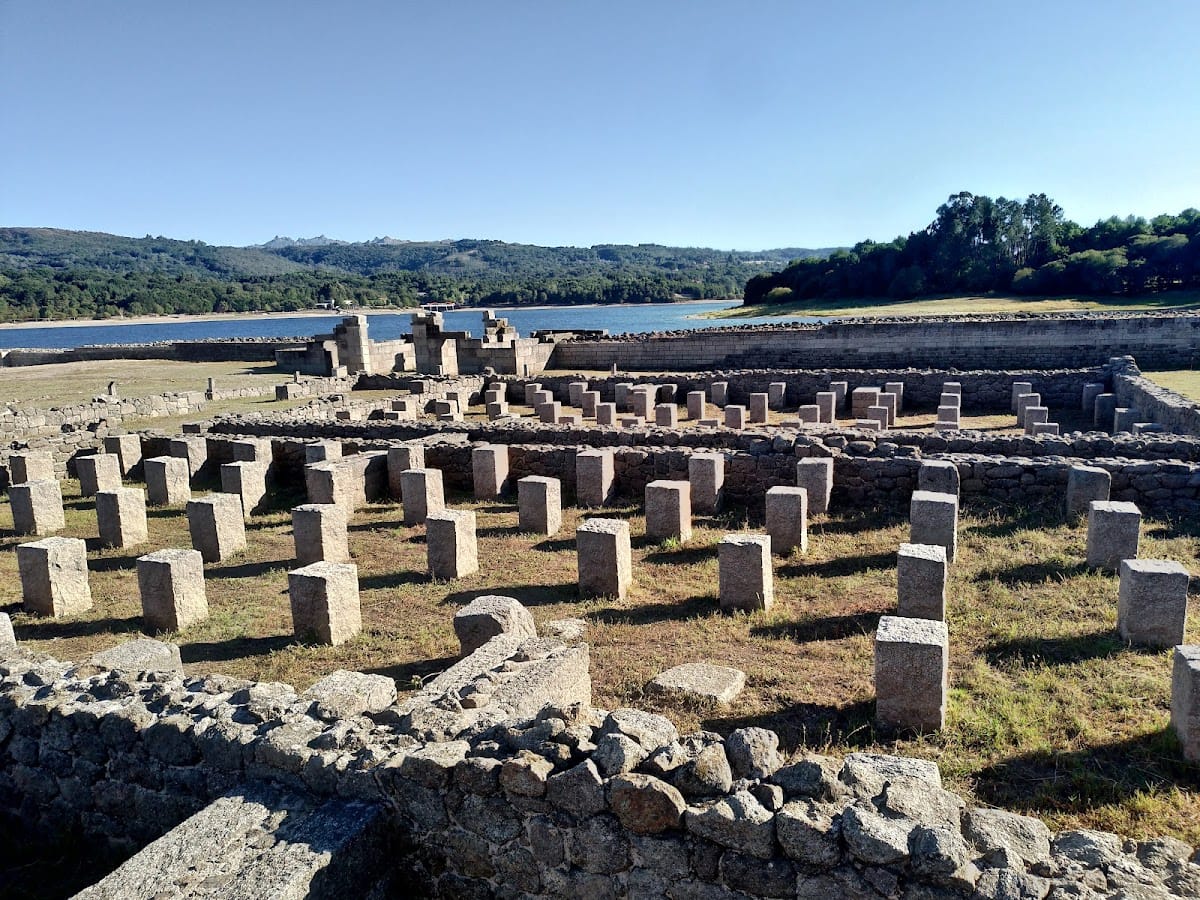
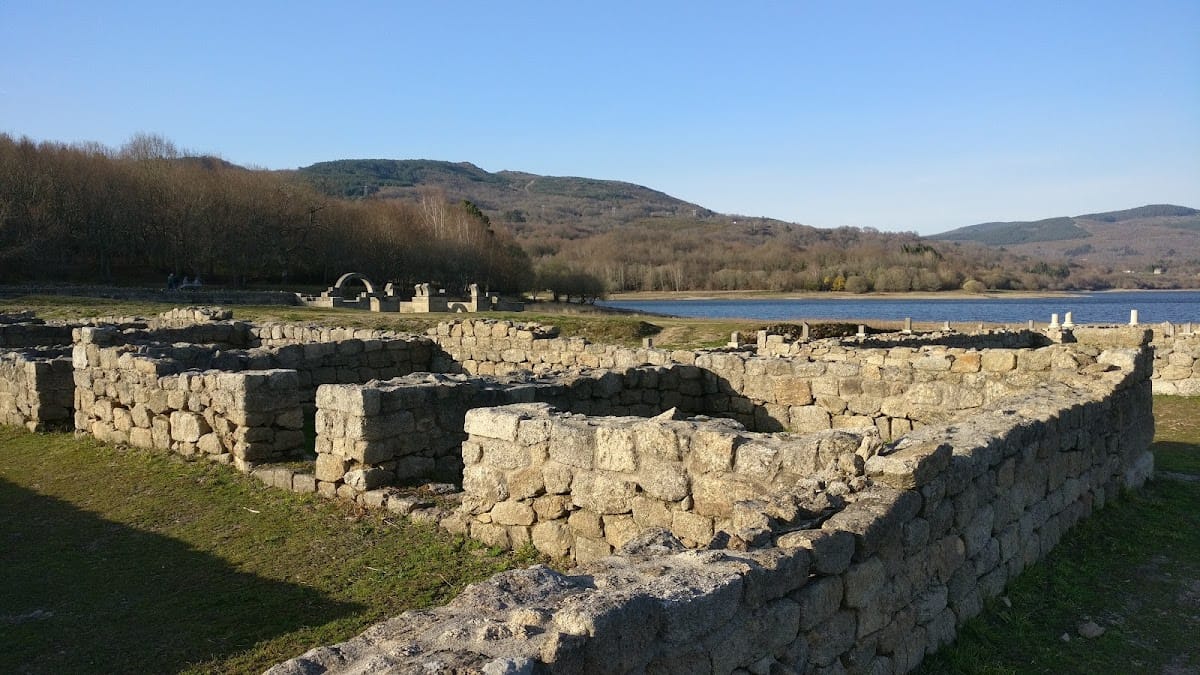
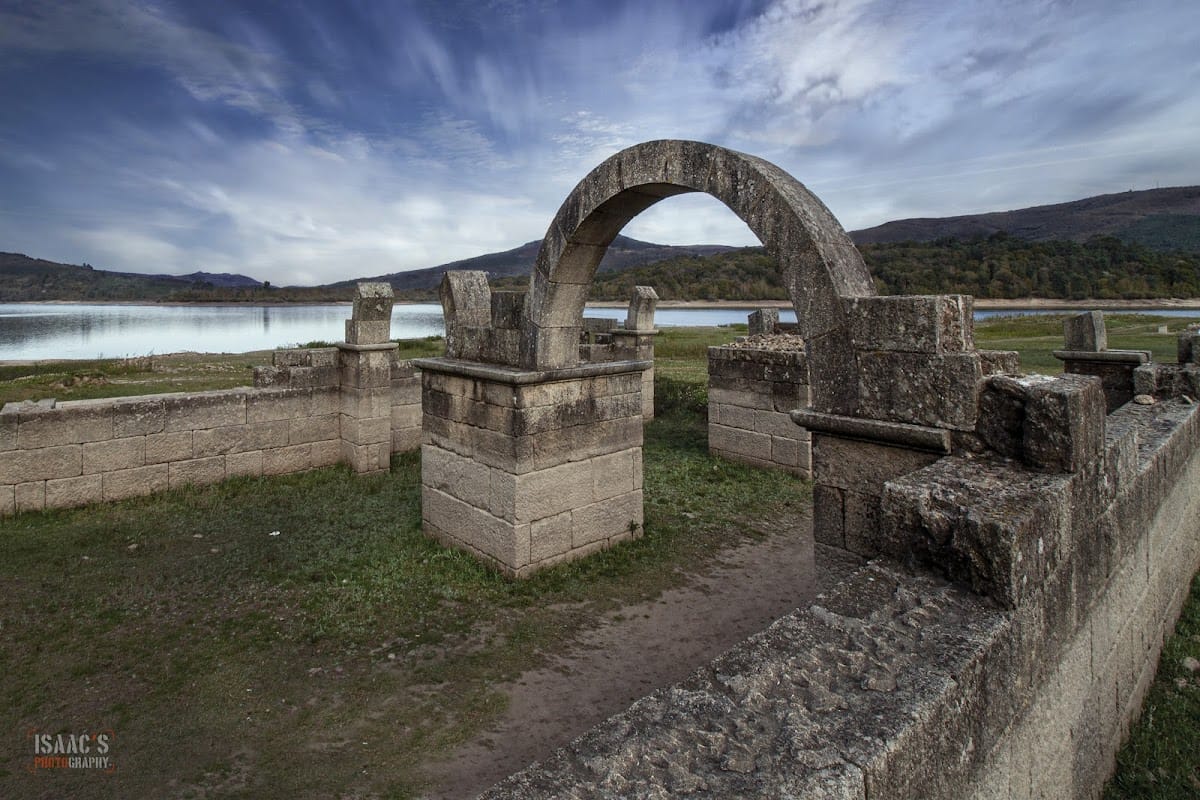
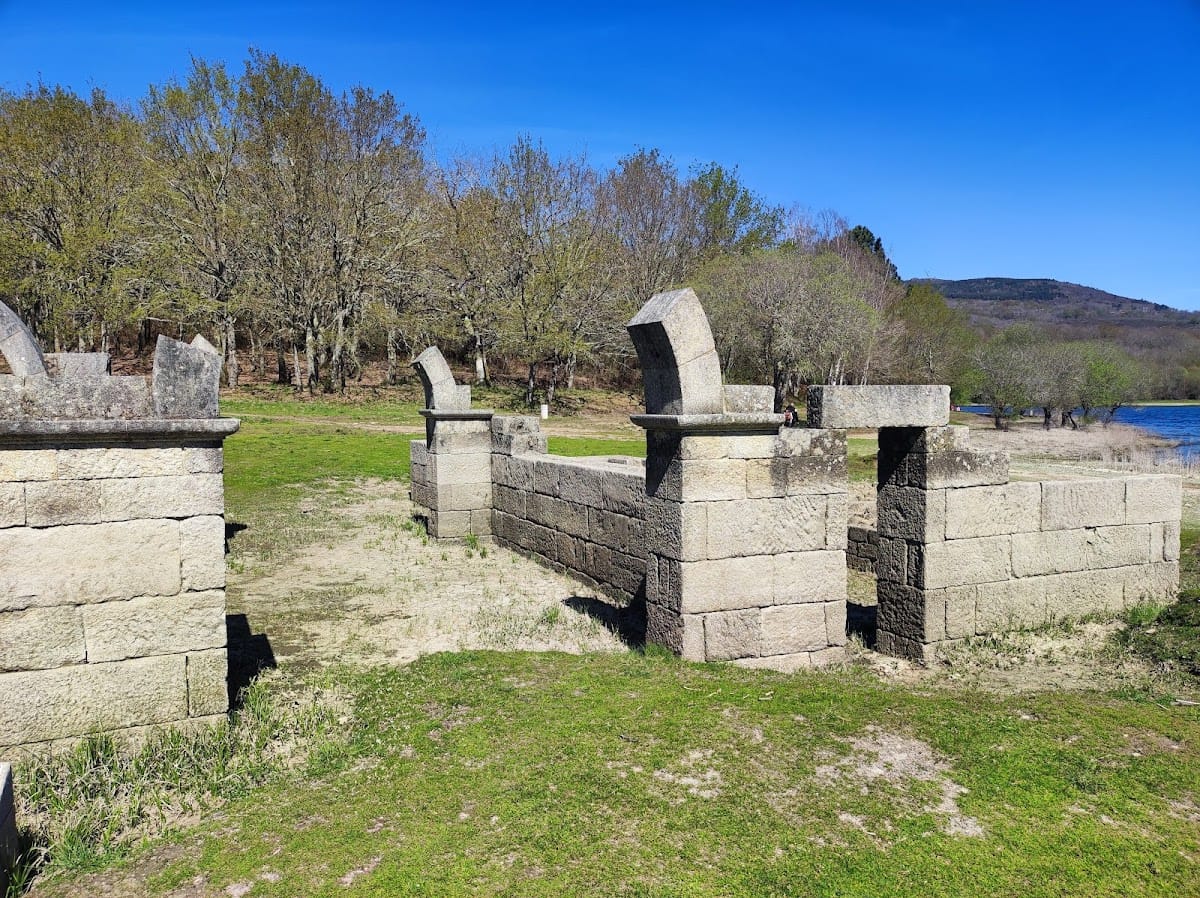
The Roman camp at Aquis Querquennis covers about 2.4 to 2.5 hectares and has a rectangular shape with rounded corners. It is enclosed by a granite wall approximately 3.2 meters thick and 5 meters high. The wall was built using small granite blocks fitted tightly without mortar, a technique known as opus vittatum, and topped with semicylindrical battlements.
Defensive features include four large gates: two Principalis gates on the north and south sides, called Sinistra and Dextra; the Decumana gate on the west; and the Praetoria gate on the east. The Sinistra and Praetoria gates have two openings each, serving as entrance and exit, while the Decumana and Dextra gates have a single opening. Surrounding the fort is a V-shaped ditch about 6 meters wide and 3 meters deep. An 11-meter-wide clear space, called the intervallum, separates the wall from the first row of buildings inside.
Inside the camp, five infantry barracks were excavated. These barracks are arranged facing each other around a central courtyard with a rainwater cistern. Each barrack contains rooms called contubernia, which housed eight soldiers each. The floors were made of compacted earth, divided into sleeping and hearth areas. Circular bases near the entrances likely supported communal ovens.
Two rectangular granaries, or horrea, stand on stone pillars. They have thick walls reinforced with external buttresses to protect stored grain. A nearly square hospital, known as a valetudinarium, consists of multiple square rooms arranged around a central courtyard with an opening to collect rainwater. A drainage channel carried water from the courtyard outside the building.
The principia, or headquarters building, is rectangular and includes a vestibule with covered corridors open to the front. It has two small side rooms for storing weapons, a large courtyard with columns on three sides, and a basilica accessed through a large central door and two smaller side entrances. The sacro-administrative area contains an official temple surrounded by five rooms, possibly including the archive.
Attached to the wall is a rectangular latrine building with a drainage channel and a central sewer. Wooden benches or seats likely lined the latrines, though these have not survived. Outside the walls to the south, two circular tiled bases probably supported ceramic kilns. Nearby remains of a civilian settlement, or vicus, include a dwelling.
The praetorium, the residence of the military commander, has been recently excavated. It served as the home for the tribune, his family, and staff. Near the camp, the mansio includes several rooms for travelers, stabling for horses, a bread oven, a circular well, and a paved entrance area.
Close to the mansio lies a thermal water area, featuring stone pools and bathtubs from a Roman bath complex. This balneary has not yet been excavated. Parts of the site remain submerged under the As Conchas reservoir but become visible during low water levels.
Nearby sites