Anhalt Castle: The Ancestral Fortress of the House of Ascania in Germany


Visitor Information
Google Rating: 4.5
Popularity: Low
Country: Germany
Civilization: Unclassified
Site type: Military
Remains: Castle

History
Anhalt Castle is located near Harzgerode in modern-day Germany and was built by the Saxon noble family known as the House of Ascania. Its origins date back to the early 12th century when Count Otto of Ballenstedt established the fortress as the ancestral home of his dynasty.
The castle first appears in historical records in 1140, a time of conflict involving Otto’s son, Albert the Bear, who was fighting the rival Welf dynasty. During this turmoil, forces under the Archbishop of Magdeburg and Margrave Conrad of Meissen attacked and destroyed the original hilltop fortress. Following Albert’s eventual success and rise in power after 1147, the castle was rebuilt and expanded to serve as a stronghold in the Harz region. It grew into a considerable complex, rivaling other notable fortifications such as Wartburg Castle in Thuringia. Alongside Ballenstedt and Aschersleben, it became one of the three principal residences of the Ascanian family.
The designation “Prince of Anhalt” was first officially linked to the castle in 1215. Over time, the name Anhalt extended beyond the fortress to refer to the ruling family and eventually to the territory and its inhabitants, confirming the castle’s lasting influence in shaping the region’s identity.
After the Principality of Anhalt was divided in 1252, the castle became the main seat of the older Aschersleben line of the family. This lineage ended in 1315, leading to the castle’s decline and gradual abandonment. The nearby village of Anhalt, first mentioned in 1311, saw a similar fate and was deserted by the mid-15th century.
Interest in the site revived in the 19th century when Duke Alexius of Anhalt-Bernburg initiated archaeological excavations beginning in 1822. He cleared much of the ruins and constructed a neo-Gothic well house over the castle’s well, providing a visible landmark at the site. Further archaeological investigations took place from 1901 to 1909 under the supervision of surveyor Brinckmann and architect Starke. In 2012, significant restoration efforts allowed large parts of the castle remains to be preserved and made accessible, marking the 800th anniversary of the Anhalt principality.
Remains
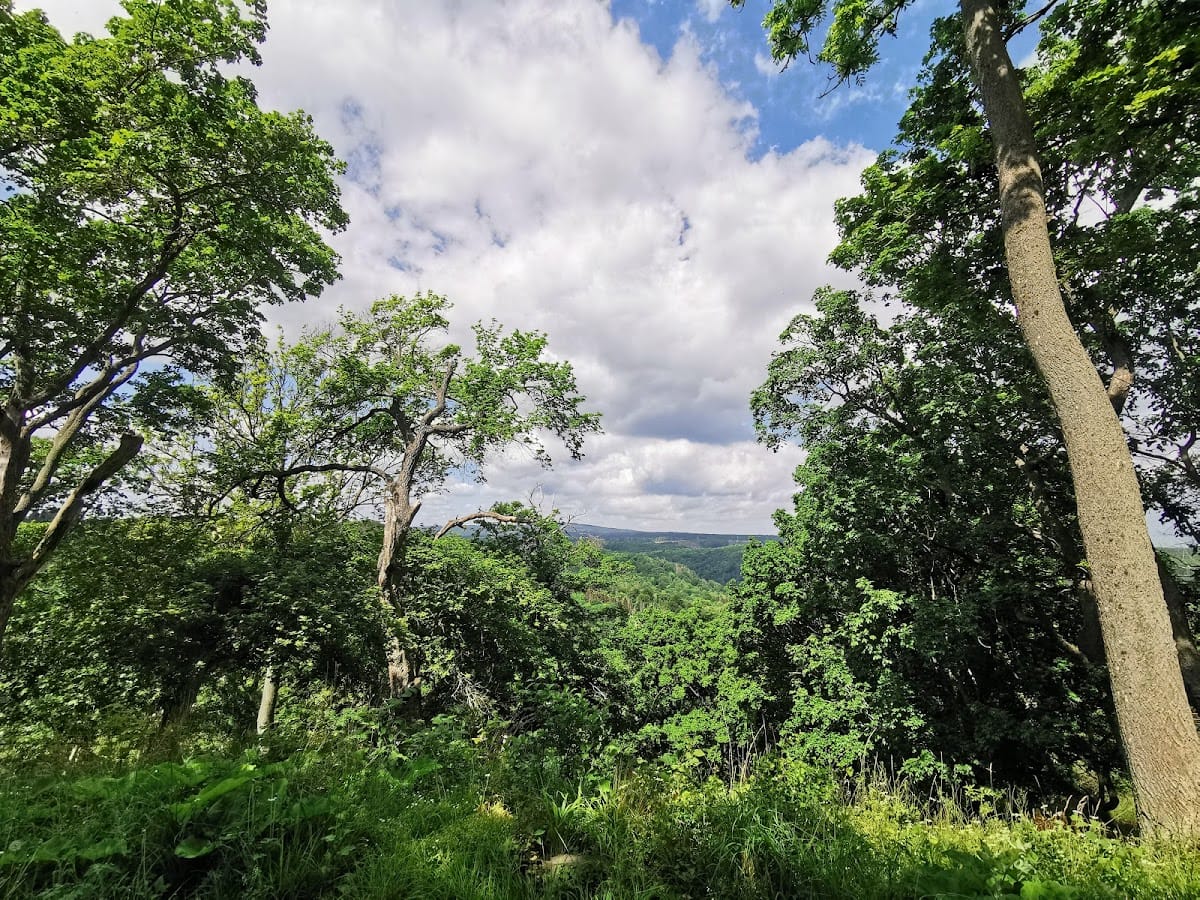
Anhalt Castle was originally built as a hilltop fortress on the Großer Hausberg, a prominent elevation measuring nearly 400 meters above sea level. The castle overlooked the Selke valley and was uniquely constructed mostly from brick, a building method uncommon for its time and region that more frequently used stone or timber.
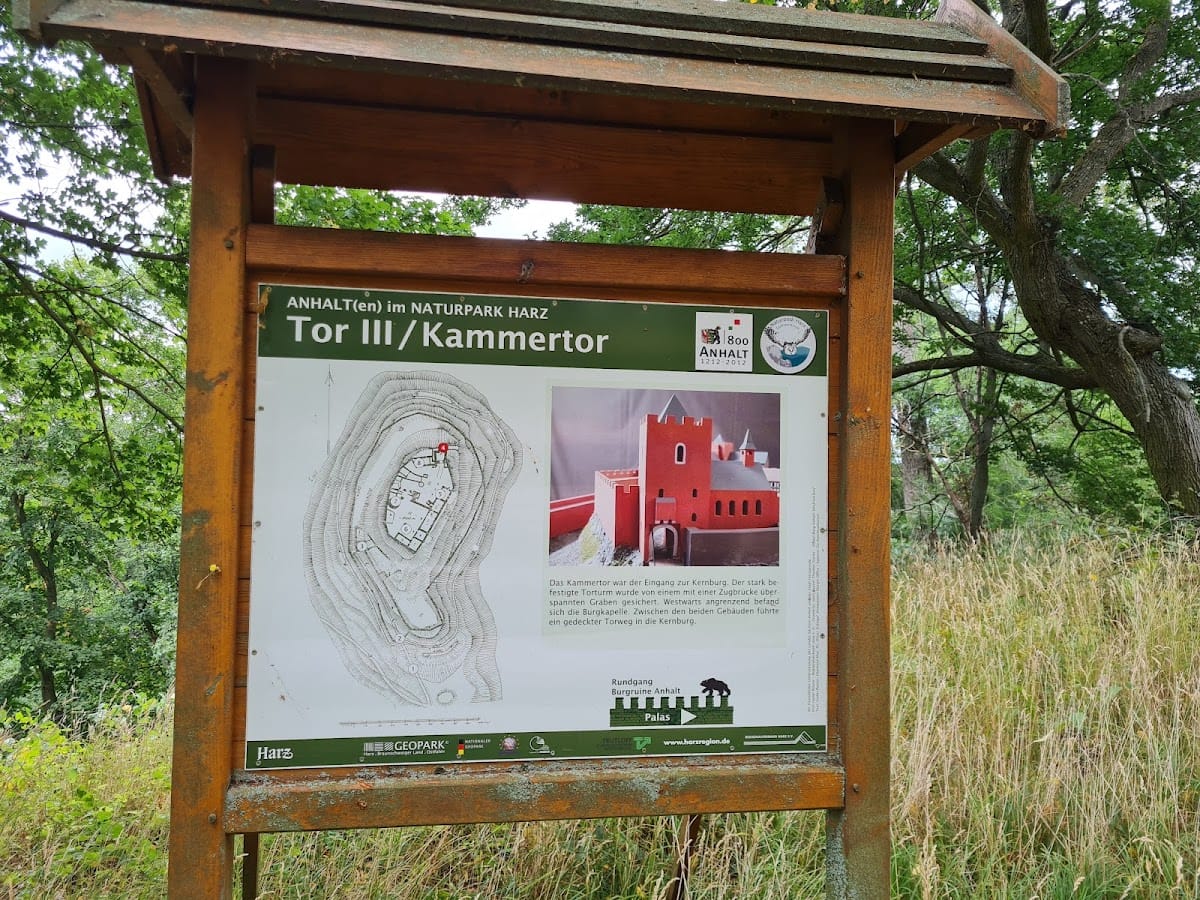
The initial 12th-century structure featured a round residential tower with a diameter of about 18 meters. When rebuilt after the mid-12th century destruction, the castle expanded into a large complex enclosed by defensive earthworks: a dry moat and an outer rampart known as a Vorwall, which ran to a length of 543 meters.
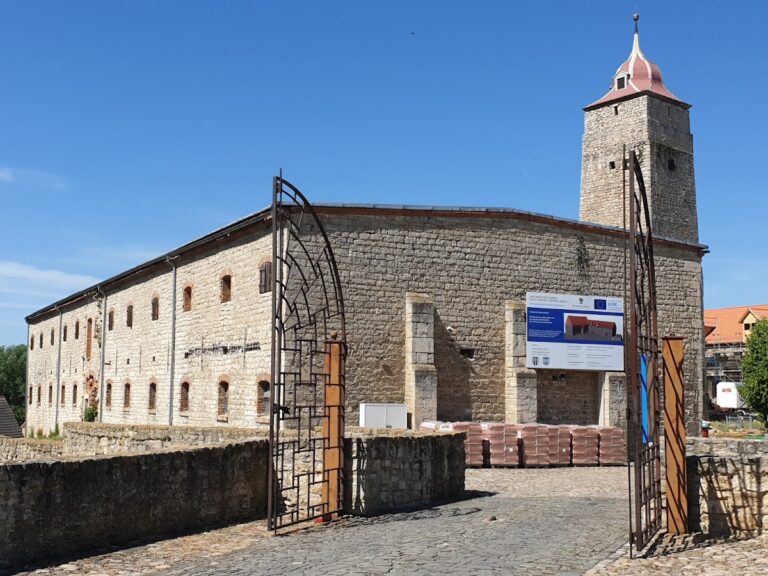
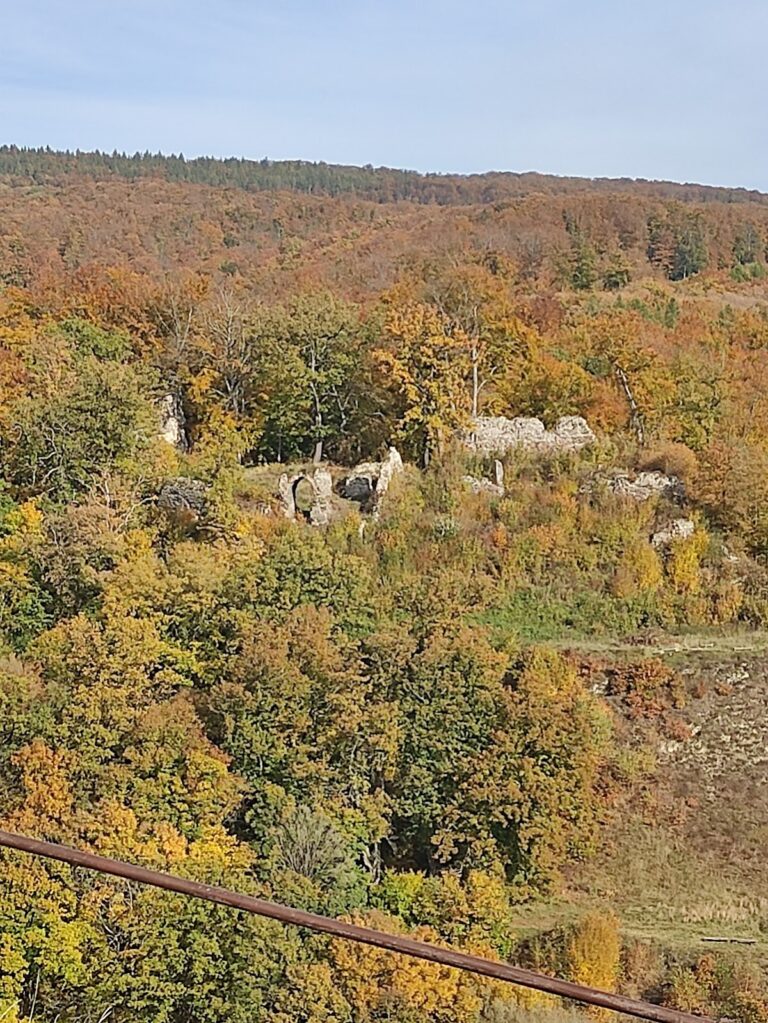
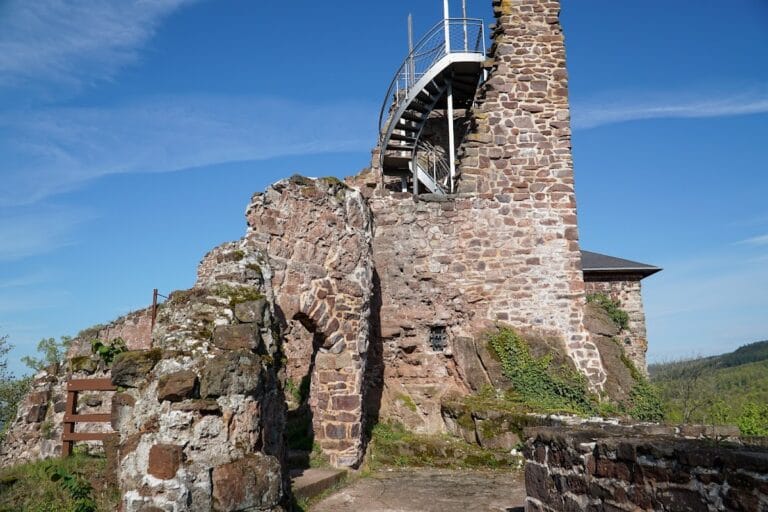
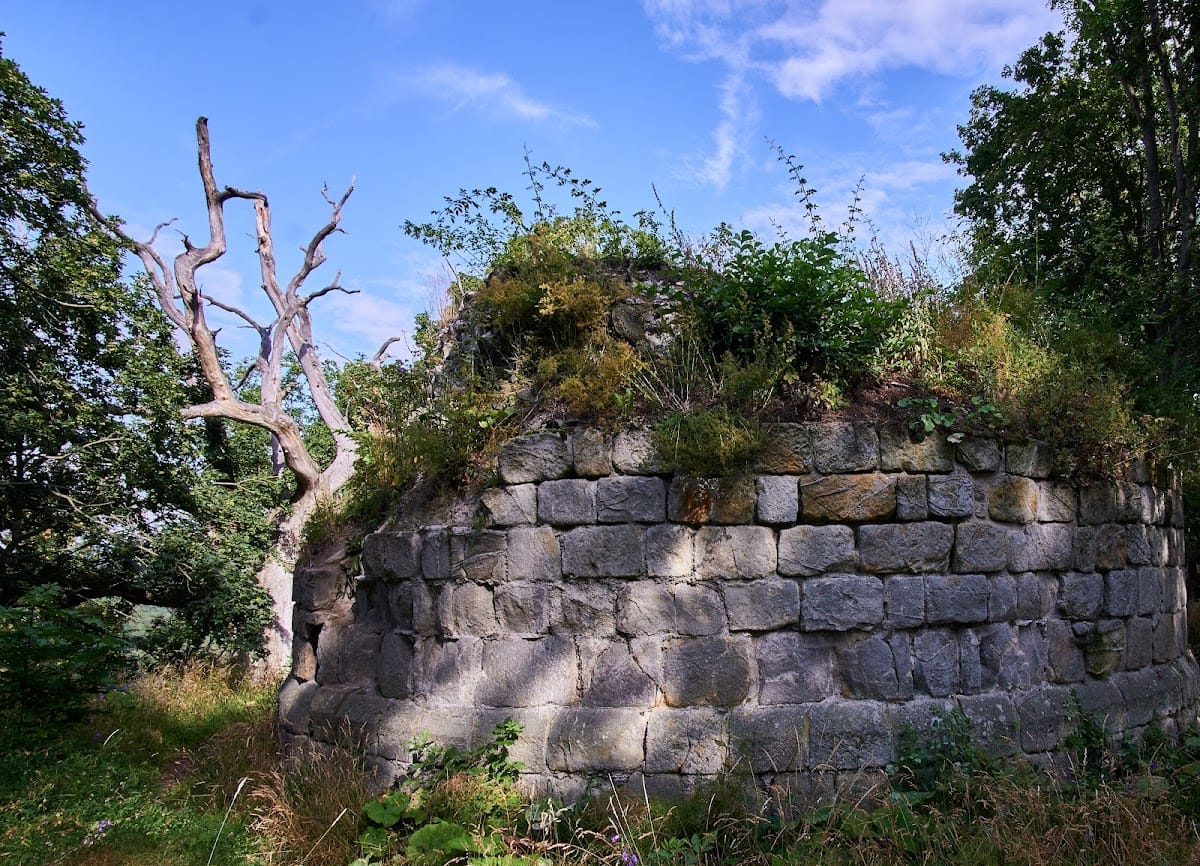
Today, visitors can see several surviving sections of the castle’s walls, including parts of the chapel and remains of residential and supporting buildings. The base of the bergfried, or main tower, still rises roughly three meters and is covered by vegetation. This tower would have served as a fortified lookout and final refuge.
Archaeological work at the site has also revealed traces of the deserted village of Anhalt near the castle. Excavations uncovered farmstead remains and depressions where wells once existed, as well as a rubble mound marking the location of the village church. Among the notable finds is a smelting furnace dating back to the 12th or 13th century, connected to local iron ore processing activities that took place nearby.
One distinctive structure from the 19th century is the neo-Gothic well house erected over the excavated castle well by Duke Alexius. This small building serves as a historical marker for the site’s early modern rediscovery. The castle ruins have undergone partial restoration and are accessible along hiking routes, with a checkpoint positioned close to what was once the neck ditch, a defensive trench protecting the castle’s entrance.
Nearby sites