Alte Veste: A Historic Hilltop Castle Site in Germany


Visitor Information
Google Rating: 4.6
Popularity: Low
Official Website: de.m.wikipedia.org
Country: Germany
Civilization: Unclassified
Site type: Military
Remains: Castle

History
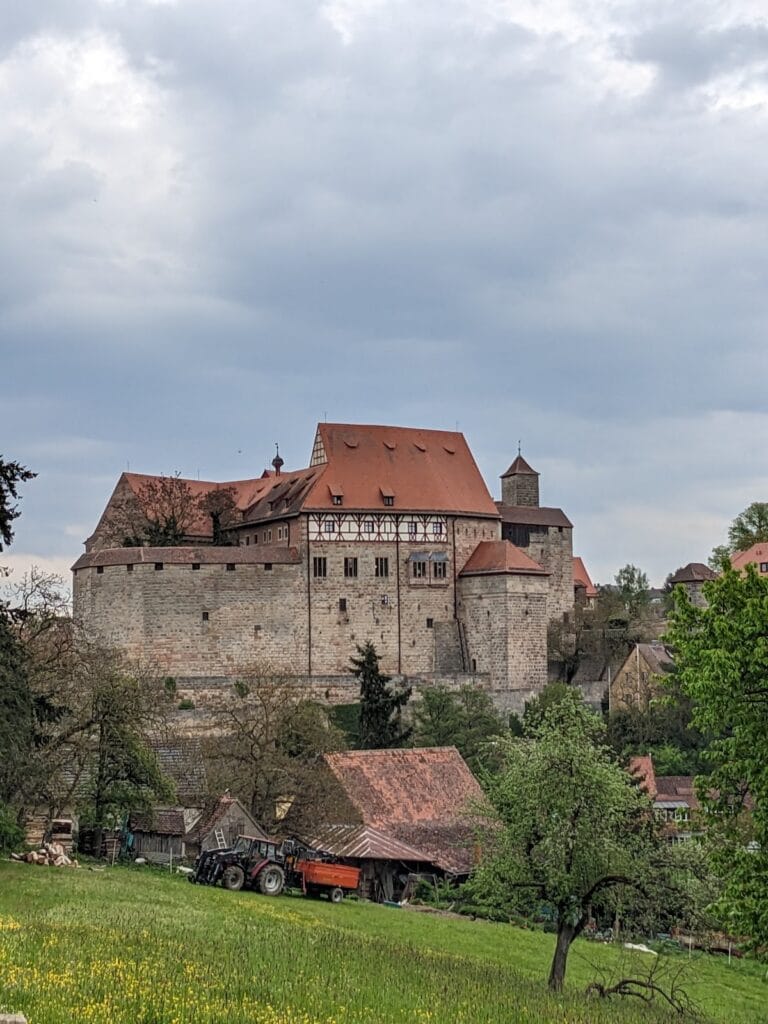
Alte Veste is a historic hilltop castle site located near Zirndorf in modern-day Germany. Originally constructed in the 13th century by medieval German builders, it was established on Rosenberg hill in the Middle Franconia region.
The earliest reference to the castle, then known as Burg Berch, dates from 1306 when Heinrich von Berg, a local imperial official, sold it to the Burgraves of Nuremberg. Prior to the sale, von Berg had pledged the fortress to a Nuremberg financier, indicating its role within regional feudal and financial arrangements. This initial ownership period reflects the castle’s function within the fragmented medieval political landscape of Bavaria.
In the late 14th century, Alten Veste’s fortifications were destroyed by the citizen militia of Nuremberg during the Cities War (1387–1389), a conflict involving imperial cities resisting noble dominance. Despite this destruction, the site retained strategic value and reemerged prominently in the Thirty Years’ War. In 1632, it was the scene of a fierce confrontation between the imperial army, commanded by Albrecht von Wallenstein, and Swedish forces under King Gustav II Adolf. The battle lasted two days with substantial losses, ultimately forcing the Swedes to retreat and giving Wallenstein a tactical advantage during the protracted conflict.
Following the war and into the subsequent centuries, the castle site lost its military importance and transformed into a single agricultural estate administered within the Brandenburg-Ansbach Cadolzburg district by the late 1700s. Between 1797 and 1808, jurisdiction shifted to the Cadolzburg judicial and chamber office, until the estate was incorporated into Zirndorf’s rural community in 1808, reflecting administrative changes during the Napoleonic era.
In the 19th century, commemorating the 200th year since the 1632 battle, a viewing tower was erected between 1832 and 1839 atop the ruins. Funded through the issuance of shares, this structure became a popular local landmark intended for recreation rather than defense.
During World War II, the viewing tower and its underlying vault served military purposes for the German Wehrmacht, functioning as both an air defense position and a site for war-related production. Shortly before Allied forces arrived in April 1945, German troops demolished the tower to deny its use to enemies.
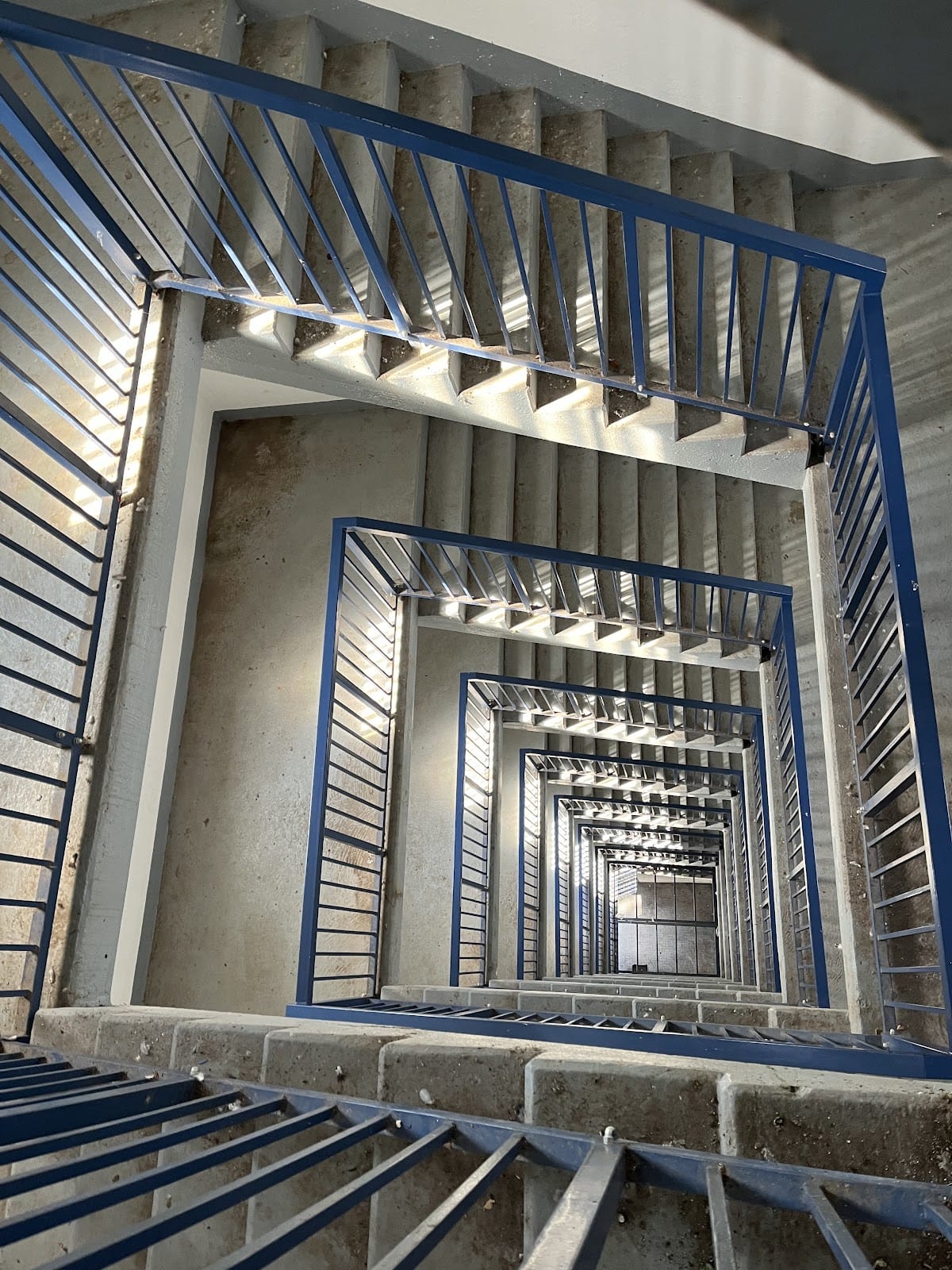
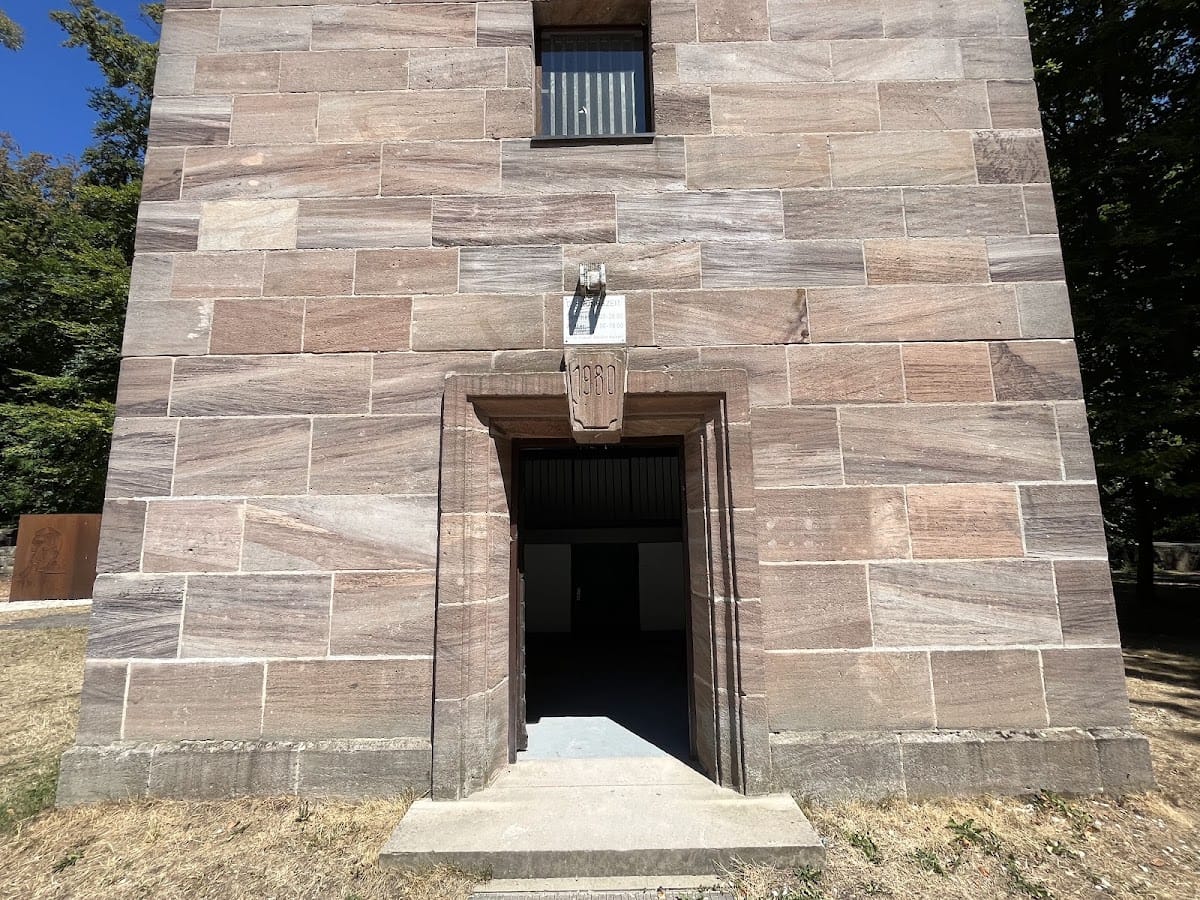
Several decades later, between 1979 and 1980, a new observation tower was constructed nearby and inaugurated in September 1980. Since 2021, the Alte Veste area forms part of the “Wallensteins Lager” trail, a marked historical route documenting the 1632 siege through multiple informational stations.
Remains
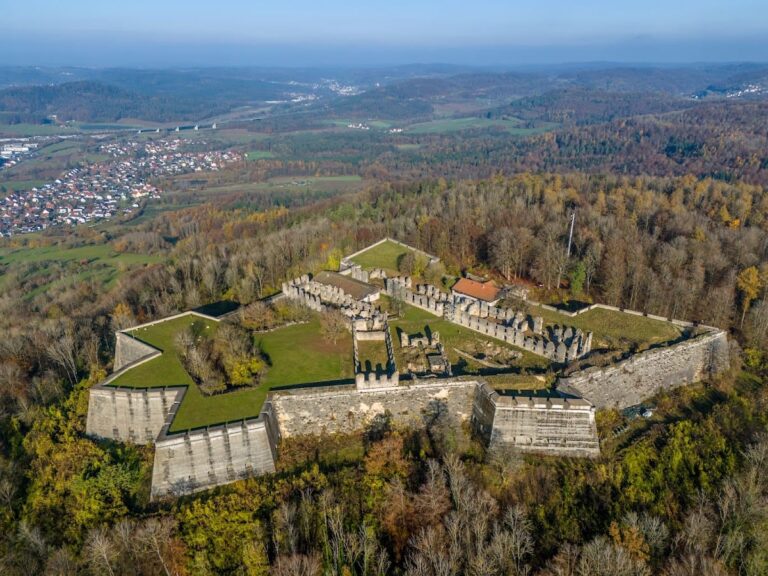
The Alte Veste site occupies the summit of Rosenberg hill and originally featured a motte-style hill castle with a central defensive tower dating back to the 13th century. Archaeological remains include rectangular foundations of the demolished tower, which surround the current observation tower. These foundations mark the footprint of the medieval fortification and offer visible evidence of the original defensive arrangement on the hilltop ridge known as the Cadolzburger Rücken.
The 19th-century viewing tower, built atop the castle ruins, was financed collectively through share issuance. While this tower no longer stands, its construction repurposed the elevated location as a site for leisure and scenic observation rather than military use.
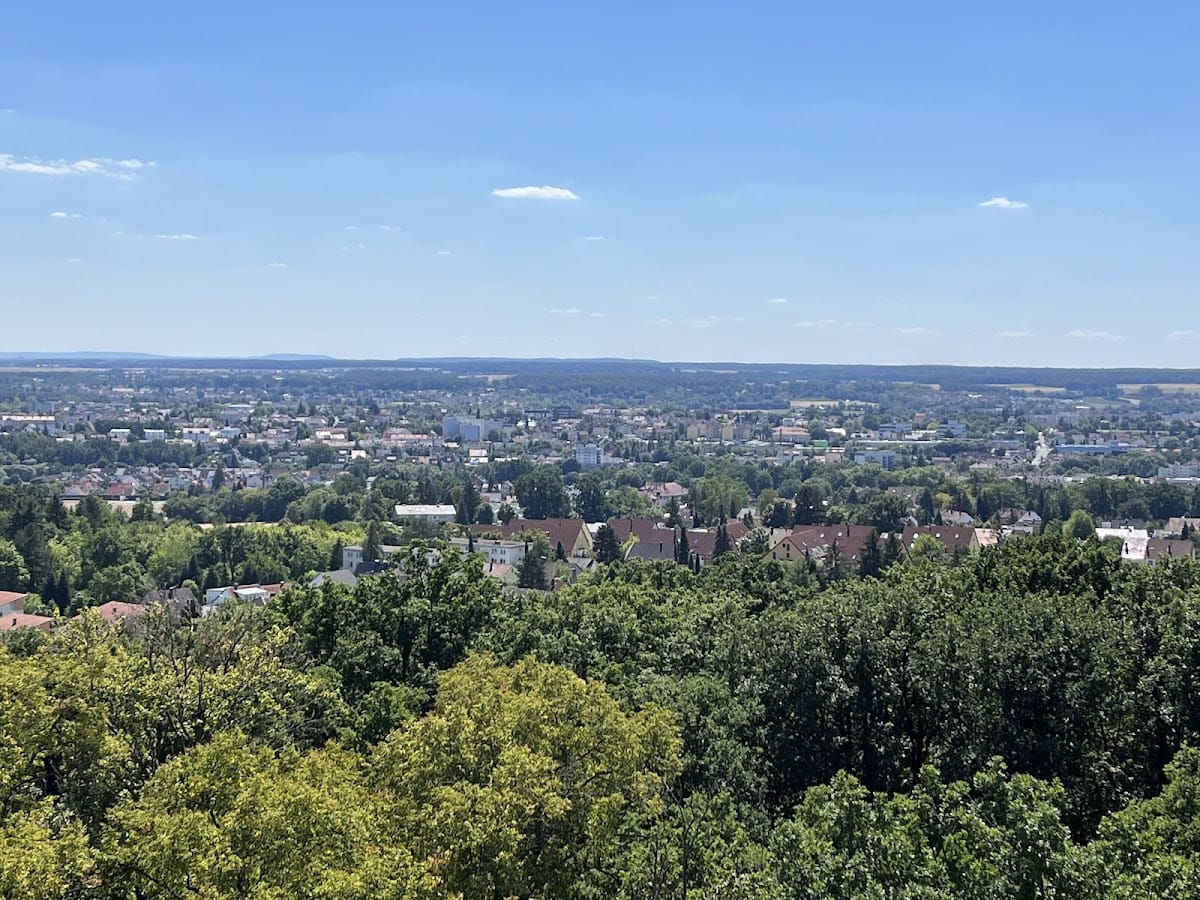
The contemporary observation tower, erected between 1979 and 1980, is situated within forested terrain near the historic foundations. It offers unobstructed panoramic views over Zirndorf, Fürth, and Nuremberg, extending eastward to Franconian Switzerland and southward to the Altmühl valley. These vistas emphasize the strategic prominence of the hill across centuries.
During the Second World War, the tower’s vault and cellar were utilized by German forces for air defense operations and war production activities. These subterranean chambers remain sealed and inaccessible today, preserving their wartime configuration. Close to the tower, approximately 400 meters away, a reconstructed artillery trench from Wallenstein’s defensive works has been integrated into a forest trail, providing a tangible connection to the 1632 siege.
Additionally, the present observation tower functions as a relay point for the local fire brigade’s BOS (Betriebliches Organisations- und Sicherheitsfunktionen) communication system, illustrating the site’s ongoing practical use. Adjacent to the tower stands the Gasthof Alte Veste, an inn that complements the setting.
Nearby sites